Few tools have transformed professional and DIY projects like the impact wrench and drill driver. From automotive garages to home workshops, these powerhouses have become staples for anyone serious about efficiency and precision. Yet, confusion persists: which tool should you reach for, and when? Understanding their differences is essential to optimizing workflow, preventing damage, and achieving the best results.
Whether you’re a seasoned mechanic, a contractor, or a homeowner tackling odd jobs, choosing between an impact wrench and a drill driver can make or break your project. This in-depth comparison draws on real-world examples, technical data, and expert advice to clarify their unique roles, strengths, and limitations.
By the end, you’ll know precisely which tool fits your specific needs, and how to get the most from each.
Key Takeaways
- Impact wrenches excel at high-torque applications like loosening lug nuts, while drill drivers are ideal for drilling holes and driving screws with precision.
- The mechanisms, torque output, and typical use cases of these tools are fundamentally different, making each better suited for specific tasks.
- Safety, accuracy, and productivity depend on selecting the right tool and using it correctly.
- Real-world examples and data-driven comparisons help clarify the best tool for automotive, construction, and DIY projects.
- Understanding the limitations and maintenance requirements of each tool extends their lifespan and ensures optimal performance.
Understanding Impact Wrenches
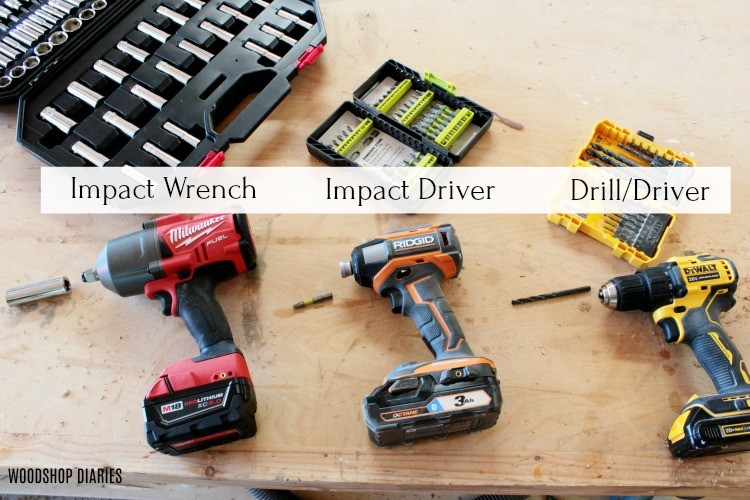
An impact wrench is a powerful tool designed primarily for loosening and tightening bolts, nuts, and fasteners that require significant torque. Unlike standard drills, impact wrenches deliver high rotational force through rapid, repeated concussive impacts, allowing them to tackle stubborn or rusted fasteners with ease.
Mechanism And Operation
Impact wrenches use a combination of rotational force (torque) and percussive impacts to break free or secure fasteners. The tool’s motor spins a hammer mechanism, which strikes an anvil connected to the output shaft. Each impact delivers a burst of torque, far exceeding what most manual or even powered wrenches can produce continuously.
Types Of Impact Wrenches
- Pneumatic (Air) Impact Wrenches: Powered by compressed air, often found in automotive repair shops for tasks like wheel removal.
- Corded Electric Impact Wrenches: Plug into standard outlets; offer consistent power but limited portability.
- Cordless (Battery-Powered) Impact Wrenches: Increasingly popular for their mobility and evolving battery technology.
- Hydraulic Impact Wrenches: Used in industrial settings, powered by hydraulic systems for extremely high-torque needs.
Typical Applications
- Automotive repair: Removing lug nuts, suspension bolts, and other high-torque fasteners.
- Construction: Assembling steel structures, scaffolding, or heavy machinery.
- Heavy equipment maintenance: Where large, stubborn bolts are common.
Strengths And Limitations
Strengths:
- Delivers extremely high torque, often exceeding 1,000 ft-lbs in industrial models.
- Saves time and reduces physical strain on repetitive or heavy-duty tasks.
- Effective even with rusted or stuck fasteners.
Limitations:
- Not suitable for precision tasks or delicate fasteners.
- Can over-tighten or break bolts if not used carefully.
- Generally heavier and noisier than drill drivers.

Credit: www.perkinshomeimprovement.com
Drill Drivers Explained
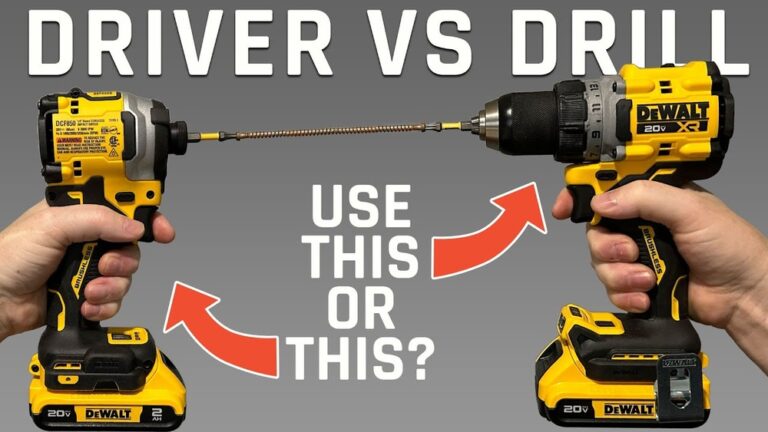
A drill driver is a versatile tool designed for both drilling holes and driving screws. It excels in tasks requiring precision and control, making it indispensable in woodworking, cabinetry, and general construction.
Mechanism And Operation
Drill drivers use a continuous rotational motion powered by an electric motor. The adjustable clutch allows users to control the amount of torque applied, preventing over-driving or stripping screws. Most models offer variable speed settings and reverse functions for greater versatility.
Types Of Drill Drivers
- Corded Drill Drivers: Provide constant power but require access to an outlet.
- Cordless Drill Drivers: Powered by rechargeable batteries; offer portability and convenience.
- Hammer Drill Drivers: Include a hammering action for drilling into masonry (not to be confused with impact drivers or wrenches).
Typical Applications
- Woodworking: Drilling holes and driving screws into wood or soft materials.
- Metalworking: Drilling pilot holes in sheet metal or thin steel.
- Home improvement: Hanging shelves, assembling furniture, mounting fixtures.
Strengths And Limitations
Strengths:
- Highly versatile, can both drill and drive screws.
- Offers precise control with adjustable clutch settings.
- Lightweight and easy to maneuver for extended use.
Limitations:
- Lower maximum torque compared to impact wrenches.
- Struggles with large or stuck fasteners.
- Not designed for heavy-duty automotive or industrial applications.

Credit: www.protoolreviews.com
Side-by-side Comparison: Impact Wrench Vs Drill Driver
To highlight the core differences, the table below compares key features and specifications of impact wrenches and drill drivers:
| Feature | Impact Wrench | Drill Driver |
|---|---|---|
| Primary Function | Loosening/Tightening Nuts & Bolts | Drilling & Driving Screws |
| Torque Output | High (Up to 1,500 ft-lbs+) | Moderate (30, 90 ft-lbs) |
| Mechanism | Rotational + Percussive Impact | Continuous Rotation |
| Common Uses | Automotive, Construction, Heavy Equipment | Woodworking, Metalworking, Home Tasks |
| Tool Attachments | Impact Sockets | Drill Bits, Driver Bits |
| Control Features | Variable Speed, Direction | Variable Speed, Direction, Clutch |
| Weight | Heavier (3, 10 lbs+) | Lighter (2, 5 lbs) |
| Noise Level | Loud | Quieter |
Credit: www.woodshopdiaries.com
Technical Differences And Performance Metrics
Understanding the technical specifications behind each tool sheds light on their suitability for various tasks. Below, we break down the most important performance metrics.
Torque Output
Impact wrenches routinely deliver torque ratings from 150 ft-lbs for compact models to over 1,500 ft-lbs for industrial-grade versions. This high torque is necessary for breaking free rusted or over-tightened fasteners.
Drill drivers, on the other hand, typically offer torque in the range of 30, 90 ft-lbs. The adjustable clutch allows for precise control, preventing material damage or fastener stripping.
Speed (rpm) And Impacts Per Minute (ipm)
- Impact wrenches operate at lower RPMs (typically 1,000, 2,500), but deliver thousands of impacts per minute (IPM), multiplying their effective torque.
- Drill drivers may reach 1,500, 2,000 RPM for fast, efficient drilling, but lack the concussive impact mechanism.
Chuck And Attachment Compatibility
Impact wrenches use a square drive, most commonly 1/2-inch, for attaching impact-rated sockets. They are not compatible with typical drill bits.
Drill drivers use a keyless chuck (often 3/8-inch or 1/2-inch), accepting a wide range of drill bits and driver attachments for various materials.
Power Source And Battery Considerations
- Cordless impact wrenches and drill drivers rely on lithium-ion batteries, with voltage ratings from 12V to 20V (and higher for some professional models).
- Battery capacity (measured in amp-hours, Ah) affects runtime; higher Ah means longer operation between charges.
Weight And Ergonomics
Impact wrenches tend to be heavier due to their robust construction and larger motors. Extended use can lead to fatigue, especially in overhead applications.
Drill drivers are lighter and typically feature ergonomic grips, making them suitable for prolonged, precise work.
Real-world Applications: Case Studies
Examining real-world scenarios helps illustrate the practical implications of choosing between an impact wrench and a drill driver.
Automotive Repair Shop
Scenario: A mechanic needs to quickly remove and replace wheels on multiple vehicles.
- Tool of Choice: Impact wrench.
- Reason: The mechanic requires high torque to loosen lug nuts that may be over-tightened or rusted.
- Result: The impact wrench completes the task in seconds per wheel, increasing shop efficiency.
Home Diy Furniture Assembly
Scenario: A homeowner is assembling flat-pack furniture and installing shelves.
- Tool of Choice: Drill driver.
- Reason: The project involves driving dozens of screws into wood and composite panels, requiring control to avoid stripping.
- Result: The drill driver’s adjustable clutch prevents over-driving, ensuring a clean, damage-free finish.
Construction Site Steelwork
Scenario: A construction worker is fastening large bolts on a steel frame.
- Tool of Choice: Impact wrench.
- Reason: The application requires securing bolts to a precise torque specification, often over 300 ft-lbs.
- Result: The impact wrench delivers consistent, high-torque performance, meeting safety and engineering requirements.
Example: My Personal Experience
In my experience working on automotive restoration, using an impact wrench for stuck suspension bolts saved hours of frustration. Attempting the same with a drill driver not only failed but risked damaging both the tool and the fastener. Conversely, when hanging drywall, the drill driver’s fine torque control produced a flawless result, while an impact wrench would have caused over-driving and material damage.
Choosing The Right Tool For The Job
Selecting between an impact wrench and a drill driver is more than a matter of preference, it’s about matching the tool to the demands of the task.
When To Use An Impact Wrench
- Removing or tightening lug nuts on vehicles
- Disassembling machinery with large, rusted fasteners
- Heavy construction or steelwork requiring high torque
- Situations where speed and brute force are more important than precision
Pro Tip: Always use impact-rated sockets with your impact wrench. Standard sockets can shatter under the tool’s high torque.
When To Use A Drill Driver
- Drilling holes in wood, metal, or plastic
- Driving screws into soft or brittle materials
- Assembling furniture, cabinetry, or fixtures where control is critical
- Projects requiring variable speed and clutch control
Risks Of Using The Wrong Tool
- Using an impact wrench for delicate tasks can strip threads, break fasteners, or damage material.
- Using a drill driver for high-torque applications can burn out the motor, damage the clutch, or fail to complete the task.
| Task | Recommended Tool | Reason |
|---|---|---|
| Removing lug nuts | Impact Wrench | High torque required |
| Drilling pilot holes | Drill Driver | Precision and control needed |
| Driving deck screws | Drill Driver | Clutch prevents over-driving |
| Breaking free rusted bolts | Impact Wrench | Concussive force loosens stuck fasteners |
| Hanging drywall | Drill Driver | Fine torque control |
Pros And Cons Of Each Tool
A direct comparison of the benefits and drawbacks further clarifies when each tool shines.
Impact Wrench
Pros:
- Delivers rapid, high-torque output for tough fasteners.
- Reduces manual effort in repetitive or heavy tasks.
- Essential for automotive and industrial work.
Cons:
- Lacks precision for smaller screws or delicate materials.
- Heavier and more fatiguing over long periods.
- Higher noise output; may require hearing protection.
Drill Driver
Pros:
- Extremely versatile for drilling and screw-driving.
- Lightweight and comfortable for extended use.
- Adjustable clutch prevents over-tightening and damage.
Cons:
- Struggles with large, rusted, or over-tightened fasteners.
- Lower torque limits its use in heavy-duty applications.
- Can wear out quickly if pushed beyond its design limits.
Cost, Maintenance, And Longevity
Investment in power tools should always consider not just purchase price, but also maintenance, expected lifespan, and total cost of ownership.
Purchase Price Comparison
- Impact wrenches: Range from $80 for basic cordless models to $400+ for high-end or pneumatic versions.
- Drill drivers: Entry-level models start around $40; professional-grade cordless models can reach $200+.
Maintenance Requirements
- Impact wrenches: Require periodic lubrication (especially pneumatic models), regular inspection of sockets and drive mechanisms, and battery maintenance for cordless versions.
- Drill drivers: Generally lower maintenance; keep chuck clean, check for bit wear, and maintain battery health.
Durability And Lifespan
Impact wrenches are built to withstand heavy loads and impacts but can suffer premature wear if used with incorrect attachments or overloaded sockets.
Drill drivers tend to last longer with proper use, but using them for tasks beyond their torque rating can quickly burn out the clutch or motor.
Pro Tip: Always match the accessory (bit or socket) to the tool type and application for maximum tool life.
Warranty And Support
Most reputable manufacturers offer 1, 5 year warranties on both types of tools. Higher-end models often come with extended support and service agreements.
For more details on tool warranties and support, check out the manufacturer’s official page or trusted sources like Consumer Reports.
Safety Considerations
Both impact wrenches and drill drivers can cause injury if misused. Understanding their risks and following best practices is essential.
Impact Wrench Safety
- Wear hearing protection due to high noise levels.
- Always use impact-rated sockets; regular sockets can shatter.
- Maintain a firm grip, as torque kickback can twist the tool unexpectedly.
- Avoid overtightening, which can shear bolts or strip threads.
Drill Driver Safety
- Use the correct bit size and type for the material.
- Set the clutch appropriately to avoid over-driving screws.
- Keep hands clear of moving parts and the drilling path.
- Wear eye protection to guard against flying debris.
General Power Tool Safety
- Inspect tools before each use for damage or wear.
- Follow the manufacturer’s instructions and safety guidelines.
- Disconnect battery or power supply before changing accessories.
- Store tools in a dry, secure location to prevent damage and unauthorized use.
Example: According to the US Consumer Product Safety Commission, thousands of injuries occur annually due to improper use of power tools. Proper training and adherence to safety guidelines dramatically reduce accident rates.
Trends, Innovations, And Future Outlook
The power tool market is rapidly evolving, with new features and technologies enhancing performance and user experience.
Brushless Motor Technology
Both impact wrenches and drill drivers are increasingly equipped with brushless motors, which offer higher efficiency, longer lifespan, and reduced maintenance compared to traditional brushed motors.
Smart Features And Connectivity
Some premium models now include Bluetooth connectivity, allowing users to track tool usage, set torque limits, and receive maintenance reminders via smartphone apps.
Battery Technology Advances
Modern lithium-ion batteries offer longer runtimes, faster charging, and greater power density. Swappable battery platforms across tool lines add flexibility for users with multiple tools.
Ergonomic Improvements
Manufacturers are focusing on lightweight materials, balanced designs, and improved grips to minimize user fatigue and strain.
Sustainability And Environmental Impact
Companies are developing eco-friendly manufacturing processes and recycling programs for batteries and worn-out tools. For the latest industry trends, see Wikipedia’s Impact Wrench page.
Frequently Asked Questions
What Is The Main Difference Between An Impact Wrench And A Drill Driver?
The primary difference lies in their mechanism and intended use. Impact wrenches are designed for high-torque applications, using percussive impacts to loosen or tighten nuts and bolts. Drill drivers provide continuous rotational motion and are optimized for drilling holes and driving screws with precision.
Can An Impact Wrench Be Used For Drilling?
No, an impact wrench cannot be used for drilling because it lacks a chuck compatible with drill bits and does not provide the continuous rotation required for drilling holes. Attempting to use an impact wrench with a drill bit adapter is unsafe and can damage both the tool and the accessory.
Is It Safe To Use Regular Sockets With An Impact Wrench?
It is not safe to use regular sockets with an impact wrench. Regular sockets are not designed to withstand the high torque and repeated impacts and can shatter, posing a safety hazard. Always use impact-rated sockets with your impact wrench.
How Do I Maintain The Battery Life Of Cordless Tools?
To maximize battery life, avoid fully depleting lithium-ion batteries, store them at room temperature, and recharge them after use rather than letting them discharge completely. Periodically clean battery contacts and use only manufacturer-approved chargers.
Which Tool Should I Buy First As A Homeowner: An Impact Wrench Or A Drill Driver?
Most homeowners will benefit more from purchasing a drill driver first due to its versatility in drilling and screw-driving tasks. An impact wrench is a specialty tool best reserved for automotive or heavy-duty applications, unless you frequently work on cars or large equipment.
Choosing between an impact wrench and a drill driver ultimately comes down to the demands of your projects. Understanding their unique strengths, limitations, and ideal use cases ensures you’ll tackle every task with efficiency, safety, and confidence. Whether assembling a bookshelf or rebuilding an engine, the right tool is the key to professional results.