Choosing a drill press can be confusing, especially with so many brands and models. Two names you will see often are Ryobi and Wen. Both offer popular bench-top and floor drill presses for home workshops and small businesses. But which one is better for your needs? In this in-depth comparison, we will look at every key detail. You’ll learn about features, build quality, accuracy, power, price, support, and real-world performance. By the end, you will know which drill press is right for you—and why.
Understanding Ryobi And Wen Drill Presses
Ryobi is a well-known brand among DIYers and home users. Their tools are famous for being affordable and user-friendly. Ryobi drill presses are easy to find at big retailers, and their bright green color is hard to miss.
Wen has a long history in power tools, with a focus on value and versatility. Wen drill presses are often seen in home workshops, schools, and even small professional shops. Wen offers a bigger range of models than Ryobi, including small benchtop presses and larger floor models.
Both brands target similar customers: people who want reliable tools without breaking the bank. But their approaches, features, and quality can be quite different. Let’s dig deeper.
Key Features Compared
When picking a drill press, a few features matter most: motor power, speed settings, drilling capacity, table size and adjustability, build quality, and extra features. Here’s how Ryobi and Wen stack up.
Motor Power
Ryobi’s most common model—the DP103L—comes with a 1/4 HP motor. This is enough for most wood, plastic, and light metal jobs. But if you want to drill through thick steel or hardwood, you may find it underpowered.
Wen offers more choices. Their popular 4210T model has a 3.2-amp (about 1/3 HP) motor, and some Wen floor models go up to 2/3 HP or higher. This means Wen can handle tougher materials and deeper drilling. For heavy-duty work, Wen usually comes out ahead.
Speed Settings
Different materials need different drill speeds. Both Ryobi and Wen offer variable speed settings, but there are differences.
- Ryobi DP103L: 5 speeds (570, 900, 1390, 2050, 3050 RPM)
- Wen 4210T: 5 speeds (600, 1100, 1700, 2400, 3100 RPM)
- Wen 4214: 12 speeds (580 to 3200 RPM, using a mechanical belt system)
- Some Wen models even use digital speed readouts for more precise control.
Wen’s wider range, especially at the low end, gives you better options for drilling metal and delicate work. The digital readouts on some Wen models are a real advantage for users who want fine control.
Drilling Capacity
Capacity is how big and deep a hole the drill press can make. This depends on the swing (the distance from the column to the spindle, times two) and spindle travel (how far the chuck can move up and down).
Here’s a comparison of popular Ryobi and Wen models:
| Model | Swing | Spindle Travel |
|---|---|---|
| Ryobi DP103L | 10 in | 2 in |
| Wen 4210T | 10 in | 2.5 in |
| Wen 4214 | 12 in | 3.1 in |
Wen often offers a little more spindle travel and sometimes a bigger swing, which helps with larger projects.
Table Size And Adjustability
The worktable is where you place your material. A bigger, more adjustable table makes it easier to drill precise holes.
Ryobi’s tables are solid but basic. They tilt up to 45 degrees for angled drilling and have slots for clamps.
Wen tables are often larger and offer similar tilt functions. On bigger Wen models, you’ll find tables with crank lifts and even laser guides to help line up your holes. The crank lift is a non-obvious benefit: it makes height adjustments much easier, especially when working with heavy or awkward pieces.
Build Quality
Both Ryobi and Wen use cast iron for the base and table, which is important for stability and vibration control. However, Ryobi sometimes uses more plastic in non-critical areas (like adjustment knobs or belt covers). Wen models, especially the higher-end ones, have a heavier, more solid feel.
A subtle but important difference: Wen’s columns and bases are often thicker, giving extra stability for precise drilling. Ryobi presses can vibrate a bit more, especially on harder materials or at high speeds.
Extra Features
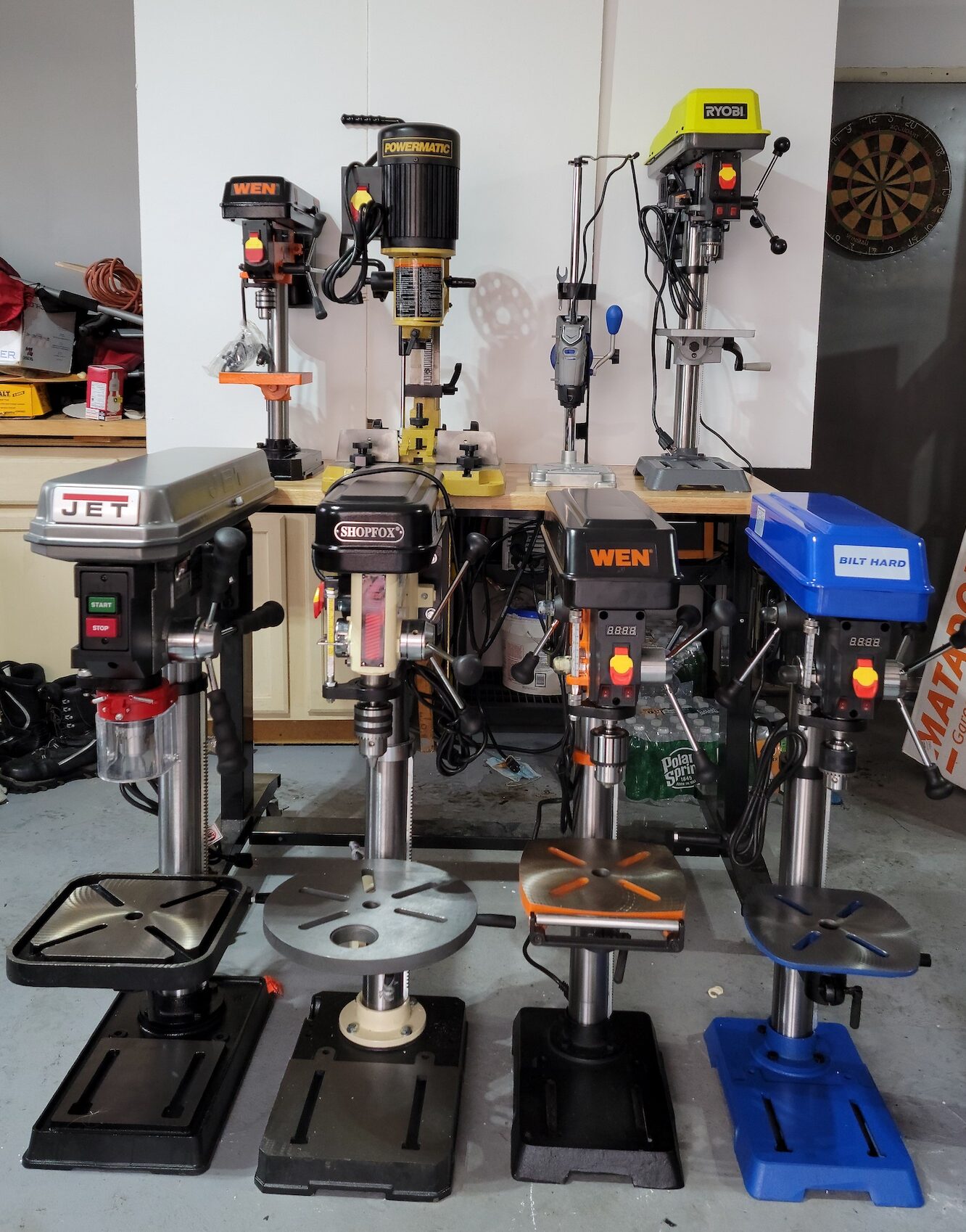
- Laser guides: Both brands offer laser alignment on some models, but Wen’s lasers tend to be brighter and easier to adjust.
- LED work lights: Some Wen models include them, while Ryobi usually does not.
- Digital speed readout: Exclusive to some Wen models, this helps with accuracy.
- Key storage and onboard chuck key: Both brands offer this, though Wen’s storage is often more secure.
Credit: www.bobvila.com
Price And Value
For most buyers, price is a big factor. Both Ryobi and Wen are in the affordable range, but there are differences in what you get for your money.
- Ryobi drill presses: Usually cost $130–$180 for benchtop models.
- Wen drill presses: Range from $100 (smallest model) to $300+ (for bigger benchtop/floor presses).
Wen offers more models at different prices, so you can pick exactly what you need. Ryobi keeps things simple but may feel limited if you want more options.
When you compare similar models, Wen often gives you more features (like longer spindle travel or extra speeds) for the same price or just a bit more. For shoppers who want the best value, Wen usually wins.
Performance In Real-world Use
You don’t want a drill press just to look good on paper. How do Ryobi and Wen perform in real workshops? Here’s what users and experts say.
Drilling Wood
Both Ryobi and Wen do well with softwoods and hardwoods. If you’re making furniture, shelves, or crafts, either brand can handle it. Wen’s higher power and longer spindle travel on some models make it easier to drill deeper holes or use larger bits.
Drilling Metal
This is where the difference shows. Ryobi can drill through thin steel or aluminum, but the lower power means you need to go slow and use small bits. Wen’s stronger motors and better low-speed control make it more comfortable for metal jobs.
A common mistake for beginners: using high speed on metal. Wen’s extra-low RPM settings reduce heat and bit wear, which is critical for metalwork.
Precision And Vibration
Precision depends on the stability of the press and the quality of the chuck. Wen presses are usually heavier, and that extra mass cuts down on vibration. Ryobi models can work loose over time, especially if not bolted down.
Another non-obvious insight: the quality of the chuck matters a lot. Wen’s chucks on higher-end models grip bits tighter and have less runout (wobble), which means cleaner, more accurate holes.
Noise And Comfort
Both brands make some noise, but Ryobi motors often sound rougher at high speeds. Wen’s belt system is smoother and quieter, especially in the mid- to high-range models.
Reliability And Durability
No one wants a tool that breaks after a few uses. While both Ryobi and Wen are budget brands, there are differences in how their drill presses age.
Ryobi
Ryobi’s warranty is typically 3 years, which is good for the price. But some users report issues with plastic parts breaking, especially on adjustment levers and belt covers. Ryobi’s motor can overheat if pushed too hard for long periods. For occasional home use, these are minor issues.
For frequent or heavy use, they can add up.
Wen
Wen offers a 2-year warranty, but their customer service is known for being responsive. Replacement parts are easy to find. Wen’s cast iron parts and thicker columns help them last longer, even in busy workshops. Users often mention their Wen drill presses lasting 5–10 years or more with basic care.
A practical tip: always keep your drill press clean, lubricate moving parts, and never force the motor. This helps both brands last much longer.
Range Of Models And Flexibility
When it comes to choices, Wen is far ahead. They offer everything from compact 8-inch presses for hobbyists to 15-inch floor models for serious woodworkers.
Ryobi keeps things simple, with one main benchtop model (the DP103L) and a few older, harder-to-find floor models.
Here’s a quick look at the range:
| Brand | Smallest Model | Largest Model | Special Features |
|---|---|---|---|
| Ryobi | 10-inch benchtop | 12-inch floor (rare) | Laser guide, tilt table |
| Wen | 8-inch benchtop | 17-inch floor | Digital readout, crank lift, LED, laser |
This matters because your needs may change. Maybe you start with small projects, but later want to drill bigger holes or work with metal. Wen’s wider selection makes it easier to upgrade without changing brands.
Customer Support And Parts Availability
Even the best drill press needs a replacement part or service sometimes. Ryobi and Wen have different strengths here.
- Ryobi: Sold at big stores like Home Depot, so you can often get help in person. Replacement parts can be tricky to find online, especially for older models.
- Wen: Excellent online support and parts store. Many users report quick responses from Wen’s support team, and parts for even old models are usually available.
This is important for long-term use. If you plan to keep your drill press for years, good support makes a big difference.
Who Should Choose Ryobi?
Ryobi is best for:
- Beginners who want a simple, affordable tool
- Light woodworking, crafts, and small metal projects
- People who want to buy in-person from big retailers
- Users who value a long warranty (3 years)
If you just need a basic drill press for occasional use and don’t plan to push it hard, Ryobi is a solid choice. Its easy setup and clear manual make it good for those new to power tools.
Who Should Choose Wen?
Wen is better for:
- Users who want more power and flexibility
- People who plan to drill metal, thick wood, or use large bits
- Those who want more choices and upgrade options
- Users who value extra features (digital speed, LED light, crank lift)
- Anyone who wants good support and parts availability
If you want a drill press that can grow with your skills, Wen is the better long-term investment. The extra features and better build quality are worth a little more money.
Common Beginner Mistakes When Buying A Drill Press
- Ignoring spindle travel: Many buyers only look at swing (how wide a board fits under the chuck) and forget about spindle travel (how deep it drills). For deep holes, more spindle travel is better.
- Overlooking speed range: If you plan to drill metal, low RPM is crucial. Some presses start at 600–700 RPM, which can be too fast for steel.
- Forgetting about stability: A heavier drill press is usually better, as it cuts vibration. Lightweight presses can “walk” on the bench during use.
- Not checking table features: A crank lift or larger table makes precise work much easier, especially for repeated drilling.
- Choosing only by price: The cheapest drill press often has fewer features and lower build quality. Spending a little more can save frustration.
Real User Experiences
Many woodworkers and hobbyists have shared their experiences with both Ryobi and Wen. Here are some insights:
- A DIY furniture maker found that her Wen 4214 handled thick oak much better than her old Ryobi. The deeper spindle travel let her drill all the way through table legs without flipping the piece.
- A high school shop teacher said he chose Wen because replacement parts were easy to order, which kept the presses running even after heavy student use.
- A hobby metalworker said the digital speed readout on his Wen helped him avoid burning up drill bits—a feature his Ryobi didn’t have.
These stories show that real-world needs can make one brand a better choice, depending on your projects.
Comparing Popular Models: Ryobi Dp103l Vs Wen 4210t
Let’s take two of the most popular benchtop models and see how they compare side by side.
| Feature | Ryobi DP103L | Wen 4210T |
|---|---|---|
| Motor Power | 1/4 HP | 1/3 HP |
| Speed Settings | 5 (570–3050 RPM) | 5 (600–3100 RPM) |
| Swing | 10 in | 10 in |
| Spindle Travel | 2 in | 2.5 in |
| Table Size | 6.5 x 6.5 in | 7-5/8 x 7-5/8 in |
| Laser Guide | Yes | Yes |
| LED Light | No | Yes |
| Weight | ~42 lbs | ~51 lbs |
| Warranty | 3 years | 2 years |
| Price | $140–$180 | $150–$190 |
As you can see, the Wen 4210T is heavier, has more spindle travel, and includes an LED light. The Ryobi is a bit lighter and has a longer warranty, but lacks some of the extra features.
Credit: wenproducts.com
Final Thoughts: Which Is Better?
Both Ryobi and Wen offer good value for home workshops and light professional use. Ryobi is simpler, usually a bit cheaper, and best for light-duty work or beginners who want a no-fuss tool. Wen stands out for its range of options, extra features, better build quality, and flexibility for future upgrades.
For most people, especially those who want to tackle a wide range of projects, Wen is the better choice. The slightly higher price brings real benefits: more power, deeper drilling, and extra features that make every job easier.
Before you buy, think about the types of projects you’ll do, the materials you’ll use, and whether you want room to grow. If you choose wisely, either brand can serve you well for years.
If you want to see more about how drill presses work and what features matter, check the detailed guide on Wikipedia.
Frequently Asked Questions
What Is The Main Difference Between Ryobi And Wen Drill Presses?
The biggest differences are power, range of models, and extra features. Wen offers more powerful motors, longer spindle travel, and features like digital speed readouts and crank lifts. Ryobi keeps things simpler and is usually a little cheaper but has fewer options.
Can I Use A Ryobi Or Wen Drill Press For Metalworking?
Yes, you can use both for light metalworking. Wen is better for this because it offers lower speed settings and stronger motors, which help prevent bit damage and overheating. Always use proper bits and cutting fluid for metal.
Which Brand Is Better For Beginners?
Ryobi is easier for absolute beginners because of its simple controls and clear manual. But Wen is also beginner-friendly and offers more room to grow if you want to do bigger or more complex projects in the future.
How Important Is Spindle Travel In A Drill Press?
Spindle travel controls how deep you can drill in one pass. More travel is better for thick materials and for projects where you need to drill all the way through. Wen models usually offer more spindle travel than Ryobi.
Are Replacement Parts Easy To Find For Ryobi And Wen?
For Wen, replacement parts are usually easy to order from their website or customer service. Ryobi parts can be harder to find, especially for older models. This makes Wen a better choice for long-term use where parts may be needed.
Choosing the right drill press can make your projects smoother, more accurate, and more enjoyable. Take your time, compare your options, and you’ll find the perfect fit for your workshop.

Credit: www.youtube.com