If you work with metal, wood, or other tough materials, you know how important drill bits are. Choosing the right drill bit can make your job faster, easier, and safer. Two popular choices for professionals and hobbyists are M2 drill bits and M35 drill bits. But what makes them different? Which one is better for your needs?
Let’s explore everything about M2 vs M35 drill bits. You’ll learn how they’re made, their strengths and weaknesses, and when to use each. By the end, you’ll have a clear picture and feel confident about which drill bit to choose for your next project.
What Are M2 And M35 Drill Bits?
M2 drill bits and M35 drill bits are both types of high-speed steel (HSS) drill bits. HSS is a strong material used in many cutting tools. But M2 and M35 have different chemistry, which affects how they perform.
M2 is the most common type of HSS. It offers good toughness, moderate hardness, and a reasonable price. It’s widely used for general-purpose drilling.
M35 is a premium HSS with added cobalt (about 5%). Cobalt makes the bit harder and more resistant to heat. M35 bits are made for tough jobs and last longer when drilling hard metals.
Key Differences Between M2 And M35 Drill Bits
Understanding the differences helps you pick the right bit.
| Feature | M2 Drill Bit | M35 Drill Bit |
|---|---|---|
| Material | High-Speed Steel (HSS) | HSS + 5% Cobalt |
| Hardness (HRC) | ~62 | ~65 |
| Heat Resistance | Moderate | High |
| Durability | Good | Excellent |
| Price | Lower | Higher |
| Best For | General metals, wood, plastics | Stainless steel, hardened steel |
How M2 Drill Bits Are Made
M2 drill bits start with M2 high-speed steel. This alloy contains iron, carbon, tungsten, molybdenum, and vanadium. The process involves:
- Melting and mixing: All elements are melted together and mixed.
- Shaping: The steel is rolled into rods and cut to size.
- Machining: The rods are shaped into drill bits using machines.
- Heat treatment: The bits are heated and cooled to reach the right hardness.
- Finishing: The tips are sharpened, and coatings may be added.
M2 steel offers a balance between toughness and hardness. That means M2 bits can handle some bending and stress without breaking.
How M35 Drill Bits Are Made
M35 drill bits use HSS with 5% cobalt. Cobalt is blended with other metals during the melting stage. The rest of the process is similar to M2:
- The cobalt makes the steel harder and more resistant to heat.
- After machining, M35 bits get special finishing for extra sharpness.
- Some M35 bits have coatings like titanium nitride for even better performance.
Because of cobalt, M35 bits can handle higher temperatures and keep their sharpness longer.
Performance Comparison: M2 Vs M35 Drill Bits
Let’s compare how each performs in real-world tasks.
Strength And Hardness
M2 bits have good hardness (about 62 HRC). They cut most metals, wood, and plastics well.
M35 bits are harder (about 65 HRC). This extra hardness helps them cut through tough metals like stainless steel or cast iron. They also keep their edge longer, so you don’t need to sharpen them often.
Heat Resistance
When drilling, friction creates heat. Too much heat can dull your drill bit.
M2 bits handle moderate heat. But if you drill for a long time, or work with hard metals, they can lose their sharpness.
M35 bits resist heat much better. The cobalt helps them stay sharp, even during heavy-duty drilling. You can drill longer without worrying about damage.
Durability
M2 bits are durable for everyday tasks. They last a long time if you use them with softer metals or wood.
M35 bits are built for tough jobs. They last much longer when used on hard or abrasive materials. Even if you use them daily, they hold up well.
Cutting Speed
Both bits can cut quickly, but M35 bits allow for higher speeds. You can drill faster without overheating or damaging the bit.
Price
M2 bits are affordable. You can buy a set for a low price, making them good for beginners or casual users.
M35 bits cost more because of cobalt and extra processing. They’re an investment for serious users or anyone who drills hard materials often.
When To Use M2 Drill Bits
M2 drill bits are best for:
- General metalwork (mild steel, aluminum, copper)
- Woodworking
- Plastic drilling
- Home repairs
- DIY projects
They’re not ideal for very hard metals or constant, heavy use.
Examples
Suppose you need to drill holes in a mild steel sheet for a home project. M2 bits are perfect. Or, if you’re making furniture and need to drill through wood, M2 bits work great.
A non-obvious tip: M2 bits are good for repetitive drilling in soft materials, as their toughness helps avoid snapping.
When To Use M35 Drill Bits
M35 drill bits shine when you need:
- Drilling stainless steel
- Working with hardened steel
- Cutting cast iron
- Commercial or industrial projects
- Long-lasting performance
They’re not needed for softer materials, as that’s overkill.
Examples
If you’re installing a kitchen sink and need to drill through stainless steel, M35 bits are the right tool. If you work in a factory and drill hard metals daily, M35 will save you time and money.
A practical insight: Using M35 bits on soft materials can sometimes cause the bit to bind, because their sharpness is designed for harder metals.
Common Mistakes When Choosing Drill Bits
Many people make mistakes when picking between M2 and M35:
- Using M2 for hard metals: M2 bits will dull quickly if you drill stainless steel or cast iron. Always use M35 for these.
- Overpaying for M35: If you only drill wood or mild steel, M2 is enough. No need to spend more.
- Ignoring speed and pressure: Drilling too fast with M2 bits can overheat them. With M35, you can use higher speeds, but always use cutting fluid for best results.
- Skipping lubrication: Lubrication helps both types last longer, especially M35 during tough jobs.
- Not matching the bit to the drill: Some drills are too powerful for M2 bits. Always match the bit to your tool.

Credit: www.ebay.com
Drill Bit Coatings: Do They Matter?
Some drill bits have special coatings. These improve performance, but only if matched to your job.
Types Of Coatings
- Black oxide: Adds corrosion resistance and helps reduce friction.
- Titanium nitride (TiN): Makes the bit harder and extends life.
- Cobalt: Not a coating, but part of the steel in M35 bits.
M2 bits often have black oxide or TiN coatings. M35 bits may have TiN for extra durability.
Does Coating Make A Difference?
Coatings help, but the base material matters more. For tough jobs, M35 with TiN is the best choice. For general drilling, M2 with black oxide is enough.
Real-world Data: Drilling Performance
Here’s a comparison from field tests on stainless steel:
| Drill Bit Type | Material | Number of Holes (Before Dull) | Average Speed (RPM) |
|---|---|---|---|
| M2 HSS | Stainless Steel | 8 | 800 |
| M35 Cobalt | Stainless Steel | 24 | 1200 |
| M2 HSS | Mild Steel | 40 | 1200 |
| M35 Cobalt | Mild Steel | 42 | 1200 |
Notice that M35 bits last three times longer in hard metals. In mild steel, the difference is smaller.
Cost Vs Value: Which Bit Is Worth It?
Let’s break down cost and value:
- M2 drill bits: $10–$20 for a set. Good for occasional use, DIY, or soft materials.
- M35 drill bits: $25–$50 for a set. Worth it if you drill hard metals often.
If you use drill bits rarely, M2 is a smart choice. If you need reliability and long life, invest in M35.
Safety Tips For Using M2 And M35 Drill Bits
Safety matters with any tool. Here’s how to use these bits safely:
- Wear goggles: Always protect your eyes.
- Secure your work: Use clamps or a vise.
- Use steady pressure: Don’t force the bit.
- Check speed: Use the right speed for your bit and material.
- Apply lubrication: Especially for M35 bits in hard metals.
- Keep bits sharp: Dull bits can slip and cause injury.
An overlooked safety tip: Clean your bits after use. Metal shavings can cause injury or dull the bit.

Credit: cityofharrah.com
Pros And Cons: M2 Vs M35 Drill Bits
Let’s sum up the advantages and disadvantages.
M2 Drill Bits
Pros:
- Affordable
- Good for soft materials
- Tough and flexible
Cons:
- Dulls quickly in hard metals
- Not ideal for high-speed drilling
- Limited heat resistance
M35 Drill Bits
Pros:
- Excellent for hard metals
- High heat resistance
- Long-lasting
Cons:
- Higher cost
- Can be brittle if misused
- Not needed for soft materials
Choosing The Right Drill Bit: Practical Guidance
Here’s how to decide:
- If you’re a DIYer or work with wood and soft metals, choose M2.
- If you’re a professional or often drill hard metals, go for M35.
- For mixed jobs, keep both types handy.
A useful insight: Having both types in your toolbox saves time and money. Use M2 for everyday jobs, and switch to M35 for tough materials.
Environmental Impact Of Drill Bit Materials
Manufacturing drill bits affects the environment.
- M2 drill bits use less energy and materials, so they’re more eco-friendly.
- M35 drill bits require mining cobalt, which has a bigger environmental footprint.
If you care about sustainability, choose M2 when possible. Use M35 only when needed.
How To Maintain Drill Bits For Longer Life
Proper care keeps your bits sharp and ready.
- Store bits dry: Moisture can cause rust.
- Sharpen regularly: Use a bench grinder or sharpening tool.
- Clean after use: Remove shavings and debris.
- Lubricate during use: Especially for M35 bits.
- Inspect for damage: Cracks or chips mean it’s time to replace.
A tip many miss: Even expensive M35 bits wear out. Don’t keep using a dull bit—it risks damaging your work and tool.
Advanced Applications: Where M35 Bits Really Shine
Some jobs truly need M35 bits:
- Automotive repairs: Drilling into engine parts, frames, or body panels.
- Aerospace: High-strength metals require cobalt bits.
- Industrial manufacturing: Daily drilling in hard alloys.
- Construction: Stainless steel fixtures and fittings.
If your work involves these areas, M35 is not just better—it’s essential.
M2 And M35 Drill Bits In Woodworking
While both are metal-focused, they’re used in woodworking too.
- M2 bits are perfect for wood, offering clean holes and durability.
- M35 bits are rarely needed, but may help with hardwoods or laminates.
Insight: Using M35 bits in wood can be wasteful, as their benefits aren’t needed.
How To Spot Counterfeit Drill Bits
Sadly, fake bits are common. Here’s how to spot genuine M2 and M35 drill bits:
- Check markings: Real bits have clear markings (e.g., “M2 HSS”, “M35 Cobalt”).
- Feel the weight: M35 bits are heavier.
- Check packaging: Reputable brands use quality packaging.
- Look for certifications: Genuine bits may have ISO or DIN numbers.
Fake bits often break or dull quickly. Always buy from trusted suppliers.
How Drill Bit Geometry Affects Performance
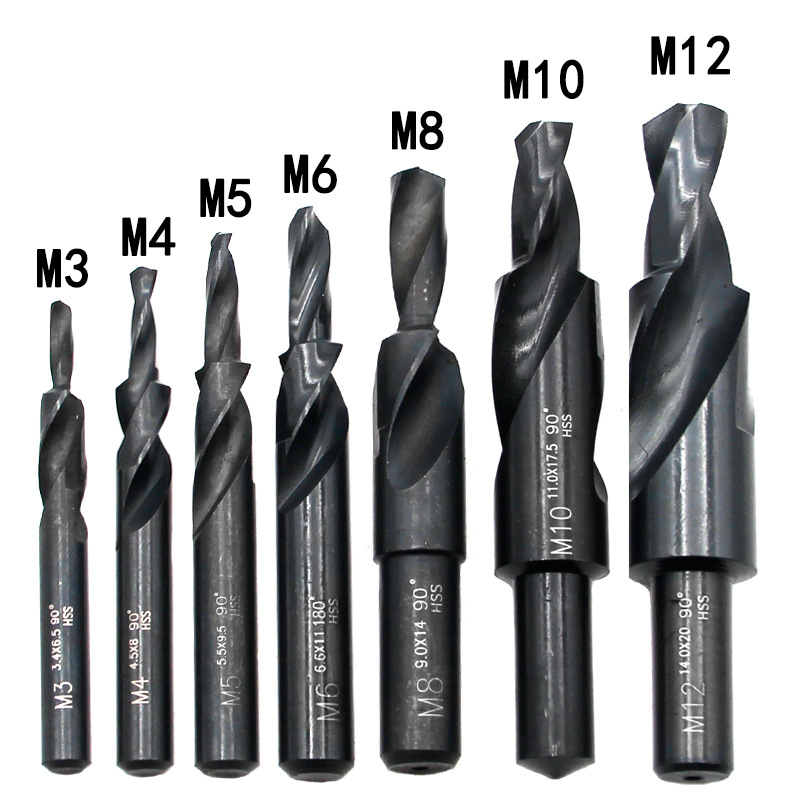
The shape of the bit matters:
- Point angle: Standard is 118°, but 135° is better for hard metals.
- Flute design: More flutes mean faster chip removal.
- Tip style: Split point tips start cutting faster and reduce wandering.
M35 bits often have split point tips and 135° angles for better performance.
Credit: www.mskcnctools.com
Comparing M2 And M35 With Other Drill Bit Types
How Do M2 And M35 Compare To Other Popular Bits?
| Bit Type | Best For | Heat Resistance | Durability | Cost |
|---|---|---|---|---|
| M2 HSS | Soft metals, wood | Moderate | Good | Low |
| M35 Cobalt | Hard metals | High | Excellent | High |
| Carbide | Glass, ceramics | Very High | Very High | Very High |
| Titanium-coated | General purpose | High | Good | Medium |
M2 and M35 cover most jobs, but carbide is needed for stone or glass, and titanium-coated is good for general tasks.
Trusted Brands For M2 And M35 Drill Bits
Some brands are known for quality:
- Bosch
- DeWalt
- Irwin
- Milwaukee
- Dormer
Always check reviews and ratings before buying. The right brand means better performance and safety.
Where To Buy Genuine Drill Bits
Buy from hardware stores or trusted online shops. For more information, you can check Wikipedia to learn about the science behind drill bits and their materials.
Frequently Asked Questions
What Is The Main Difference Between M2 And M35 Drill Bits?
The main difference is material composition. M2 bits are made from regular HSS, while M35 bits have 5% cobalt added. This makes M35 bits harder, more heat-resistant, and better for drilling tough metals.
Can I Use M35 Drill Bits For Wood?
Yes, you can use M35 drill bits for wood, but it’s not necessary. M2 bits are cheaper and work perfectly for wood. Using M35 bits in wood is overkill and may cause the bit to bind.
How Do I Know If My Drill Bit Is M2 Or M35?
Check the markings on the bit or packaging. M2 bits are usually labeled “HSS” or “M2 HSS. ” M35 bits are labeled “Cobalt” or “M35. ” Genuine bits will have clear, stamped markings.
Are M35 Drill Bits Worth The Extra Cost?
If you drill hard metals often, M35 bits are worth the extra cost. They last longer, stay sharp, and save time. For soft materials or occasional use, M2 bits are a smarter, more affordable choice.
How Can I Extend The Life Of My Drill Bits?
You can extend the life by:
- Using cutting fluid during drilling
- Drilling at the right speed
- Cleaning bits after use
- Storing them dry
- Sharpening when dull
With these tips, your bits will last longer and perform better.
Choosing between M2 vs M35 drill bits depends on your job, budget, and how often you drill tough materials. Now you know the facts and can make the best choice for your workshop or toolbox.