Choosing the right cordless drill is not just about picking a brand name. For both professionals and DIY enthusiasts, the right tool makes every job smoother and faster. Two of the biggest names in the power tool world are DeWalt and Milwaukee. Their drills—DeWalt’s 20V Max and Milwaukee’s M18 (18V)—are often compared, but which one fits your needs better? This guide will give you a clear, detailed look at these two popular models, so you can make a confident decision.
Brand Backgrounds: Dewalt And Milwaukee
Before we dive into the features, it helps to know a little about the companies behind the tools.
DeWalt is a well-known American brand, famous for its durable power tools. The company focuses on creating reliable, jobsite-ready products. DeWalt’s tools are often seen on construction sites and in workshops around the world.
Milwaukee has a strong reputation for innovation and rugged tools. Founded in 1924, Milwaukee is popular with professionals who want high-performance and advanced technology. Their tools are designed for long-term use, even in harsh conditions.
Both brands are trusted, but they each approach tool design in their own way.
Understanding The Voltage: 20v Vs 18v
One of the first things that confuses buyers is the voltage. DeWalt’s drills are labeled 20V Max, while Milwaukee’s are 18V. At first, it may seem like DeWalt offers more power, but this is not the full story.
DeWalt’s 20V Max tools and Milwaukee’s 18V M18 tools both use lithium-ion batteries. The difference in numbers comes from how the companies rate their batteries:
- DeWalt 20V Max: The “20V” is based on the maximum voltage right after charging. The actual operating voltage under load is 18V.
- Milwaukee 18V: Milwaukee uses the nominal (average) voltage, which is 18V.
So, in real use, both drills run at about 18 volts. The difference in labeling is more about marketing than real-world power.
Core Features: Side-by-side Comparison
To help you see the main differences quickly, here is a comparison of the most important features:
| Feature | DeWalt 20V Max Drill | Milwaukee M18 Drill |
|---|---|---|
| Voltage | 20V Max (18V nominal) | 18V nominal |
| Battery Type | Lithium-ion | Lithium-ion |
| Max Torque | Up to 530 in-lbs | Up to 725 in-lbs |
| Speed Settings | 2 speeds (0-550 / 0-2,000 RPM) | 2 speeds (0-550 / 0-1,800 RPM) |
| Weight (with battery) | ~3.5 lbs | ~4.0 lbs |
| LED Light | Yes | Yes |
| Chuck Size | 1/2 inch | 1/2 inch |
| Warranty | 3 years | 5 years |
Performance: Power, Speed, And Control
When looking at drills, power and speed are often the first things people compare. These two tools are strong, but there are some differences:
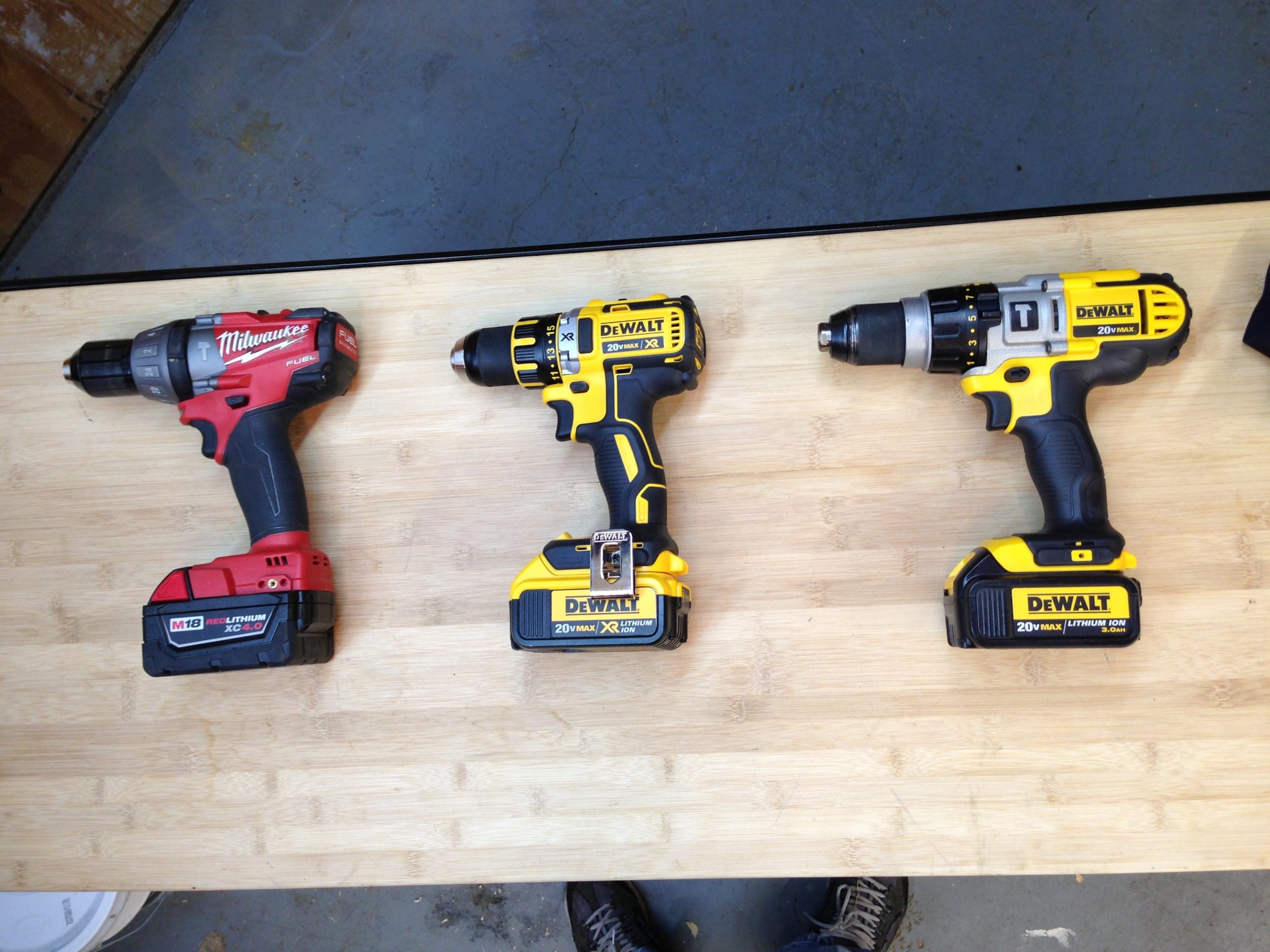
- Max Torque: Milwaukee’s M18 drills usually offer higher torque. For example, the Milwaukee 2804-20 hammer drill delivers up to 1,200 in-lbs of torque, compared to DeWalt’s DCD791D2 at about 530 in-lbs. This extra torque helps when drilling into hard materials or driving large screws.
- Speed Settings: Both brands give you two speed ranges. DeWalt’s top speed can reach 2,000 RPM, while Milwaukee’s is often a bit lower at 1,800 RPM. Higher RPM is useful for drilling, while lower speeds help with driving screws.
- Clutch Positions: Both drills come with many clutch settings, allowing you to control how much force you apply. This helps avoid stripping screws or damaging materials.
A non-obvious insight: Higher torque is not always better for every job. For delicate or precise work, too much power can actually make it harder to control the drill. Some users find DeWalt’s smoother power delivery gives them better control for lighter tasks.
Credit: toolsinaction.com
Battery Life And Charging
Cordless tools are only as good as their batteries. Both DeWalt and Milwaukee use advanced lithium-ion battery systems, but there are some differences:
- DeWalt 20V Max batteries come in different sizes, from 1.5Ah (amp hours) to 5.0Ah and higher. Larger batteries last longer but make the tool heavier.
- Milwaukee M18 batteries also come in many sizes, with some high-capacity “RedLithium” packs that promise longer run time and better performance in cold weather.
Milwaukee’s battery platform is known for its “RedLink Intelligence”, which helps protect the battery and the tool from overheating and overloading. This can extend the life of both the battery and the drill.
Another detail beginners might miss: Battery compatibility. Both companies let you use any 20V Max (DeWalt) or M18 (Milwaukee) battery with any matching tool. This means you can build a whole set of tools around one battery system, saving money over time.
Ergonomics: Comfort And Usability
How a drill feels in your hand can affect your work, especially if you use it for hours. DeWalt and Milwaukee both pay attention to ergonomics, but their designs feel different:
- DeWalt drills are often a bit lighter and have a more balanced grip. Many users say they feel less fatigue using a DeWalt for long periods.
- Milwaukee drills can be a little heavier, but some users prefer the solid, sturdy feel. The handle design is slightly thicker, which may suit larger hands.
Both brands include LED work lights near the chuck, making it easier to see in dark spaces. The placement and brightness are similar, but DeWalt’s light sometimes lasts a few seconds after releasing the trigger, which can be useful.
Durability And Build Quality
Professional users need tools that can survive drops, dust, and tough conditions. Both DeWalt and Milwaukee use reinforced housings and strong chucks, but Milwaukee is often considered the leader for ruggedness. Their drills have a reputation for lasting years, even in daily use.
Warranty is another sign of confidence: Milwaukee offers a 5-year warranty on most M18 drills, while DeWalt offers 3 years. This longer coverage can be important if you rely on your tools for work.
A practical tip: If you work in wet or dirty environments, look for a drill with a sealed switch and electronics. Both brands offer some models designed for extra protection.
Versatility: Tool Ecosystem
One big advantage of cordless drills is the battery platform. Both DeWalt and Milwaukee offer a wide range of tools that use the same batteries.
- DeWalt 20V Max system includes over 200 tools, from drills to saws, lights, and even lawn equipment.
- Milwaukee M18 system has more than 200 compatible tools, including unique options like the M18 Fuel surge hydraulic driver and the PACKOUT storage system.
If you plan to buy more cordless tools in the future, think about which ecosystem has the specialty tools you need.
Price And Value For Money
Cost is always a factor. Both DeWalt and Milwaukee drills are mid-to-high priced, but you can find deals on kits that include the drill, charger, and batteries. Here’s a quick look at typical prices:
| Model | Average Price (Drill + 2 Batteries + Charger) |
|---|---|
| DeWalt 20V Max DCD791D2 Kit | $170 – $200 |
| Milwaukee M18 2801-22CT Kit | $180 – $220 |
Prices change often, and promotions can make one brand much cheaper at times. However, Milwaukee’s higher-end models (like the Fuel line) often cost a bit more than DeWalt’s standard drills.
It’s easy to focus only on the price, but also consider the tool’s lifespan, battery compatibility, and warranty. Sometimes, paying a little more up front saves money in the long run.
Real-world Examples: Which Drill For Which Job?
Let’s look at some typical uses and which brand might fit best:
- Home Repairs and Light DIY: DeWalt’s lighter weight and smooth power make it a favorite for hanging shelves, assembling furniture, or drilling into drywall.
- Heavy Construction: Milwaukee’s higher torque and rugged design shine when drilling through concrete, metal, or for big deck projects.
- Electricians/Plumbers: Both brands offer compact models for tight spaces, but Milwaukee has a few ultra-compact “stubby” models that fit where others can’t.
- Long Projects: If you need a tool that runs for hours, Milwaukee’s RedLithium batteries often last longer between charges, especially in cold weather.
- Precise Work: DeWalt’s clutch system is praised for its fine control, which helps avoid overdriving screws into delicate materials.
User Experience: What Real Owners Say
Looking at specs is helpful, but feedback from real users is even better. Here are some patterns from thousands of reviews:
- DeWalt users often mention the comfortable grip, light weight, and reliability. Many DIYers feel more confident with DeWalt for home projects.
- Milwaukee owners praise the raw power, long battery life, and durability. Professionals who use their drill all day are often Milwaukee fans.
A common mistake: Only reading reviews for one model. Both brands offer several versions—compact, brushless, hammer drill, and more. Be sure to compare similar types before making your final choice.
Motor Technology: Brushed Vs Brushless
Both DeWalt and Milwaukee now offer brushless motor technology in their mid- and high-end drills. Brushless motors are more efficient, last longer, and produce less heat.
- DeWalt brushless models usually have slightly better battery run time and need less maintenance.
- Milwaukee’s “Fuel” line features advanced brushless motors with electronic controls for even more power and efficiency.
If you want the latest technology, look for “brushless” or “Fuel” in the product name.
Accessories And Add-ons
Drills are just the start. Both brands offer:
- Drill/driver bits: Wide variety for wood, metal, masonry.
- Belt clips: Handy for keeping your drill close.
- Side handles: For better control with high-torque jobs.
- Carrying cases: Protect your tool and keep everything organized.
Some kits include extra batteries or special accessories, so check what’s included before you buy.
Safety Features
Powerful drills can be dangerous if not used carefully. Both DeWalt and Milwaukee include safety features like:
- Electric brake: Stops the chuck quickly when you release the trigger.
- Overload protection: Prevents battery or tool damage if you push too hard.
- LED lights: Reduce mistakes in dark spaces.
Milwaukee’s RedLink system adds another layer of protection by monitoring temperature and power use.

Credit: www.reddit.com
Buying Tips: Avoiding Common Mistakes
Many first-time buyers get overwhelmed by choices or marketing claims. Here are some ways to avoid common mistakes:
- Don’t buy the biggest, most powerful drill unless you need it. Heavier tools are tiring for small jobs.
- Check battery compatibility. Make sure any extra batteries or tools you buy will fit your drill’s system.
- Look for deals on kits. Sometimes, buying a kit with a drill, batteries, and charger is cheaper than buying each part separately.
- Read the warranty details. Register your tool after buying to get full coverage.
- Try the tool in your hand if possible. Comfort matters, especially if you use the drill often.
Environmental Impact And Sustainability
Both DeWalt and Milwaukee are working to reduce their environmental impact. Their lithium-ion batteries are recyclable, and both companies have started using more sustainable packaging. However, lithium-ion batteries should never be thrown in the trash—take them to a recycling center or a tool retailer that offers battery recycling.

Credit: www.youtube.com
Summary Table: Key Takeaways
To help you make a quick decision, here’s a summary of the main strengths of each drill:
| Feature | DeWalt 20V Max | Milwaukee M18 |
|---|---|---|
| Best For | DIY, light to medium tasks | Heavy-duty, professional use |
| Weight | Lighter | Heavier |
| Torque | Moderate | High |
| Battery Life | Good | Excellent, especially with RedLithium |
| Warranty | 3 years | 5 years |
| Tool Ecosystem | 200+ tools | 200+ tools |
Making Your Choice: Dewalt 20v Drill Vs Milwaukee 18v
So, which should you pick? If you want a lighter, easy-to-handle drill for home projects or occasional use, DeWalt 20V Max is a great choice. It’s reliable, comfortable, and has a strong ecosystem for DIYers.
If you need a tool for heavy-duty jobs, long run times, or professional use, Milwaukee M18 stands out. The extra torque, longer warranty, and rugged design make it a top pick for demanding users.
Don’t forget the ecosystem: If you already own batteries or tools from one brand, sticking with that system will save you money. Both companies offer lots of compatible tools, so you’re not limited to just drills.
For more detailed technical comparisons and user reviews, you can check out the official DeWalt Power Tools page.
Frequently Asked Questions
What’s The Real Difference Between 20v And 18v Drills?
The main difference is in the way each brand labels its batteries. DeWalt’s 20V Max and Milwaukee’s 18V both use the same number of battery cells, so their real power is almost identical. The 20V number comes from the maximum voltage right after charging, but in use, both run at about 18 volts.
Are Milwaukee And Dewalt Batteries Interchangeable?
No, you cannot use a DeWalt battery in a Milwaukee tool or vice versa. Each brand has its own battery shape and connection system. Always use batteries designed for your tool’s brand and system.
Is A Brushless Motor Worth The Extra Money?
Yes, for most people. Brushless motors are more efficient, last longer, and provide more power. They are especially useful if you use your drill often or for heavy tasks. Over time, the longer life and better performance make up for the higher price.
Which Brand Has Better Customer Support And Warranty?
Milwaukee offers a longer 5-year warranty on most M18 drills, while DeWalt offers 3 years. Both brands have good customer service, but Milwaukee’s longer coverage can be helpful for professionals who rely on their tools every day.
Can I Use My Drill For Masonry Or Concrete?
Both DeWalt and Milwaukee offer hammer drill versions of their main models. These are designed for drilling into harder materials like brick, stone, or concrete. Be sure to use the right drill bits and select a hammer drill if you plan to do this kind of work.
Choosing between the DeWalt 20V Max Drill and the Milwaukee 18V Drill comes down to your personal needs, comfort, and the type of projects you tackle most. Both brands deliver excellent results—your best choice is the one that fits your hand, your work, and your long-term tool plans.