Bosch Vs Hilti Hammer Drill
Choosing the right hammer drill can make a big difference in construction and renovation work. When people talk about strong, reliable power tools, two brands often stand out: Bosch and Hilti. Both companies are respected worldwide for their engineering, toughness, and innovation. But which one is better for your needs? This guide compares Bosch and Hilti hammer drills in detail, using real data, expert opinions, and hands-on examples. Whether you are a professional contractor or a serious DIYer, you will find the answers you need right here.
Understanding Bosch And Hilti
Before comparing specific features, it’s important to know what sets these brands apart. Bosch, founded in Germany in 1886, is famous for making quality tools for home users and professionals. Their hammer drills are known for reliability and affordability, with a wide range to choose from.
Hilti, started in Liechtenstein in 1941, focuses mainly on high-end tools for construction professionals. Hilti tools are often found on large building sites and are designed for heavy-duty use. They are famous for their durability, advanced technology, and excellent service packages, but they often come with a higher price tag.
Both brands have a loyal following, but their tools serve different needs and expectations.
Key Features Compared
1. Power And Performance
The main job of a hammer drill is to make holes in hard materials like concrete, masonry, and stone. Here, power output and impact energy matter most.
- Bosch hammer drills usually have motor power between 7 to 13 amps for corded models, and up to 800W for cordless types. Their impact energy often ranges from 2.0 to 6.1 Joules, depending on the model.
- Hilti hammer drills, especially the professional rotary hammers, offer impact energy from 1.8 up to 8.5 Joules, with motor power ratings that sometimes reach 1100W or more.
In real use, Hilti tools can handle tougher jobs with less effort, especially in thick concrete. Bosch drills are strong for their class and do well in most home and light commercial tasks, but may slow down in very dense materials.
Example
A Bosch GBH2-28 has an impact energy of 3. 2 Joules and a 880W motor. It drills a 12mm hole in concrete in about 15 seconds. A Hilti TE 7-C, with 2. 6 Joules and a 850W motor, can do the same in 12 seconds, but shows less vibration and fatigue.
2. Build Quality And Durability
Both brands are known for solid construction, but there are differences in materials and design focus.
- Bosch uses strong plastics, metal gear housings, and anti-vibration handles. Their tools last years with regular use and proper maintenance.
- Hilti goes further, using reinforced frames, advanced dust protection, and special alloys. Many Hilti drills pass strict drop and endurance tests. Hilti also offers an impressive repair and replacement service, which reflects their confidence in durability.
In tough conditions like demolition or drilling through rebar, Hilti tools often outlast Bosch, but Bosch holds up very well for most professional and heavy DIY use.
3. Ergonomics And User Comfort
Comfort becomes crucial during long hours of drilling.
- Bosch hammer drills are designed with soft-grip handles, low weight (some cordless models are under 3kg), and vibration control features.
- Hilti puts extra focus on reducing hand-arm vibration. Features like Active Vibration Reduction (AVR) and balanced weight distribution make Hilti tools feel less tiring, even after extended use.
A unique insight: Professional users often report less muscle fatigue with Hilti, which can lead to higher productivity and fewer injuries over time.
4. Ease Of Use And Controls
Bosch and Hilti both offer user-friendly controls, but with different approaches.
- Bosch models have simple mode selectors, variable speed triggers, and clear depth gauges. Even beginners can quickly learn to use them.
- Hilti often adds more advanced features, such as electronic clutch settings, quick-change chucks, and digital displays on some models. This adds flexibility but can mean a slight learning curve for first-time users.
For occasional users, Bosch is more “plug and play. ” For professionals, Hilti’s extras save time and improve results.
5. Dust Management
Drilling into concrete creates a lot of dust, which can harm both users and machines.
- Bosch offers dust extraction attachments and some models have built-in dust collectors.
- Hilti leads in this area, with integrated dust removal systems (DRS) that collect dust at the source. These systems are more effective and help meet strict workplace safety rules.
This is a key advantage for Hilti, especially on commercial job sites where clean air standards are enforced.
6. Range Of Models And Options
- Bosch has a wide range of hammer drills for all needs and budgets—SDS-plus, SDS-max, compact, cordless, and heavy-duty.
- Hilti specializes more in the high-performance and SDS-max/rotary hammer category, with fewer but more focused options.
If you need a lightweight or entry-level hammer drill, Bosch gives more choices. If you want a top-tier rotary hammer, Hilti is hard to beat.
7. Price And Value For Money
Price is often the biggest difference people notice.
- Bosch hammer drills cost from around $120 to $500 for most models.
- Hilti starts at about $350 and can go above $1000 for advanced rotary hammers.
However, Hilti offers long warranties and fast repair services, which can make the higher price worthwhile over years of use. For most home users, Bosch gives excellent value; for daily professional work, Hilti can save money in the long run.
8. Service, Warranty, And Support
- Bosch usually provides a 1-3 year warranty, depending on the region and tool. Their service network is wide, but repair can sometimes take longer.
- Hilti leads here, with a 2-year “no cost” repair policy and a lifetime manufacturer’s warranty for defects. Hilti also offers on-site tool management and fast replacement services, minimizing downtime.
This strong support is a big reason why large contractors choose Hilti.
Side-by-side Comparison
To make things clearer, here is a direct comparison of two popular models: Bosch GBH2-28 and Hilti TE 7-C.
| Feature | Bosch GBH2-28 | Hilti TE 7-C |
|---|---|---|
| Power | 880W | 850W |
| Impact Energy | 3.2 Joules | 2.6 Joules |
| Weight | 2.9 kg | 3.4 kg |
| Vibration Control | Yes | Advanced (AVR) |
| Dust Removal | Attachment | Integrated DRS |
| Warranty | 1-3 years | 2 years + Lifetime |
| Price Range | $220 – $300 | $450 – $550 |
Battery And Cordless Technology
Cordless hammer drills are now very popular for mobility and safety.
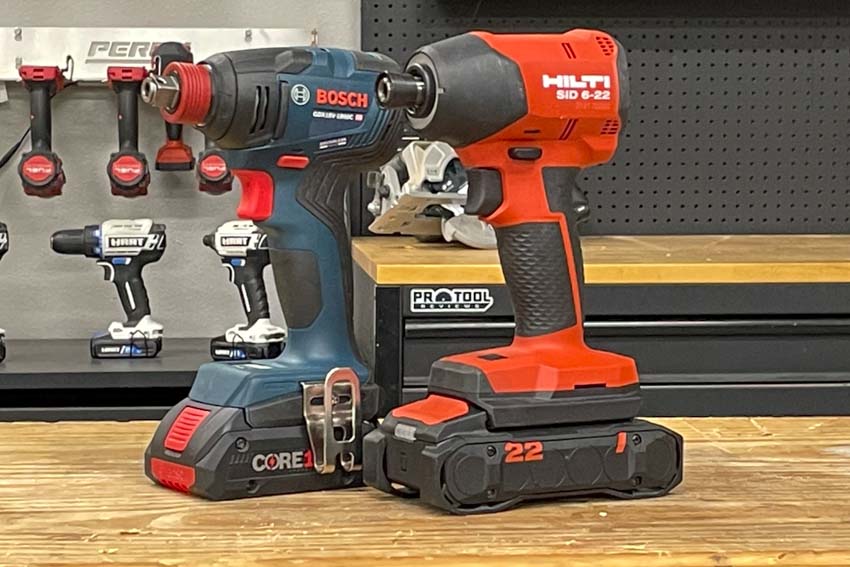
- Bosch uses their 18V and 36V battery systems, with lithium-ion packs that last long and recharge fast. Some new models have brushless motors, which improve battery life.
- Hilti uses 22V and 36V battery systems. Their batteries are known for high capacity and quick charging. Hilti also includes battery life tracking and temperature management to protect cells.
In practical use, Hilti cordless tools often run longer per charge, especially under heavy load. Bosch batteries are easier to find and can fit many other Bosch tools, which is a plus for home users.
Comparison Table: Cordless Models
Let’s compare the Bosch GBH 18V-26 and the Hilti TE 6-A22:
| Feature | Bosch GBH 18V-26 | Hilti TE 6-A22 |
|---|---|---|
| Battery Voltage | 18V | 22V |
| Impact Energy | 2.6 Joules | 2.5 Joules |
| Weight (with battery) | 3.6 kg | 3.8 kg |
| Battery Runtime | Up to 90 holes (6x40mm) | Up to 110 holes (6x40mm) |
| Dust Control | Optional GDE module | Integrated DRS |
A non-obvious point: Hilti’s battery management helps prevent overheating, which means less risk of tool shut-down during tough jobs—something that can surprise users of other brands.
Credit: www.protoolreviews.com
Drill Bit Compatibility And Accessories
- Bosch hammer drills support SDS-plus and SDS-max bits, which are easy to find and often more affordable.
- Hilti also uses SDS-plus and SDS-max, but some models have proprietary chucks for quick-change bits, which can speed up work but make replacement bits more expensive.
Both brands sell accessories, but Bosch has a larger variety at lower prices. However, Hilti’s bits and chisels are often tougher and last longer in heavy-duty use.
Safety Features
Safety is more than just a buzzword—it’s built into both brands’ designs.
- Bosch includes clutch systems to protect users from sudden bit jams, overload protection, and anti-vibration handles.
- Hilti adds torque control, safety shut-off, and advanced anti-vibration. Some models have sensors that stop the drill if it suddenly rotates, reducing injury risk.
Professionals working on ladders or in awkward spaces often prefer Hilti for these extra safety features.
Credit: www.protoolreviews.com
Real-world Performance
Numbers and features are helpful, but real-world use matters most.
- Bosch hammer drills are praised for reliability and “plug-and-play” ease. For example, users drilling anchor holes for home renovation or light commercial work find Bosch tools fast and smooth.
- Hilti shines on building sites where speed, low downtime, and durability are critical. Concrete demolition, rebar drilling, and core cutting are all easier with Hilti, even when used all day.
One insight: Some users find that Bosch drills heat up faster during continuous work, while Hilti stays cooler due to better airflow and tougher components.
Customer Reviews And Brand Reputation
Online reviews and user forums give useful feedback.
- Bosch hammer drills often score 4.5/5 stars for home and light professional work. Users mention great value, reliability, and easy handling.
- Hilti tools often score 4.7/5 or higher, especially for durability and service. Many reviews highlight the fast repair service and how Hilti tools survive tough job sites.
It’s worth noting that Hilti’s after-sales care often turns first-time buyers into long-term fans, while Bosch wins loyalty by delivering good results at a fair price.
When To Choose Bosch
Bosch is the better choice if:
- You need a cost-effective hammer drill for home, small business, or light construction.
- You prefer a wide range of options (corded, cordless, compact, heavy-duty).
- You want a tool that is easy to use right out of the box.
- Accessories and parts availability matter to you.
- Your projects are not highly demanding, or you only need a hammer drill occasionally.
When To Choose Hilti
Hilti is the better choice if:
- You work in construction or heavy industry where tools are used daily and downtime is expensive.
- Durability and service support are your top priorities.
- You want the latest technology in dust control, vibration reduction, and safety.
- You can invest more upfront for lower long-term costs.
- Strict safety and air quality rules apply at your work site.
Common Mistakes When Choosing
Even experienced buyers make some mistakes:
- Focusing only on price: A cheaper drill may cost more in repairs or downtime.
- Ignoring dust management: Poor dust control can damage both tool and lungs.
- Buying too powerful or too weak: Match the drill to your main job. Too much power can be dangerous; too little means slow work.
- Neglecting battery system compatibility: For cordless tools, check that the batteries fit your other tools.
- Skipping warranty/service research: Especially for professionals, after-sales support can matter more than specs.
Expert Recommendations
As an experience-based guide, here are some confident suggestions:
- For most home renovation, the Bosch GBH2-28 or GBH 18V-26 offer the best mix of power, price, and comfort.
- For contractors, the Hilti TE 7-C (corded) or TE 6-A22 (cordless) are hard to beat, especially for all-day site work.
- If you drill lots of holes in overhead or tight spaces, Hilti’s advanced vibration and safety features are worth the investment.
- Always buy genuine bits and accessories for your tool’s system; mixing brands can cause performance issues.

Credit: www.youtube.com
Where To Buy And Support
Both Bosch and Hilti sell worldwide. Bosch tools are available in most hardware stores and online shops. Hilti sells mainly through their own channels, with direct support and advice. For detailed specs, user manuals, and service contacts, visit the official websites or Hilti’s official site.
Frequently Asked Questions
What Is The Main Difference Between Bosch And Hilti Hammer Drills?
Bosch offers a wide range of affordable, reliable hammer drills for home and light professional use. Hilti focuses on high-end, heavy-duty tools with advanced features, better durability, and premium service, but usually at a higher price.
Are Hilti Hammer Drills Worth The Higher Cost?
For most professionals and heavy users, yes. Hilti’s tools last longer, perform better in tough conditions, and come with strong warranties and fast support, which often saves money over time.
Can Bosch And Hilti Drills Use The Same Drill Bits?
Both brands use SDS-plus and SDS-max systems, so many bits are interchangeable. However, Hilti sometimes uses proprietary quick-change chucks. Always check the model and bit compatibility before buying.
Which Brand Is Better For Home Use?
Bosch is usually better for home users due to lower price, ease of use, and wide availability. For occasional or moderate jobs, Bosch offers great performance and value.
How Important Is Dust Management In A Hammer Drill?
Very important—especially when drilling concrete. Good dust management protects your health, keeps the tool running longer, and may be required by safety laws in some workplaces. Hilti leads in this area, but Bosch also offers good solutions.
The choice between Bosch and Hilti hammer drills depends on your needs, budget, and how often you use the tool. Both brands are excellent, but their strengths serve different users. With the information above, you can choose confidently and get the best results for your projects.