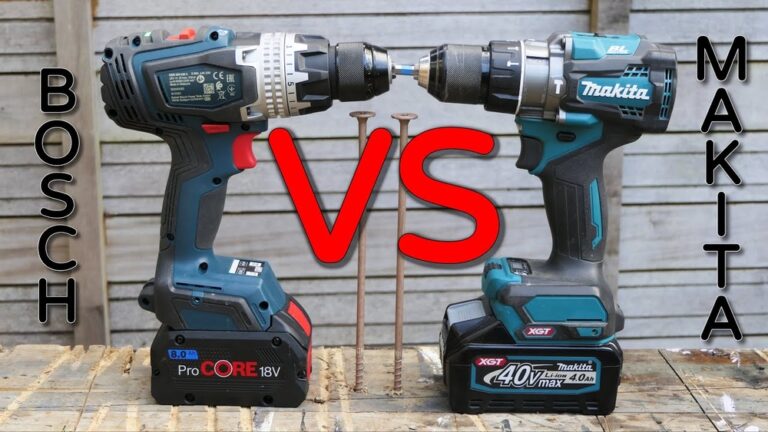
Bosch Vs Dewalt Cordless Drill: Which One Should You Choose?
Buying a cordless drill can feel overwhelming, especially when you’re choosing between top brands like Bosch and DeWalt. Both are giants in the power tool world. Their drills are trusted by professionals, DIY hobbyists, and first-time users. But which one is right for you? The answer depends on your needs, your budget, and the specific features you value.
This guide compares Bosch and DeWalt cordless drills from every angle: power, battery life, design, build quality, price, and more. You’ll learn not just the specs, but how these factors affect real-world use. Whether you want a drill for home repairs, woodworking, or construction, this article will help you make a confident choice.
Brand History And Reputation
Understanding the background of each brand helps you trust your purchase. Both Bosch and DeWalt have been in the industry for decades. But their histories and approaches are quite different.
Bosch is a German company, founded in 1886. It’s known for its engineering precision and innovation. Bosch’s tools are famous for reliability, especially in Europe and Asia. The company invests heavily in research, often bringing new technology to the market first.
DeWalt is an American brand, established in 1924. It’s popular in North America and known for rugged, jobsite-ready tools. DeWalt focuses on power and durability. Many professionals in construction trust DeWalt for heavy-duty work.
Both brands have strong reputations, but their styles differ. Bosch leans toward precision and user comfort, while DeWalt emphasizes raw power and toughness.
Drill Lineup Overview
Both brands offer a wide range of cordless drills. Understanding their main product lines can save you time during selection.
Bosch Cordless Drill Series
Bosch divides its drills into two main lines:
- Bosch Professional (Blue Series): Designed for trade professionals. More durable, higher power, better batteries.
- Bosch DIY (Green Series): Aimed at home users. Lighter, simpler, and more affordable.
Bosch drills are also labeled by voltage: 12V, 18V, and sometimes 36V. Most users choose 18V for the best balance of power and weight.
Dewalt Cordless Drill Series
DeWalt organizes its drills mainly by voltage:
- DeWalt 12V XR: Compact, light, good for light-duty tasks.
- DeWalt 20V MAX: The most popular line. Strong, versatile, and widely available.
- DeWalt FLEXVOLT (60V MAX): For heavy-duty use. Expensive and powerful.
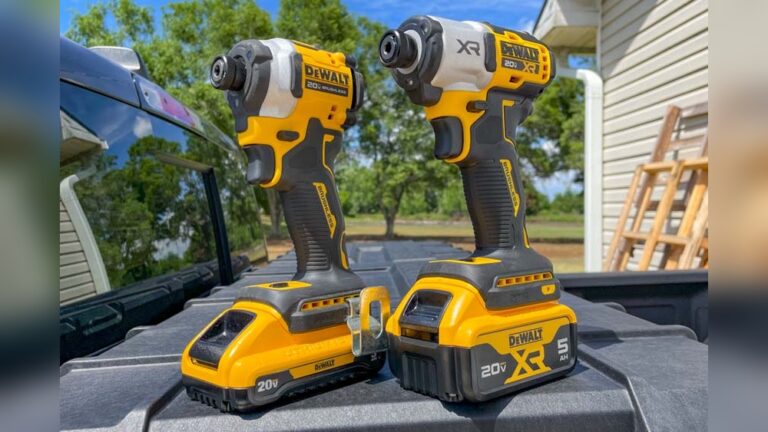
DeWalt also labels some drills as Atomic (compact and light) and XR (extended runtime, brushless motors).
Power And Performance
The main reason people buy a cordless drill is for power. But power means more than just high voltage. It’s a mix of torque, speed, and motor efficiency.
Let’s compare typical Bosch and DeWalt 18V/20V drills:
| Feature | Bosch 18V Brushless | DeWalt 20V MAX XR |
|---|---|---|
| Max Torque | ~600 in-lbs | ~820 in-lbs |
| No-Load Speed | 0-1,900 RPM | 0-2,000 RPM |
| Motor Type | Brushless | Brushless |
| Hammer Function | Available | Available |
DeWalt usually wins for raw torque and speed. This means it can handle tougher materials and larger drill bits. Bosch, while slightly lower in peak torque, still offers enough power for most tasks.
Non-obvious insight: Many beginners think more torque is always better. But too much torque can strip screws or damage workpieces, especially in delicate materials.
Another key point: DeWalt’s 20V MAX line is actually an 18V system (measured differently from Bosch’s 18V). The real-world power is quite similar.
Battery Technology And Runtime
Cordless drills depend on their batteries. Bosch and DeWalt use lithium-ion batteries, but there are important differences.
Battery Options
Bosch 18V batteries are available in sizes from 2. 0Ah (light, short runtime) up to 8. 0Ah (heavy, long runtime). DeWalt 20V MAX batteries range from 1. 5Ah to 12. 0Ah.
Both brands offer smart batteries with built-in protection and charge indicators.
Runtime
A drill’s runtime depends on battery capacity, motor efficiency, and the work you’re doing.
| Battery Size | Bosch (Drilling 1/4″ holes in pine) | DeWalt (Drilling 1/4″ holes in pine) |
|---|---|---|
| 2.0Ah | ~80 holes per charge | ~85 holes per charge |
| 5.0Ah | ~200 holes per charge | ~210 holes per charge |
The difference in runtime is usually small. DeWalt’s batteries are compatible across many tools, which is helpful if you own other DeWalt products.
Non-obvious insight: Battery compatibility matters more than most beginners realize. If you already own tools from one brand, sticking with that brand saves money on extra batteries and chargers.
Ergonomics And Design
A drill might be powerful, but if it feels uncomfortable, you won’t use it as often. Ergonomics—how the tool feels in your hand—makes a big difference.
Size And Weight
Bosch drills are known for being compact and well balanced. Many Bosch models are lighter than DeWalt equivalents, thanks to slimmer designs and smaller motors.
DeWalt drills, especially the XR and FLEXVOLT lines, tend to be heavier and bulkier. This is because they’re built for toughness and longer runtime.
Grip And Controls
Bosch uses a slim, contoured grip. Many users with smaller hands prefer Bosch for its comfort during long jobs. The trigger is smooth and easy to control.
DeWalt features a thick, rubberized grip. It fits well for large hands and provides good slip resistance, even with gloves on. The clutch and speed settings are easy to change, but some find them stiffer than Bosch’s.
Led Lighting And Extras
Most modern models from both brands include an LED work light near the chuck. DeWalt’s lights are often brighter and stay on longer after releasing the trigger.
Bosch sometimes adds extra features like a belt clip, onboard bit storage, or a battery level display.
Example: If you’re working in tight spaces—inside cabinets, under sinks, or in cars—a compact Bosch drill often fits better.
Durability And Build Quality
A cordless drill is an investment. You want it to last for years, even with tough use.
DeWalt is famous for its rugged construction. Many models have all-metal gearboxes, reinforced chucks, and thick plastic housings. DeWalt tools often survive drops, dust, and jobsite abuse.
Bosch also builds tough tools, but with a focus on smart design. Instead of making everything heavier, Bosch uses high-grade plastics, strong but light metals, and sealed electronics. Their drills are durable, but sometimes feel less “tanky” than DeWalt.
Both brands offer brushless motors on most mid-range and high-end models. Brushless motors last longer and need less maintenance.
Practical tip: If you know your tool will take a lot of abuse—dropped from ladders, tossed in a truck—DeWalt is usually the safer bet.
Price And Value
Price is often the deciding factor, especially for home users.
Cost Of Drill Kits
A typical Bosch 18V brushless drill kit (with two batteries and charger) costs $120–$180.
A DeWalt 20V MAX XR kit with similar specs costs about $140–$200.
Bare tools (no battery or charger) are cheaper, around $80–$120 for both brands.
Value For Money
Bosch gives you slightly more for your money at the lower end—more compact design and often a hard case. DeWalt kits usually include a better bag and higher capacity batteries.
Common mistake: Many buyers focus only on the drill’s price. But batteries are expensive! Check if extra batteries or chargers are included in the kit.
Warranty
DeWalt usually offers a 3-year limited warranty on tools and 1 year free service. Bosch gives a 1-year warranty on tools (extendable to 3 years if you register online in many regions) and 2 years on batteries.
Features And Technology
Both brands include modern features, but each has unique strengths.
- Bosch highlights: Compact Flexiclick system (drills with swappable heads), KickBack Control (safety shutoff if the drill binds), Electronic Cell Protection for batteries.
- DeWalt highlights: Tool Connect (Bluetooth tracking), Precision Drive mode (for delicate work), heavy-duty hammer function on many models.
Example: If you work with lots of attachments—right-angle heads, offset chucks—Bosch’s Flexiclick is a real advantage.
Drill Types And Uses
Not all cordless drills are the same. You’ll find three main types from both brands:
- Drill Driver: For drilling holes and driving screws. No hammer action. Best for wood, plastic, and soft metals.
- Hammer Drill: Adds hammering action for masonry and concrete. Heavier, more expensive.
- Impact Driver: Not a drill, but often confused with one. Uses concussive force for driving long screws and bolts. Both brands make excellent impact drivers.
Bosch and DeWalt both offer combo kits that include a drill and an impact driver.
Practical advice: For most home and DIY work, a standard drill driver or a compact hammer drill is enough. Only choose an impact driver if you often assemble decks, fences, or work with long screws.
Real-world Performance
Specs are important, but how do these drills perform on the job?
Drilling In Wood
Both brands handle wood easily. DeWalt’s higher torque makes it better for large holes (e. g. , 1” spade bits in 2x4s). Bosch feels lighter and less tiring for repeated drilling.
Driving Screws
Bosch’s smoother trigger and lighter weight help with control for delicate screws (like cabinet hinges). DeWalt’s torque can be overkill, sometimes stripping screws if you’re not careful.
Drilling In Masonry
DeWalt’s hammer drills perform better in concrete and brick. The extra power and hammer intensity save time, especially with larger bits.
Battery Swapping
DeWalt’s batteries are easier to swap quickly. They’re also compatible with a huge range of tools—over 200 in the 20V MAX line.
Bosch’s battery system is reliable, but not as widespread in the US.

Credit: www.youtube.com
Accessories And System Compatibility
A cordless drill is only part of a bigger tool system. Batteries, chargers, bits, and cases all matter.
- DeWalt: Huge 20V MAX ecosystem. If you already own a DeWalt saw, grinder, or impact driver, sticking with DeWalt saves money.
- Bosch: Smaller in the US, but very strong in Europe and Asia. Bosch accessories (bits, chucks, attachments) are high quality.
Non-obvious insight: Some Bosch drill kits come with unique accessories (like the Flexiclick system), which can save you money if you need specialty heads.
Customer Support And Availability
Buying a drill is not just about the tool. Support, repairs, and finding parts are important too.
- DeWalt: Excellent support in the US and Canada. Service centers are widespread. Spare parts are easy to find, even for older models.
- Bosch: Good support, especially if you register your tool. Fewer service centers in North America, but strong online support.
Both brands offer online manuals, troubleshooting, and registration for extended warranties.

Credit: www.reddit.com
Common Buyer Mistakes
Many first-time buyers make the same errors when choosing between Bosch and DeWalt:
- Ignoring tool weight: Heavier isn’t always better. Lighter drills are less tiring for overhead or long jobs.
- Overbuying power: Most home users never need the highest torque. Too much power can make the tool harder to control.
- Mismatching batteries: Not all batteries fit all tools. Make sure your drill and any future tools use the same system.
- Focusing only on price: A cheap drill with poor battery life or comfort isn’t a good investment.
- Skipping the warranty: Register your tool for the full warranty. It can save money if something breaks.
Who Should Choose Bosch?
- Users who value compact size and comfort
- People with smaller hands or those who do a lot of overhead work
- DIYers who want a drill for furniture, cabinets, or hobby projects
- Those who already own Bosch tools and batteries
Example: If you’re assembling kitchen cabinets or working in tight spaces, Bosch’s lighter, slimmer drills offer better control and less fatigue.
Who Should Choose Dewalt?
- Professionals in construction, carpentry, or remodeling
- Anyone who needs maximum torque for tough jobs
- Users who want a tool that can survive rough treatment
- Homeowners who plan to build a large collection of power tools
Example: If you’re building a deck or framing a basement, DeWalt’s extra power and rugged build make the work easier.
Side-by-side Comparison: Popular Models
Here’s a direct look at two best-sellers: the Bosch GSR18V-535CN and the DeWalt DCD791D2.
| Feature | Bosch GSR18V-535CN | DeWalt DCD791D2 |
|---|---|---|
| Voltage | 18V | 20V MAX (18V nominal) |
| Max Torque | 535 in-lbs | 460 in-lbs |
| Weight w/ battery | 2.6 lbs | 3.4 lbs |
| Length | 6.3 in | 6.9 in |
| LED Light | Yes | Yes (3-mode) |
| Warranty | 1-3 years | 3 years |
Both are excellent, but Bosch is lighter and shorter—better for tight spaces. DeWalt gives you more lighting options and a longer warranty.

Credit: www.findbuytool.com
Environmental And Safety Considerations
Both brands meet strict safety and environmental standards. Batteries are recyclable, and both companies are working to reduce their environmental impact.
- Bosch: Strong focus on eco-friendly manufacturing. Many factories use renewable energy.
- DeWalt: Offers recycling for batteries and tools at many locations.
Safety tip: Always use the right bit and clutch setting for the job. Many accidents happen when a drill binds or kicks back.
Where To Buy And Price Trends
Bosch and DeWalt drills are available at major retailers like Home Depot, Lowe’s, Amazon, and specialty tool stores.
- DeWalt is often on sale in the US, especially around holidays.
- Bosch deals are more common in Europe and online.
Pro tip: Watch for bundle offers that include extra batteries or accessories for little extra cost.
If you want more in-depth testing data, Pro Tool Reviews regularly compares these brands with hands-on reviews.
Frequently Asked Questions
Which Brand Is More Reliable, Bosch Or Dewalt?
Both are highly reliable, but DeWalt is known for extra durability in tough jobsite conditions. Bosch focuses more on precision and comfort. Reliability depends on how you use and care for your drill.
Can I Use Bosch Batteries In A Dewalt Drill?
No. Bosch and DeWalt batteries are not cross-compatible. Each uses a unique design and voltage system. Always match the battery brand and series to your drill.
Which Cordless Drill Is Better For Beginners?
For beginners, Bosch is often easier to handle due to its lighter weight and simpler controls. DeWalt can be better if you plan to use your drill for heavy-duty work.
Are Brushless Drills Better Than Brushed Drills?
Yes. Brushless motors last longer, need less maintenance, and provide more power and runtime from the same battery. Both Bosch and DeWalt offer brushless models at reasonable prices.
What Should I Look For When Buying A Cordless Drill?
Look for power (torque), battery life, weight, comfort, and warranty. Make sure the drill fits your hand and your main tasks. Don’t forget to check battery and charger compatibility.
Both Bosch and DeWalt make excellent cordless drills. The right choice depends on your needs, your budget, and the tools you already own. Take your time, compare the models, and choose the drill that fits your work style. With either brand, you’ll be investing in quality that will last for years.