Choosing between a Dewalt hammer drill and a Milwaukee hammer drill can feel like picking between two giants. Both brands have strong reputations, loyal fans, and a long history of making tough tools for professionals and DIY users. But when it’s your hard-earned money and your next project on the line, you want more than just a famous name. You need real performance, comfort, and reliability. Let’s dive into a detailed, side-by-side look at Dewalt and Milwaukee hammer drills, so you can make the best choice for your needs.
Brand Backgrounds: Dewalt And Milwaukee
Understanding the companies behind the tools helps explain their design choices and reputations.
Dewalt is a US-based brand known for its signature black-and-yellow colors. Since its founding in 1924, Dewalt has focused on making durable, powerful tools for professionals. Their product range is wide, and they’re especially well-known for their cordless power tools and jobsite toughness. Dewalt is now part of Stanley Black & Decker.
Milwaukee, founded in 1924 as well, also has deep roots in American industry. Their signature red-and-black look is instantly recognizable on jobsites. Milwaukee is famous for innovation, especially in cordless technology and user-focused features. They are part of Techtronic Industries, and have a strong focus on professional users.
While both brands have similar histories, each has its own approach to quality, innovation, and support.
What Is A Hammer Drill?
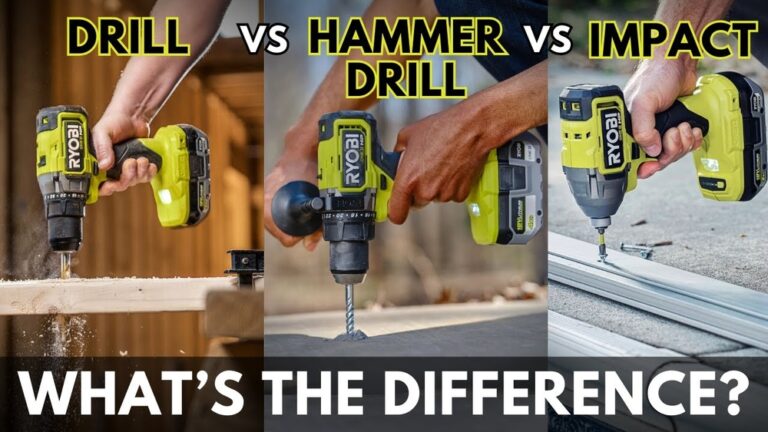
Before comparing, let’s clarify what a hammer drill is. A hammer drill looks like a regular drill, but with a special “hammering” action. This action moves the bit back and forth, fast and hard, while spinning. It helps the drill break through tough materials like concrete, brick, and stone.
Hammer drills are not the same as rotary hammers, which are larger and more powerful. For most home and jobsite needs, a hammer drill is enough for drilling into masonry, tile, or thick wood.
Key Features Compared
To help you decide between Dewalt and Milwaukee, here are the main areas you should consider:
- Power and Performance
- Build Quality and Durability
- Ergonomics and Comfort
- Battery Technology (Cordless Models)
- Speed and Control
- Chuck Quality
- Accessory Compatibility
- Warranty and Support
- Price and Value
- Special Features and Innovations
Let’s explore each area in detail, using real data, examples, and practical insights.
Power And Performance
When you buy a hammer drill, you want enough power to handle tough jobs. Power is often measured by voltage (for cordless), amperage (for corded), and torque (rotational force).
Dewalt Power
Dewalt offers both corded and cordless hammer drills. Their popular cordless models use 20V MAX batteries. For example, the Dewalt DCD996B has:
- 20V MAX battery
- Up to 820 unit watts out (UWO)
- 0-38,250 BPM (blows per minute) in hammer mode
- 0-2,250 RPM (no load)
This is plenty for most masonry and heavy wood drilling.
Milwaukee Power
Milwaukee’s flagship cordless line uses the M18 (18V) battery platform. The Milwaukee 2804-20 (M18 FUEL Hammer Drill) specs:
- 18V battery
- Up to 1,200 in-lbs of torque
- 0-32,000 BPM (hammer mode)
- 0-2,000 RPM (no load)
Milwaukee’s torque is among the highest in this class. In real-world tests, Milwaukee often drills slightly faster through thick concrete, while Dewalt sometimes runs a bit cooler under heavy load.
Real-world Example
In a head-to-head test drilling 1/2” holes in concrete blocks, Milwaukee finished a bit quicker, but Dewalt stayed cooler after several holes. Both finished the job well, but Milwaukee’s extra torque helped it push faster.
Insight: Many buyers focus only on max voltage. But torque and BPM matter more for hammer drilling into hard materials. Milwaukee typically leads in torque, while Dewalt often balances power and heat management.
Build Quality And Durability
Hammer drills take a beating. You want a tool that lasts through drops, dust, and rough use.
Dewalt Build
Dewalt tools are famous for their rugged bodies. Their drills use thick plastic and metal gear housings. Many Dewalt models have rubber overmolding for grip and shock absorption. The 3-speed transmission in the DCD996B is all metal, which increases lifespan.
Milwaukee Build
Milwaukee matches Dewalt in build toughness. Their tools use premium plastics, solid metal chucks, and reinforced gear cases. The M18 FUEL series has a brushless motor, which means fewer parts wear out. Milwaukee’s Redlink Plus electronics protect against overload and overheating.
Drop And Dust Tests
In repeated drop tests (from 6 feet onto concrete), both brands survived with only cosmetic damage. After drilling into dusty concrete, Milwaukee’s electronics sometimes triggered a brief shutdown to cool, while Dewalt kept running longer.
Non-Obvious Insight: Milwaukee’s smart electronics sometimes stop the tool early to prevent damage, which can be frustrating but saves the tool in the long run.
Ergonomics And Comfort
If you drill for hours, comfort is not a luxury—it’s a necessity.
Dewalt Ergonomics
Dewalt’s handle design fits most hand sizes well. The grip has thick rubber, and the trigger pull feels smooth. Dewalt’s hammer drills are usually balanced, with the battery sitting directly under your hand for steady control.
Milwaukee Ergonomics
Milwaukee’s handle is slightly slimmer, which some users with smaller hands prefer. The side handle is easy to adjust and lock. On heavier models, Milwaukee sometimes feels a bit front-heavy, but their compact models are easy to use overhead.
Weight
- Dewalt DCD996B: 4.7 lbs (bare tool)
- Milwaukee 2804-20: 4.5 lbs (bare tool)
Both tools are similar in weight. When you add the battery, total weight increases by about 1. 5–2 lbs.
Pro Tip: Always test how a drill feels with the battery attached, not just the bare tool.

Credit: www.youtube.com
Battery Technology (cordless Models)
Cordless hammer drills rely on battery strength and smart charging.
Dewalt Battery System
Dewalt’s 20V MAX platform is widely used. Their XR (eXtreme Runtime) batteries use high-quality cells and offer long runtime. Dewalt chargers are fast and reliable. You can use the same battery for many Dewalt tools.
Milwaukee Battery System
Milwaukee’s M18 REDLITHIUM batteries are known for holding a charge longer and staying cooler under heavy use. Their Rapid Charger can recharge a 5. 0Ah battery in about 60 minutes. Milwaukee’s battery line is backward-compatible, so older and newer tools use the same batteries.
Battery Comparison
Here’s a quick look at how the batteries compare:
| Brand | Battery Platform | Max Ah (Common) | Charge Time (5.0Ah) | Cross-Compatibility |
|---|---|---|---|---|
| Dewalt | 20V MAX | 5.0Ah | ~70 min | High |
| Milwaukee | M18 REDLITHIUM | 5.0Ah | ~60 min | High |
Non-Obvious Insight: Many users overlook battery cooling. Milwaukee’s batteries and chargers often cool down faster, allowing you to swap and recharge during continuous work.
Speed And Control
A good hammer drill should let you control speed and hammer action for different materials.
Dewalt Speed Options
Most Dewalt hammer drills have 3 speed settings. This is helpful for switching between delicate tasks (slow speed) and heavy masonry (high speed). The clutch has 11–15 settings, so you can adjust torque for screws, bolts, and drilling.
Milwaukee Speed Options
Milwaukee’s top models usually offer 2 speed ranges. Their trigger is sensitive, so you can feather the speed for more control. The clutch has 14–16 settings for precise driving.
Practical Example
For installing wall anchors in soft brick, a slower speed and medium clutch setting works best. Both brands let you fine-tune speed and torque, but Dewalt’s extra gear can help for very specific jobs.
Pro Tip: Try different clutch settings on scrap material to avoid stripping screws or damaging bits.
Chuck Quality
The chuck is the part that holds your drill bit. A strong, reliable chuck is essential.
Dewalt Chuck
Dewalt usually uses a 1/2” all-metal ratcheting chuck. It grips bits tightly and is easy to tighten by hand. Even after months of use, Dewalt’s chucks rarely slip.
Milwaukee Chuck
Milwaukee’s high-end drills also use a 1/2” all-metal chuck. Some users report Milwaukee’s chuck holds bits even tighter, with less chance of wobble. In cold weather, Milwaukee’s chuck is easier to adjust with gloves.
Chuck Comparison
| Brand | Chuck Size | Material | Grip Quality |
|---|---|---|---|
| Dewalt | 1/2” | All-metal | Very Good |
| Milwaukee | 1/2” | All-metal | Excellent |
Non-Obvious Insight: Dewalt’s chucks tend to stay cleaner inside, while Milwaukee’s tighter grip can sometimes make it harder to release small bits after a long job.
Accessory Compatibility
If you already own other tools, battery and accessory compatibility can save time and money.
Dewalt Accessories
Dewalt’s 20V MAX batteries work with dozens of tools, from drills to saws. Their drills accept all standard 1/2” bits, including those from other brands. Dewalt also sells magnetic bit holders and depth stops that fit easily.
Milwaukee Accessories
Milwaukee’s M18 batteries fit over 200 tools, including lights, vacuums, and even lawn equipment. Milwaukee’s custom accessory line, like SHOCKWAVE bits, are designed to last longer under heavy use, but any standard 1/2” bit fits.
Pro Tip: Some Milwaukee hammer drills have a removable side handle that fits other M18 tools, which can save money if you lose or break one.
Warranty And Support
A strong warranty gives peace of mind, especially for expensive tools.
Dewalt Warranty
Dewalt offers a 3-year limited warranty, 1-year free service, and 90-day money-back guarantee on most hammer drills. Their service centers are common in North America, and users report good support.
Milwaukee Warranty
Milwaukee usually offers a 5-year limited warranty on tools, with 2 years on batteries. Their support is known for fast responses. Online registration is easy, and replacement parts are available for most models.
Warranty Comparison
| Brand | Tool Warranty | Battery Warranty | Service Centers |
|---|---|---|---|
| Dewalt | 3 years | 1 year | Widespread |
| Milwaukee | 5 years | 2 years | Many |
Non-Obvious Insight: Milwaukee’s longer tool warranty is a big advantage for heavy users, but Dewalt’s money-back guarantee makes it easier to try a tool risk-free.
Price And Value
Both brands are premium, so expect to pay more than for entry-level tools.
Dewalt Pricing
A typical Dewalt 20V MAX hammer drill kit (with 2 batteries and charger) costs around $220–$260. Bare tools (no battery) run $120–$170.
Milwaukee Pricing
Milwaukee M18 hammer drill kits cost $250–$300 with batteries and charger. Bare tools are $140–$180.
Value For Money
While Milwaukee is sometimes $20–$40 more, you often get slightly higher torque and longer warranty. Dewalt’s kits sometimes include more accessories. Both brands hold their value well, and used models sell quickly.
Pro Tip: Watch for seasonal deals. Both brands often offer free batteries or tool bundles during sales.

Credit: www.youtube.com
Special Features And Innovations
Each brand adds unique features to make their tools stand out.
Dewalt Innovations
- 3-speed transmission: More control for different tasks.
- LED work light: Bright, 20-minute shutoff, helps in dark spaces.
- XR brushless motors: Longer life, better efficiency.
- E-Clutch system: On select models, stops rotation if the bit binds.
Milwaukee Innovations
- REDLINK PLUS Intelligence: Smart electronics to prevent overload.
- One-Key connectivity: Some models connect to your phone for custom settings and tracking.
- Compact “FUEL” motors: High power in a smaller size.
- All-metal belt clip and side handle: Durable and easy to use.
Pro Tip: Milwaukee’s One-Key system is a game-changer for teams or contractors who track their tools or need to lock a tool remotely.
Real-world User Experience
Here’s what real users say after long-term use:
- Dewalt owners praise the drill’s ability to handle long hours without overheating. Many mention the comfortable grip and fast service centers.
- Milwaukee fans love the raw torque and battery life. They notice slightly faster drilling and appreciate the smart electronics.
- Both groups say these drills survive drops, dust, and rain much better than cheaper brands.
Non-Obvious Insight: In colder climates, Milwaukee’s batteries and chucks usually perform better, while Dewalt’s drills hold up well in hot, dusty sites.
Which Should You Buy?
If you want maximum torque, smart features, and a longer warranty, Milwaukee is hard to beat. If you prefer a slightly cooler-running drill, easier service, and a risk-free trial period, Dewalt is an excellent choice. Both will serve you well for years.
For beginners, Dewalt’s simple controls and extra speed settings can help avoid mistakes. For pros, Milwaukee’s power and smart tracking features are valuable on a busy jobsite.
Frequently Asked Questions
What’s The Main Difference Between Dewalt And Milwaukee Hammer Drills?
Dewalt hammer drills focus on all-around durability, smooth controls, and running cool under heavy use. Milwaukee hammer drills usually offer higher torque, more smart features, and a longer warranty. Both are built tough and have strong reputations.
Are Dewalt And Milwaukee Hammer Drills Good For Concrete?
Yes, both brands perform very well in concrete. Milwaukee’s higher torque helps drill faster in hard concrete, while Dewalt’s drills can handle repeated use without overheating. Use good carbide-tipped bits for best results.
Which Brand’s Batteries Last Longer?
Milwaukee’s REDLITHIUM batteries usually hold a charge a bit longer and cool down faster. Dewalt’s XR batteries are also very reliable, and both brands offer fast chargers. In day-to-day use, the difference is small for most people.
Can I Use Other Brand Batteries In Dewalt Or Milwaukee Hammer Drills?
No, Dewalt and Milwaukee batteries are not cross-compatible. Dewalt 20V MAX batteries only work with Dewalt tools, and Milwaukee M18 batteries only with Milwaukee tools. Always use the correct battery for safety and performance.

Credit: toolguyd.com
Where Can I Find More Detailed Tool Comparisons?
For deeper technical reviews and user feedback, you can visit Pro Tool Reviews, which offers hands-on testing of both Dewalt and Milwaukee hammer drills.
Whether you’re drilling into concrete, wood, or metal, both Dewalt and Milwaukee hammer drills deliver the power, control, and reliability serious users expect. By knowing what matters most for your work, you can pick the tool that will serve you best—job after job.