Milwaukee Drill Brushless Vs Fuel: A Complete Guide
Choosing the right power tool can make your work smoother, faster, and even more enjoyable. If you’re looking at Milwaukee drills, you’ll quickly find two words that create confusion for many buyers: Brushless and Fuel. Both terms show up in tool descriptions, but what do they really mean? And, more importantly, which one is right for you?
This article will walk you through everything you need to know about Milwaukee brushless and Milwaukee Fuel drills. We’ll break down what each term means, how the technology works, and how these differences impact real-world performance. You’ll also find data, examples, and tables to make the comparison clear—even if you’re not a tool expert. By the end, you’ll know exactly what to look for and which drill suits your needs best.
Understanding Milwaukee’s Tool Lines
Before comparing brushless to Fuel, it helps to understand how Milwaukee organizes their power tools. This company is known for innovation, but their naming can be confusing at first glance.
Milwaukee has two main categories for their cordless drills:
- Brushless: This means the motor inside the drill does not use brushes.
- Fuel: This is Milwaukee’s premium line, which always has a brushless motor, but adds advanced electronics and better components.
It’s important to know that all Fuel tools are brushless, but not all brushless tools are Fuel. Think of Fuel as the top-shelf version of brushless.
What Is A Brushless Drill?
A brushless drill uses a modern motor design that doesn’t need the carbon brushes found in older tools. This technology offers several benefits:
- Higher efficiency: Less energy is wasted as heat.
- Longer life: Fewer parts wear out over time.
- Lower maintenance: No brushes to replace.
Brushless motors are now common in many brands, including Milwaukee. They are found in both basic and advanced models.
How Brushless Motors Work
Traditional brushed motors use small carbon brushes that touch a spinning part called the commutator. This creates friction, which wastes energy and causes wear.
In a brushless motor, electronics control the flow of electricity. There are no physical contacts, so the motor runs smoother, cooler, and lasts longer.
What Is Milwaukee Fuel?
Milwaukee Fuel is the company’s most advanced tool line. Every Fuel drill is brushless, but there’s more to it:
- RedLink Plus Intelligence: Advanced electronics that protect the tool and battery.
- RedLithium Battery Technology: Special batteries designed for power and durability.
- Premium build: Stronger parts and better sealing against dust and water.
So, a Fuel drill is always brushless, but it also offers extra power, smart features, and better build quality.
Why The Name “fuel”?
Milwaukee uses the word “Fuel” to show that these tools have the best possible combination of motor, battery, and electronics. The goal is to deliver maximum performance and life in demanding situations.
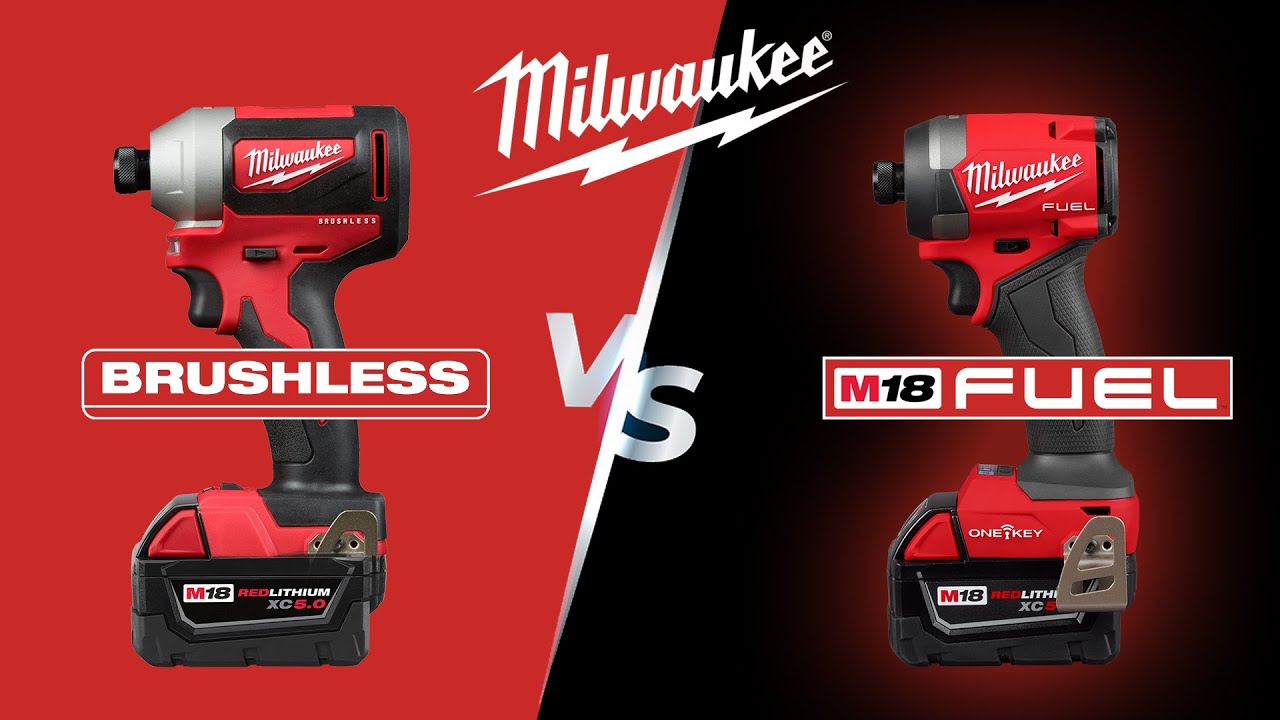
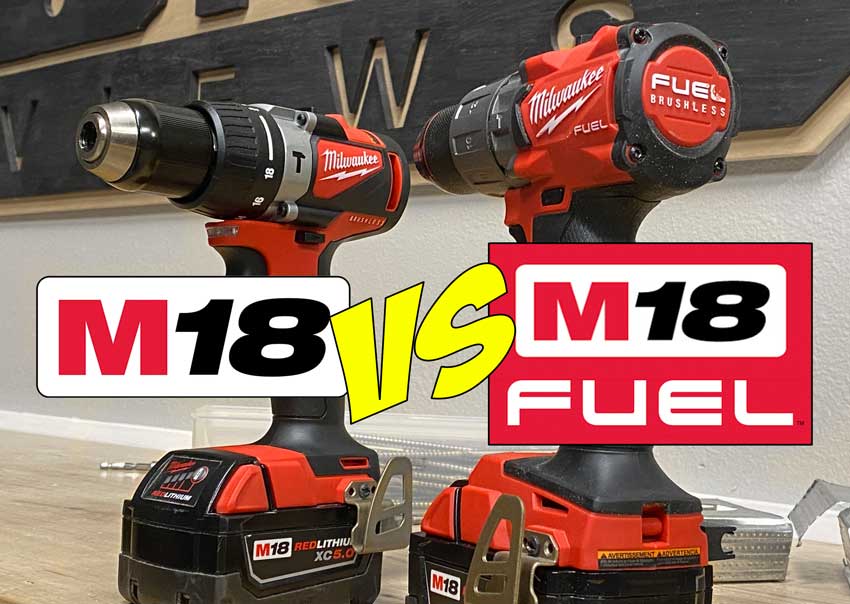
Key Differences: Brushless Vs Fuel
Many buyers wonder: “If Fuel is just a brushless tool, why does it cost more?” The answer comes down to three main areas: electronics, batteries, and construction.
Here’s a look at the most important differences:
| Feature | Milwaukee Brushless | Milwaukee Fuel |
|---|---|---|
| Motor | Brushless | Brushless |
| Electronics | Basic | RedLink Plus (advanced) |
| Battery System | M18 or M12 | RedLithium with added protection |
| Durability | Standard | Enhanced (often metal gear cases, better sealing) |
| Price | Lower | Higher |
| Power Output | Good | Excellent (higher torque and speed) |
Credit: www.youtube.com
Performance: Real-world Testing
For most users, drilling power and run time are the biggest concerns. Milwaukee Fuel drills usually outperform standard brushless models, especially under heavy loads.
Torque And Speed
Fuel models often have more torque (twisting force). For example:
- The M18 Brushless Drill/Driver offers up to 500 in-lbs of torque.
- The M18 Fuel Drill/Driver delivers up to 1,200 in-lbs of torque.
That’s more than double the power, which makes a big difference if you’re drilling large holes or using big bits.
Battery Life
Fuel tools use Milwaukee’s RedLithium batteries, which are designed for longer life and better performance in cold weather. Combined with smart electronics, you’ll notice less slowdown as the battery drains.
Non-Fuel brushless models still have good battery life, but may show more “fade” (loss of power) as the battery gets low.
Durability Under Tough Conditions
Fuel drills are built for jobsite abuse. They usually have:
- All-metal gear cases
- Improved sealing against dust and water
- Better shock protection
If you work in dirty, wet, or rough environments, these features keep your tool running longer.
Cost: Is Fuel Worth The Price?
One of the most common questions is about value for money. Fuel tools usually cost 20–40% more than similar brushless models.
Typical Price Differences
- M18 Brushless Drill Kit: $120–$160
- M18 Fuel Drill Kit: $180–$240
Why pay more? For many homeowners, the extra power isn’t needed. But for professionals or anyone who wants the best, Fuel models can save time and money in the long run.
Non-obvious insight: The higher price is not just for the motor, but also for better electronics, protection features, and a warranty that often covers tougher use.
Battery Compatibility And Options
Both lines use Milwaukee’s M18 or M12 battery systems. This means you can use the same batteries across many tools, but Fuel models can take advantage of the highest-capacity packs for longer run times.
Example:
- M18 Compact Brushless Drill: Works with all M18 batteries, but best with 2.0Ah or 4.0Ah packs.
- M18 Fuel Drill: Can use up to 12.0Ah “High Output” batteries, which gives much longer run time for heavy jobs.
This is a key point for anyone who owns multiple Milwaukee tools: You do not need special batteries for Fuel, but bigger batteries unlock more performance.
Electronics And Protection
One big advantage of Fuel tools is the RedLink Plus Intelligence system. This is a set of smart chips inside the tool and battery pack that monitor:
- Temperature
- Current draw
- Overload
If the tool gets too hot or overloaded, it will automatically reduce power or shut off to protect itself. Standard brushless tools have basic protection, but not as advanced.
Practical example: If you get the drill stuck in a tough hole, a Fuel tool is less likely to burn out or destroy the battery. It will simply stop and protect itself.
Build Quality And Features
Most Fuel drills are built to higher standards, with:
- Metal chucks (the part that holds the bit)
- Thicker gear cases
- Better grip designs
Non-Fuel brushless drills are still strong, but may have more plastic parts, less water resistance, or lighter-duty switches.
Non-obvious insight: If you drop your drill often or use it in the rain, Fuel’s extra protection really pays off.
Size And Weight
A common belief is that more power means a heavier, bulkier tool. Surprisingly, Fuel drills are often smaller and lighter than older, brushed models. However, compared to non-Fuel brushless, they may be slightly heavier due to the metal parts.
| Model | Weight (with 5.0Ah Battery) | Length |
|---|---|---|
| M18 Brushless Drill | 3.7 lbs | 7.6 in |
| M18 Fuel Drill | 4.2 lbs | 6.9 in |
For users who need to work overhead or in tight spaces, the slightly shorter Fuel drill can be a big advantage—even if it weighs a bit more.
Use Cases: Who Should Choose Which?
Not every user needs a Fuel drill. Here’s guidance based on common situations:
Homeowners And Diyers
A standard brushless drill is more than enough for most home projects, like hanging shelves, building furniture, or repairing drywall. You get great battery life, less maintenance, and a lower price.
Professionals And Heavy-duty Users
If you’re a contractor, electrician, plumber, or carpenter who uses a drill all day, the extra power, speed, and protection of a Fuel drill can save time and reduce tool failures. The advanced electronics also help avoid damage from tough jobs.
Maintenance Crews And Facility Managers
Here, the decision depends on the frequency and difficulty of tasks. If you’re drilling concrete, steel, or using large hole saws, Fuel is a better investment. For light duty, a standard brushless will save money.
Common Buyer Mistakes
Choosing the wrong drill can lead to frustration. Here are mistakes to avoid:
- Thinking all brushless drills are Fuel: Remember, only Fuel models have the top-level electronics and durability.
- Ignoring battery compatibility: Make sure your new drill matches your current Milwaukee battery system (M18 or M12).
- Buying too much power: For small jobs, the extra cost and weight of a Fuel drill may not be worth it.
- Not considering tool weight: For overhead work, a lighter tool may be more comfortable, even if it’s less powerful.
- Overlooking warranty details: Fuel tools often have better warranties for professional use.
Real-world Examples
To make things clearer, let’s look at two popular Milwaukee drills:
Milwaukee M18 Brushless Drill/driver (2801-20)
- Motor: Brushless
- Max Torque: 500 in-lbs
- Battery: M18 compatible
- Weight: 3.7 lbs
- Intended Use: General purpose, light to medium jobs
- Price: Around $130 (tool only)
Milwaukee M18 Fuel Drill/driver (2803-20)
- Motor: Brushless (Fuel)
- Max Torque: 1,200 in-lbs
- Battery: M18 RedLithium (works with all M18)
- Weight: 4.2 lbs
- Special Features: RedLink Plus, all-metal gear case, advanced protection
- Price: Around $200 (tool only)
Summary: The Fuel model costs more, but delivers more than twice the torque, better electronics, and stronger build. For heavy work, this is a clear upgrade.
Comparing Warranty And Support
Milwaukee is known for good warranty support. Here’s what you get:
- Standard Brushless Drills: Usually 5-year limited warranty.
- Fuel Drills: Also 5-year, but coverage may be broader for professional abuse.
It’s smart to register your tool and keep proof of purchase. If you use your drill in a business, check if the warranty covers commercial use.

Credit: www.youtube.com
Upgrades And Future-proofing
Technology in power tools changes fast. Choosing a Fuel model can be a way to “future-proof” your kit, especially if you plan to expand with more advanced Milwaukee tools later.
For example, if you buy a Fuel drill now, you can add Fuel saws, impacts, and other heavy-duty tools later—using the same batteries and chargers.
Environmental And Long-term Cost
Brushless motors—especially in Fuel tools—are more energy-efficient. Over time, this means less electricity used for charging. Also, longer tool life means fewer replacements, reducing waste.
If you care about the environment, this is a small but real benefit.
Credit: www.protoolreviews.com
Availability And Model Numbers
Many buyers get confused by model numbers. Here’s a quick tip:
- Milwaukee Fuel drills always include the word “Fuel” in the box and marketing.
- Model numbers for Fuel drills often start with “28” or “29.”
- Non-Fuel brushless models may have lower numbers and no “Fuel” label.
For detailed specs, check Milwaukee’s official site or ask a dealer.
Other Considerations: Accessories And Compatibility
Both Fuel and non-Fuel drills use the same Milwaukee accessories, including:
- Drill bits
- Chargers
- Batteries
- Cases and holsters
This makes it easy to upgrade without replacing everything.
Should You Upgrade To Fuel?
If you already own a good brushless Milwaukee drill, you might wonder if it’s worth upgrading. Here are signs it’s time to switch to Fuel:
- Your current drill bogs down or overheats during tough jobs.
- You need longer run time and more power.
- You work in harsh conditions (dust, water, drops).
- You want the latest electronics and protection.
But if your current drill handles your projects well, upgrading is optional.
How To Identify A Genuine Milwaukee Fuel Drill
There are many look-alike tools online. To be sure you get the real thing:
- Look for the “Fuel” logo on the tool and packaging.
- Buy from authorized dealers.
- Check the model number on Milwaukee’s website.
- Avoid deals that seem too cheap to be true.
Where To Learn More
If you want to dive deeper into Milwaukee’s technology, you can visit the official Milwaukee Tool website or see independent reviews and tests on trusted sites like Pro Tool Reviews.
Frequently Asked Questions
What Does “fuel” Mean In Milwaukee Drills?
Fuel means the drill has Milwaukee’s top brushless motor, advanced electronics (RedLink Plus), and premium build. It’s the highest performance version, made for demanding users.
Are All Milwaukee Fuel Drills Brushless?
Yes, every Fuel drill is brushless. But not every brushless drill is Fuel. Fuel models add more features on top of the brushless motor.
Can I Use My M18 Batteries With Both Brushless And Fuel Drills?
Yes, both use the M18 battery system. However, Fuel drills can use higher-capacity packs for longer run time and more power.
Is A Milwaukee Fuel Drill Worth The Extra Money For Home Use?
For most home users, a standard brushless drill is enough. Fuel is best if you want maximum power, use your drill daily, or work on heavy-duty projects.
How Can I Tell If A Milwaukee Drill Is Fuel Or Just Brushless?
Look for the “Fuel” logo on the tool and the box. Also, Fuel models are usually marked in red and black, with the word “Fuel” clearly printed.
—
Choosing between Milwaukee’s brushless and Fuel drills comes down to your needs, budget, and how hard you push your tools. For professionals and those who want the best, Fuel offers extra power, protection, and long-term value. For most homeowners, a standard brushless drill delivers reliable performance at a lower price.
Know your work, check the details, and you’ll be happy with your Milwaukee drill for years to come.