Choosing the right tool for drilling or driving screws can make any project smoother, safer, and even more enjoyable. For many, the decision comes down to two popular choices: the Milwaukee drill and the Milwaukee impact driver. Both tools have earned strong reputations among professionals and DIYers. Yet, each tool excels at different tasks and offers unique advantages. If you’ve ever wondered which one you really need—or if you might actually need both—this in-depth guide will help you decide with confidence.
Whether you’re working on home repairs, building furniture, or handling professional construction jobs, understanding the differences and strengths of these two Milwaukee tools is critical. This article goes beyond the basics, offering clear explanations, practical scenarios, and expert advice. By the end, you’ll know exactly which tool fits your needs, how to use them safely, and how to avoid common mistakes. Let’s dive in and settle the Milwaukee drill vs impact driver debate once and for all.
What Is A Milwaukee Drill?
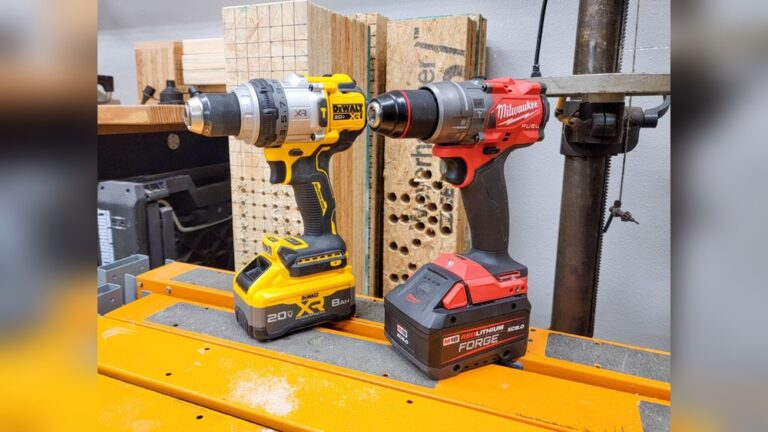
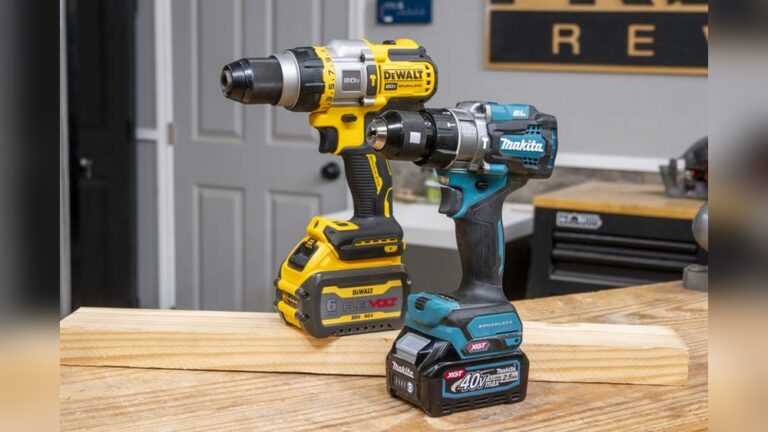
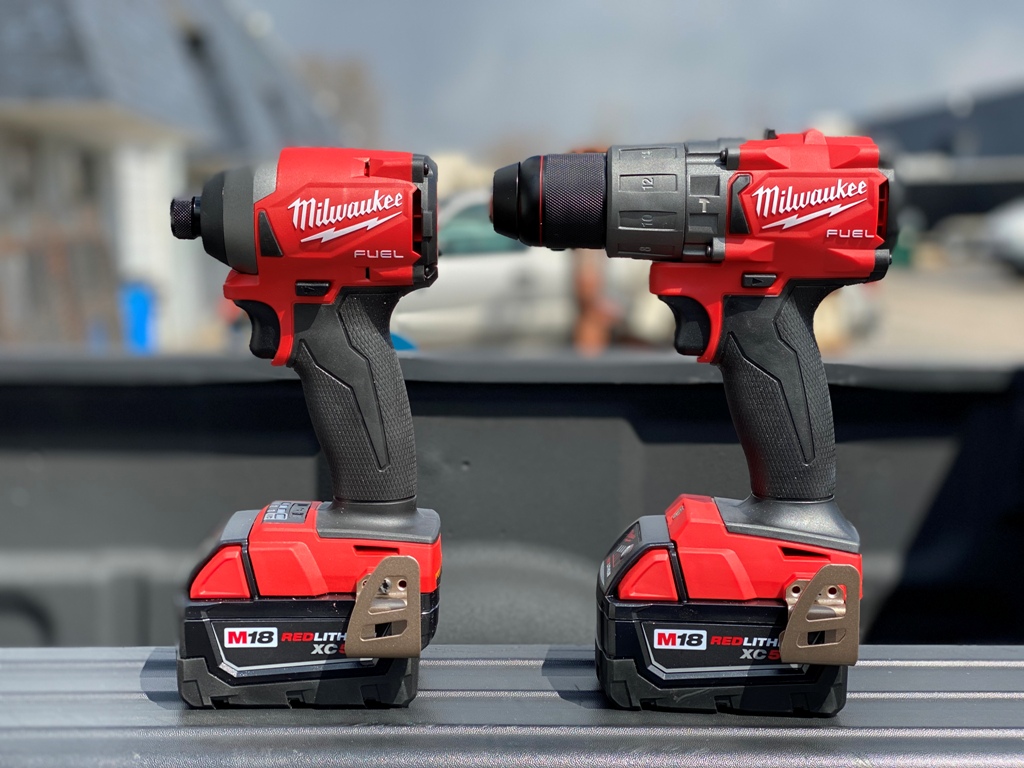
A Milwaukee drill is a power tool designed mainly for drilling holes and driving screws. Milwaukee, a trusted brand in power tools, makes several types of drills, but the most popular is the cordless drill/driver. This tool uses a rotating chuck to hold different bits and can handle both drilling and screwdriving tasks.
A typical Milwaukee cordless drill offers:
- Adjustable speed and torque settings
- A keyless chuck (usually 3/8” or 1/2”) for easy bit changes
- Forward and reverse control
- Multiple clutch settings for precise screwdriving
Drills are versatile and suitable for tasks like:
- Drilling holes in wood, metal, or plastic
- Driving screws into softer materials
- Mixing paint or other substances with a paddle attachment
Milwaukee’s drills are powered by the M18 or M12 battery systems, which allow you to use the same battery across many different Milwaukee tools.
What Is A Milwaukee Impact Driver?
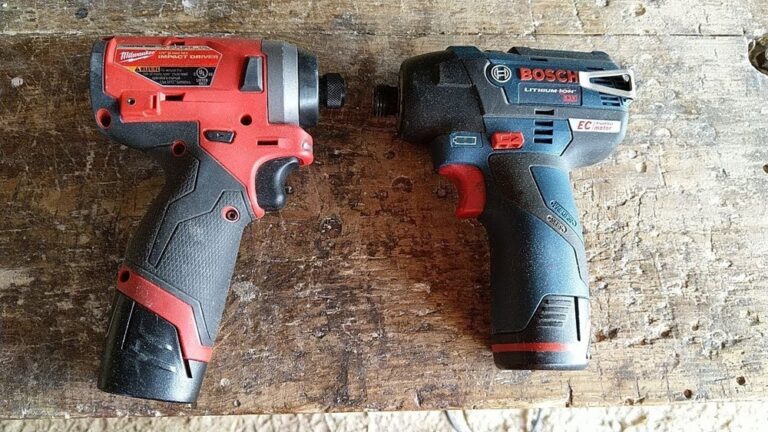
A Milwaukee impact driver is a power tool designed to drive screws and fasteners with high torque and speed. Unlike a drill, an impact driver uses concussive, rotational impacts to deliver much more force. This makes it ideal for tough jobs like driving long screws or bolts into hard materials.
Key features of a Milwaukee impact driver include:
- A 1/4” hex chuck for quick bit changes
- No clutch, but electronic speed controls on some models
- High torque (often over 1,500 in-lbs)
- Compact and lightweight design
Milwaukee impact drivers are also powered by the M18 or M12 battery systems. They excel at tasks such as:
- Driving long screws or lag bolts into wood
- Removing stubborn or rusted fasteners
- Fastening sheet metal or decking screws
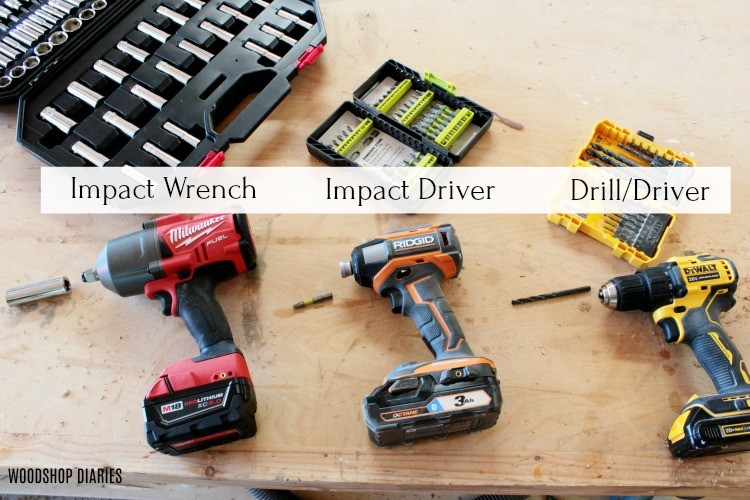
Credit: www.woodshopdiaries.com
Milwaukee Drill Vs Impact Driver: Key Differences
At first glance, these tools may look similar, but they have important differences in how they work and what they do best.
| Feature | Milwaukee Drill | Milwaukee Impact Driver |
|---|---|---|
| Main Use | Drilling holes, light screwdriving | Driving screws/fasteners, high torque tasks |
| Chuck Type | Keyless chuck (3/8″ or 1/2″) | 1/4″ Hex chuck (quick change) |
| Torque | Lower (300-600 in-lbs typical) | Higher (1,500+ in-lbs typical) |
| Speed Control | Variable speed, clutch settings | Variable speed, no clutch |
| Best For | Precision drilling, general tasks | Heavy-duty driving, lag screws, long fasteners |
| Size/Weight | Usually larger/heavier | Compact/lighter |
The main takeaway: Drills are more versatile, while impact drivers are more powerful for driving fasteners.
When To Use A Milwaukee Drill
A Milwaukee drill shines in situations where you need control and versatility. It’s the tool of choice for:
- Drilling clean holes: When making holes in wood, drywall, metal, or plastic, a drill gives more precision and a cleaner result. You can use twist bits, spade bits, or hole saws with the standard chuck.
- Working with delicate materials: If you’re assembling furniture or drilling into soft materials, a drill’s adjustable clutch helps prevent overdriving or damaging the material.
- Mixing and light sanding: With the right attachment, a drill can mix paint or plaster, or even do light sanding or polishing.
- Driving small screws: For small screws and light-duty fasteners, a drill offers more control and reduces the risk of stripping screws.
For example, if you’re installing cabinet hardware or building a birdhouse, a drill is usually the better choice. It allows you to start holes gently and stop just as the screw tightens.
When To Use A Milwaukee Impact Driver
A Milwaukee impact driver is a powerhouse for driving fasteners quickly and with less effort. It’s the best pick when:
- Driving long screws: If you’re building a deck or framing a wall, impact drivers can drive long screws or lag bolts into tough wood without slowing down or stalling.
- Working with tough materials: When fastening into dense wood or metal, the impact action helps prevent the bit from slipping or cam-out.
- Handling repetitive jobs: Impact drivers are lighter and smaller, so they reduce fatigue during long projects with lots of screws.
- Removing stubborn screws or bolts: The extra torque is useful for loosening old, rusted, or over-tightened fasteners.
One example: When installing drywall or building a fence, an impact driver will drive hundreds of screws much faster than a drill, and without straining your wrist.
Strengths And Weaknesses: Milwaukee Drill
Every tool has its pros and cons. Here’s a closer look at the Milwaukee drill:
Strengths
- Versatile: Handles both drilling and screwdriving
- Precise: Adjustable clutch prevents overdriving
- Compatible with many bits: Accepts a wide range of drill and driver bits
- Smooth operation: No loud impacts, less vibration
Weaknesses
- Lower torque: Struggles with long or thick fasteners
- Can stall or slip: In tough materials, the bit may stop or cam-out
- Bulkier: Larger and heavier than most impact drivers
Strengths And Weaknesses: Milwaukee Impact Driver
Impact drivers offer many benefits, but they’re not perfect for every job.
Strengths
- High torque: Drives large fasteners with ease
- Compact and lightweight: Easier to use in tight spaces
- Less wrist strain: The impact mechanism absorbs much of the force
- Fast work: Drives screws quickly, even in hard materials
Weaknesses
- Limited drilling ability: Not ideal for drilling holes, especially in metal or with large bits
- No clutch: Easier to overdrive or snap small screws
- Noisy: The impact action can be loud in use
- Requires hex bits: Only works with 1/4” hex-shank bits
Real-world Scenarios: Which Tool Wins?
It’s easier to choose the right tool when you know how they perform in real situations. Let’s compare them in common tasks.
| Task | Best Tool | Why |
|---|---|---|
| Drilling pilot holes in wood | Drill | Precision and bit compatibility |
| Driving 3” deck screws | Impact Driver | High torque, less effort |
| Installing hinges on cabinets | Drill | Clutch prevents overdriving |
| Removing rusted bolts | Impact Driver | Extra force breaks loose fasteners |
| Mixing drywall mud | Drill | Accepts mixing paddles |
| Fastening metal roofing | Impact Driver | Drives screws through metal easily |
These examples show that neither tool replaces the other. Each excels in different jobs.
Milwaukee Drill And Impact Driver: Key Models Compared
Milwaukee offers several models of drills and impact drivers. Here’s a quick look at two of their most popular cordless options:
| Model | Type | Max Torque | Max Speed (RPM) | Weight (lbs, bare tool) | Battery System |
|---|---|---|---|---|---|
| Milwaukee M18 Fuel Drill/Driver (2803-20) | Drill | 1,200 in-lbs | 2,000 | 3.2 | M18 |
| Milwaukee M18 Fuel Impact Driver (2853-20) | Impact Driver | 2,000 in-lbs | 3,600 | 2.2 | M18 |
| Milwaukee M12 Fuel Drill/Driver (2503-20) | Drill | 350 in-lbs | 1,700 | 2.3 | M12 |
| Milwaukee M12 Fuel Impact Driver (2553-20) | Impact Driver | 1,300 in-lbs | 3,300 | 1.8 | M12 |
Note that M18 models are more powerful and use larger batteries, while M12 models are lighter and more compact.
How To Choose: Drill, Impact Driver, Or Both?
Deciding between a Milwaukee drill and impact driver depends on the work you do most often. Here are some tips to help you choose:
- If you mostly drill holes and drive small screws: Start with a Milwaukee drill/driver. It’s more flexible for different tasks.
- If you often drive long screws or work with tough materials: An impact driver will save you time and effort.
- If you do a mix of jobs, or want to be ready for anything: Consider owning both. Many Milwaukee combo kits include a drill and an impact driver, often at a better price than buying separately.
Non-obvious insight: Many users try to use a drill for every job and end up stripping screws or burning out the motor. Using the right tool not only saves your tools—it also makes your work cleaner and faster.
Another insight: Some Milwaukee impact drivers now offer multiple speed settings, letting you adjust for smaller screws—something older impact drivers lacked.
Common Mistakes To Avoid
Even experienced users sometimes make mistakes with drills and impact drivers. Watch out for these common errors:
- Using the wrong bit: Impact drivers need impact-rated bits. Regular bits can break under the force.
- Overdriving fasteners: Impact drivers can easily drive screws too deep, especially in soft wood. Use lighter pressure and, if possible, a tool with speed control.
- Drilling with an impact driver: While possible with special bits, it’s harder to make clean, precise holes. Stick to a drill for most drilling jobs.
- Ignoring battery compatibility: Milwaukee M12 and M18 batteries are not cross-compatible. Make sure your tools and batteries match.
- Not using the clutch on a drill: The clutch is there to protect your work and your tool. Always set it to the right level for the job.
Safety Tips For Milwaukee Drills And Impact Drivers
Power tools can be dangerous if not used correctly. Follow these safety tips every time:
- Wear safety goggles to protect your eyes from flying debris.
- Keep hands away from moving parts.
- Check that the bit is seated properly before turning on the tool.
- Let the tool stop completely before setting it down.
- Use the right bit for the job and replace worn bits promptly.
- Charge batteries only with the recommended charger.
- Keep your workspace clean to avoid tripping or slipping hazards.
Credit: everestkitchennc.com
Maintenance And Longevity
Proper care extends the life of your Milwaukee tools:
- Regularly clean the chuck and vents to prevent dust buildup.
- Store in a dry, cool place away from direct sunlight or moisture.
- Check batteries for damage and replace if needed.
- Lubricate moving parts if recommended by Milwaukee’s manual.
- Tighten all screws and parts regularly.
With good care, both your drill and impact driver can last for years—even with heavy use.
Cost Considerations
Price is often a deciding factor. Milwaukee tools are premium products, but they offer excellent durability and performance. Here’s what to expect:
- Drills and impact drivers typically cost between $80 and $200 each for the bare tool.
- Combo kits (drill + impact driver + batteries + charger) offer great value, usually between $200 and $350.
- Aftermarket batteries can save money, but may not offer the same performance or safety as Milwaukee originals.
Investing in quality tools often saves money long-term by avoiding breakdowns and poor results.
Environmental Impact
Both drills and impact drivers use lithium-ion batteries, which are safer for the environment than older battery types. Milwaukee offers battery recycling programs and designs their tools for long service life, reducing waste. Always recycle old batteries properly to avoid pollution.
Which Milwaukee Tool Is Right For You?
Here’s a quick summary to help you decide:
- Get a Milwaukee drill if: You need to drill holes and drive screws in a variety of materials, value precision, and often work on small or delicate projects.
- Get a Milwaukee impact driver if: You need to drive a lot of screws or bolts, especially into hard materials, and want speed and power.
- Get both if: You want the best tool for every job, or work on a wide range of projects.
Many professionals and serious DIYers keep both tools on hand, switching as needed for each task. If you’re unsure, start with a drill, then add an impact driver as your projects grow.

Credit: www.youtube.com
Frequently Asked Questions
What’s The Main Difference Between A Milwaukee Drill And An Impact Driver?
The main difference is how they deliver power. A drill uses smooth, constant rotation for making holes and driving screws. An impact driver uses rapid, strong impacts to drive screws with more force, making it better for tough jobs.
Can I Use A Milwaukee Impact Driver For Drilling?
Yes, but it’s not ideal. You need hex-shank drill bits, and the holes may be rougher. For precise or large holes, use a drill instead.
Are Milwaukee M18 And M12 Batteries Interchangeable?
No. M18 and M12 batteries are not compatible. M18 tools use 18V batteries, while M12 tools use 12V. Always match the battery to the tool.
Which Is Better For Beginners: Drill Or Impact Driver?
A drill is better for beginners because it’s more versatile and easier to control. Impact drivers are powerful, but they can overdrive screws if you’re not careful.
Where Can I Find More Details About Milwaukee Tools?
For official specifications and guides, visit the Milwaukee Tool website.
In the end, choosing between a Milwaukee drill and impact driver depends on your projects, your preferences, and your future plans. Both are excellent tools that can make any building or repair job easier—and with the right knowledge, you’ll get the best results every time.