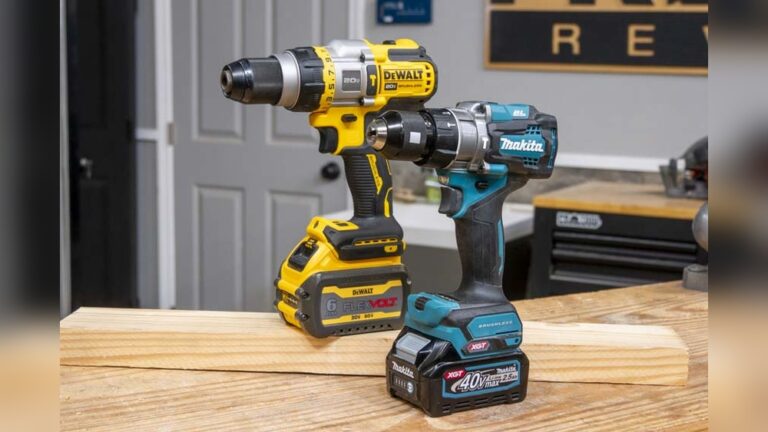
When you are choosing a cordless drill, the choice can feel overwhelming. Two names often stand out: Hart and DeWalt. Both brands are visible in big stores, both offer battery-powered tools, and both promise to help you get the job done. But which one should you trust? The answer is not always simple, especially if you want a tool that matches your actual needs and budget. In this article, you’ll get a deep, practical comparison of Hart drills and DeWalt drills. We’ll look at performance, battery life, build quality, price, warranty, and even those smaller details that beginners often overlook. By the end, you’ll understand exactly what makes each brand unique—and which one is right for you.
Brand Backgrounds
Before comparing models, it’s helpful to know where each brand comes from. This gives insight into their approach to making drills.
Hart Tools
Hart was once known for hand tools, but since being acquired by TTI (Techtronic Industries), it has shifted focus to power tools. Hart tools are sold mostly at Walmart and designed for DIYers and homeowners. Their cordless drills target people who want reliable tools for home projects but don’t need professional-grade performance.
Dewalt
DeWalt has a long history. Founded in 1924, DeWalt is seen as a leader in the power tool world. The brand is famous for durability and is widely used by contractors and professionals. DeWalt offers a large range of tools, from entry-level to heavy-duty, and is available almost everywhere.
Drill Lineups: What’s On Offer?
Understanding the lineup helps you compare apples to apples. Both Hart and DeWalt offer several types of cordless drills.
Hart Drill Types
Hart mainly offers:
- Drill/Driver: Basic drilling and screwdriving
- Hammer Drill: For drilling into harder surfaces like brick or concrete
- Combo Kits: Drill plus other tools (impact driver, saw, etc.)
Most Hart drills use a 20V battery system, which is standard for DIY tools.
Dewalt Drill Types
DeWalt’s range is broader, including:
- Drill/Driver: All-purpose drilling and driving
- Hammer Drill: For masonry and heavy-duty jobs
- Brushless Models: Longer life, more power, less heat
- Compact & Heavy-Duty: Options for both small spaces and big jobs
- Combo Kits: Many combinations for different trades
DeWalt uses 20V MAX and FlexVolt batteries, supporting both home and professional work.
Performance: Power, Speed, And Torque
At the heart of every drill is its performance. This includes speed (RPM), torque (twisting force), and the types of jobs each drill can handle.
Power Output
Hart drills often provide up to 350-400 in-lbs of torque in their 20V models. That’s enough for wood, drywall, and plastic, but may struggle with dense hardwood or thick masonry.
DeWalt’s 20V MAX drills deliver up to 600 in-lbs of torque (in brushless models), and some FlexVolt models reach even higher. This means DeWalt can handle tougher tasks, like lag bolts or drilling into concrete.
Speed
Hart drills usually have 2-speed settings, with a maximum of about 1,600 RPM. This is fine for most home projects.
DeWalt drills often offer up to 3 speed settings, with some models reaching 2,000 RPM or more. This allows for faster drilling and more control, especially for professionals who need precision.
Real-world Example
If you are assembling furniture or putting up shelves, a Hart drill is more than enough. But if you are building a deck or working on a renovation, DeWalt’s extra power becomes important.
Battery Technology And Runtime
A cordless drill is only as good as its battery. Both brands use lithium-ion batteries, but there are key differences.
Hart Battery System
Hart uses a 20V lithium-ion battery. These batteries are interchangeable with all Hart 20V tools, making it easy to switch between your drill, saw, or blower. Typical batteries are 1.5Ah or 2.0Ah, which gives about 30-40 minutes of real work per charge.
Dewalt Battery System
DeWalt’s 20V MAX and FlexVolt batteries are famous for long life. DeWalt offers batteries from 1.3Ah to 12.0Ah. The higher the Ah, the longer you can work. FlexVolt batteries even switch voltage depending on the tool, which is a unique feature in the industry.
Charging Times
- Hart: Standard charger takes about 60-90 minutes for a full charge.
- DeWalt: Fast chargers can charge a 2.0Ah battery in about 30 minutes.
Non-obvious Insight
Many beginners forget that bigger batteries make the drill heavier. If you need long runtime but don’t want extra weight, stick with 2.0Ah for most jobs.
Build Quality And Durability
A drill’s build determines how long it will last, especially if dropped or used in tough conditions.
Hart Build
Hart drills are made mostly of impact-resistant plastic. They feel solid, but lighter than pro-grade tools. Good for home use, but not designed to survive a construction site.
Dewalt Build
DeWalt drills use high-strength plastic with metal gear housings. Many models are IP-rated for dust and water resistance. Rubber overmolds on handles help with grip and shock.
Drop Test Example
In independent tests, DeWalt drills often survive 5-6 foot drops onto concrete with only minor scratches. Hart drills may crack or break open if dropped from the same height.
Practical Tip
If you work in an environment where your drill might fall or get banged around, DeWalt is the safer choice.
Features And Usability
Features affect how easy and comfortable the drills are to use.
Hart Features
- LED Work Light: Built-in light for dark spaces
- Keyless Chuck: Tool-free bit changes
- Simple Speed Selector: Easy to switch between high and low
- Ergonomic Handle: Comfortable for small hands
Dewalt Features
- LED Light with Delay: Stays on after trigger release
- All-Metal Chuck: More durable, holds bits tighter
- Variable Speed Trigger: More control over speed
- Belt Clip and Bit Holder: Handy for fast work
- Brushless Motor: Some models, for better efficiency
Non-obvious Insight
Brushless motors are not just about power—they also run cooler, which means longer life and less maintenance. DeWalt offers more brushless options than Hart.
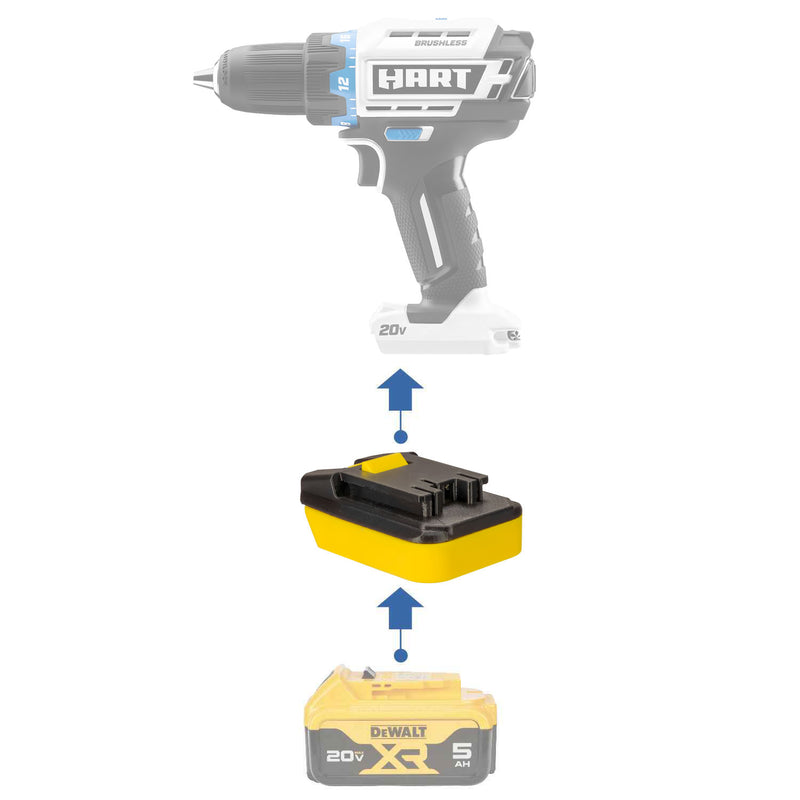
Credit: powertoolsadapters.com
Weight And Size
Weight matters if you use your drill for long periods or in tight spaces.
Hart Weight
Most Hart drills weigh 3.0 to 3.5 lbs with battery. This is light enough for most people to use comfortably for an hour or more.
Dewalt Weight
DeWalt drills range from 2.5 lbs (compact) to 4.0 lbs (heavy-duty) with battery. Compact models are perfect for overhead or one-handed use.
Practical Example
If you’re installing curtain rods or working above your head, a lighter drill (Hart or DeWalt compact) reduces fatigue.
Price And Value
Price is often the biggest factor for buyers. Here’s how the two brands compare.
Hart Pricing
- Drill/Driver Kit: $40 to $70 (includes battery, charger, bag)
- Hammer Drill Kit: $70 to $100
Hart’s prices are lower because they target homeowners and DIYers.
Dewalt Pricing
- Drill/Driver Kit: $90 to $150 (includes battery, charger, bag)
- Brushless or Hammer Drill: $130 to $250 (depending on features)
DeWalt costs more, but also offers more power and durability. The price premium reflects professional-grade materials and engineering.
Value For Money
If you drill a few holes a month, Hart offers unbeatable value. But if you use your drill daily, DeWalt’s higher price pays off in the long run because you’ll likely replace a Hart drill sooner.
Warranty And Support
A good warranty means the brand stands behind its products.
Hart Warranty
Hart offers a 3-year limited warranty on power tools. This covers defects but not wear from regular use or drops.
Dewalt Warranty
DeWalt gives a 3-year limited warranty, 1 year of free service, and a 90-day money-back guarantee. This is one of the best policies in the industry.
Service Availability
DeWalt has hundreds of service centers in the U.S. Hart’s service is mostly handled through Walmart or mail-in repairs.
Practical Tip
If fast service is important, DeWalt’s support network is a big advantage.
Accessories And System Compatibility
A cordless drill often works best as part of a tool system.
Hart Ecosystem
Hart’s 20V battery fits over 30 tools (saws, lights, blowers, etc.)—good for someone building a home toolkit.
Dewalt Ecosystem
DeWalt’s 20V MAX and FlexVolt systems support over 200 tools. This makes it easier to expand your collection without buying extra batteries or chargers.
Key Difference
If you plan to buy more tools in the future, DeWalt’s bigger ecosystem is a smarter long-term investment.
User Experience: What Real Owners Say
Looking at customer reviews gives a sense of real-world satisfaction.
Hart Owner Feedback
Most Hart owners are DIYers who say the drills are:
- Easy to use
- Lightweight
- Good for household repairs
Complaints focus on:
- Battery life dropping after 1-2 years
- Struggles with tough materials (brick, thick metal)
Dewalt Owner Feedback
DeWalt users include both DIYers and professionals. Positive reviews mention:
- Lasts for years, even with daily use
- Great power and speed
- Reliable batteries
Negative comments are rare, but some mention:
- Heavier models can cause fatigue
- Expensive compared to other brands
Non-obvious Insight
Online reviews often don’t mention the feel of the trigger—DeWalt triggers are smoother, making precise work easier. For tasks like installing hinges or electronics, this matters more than raw power.
Detailed Model Comparison
Let’s compare popular models head-to-head for a clearer picture.
| Feature | Hart 20V Drill/Driver | DeWalt 20V MAX Drill/Driver |
|---|---|---|
| Torque | 400 in-lbs | 500–600 in-lbs |
| Max Speed | 1,600 RPM | 2,000 RPM |
| Motor Type | Brushed | Brushed/Brushless |
| Weight (with battery) | 3.0 lbs | 2.5–4.0 lbs |
| Warranty | 3 years | 3 years + 1 year service |
| LED Light | Yes | Yes, with delay |
| Typical Price | $50–$70 | $100–$150 |

Credit: www.youtube.com
Who Should Buy Hart?
Hart drills are best for:
- Homeowners: Hanging shelves, assembling furniture, fixing cabinets.
- DIY Beginners: Learning how to use power tools on small projects.
- Budget Buyers: People who want a solid drill for less money.
If you only need a drill a few times a month, Hart is a safe, wallet-friendly choice.
Who Should Buy Dewalt?
DeWalt drills are best for:
- Professionals: Carpenters, electricians, plumbers.
- Heavy DIYers: People who build decks, fences, or work on cars.
- Tool Enthusiasts: Those who want the best features and longest life.
If you need maximum power, reliability, and a big tool ecosystem, DeWalt is worth the investment.
Common Buying Mistakes
Many people regret their purchase because they miss key details. Here are mistakes to avoid:
- Overbuying: Getting a DeWalt hammer drill for simple home repairs is overkill and a waste of money.
- Underbuying: Buying a Hart drill for daily job site use means you may need to replace it soon.
- Ignoring Battery Size: Big batteries run longer but are heavier. Think about how long you really need to work before recharging.
- Not Checking Chuck Size: Most Hart drills have a 3/8-inch chuck, while DeWalt often offers 1/2-inch. The larger chuck fits bigger drill bits.
- Missing the Combo Kit Value: Buying a drill and driver kit usually costs less than buying each tool separately.
Side-by-side Comparison: Hart Vs Dewalt
Here’s a quick reference to help you decide.
| Category | Hart | DeWalt |
|---|---|---|
| Best for | Home & DIY | Pro & Heavy DIY |
| Price | Low | Medium–High |
| Torque | Lower | Higher |
| Battery Options | Few | Many |
| Build Quality | Good | Excellent |
| Warranty | 3 years | 3 years + service |
| Tool Ecosystem | Small | Large |
| Availability | Walmart | Most stores |
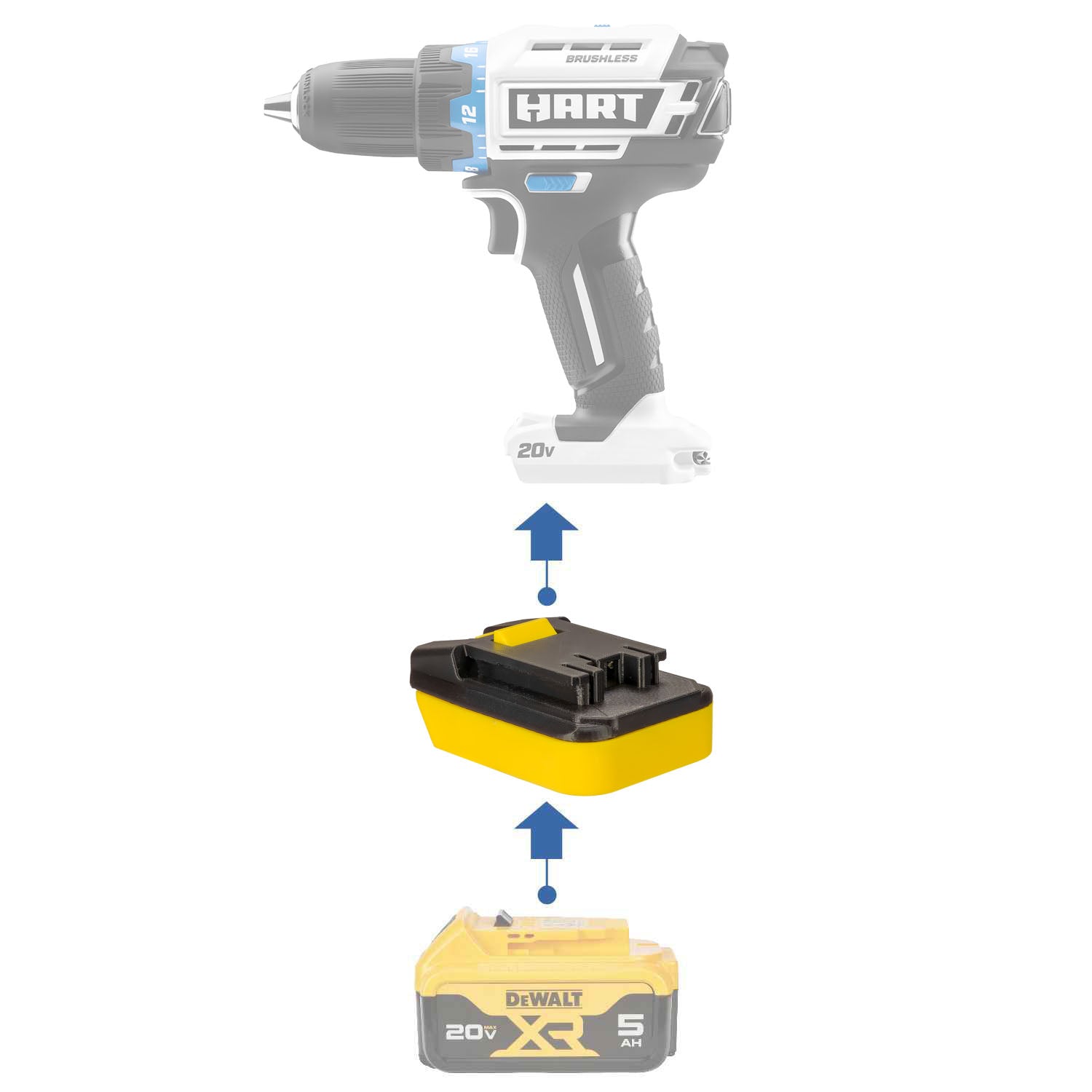
Credit: powertoolsadapters.com
Real-world Use Cases
Hart In Action
- Putting together flat-pack furniture
- Drilling pilot holes for wall anchors
- Fixing a loose door hinge
- Installing curtain rods
In these cases, Hart drills are light, easy to handle, and powerful enough for the job.
Dewalt In Action
- Building a deck or shed
- Drilling into concrete or brick
- Driving long screws into hardwood
- On-site repairs with heavy use
DeWalt’s extra torque, durability, and battery options make it a better fit for tough, daily jobs.
Which Brand Is Right For You?
The right answer depends on your needs, budget, and how often you’ll use the drill. Here’s a quick decision guide:
- Choose Hart if you want a simple, affordable, and reliable tool for home use.
- Choose DeWalt if you need power, durability, and a tool system you can expand over time.
If you’re still unsure, visit a store and hold both drills. The feel in your hand can be the deciding factor.
For more on battery technology and tool reviews, you can check Pro Tool Reviews.
Frequently Asked Questions
Is Hart As Good As Dewalt For Home Use?
For basic home projects, Hart offers enough power and features. If you only need to hang shelves, assemble furniture, or do small repairs, Hart is a great value. DeWalt is better if you want more power or plan to use the drill for bigger projects.
Can You Use Dewalt Batteries With Hart Drills?
No, DeWalt and Hart batteries are not compatible. Each brand uses a different battery system, so you cannot swap batteries between them.
How Long Do Hart And Dewalt Drills Last?
With light use, a Hart drill can last 3–5 years. A DeWalt drill can last 5–10 years or more, especially if you choose a brushless model and take care of it.
Are Brushless Drills Worth It?
Yes, brushless drills last longer, are more efficient, and need less maintenance. DeWalt offers more brushless options, which are especially good for heavy or professional use.
What Is The Best Drill For Beginners?
For beginners, a Hart 20V drill/driver kit is a good choice because it’s affordable, easy to use, and comes with everything you need. If you want to invest in a tool you’ll use for years, a DeWalt 20V MAX drill/driver is also an excellent option.
Choosing between Hart and DeWalt drills depends on your needs, budget, and how much you’ll use the tool. Both brands offer reliable products, but understanding their differences helps you make a smart, confident choice.