Choosing the right cordless drill can make every project smoother, faster, and even more enjoyable. For both professionals and home users, the Flex 24V Drill and the Milwaukee M18 Drill stand out as two of the most talked-about power tools on the market. But which one truly fits your needs? This guide dives deep into both drills, comparing their features, strengths, and weaknesses. Whether you care about power, battery life, durability, or price, you’ll find all the details you need right here. By the end, you’ll know exactly which drill deserves a spot in your toolkit.
Flex 24v Drill: An Overview
The Flex 24V Drill is a newer player in the power tool world but has quickly earned a strong reputation. It was designed with professionals in mind, offering high power and advanced battery technology. The Flex brand invests heavily in innovation, and that shows in this drill’s performance and features.
- Voltage: 24V, which is higher than the average 18V or 20V drills
- Brushless motor: For better efficiency and longer tool life
- Maximum torque: Around 1,400 in-lbs (varies by model)
- Battery system: Uses the Flex 24V lithium-ion platform
- Weight: About 3.5 lbs (tool only)
- Speed settings: Usually 2 (low/high)
- Warranty: Lifetime (for registered users)
This drill is designed for heavy-duty work, from drilling large holes to driving big screws. The high voltage and torque make it one of the strongest in its class.
Milwaukee M18 Drill: An Overview
The Milwaukee M18 Drill is a long-standing favorite among both pros and DIYers. Milwaukee has been a leader in the power tool industry for decades, and the M18 series is their flagship cordless line.
- Voltage: 18V, standard for professional power tools
- Brushless motor: Available on most models, especially Fuel versions
- Maximum torque: Up to 1,200 in-lbs (Fuel models)
- Battery system: M18 REDLITHIUM platform
- Weight: Around 3.3 lbs (tool only)
- Speed settings: 2 (low/high)
- Warranty: 5 years (tool), 3 years (battery)
The M18 Drill is known for its reliability, wide accessory ecosystem, and user-friendly design. It’s suitable for everything from light home repairs to demanding jobsite tasks.

Credit: www.youtube.com
Performance Comparison
Power And Torque
Power is one of the first things users compare. The Flex 24V Drill delivers up to 1,400 in-lbs of torque, while the Milwaukee M18 Fuel tops out at around 1,200 in-lbs. That extra torque from Flex is noticeable in heavy-duty tasks, such as drilling through thick wood or masonry.
However, Milwaukee’s torque is more than enough for most projects. For standard jobs like furniture assembly or drywall, both drills will feel very powerful. The difference is most apparent when you push the drills to their limits.
Speed And Control
Both drills offer two-speed transmission for more control:
- Flex 24V: 0–550 RPM (low), 0–2,000 RPM (high)
- Milwaukee M18: 0–550 RPM (low), 0–2,000 RPM (high, Fuel models)
This means you can switch between high speed for drilling and low speed for driving screws. Both models also feature adjustable clutch settings, letting you fine-tune the torque for delicate work.
Battery Technology
Battery performance can make or break a cordless tool experience. Here’s how they stack up:
Flex 24v Battery
- 24V lithium-ion
- Available in 2.5Ah, 5.0Ah, and 8.0Ah sizes
- Fast charging: Up to 50% charge in 15 minutes (with certain chargers)
- Lifetime battery warranty (if registered)
Milwaukee M18 Battery
- 18V REDLITHIUM™
- Sizes from 1.5Ah to 12.0Ah (High Output)
- REDLINK™ intelligence for optimal performance and protection
- 3-year battery warranty
Battery Comparison Table
| Brand | Voltage | Battery Sizes (Ah) | Max Charge Speed | Warranty |
|---|---|---|---|---|
| Flex 24V | 24V | 2.5, 5.0, 8.0 | 50% in 15 min | Lifetime (registered) |
| Milwaukee M18 | 18V | 1.5 – 12.0 | Depends on charger | 3 years |
The Flex battery system offers higher voltage and faster charging. However, Milwaukee’s M18 line provides a wider range of battery sizes, including a massive 12. 0Ah pack for long runtimes.
Runtime And Efficiency
Both brands use brushless motors for better efficiency, meaning longer runtime from each charge. In real-world use, the difference in runtime often depends more on the battery size than the drill itself.
- With similar battery sizes (e.g., 5.0Ah), both drills provide enough power for a full day of medium use.
- For very heavy tasks or all-day jobs, Milwaukee’s larger battery options can be an advantage.
One insight many beginners miss: using a larger battery (like 8.0Ah or 12.0Ah) can add noticeable weight, making the drill harder to handle for long periods.
Durability And Build Quality
Both Flex and Milwaukee build their drills to handle rough use. The Milwaukee M18, especially the Fuel models, have a long track record for jobsite toughness. Many users report their drills surviving drops, rain, and years of daily abuse.
Flex 24V is newer, but initial reviews and field tests are very positive. The all-metal chuck and reinforced gearbox feel solid. Flex also offers a lifetime warranty for registered tools and batteries—something rare in the industry.
A key insight: Milwaukee’s long-term durability is proven over decades, while Flex’s lifetime warranty is a strong sign of confidence but has less real-world history behind it.
Ergonomics And User Experience
Weight And Balance
- Flex 24V Drill: Around 3.5 lbs (tool only)
- Milwaukee M18 Drill: About 3.3 lbs (tool only)
Both drills are comfortable for most users. Flex’s slightly higher weight is due to the larger battery platform and robust build. For overhead work or long sessions, that extra weight can add up.
Grip And Comfort
Both brands use ergonomic handles with textured rubber grips. User feedback suggests Milwaukee’s handle feels a bit slimmer, which can be easier for people with smaller hands. Flex’s handle is slightly thicker but still comfortable.
Led Lighting
Both models include a built-in LED work light near the trigger. This helps when working in tight spaces or dim rooms. Milwaukee’s light is a bit brighter and better positioned, but the difference is minor.
Noise And Vibration
Neither drill is unusually loud, but the Flex 24V, thanks to its powerful motor, can be slightly noisier under heavy load. Both keep vibration low, which reduces user fatigue.
Features And Accessories
Standard Features
- Keyless metal chuck: Both have tough, all-metal chucks for easy bit changes
- Belt clip: Included on both models for easy carrying
- Bit holder: Both include a magnetic or snap-in bit holder
Advanced Features
- Flex 24V: Turbo Mode (on some models), advanced electronic controls, rapid charger
- Milwaukee M18: REDLINK Plus™ intelligence (protects against overload), One-Key™ (on select models for tool tracking and customization), wide accessory ecosystem
Accessory Ecosystem
Milwaukee’s biggest advantage is its vast range of M18-compatible tools. The battery fits more than 200 tools, from saws to vacuums. If you plan to build a whole set of cordless tools, Milwaukee is hard to beat.
Flex’s 24V line is newer, with around 20+ tools at the time of writing. The ecosystem is growing but not yet as large as Milwaukee’s.
Price And Value
Drill Kit Pricing
- Flex 24V Drill Kit: Usually $180–$250 (includes drill, 2 batteries, charger, case)
- Milwaukee M18 Drill Kit: Typically $180–$270 (includes drill, 2 batteries, charger, case)
Pricing can vary based on sales, battery size, and included accessories. Both brands target the professional market, so expect higher prices than basic home-use drills.
Long-term Value
Flex’s lifetime warranty adds value, especially for heavy users. Milwaukee offers a strong 5-year tool warranty and 3 years on batteries. Both brands are good investments, but Milwaukee’s proven reliability and large accessory line may stretch your dollar further if you plan to expand your tool collection.
Real-world Use Cases
For Professionals
Contractors, carpenters, and electricians often need maximum power, reliability, and a wide range of compatible tools. Milwaukee M18 is a jobsite staple for a reason—its performance and reliability are proven. The Flex 24V, with its higher torque and lifetime warranty, is an exciting new choice for pros who want the latest technology.
For Diy And Home Use
If you mostly do home repairs, furniture building, or light renovations, both drills might feel like overkill—but in a good way. You’ll enjoy fast drilling, long battery life, and a tool that won’t let you down. Milwaukee’s lighter feel may be better for smaller hands, while Flex’s power is great if you plan bigger projects.
Special Situations
- Need the most power for heavy-duty drilling? Flex 24V wins on torque.
- Want to build a large tool collection? Milwaukee’s M18 system is more established.
- Prefer a lighter drill? Milwaukee is a touch lighter, especially with smaller batteries.
- Care most about warranty? Flex’s lifetime coverage is hard to beat.
Side-by-side Feature Comparison
Here’s a quick comparison of the most important features:
| Feature | Flex 24V Drill | Milwaukee M18 Drill |
|---|---|---|
| Max Torque | 1,400 in-lbs | 1,200 in-lbs |
| Voltage | 24V | 18V |
| Weight (Tool Only) | 3.5 lbs | 3.3 lbs |
| Warranty | Lifetime (registered) | 5 years (tool) |
| Battery Platform | 24V Lithium-ion | M18 REDLITHIUM |
| Accessory Ecosystem | 20+ tools | 200+ tools |
| Special Features | Turbo Mode, fast charging | REDLINK Plus, One-Key |

Credit: www.youtube.com
Pros And Cons
Flex 24v Drill
Pros:
- Highest torque in its class
- Fast charging batteries
- Lifetime warranty with registration
- Advanced electronics for efficiency
Cons:
- Heavier than most 18V drills
- Smaller tool ecosystem (for now)
- Newer brand, less long-term field data
Milwaukee M18 Drill
Pros:
- Proven durability and reliability
- Vast accessory and tool ecosystem
- Lighter, comfortable grip
- Smart features (One-Key, REDLINK)
Cons:
- Slightly less torque than Flex
- No lifetime warranty (though 5 years is strong)
- Larger batteries can get pricey
Common Mistakes When Choosing
- Ignoring the tool ecosystem: Many buyers focus only on the drill, but matching batteries to future tools is important. Milwaukee is best for building a full set.
- Overlooking warranty details: Flex’s lifetime warranty requires registration. Without it, coverage is standard.
- Choosing only by power: More torque is not always better. For light jobs, a lighter drill can be easier to use all day.
- Forgetting about charging speed: Fast-charging batteries save time, especially on busy jobsites.
- Assuming all models are the same: Both brands have different versions (compact, hammer drill, Fuel, etc.). Double-check specs before buying.
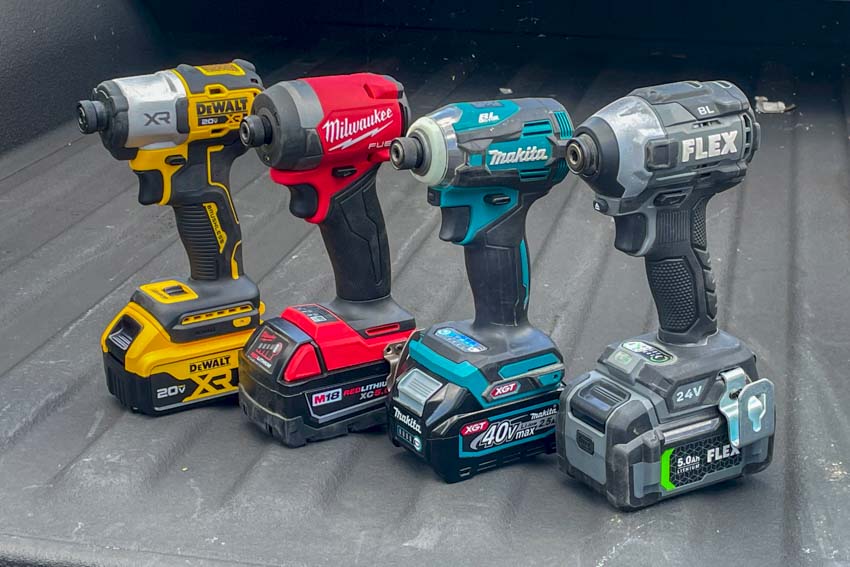
Credit: www.protoolreviews.com
Who Should Choose Flex 24v?
Pick the Flex 24V Drill if you:
- Need maximum power for heavy drilling and driving
- Want rapid battery charging and longer runtime per charge
- Value a lifetime warranty for peace of mind
- Don’t mind a slightly heavier tool
- Are okay with a smaller (but growing) accessory lineup
Who Should Choose Milwaukee M18?
Milwaukee is the smart choice if you:
- Want proven reliability and long-term durability
- Plan to expand your cordless tool collection
- Prefer a lighter, more balanced drill
- Like smart features like One-Key or REDLINK
- Don’t need quite as much raw torque
Not-so-obvious Insights
- Flex’s Turbo Mode (on some models) provides a power boost for short bursts, but it can drain the battery faster. Use it only when you need maximum power.
- Milwaukee’s One-Key feature allows you to track your tool, customize settings, and even lock it remotely. This is especially useful on jobsites with many workers.
Most beginners overlook the importance of a tool ecosystem. It’s not just about the drill—it’s about what other tools you might need in the future. Buying into a system with a wide range of compatible tools and batteries saves money and hassle in the long run.
Frequently Asked Questions
What Is The Main Difference Between Flex 24v And Milwaukee M18 Drills?
The biggest difference is the voltage and torque. Flex 24V offers a higher voltage (24V) and more torque (up to 1,400 in-lbs), making it stronger for heavy-duty tasks. Milwaukee M18 is 18V with up to 1,200 in-lbs torque but is lighter and has a larger accessory ecosystem.
Which Drill Has A Better Warranty?
The Flex 24V Drill offers a lifetime warranty for both the tool and batteries if you register your purchase. Milwaukee provides a 5-year warranty on the tool and 3 years on batteries. Both are industry-leading, but Flex’s lifetime coverage is unique.
Can I Use Milwaukee M18 Batteries In Flex 24v Tools?
No, Milwaukee M18 and Flex 24V batteries are not compatible. Each uses a different voltage and battery design. You must use batteries made for each specific brand.
Is The Flex 24v Drill Good For Beginners?
Yes, the Flex 24V Drill is user-friendly and offers advanced features. However, its power and weight might be more than a casual DIY user needs. Beginners doing heavy-duty work will appreciate the performance, but lighter jobs might be easier with a smaller drill.
Are There Any Trusted Reviews Or Comparisons I Can Read?
For a deep dive and head-to-head tests, check out this Pro Tool Reviews comparison for real-world insights and data.
Choosing between the Flex 24V Drill and the Milwaukee M18 Drill depends on your priorities. Both are excellent, professional-grade tools. If you want maximum power and a strong warranty, Flex 24V is the clear choice. If you value proven reliability, a huge accessory lineup, and a lighter feel, Milwaukee M18 is hard to beat. Take a moment to think about your current and future needs—then you’ll make a decision that keeps you productive and happy for years to come.