When it comes to cordless drills, two names stand out in workshops and toolboxes: Ridgid and Dewalt. Both brands are trusted by professionals and DIY users alike. But which one should you choose for your next project? The answer is not always simple, because each brand has its own strengths and weaknesses. This guide walks you through a deep, hands-on comparison—looking at power, battery life, user comfort, features, price, and more. Whether you’re a homeowner taking on weekend repairs, or a contractor who needs tough tools every day, you’ll find clear, honest answers here. Let’s break down the Ridgid vs Dewalt cordless drill debate so you can pick the right tool for your work.
Brand Backgrounds
Understanding the companies behind the tools helps you see what each brand values—and what you can expect from their drills.
Ridgid
Ridgid has been around since 1923, first known for plumbing tools. Over the years, they’ve built a reputation for making durable, reliable tools that hold up in tough conditions. Ridgid’s cordless drills are popular among those who want strong warranties and solid performance at a reasonable price. They’re often seen as a smart choice for serious DIY users and those who want pro-level features without a sky-high price tag.
Dewalt
Dewalt is a household name when it comes to power tools. Founded in 1924, the brand has always focused on innovation and toughness. Dewalt tools are widely used on construction sites and by professionals all over the world. Their cordless drills are famous for being powerful, durable, and comfortable to use. Dewalt invests heavily in battery technology and often leads the market with new features.
Core Features Compared
Let’s look at the main things people care about when choosing a cordless drill. These factors can make a big difference in your day-to-day work.
Power And Performance
The power of a drill is usually measured by its voltage (for the battery) and torque (twisting force). For most home and professional tasks, you want enough power to drive screws and drill into wood, metal, and masonry.
Ridgid
Ridgid’s 18V line is their most popular. Their drills typically offer 500–700 inch-pounds of torque. This is more than enough for most drilling and driving tasks. Ridgid also uses brushless motors in many models, which are more efficient and last longer than brushed motors.
Dewalt
Dewalt offers both 20V MAX and 12V MAX lines. The 20V MAX drills are top sellers, and models like the DCD996 can deliver up to 820 unit watts out (UWO), which translates to strong real-world performance. Dewalt also uses brushless motors in many drills and is known for consistent power delivery under load.
Practical Insight: While Ridgid’s torque ratings often look higher on paper, Dewalt’s real-world performance matches or exceeds these numbers, especially when drilling into harder materials. This is due to Dewalt’s motor and electronics design.
Battery Life And Technology
A cordless drill is only as good as its battery. Long life, fast charging, and compatibility with other tools are all important.
Ridgid
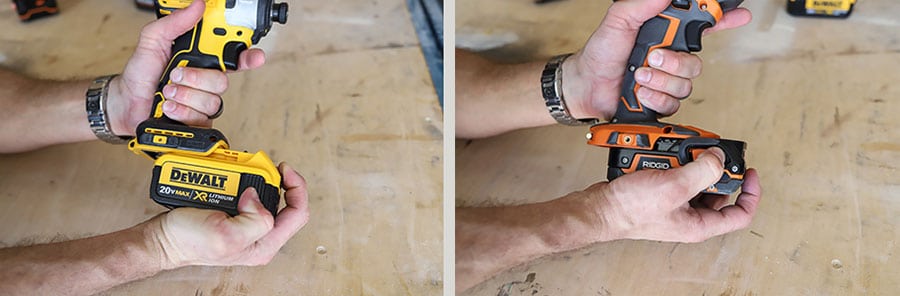
Ridgid’s 18V battery system is used across their cordless tools, so batteries are interchangeable. They offer Lithium-Ion batteries in sizes like 2.0Ah (amp-hour) and 4.0Ah. Many kits come with two batteries and a charger. Ridgid is famous for its Lifetime Service Agreement, which includes free battery replacements if you register your tool.
Dewalt
Dewalt’s 20V MAX battery system is one of the most widely used in the world. Their batteries come in a wide range of sizes, from compact 1.5Ah up to 12.0Ah for extended runtime. Dewalt’s FLEXVOLT batteries can switch between 20V and 60V tools, offering unmatched flexibility. They also have fast chargers and good battery indicator lights.
Non-obvious tip: Dewalt’s battery platform is larger, so if you plan to buy many cordless tools, Dewalt might offer more choices that use the same battery.
Ergonomics And User Comfort
Drills are used for long periods, so comfort matters—a lot.
Ridgid
Ridgid drills are known for being slightly heavier and more robust. They have large grips that fit well in bigger hands. The rubber overmolding is thick and helps with vibration. Some users find Ridgid drills a bit bulky for tight spaces or for people with smaller hands.
Dewalt
Dewalt puts a lot of thought into ergonomics. Their drills are often lighter, better balanced, and have slimmer handles. The grip texture and trigger placement are designed for comfort, even during long work sessions.
Practical advice: If you use a drill overhead or for many hours, Dewalt’s lighter weight and balance will help reduce fatigue.
Durability And Build Quality
Nobody wants a tool that breaks after a few months. How do Ridgid and Dewalt drills compare in terms of toughness?
Ridgid
Ridgid drills are built to last. They use solid plastics and metal chucks, and their tools often survive drops and rough use. The orange-and-grey color scheme hides scratches well, and their drills are backed by one of the best warranties in the market.
Dewalt
Dewalt drills are famous for their jobsite durability. The yellow-and-black design is a classic. Dewalt uses high-quality materials and weather-resistant seals in many models. Their tools are tested to handle falls, dust, and even rain.
Insider note: Both brands are tough, but Dewalt’s track record in heavy construction environments is hard to beat.
Features And Innovation
Modern cordless drills come with features that make them safer, smarter, and more versatile.
Ridgid
Ridgid offers LED work lights, adjustable clutches, and belt hooks on most models. Some advanced models have auxiliary side handles for better control during heavy drilling. Ridgid’s drills are also known for having long, multi-year warranties.
Dewalt
Dewalt leads in features. Many drills have 3-speed gearboxes, integrated LED lights with multiple brightness settings, and all-metal chucks. Some high-end models include Bluetooth Tool Connect for tracking and customizing your drill through your phone. Dewalt’s hammer drills have advanced safety features like E-Clutch, which stops the tool if it binds.
Beginner insight: Dewalt’s extra features usually only appear in premium models—Ridgid’s mid-tier drills are often better equipped for the price.
Price And Value
Price is always a deciding factor. Both brands offer a range of models from affordable to premium.
Ridgid
Ridgid drills are often priced lower than Dewalt for similar specs. You can find full kits (drill, two batteries, charger, bag) for $99–$179. For the warranty and power, this is excellent value.
Dewalt
Dewalt drills are usually more expensive, especially their brushless and 20V MAX models. Kits typically start around $129, but high-end kits can go above $250. Dewalt’s brand reputation and advanced features drive up the price.
Non-obvious mistake: Many buyers look only at the upfront price. Dewalt’s higher resale value and longer part availability can make it a better long-term investment.
Direct Model Comparison: Ridgid Vs Dewalt
To make things clear, let’s compare two popular models side by side:
- Ridgid R86009 18V Brushless Drill/Driver
- Dewalt DCD791 20V MAX XR Brushless Drill/Driver
| Feature | Ridgid R86009 | Dewalt DCD791 |
|---|---|---|
| Voltage | 18V | 20V MAX |
| Max Torque | 700 in-lbs | 460 UWO (~650 in-lbs) |
| Batteries Included | 2 x 2.0Ah | 2 x 2.0Ah |
| Weight (with battery) | 3.8 lbs | 3.5 lbs |
| LED Light | Yes | Yes (3-mode) |
| Warranty | Lifetime (with registration) | 3 years |
What stands out: Ridgid wins on torque and warranty, Dewalt wins on weight, LED features, and overall balance. Both are strong choices for most users.
Real-world Performance
Specs tell only part of the story. How do these drills perform on job sites and home projects?
Drilling Speed And Power
- Ridgid: Handles thick wood and most metals with ease. The higher torque is noticeable when driving long screws or using hole saws.
- Dewalt: Feels faster and keeps a steady speed under pressure. The brushless motor and smart electronics prevent overheating.
Battery Runtime
- Ridgid: With two 2.0Ah batteries, you can work for hours if you swap and charge as you go. Heavy use will drain batteries faster, but the charger is quick.
- Dewalt: Excellent runtime, especially with 4.0Ah or higher batteries. Dewalt’s batteries tend to last a bit longer in cold weather.
User Experience
- Ridgid: Heavier, but feels solid in the hand. Good for people with larger hands or who like a “rugged” feel.
- Dewalt: Lighter, easier to use in tight spots or overhead. The trigger is smooth, and the light is bright enough for dark corners.
Expert tip: Test both in-store if possible. Comfort is personal—what feels good to one person may feel awkward to another.
Credit: jenwoodhouse.com
Battery Platforms And Tool Ecosystem
When you buy a cordless drill, you’re also buying into a battery platform. This matters if you want to add more tools later.
Ridgid 18v Platform
Ridgid’s 18V battery fits dozens of tools: impact drivers, saws, sanders, and more. The lineup is growing, but not as wide as Dewalt’s.
Dewalt 20v Max & Flexvolt
Dewalt’s 20V MAX line is huge—over 200 compatible tools. FLEXVOLT batteries can be used in both 20V and 60V tools, which is a big plus if you want to add powerful saws or outdoor equipment.
Non-obvious insight: If you plan to build a large tool collection, Dewalt’s bigger ecosystem can save you money on batteries and chargers.
Warranty And Support
- Ridgid: Lifetime Service Agreement (if registered within 90 days). This covers free parts and service, including batteries.
- Dewalt: 3-year limited warranty, 1-year free service, and 90-day money-back guarantee.
What beginners miss: Ridgid’s warranty is amazing, but you MUST register your tool soon after buying. Otherwise, you only get the standard 3-year warranty.
Customer Reviews And Reputation
Looking at user feedback is a smart way to spot real-world strengths and weaknesses.
Ridgid
- Most users praise the warranty and value for money.
- Some say the tools are a bit bulky and batteries can be hard to find in stores.
- Service centers can be slow, but issues are usually fixed for free.
Dewalt
- Users love the performance, comfort, and battery compatibility.
- Some complain about higher prices and the shorter warranty.
- Dewalt tools are easy to find, and support is usually fast.
Practical tip: Check if there’s a service center near you before you buy. Fast repairs can save you a lot of hassle.
Who Should Choose Ridgid?
Ridgid drills are a great fit if you:
- Want maximum value for your money
- Prefer a tool with a lifetime warranty
- Don’t mind a little extra weight for more torque
- Are building a small to medium collection of tools

Credit: www.youtube.com
Who Should Choose Dewalt?
Dewalt drills are best for those who:
- Need pro-level performance and lighter weight
- Plan to buy many cordless tools over time
- Want the widest battery platform and tool choices
- Care about advanced features and comfort
Common Buyer Mistakes To Avoid
- Ignoring Battery Compatibility: Don’t mix brands if you want to share batteries.
- Not Registering Ridgid Tools: If you forget, you lose the lifetime warranty.
- Choosing Only by Torque: High torque isn’t everything—consider balance and comfort.
- Buying the Cheapest Kit: Entry-level models may lack features you’ll need later.
- Skipping In-Store Testing: Hands-on feel is as important as specs.

Credit: www.youtube.com
Value Over Time: Resale And Longevity
- Dewalt tools often have better resale value due to brand reputation and larger user base.
- Ridgid tools keep working for years, especially with the lifetime warranty, but may be harder to sell used.
Extra tip: If you think you’ll upgrade later, Dewalt’s tools are easier to resell or trade.
Advanced Features Breakdown
Here’s a quick side-by-side look at advanced features you might care about:
| Feature | Ridgid | Dewalt |
|---|---|---|
| Bluetooth/App Control | No | Yes (Tool Connect models) |
| Hammer Mode | Some models | Many models |
| LED Light Modes | Single | Multiple |
| Side Handle | Yes | Yes |
| Metal Chuck | Yes | Yes |
| Bit Holder | Yes | Yes |
Quick Guide: Choosing The Right Drill
If you’re not sure which way to go, here’s a simple checklist:
- What will you use it for most? Light home tasks—either brand. Heavy construction—lean Dewalt.
- Do you want to buy more tools later? Dewalt for a bigger ecosystem.
- Is price your main concern? Ridgid offers more for less.
- Do you want a hassle-free warranty? Register Ridgid for lifetime coverage.
- Do you care about extra features? Dewalt’s premium models are packed with tech.
Environmental And Service Considerations
- Recycling: Both brands use recyclable battery packs, but Dewalt has more drop-off sites for battery recycling.
- Service: Dewalt’s service network is larger, especially in North America. Ridgid’s service is good, but not as widely available.
Professional And Diy User Feedback
Professional users often choose Dewalt for reliability and tool variety. Contractors on big sites appreciate the ability to swap batteries across dozens of tools.
DIY users and homeowners often choose Ridgid for the price and warranty. For weekend projects or repairs, Ridgid’s power is more than enough.
Final Thoughts
Choosing between Ridgid vs Dewalt cordless drills comes down to your needs, budget, and how many tools you plan to own in the future. Ridgid offers incredible value, strong performance, and a warranty that’s hard to beat if you remember to register. Dewalt gives you lighter weight, a huge tool ecosystem, and advanced features for professionals and demanding users.
Both are smart choices. The right pick is the one that fits your hand, your work, and your wallet. If possible, visit a local store and try both—sometimes, the feel in your hand makes the decision for you.
For more details on tool specifications and the latest models, you can also check the official Dewalt website.
Frequently Asked Questions
What Is The Main Difference Between Ridgid And Dewalt Cordless Drills?
The main difference is tool ecosystem size and price. Dewalt offers a wider range of compatible tools and batteries, with more advanced features. Ridgid focuses on value and includes a lifetime warranty if you register your tool.
Which Drill Is Better For Beginners?
Both are suitable, but Ridgid is often a better value for beginners due to its lower price and generous warranty. Dewalt is lighter and more comfortable for long use.
Are Ridgid And Dewalt Batteries Interchangeable?
No, Ridgid and Dewalt batteries are not interchangeable. Each brand uses its own battery design and voltage system.
How Important Is The Warranty When Choosing A Cordless Drill?
Warranty matters, especially for frequent users. Ridgid’s lifetime warranty is a big plus, but only if you register soon after purchase. Dewalt’s 3-year warranty is solid, but not as long.
Can I Use These Drills For Masonry And Concrete?
Yes, if you choose a hammer drill model from either brand. Standard drill drivers work for wood and metal, but hammer drills are needed for concrete. Dewalt offers more hammer drill options in its lineup.