Choosing the right drill bit size for a 1/8 NPT tap can seem confusing, especially if you’re not used to working with pipe threads. Many beginners make mistakes that lead to ruined parts, stuck taps, or leaks in finished projects.
This topic is important for anyone working with threaded pipes, fittings, or making custom connections in metal, plastic, or even wood. Understanding how to select and use the correct drill bit for a 1/8 NPT tap will help you avoid costly errors, save time, and create safer, more reliable threads.
The process is not just about matching numbers. You need to know how pipe threads are different from standard threads, why a specific drill bit size is recommended, and how to apply that knowledge to your own project. This guide will explain all the key details, provide real examples, and help you achieve professional results, even if you’re new to tapping threads.
Understanding Npt Threads And Tap Sizes
Before you can choose the right drill bit, you need to understand what NPT means and how it relates to tap sizes. NPT stands for National Pipe Tapered threads, a standard used mainly in the United States for pipe fittings. NPT threads are tapered, which means the diameter gets slightly smaller as you move down the thread. This taper helps create a tight seal, which is important for preventing leaks in gas, water, and hydraulic systems.
A 1/8 NPT tap is designed to cut threads for pipe fittings with a nominal size of 1/8 inch. However, this doesn’t mean the tap or the hole size is 1/8 inch in diameter. The “1/8” refers to the pipe size, not the actual diameter of the thread.
This is a detail that often confuses beginners.
Why Tapered Threads Matter
Tapered threads, unlike straight threads, require precise hole sizing. If the hole is too small, the tap may break or the threads may not form correctly. If it’s too large, the threads will be loose and may leak. The taper also means you need to stop the tap at the correct depth for a proper seal.
The Standard Drill Bit Size For 1/8 Npt Tap
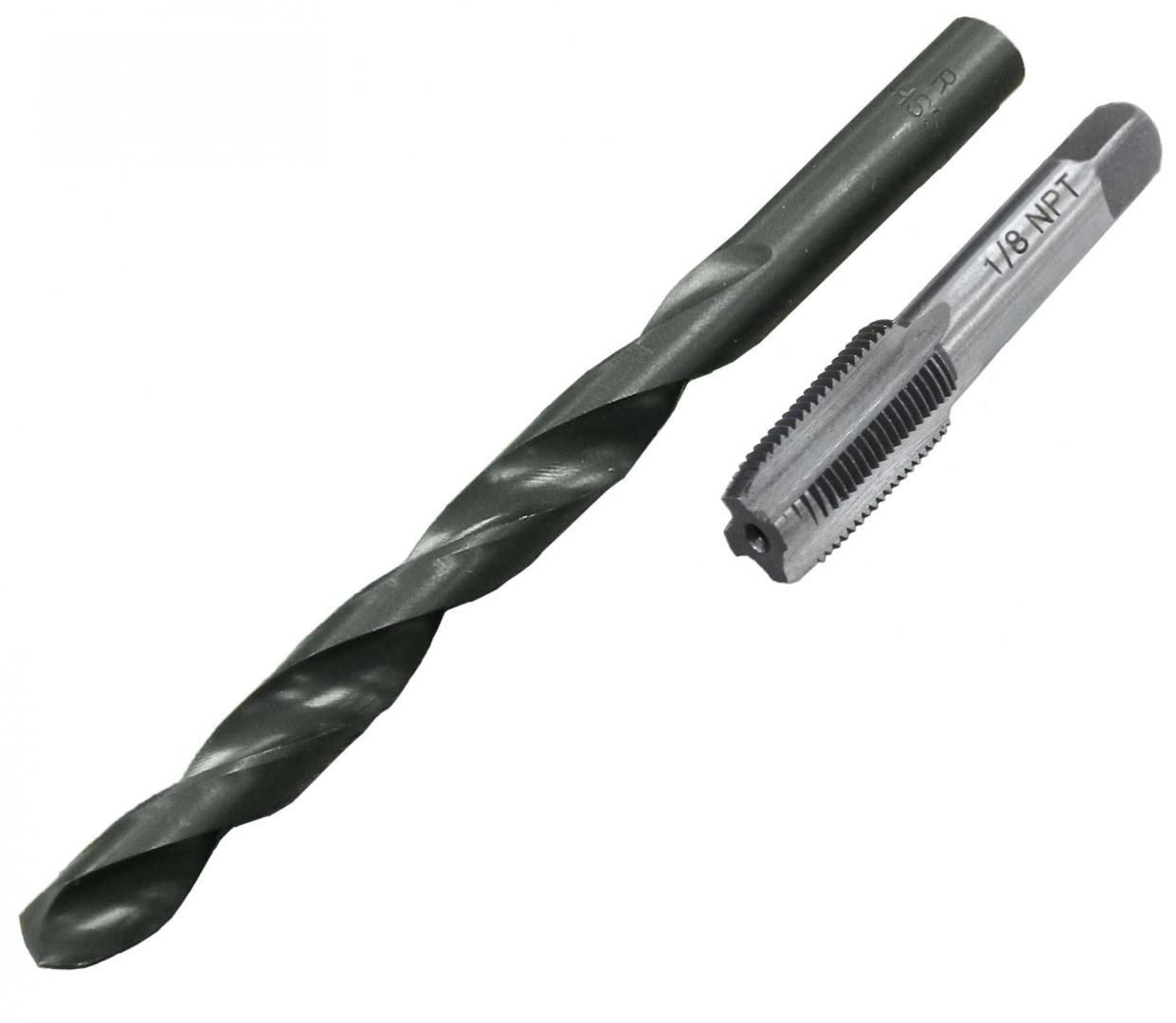
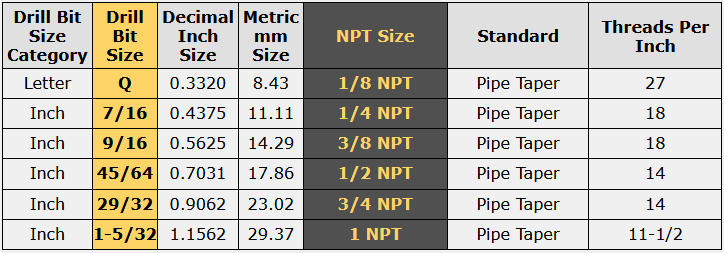
The most commonly recommended drill bit size for a 1/8 NPT tap is Q size or 0.3320 inches (8.44 mm) in diameter. This is the standard size specified by the American National Standard Pipe Thread (ANSI/ASME B1.20.1) guidelines.
| Tap Size | Recommended Drill Bit Size | Decimal (inches) | Millimeters |
|---|---|---|---|
| 1/8 NPT | Q | 0.3320″ | 8.44 mm |
But why this size? The Q size drill bit gives you the correct hole diameter for the taper, allowing the tap to cut threads deep enough for a reliable seal but not too deep for a loose fit.
Alternative Drill Bit Sizes
If you don’t have a Q size drill bit, you can sometimes substitute with a 21/64 inch (0. 3281″) drill bit. However, the fit will be tighter, and you may need more force to tap the hole. Some machinists use a letter R (0.
3390″) for a slightly looser fit, especially in soft materials, but this can reduce the thread engagement.
Why Accurate Drill Bit Size Is Critical
Getting the drill bit size exactly right is important for several reasons:
- Thread Quality: A hole that is too small causes the tap to bind and possibly break. A hole that is too large leads to weak, shallow threads.
- Seal Integrity: NPT threads are designed to seal under pressure. If the threads are not cut to the correct depth, leaks are likely.
- Tap Life: Tapping a hole that is too small puts extra strain on the tap, causing faster wear or breakage.
- Part Strength: Over-sized holes reduce the strength of the threaded joint, risking failure in service.
A common mistake is to use a “close enough” drill bit. For NPT threads, even a difference of a few thousandths of an inch can make a big difference in the final fit.
How To Drill And Tap For 1/8 Npt
Drilling and tapping for a 1/8 NPT thread requires a few careful steps. Here’s a practical guide:
- Select the Drill Bit: Use a Q size (0.3320″) drill bit if possible. If you only have fractional bits, 21/64″ can work in a pinch, but tapping will be harder.
- Mark the Hole Location: Use a center punch to mark the spot. This keeps the drill bit from wandering.
- Drill the Hole: Use a drill press for best accuracy, but a hand drill can work if you keep it straight. Drill to a depth of at least 5/8 inch (16 mm) for most taps. Check your tap’s flute length if you need deeper threads.
- Deburr the Hole: Remove sharp edges with a countersink or file. This helps start the tap straight.
- Apply Cutting Fluid: Use a good quality tapping fluid or oil, especially in steel or hard metals.
- Tap the Hole: Start the tap slowly and keep it straight. Turn a half turn forward, then a quarter turn back to break chips. Go slowly to avoid breaking the tap.
- Check Thread Depth: Use a matching 1/8 NPT fitting to test the fit. The fitting should screw in 2-3 turns by hand, then tighten with a wrench for a good seal.
Example: Tapping Aluminum Vs. Steel
If you’re tapping aluminum, a slightly looser hole (using an R bit) can help avoid binding. In steel, stick with the Q size for best results. In plastic, drill slowly to avoid melting.
Common Mistakes And How To Avoid Them
Many people make errors when tapping NPT threads for the first time. Here are some common pitfalls:
- Using the Wrong Drill Bit: Don’t guess or use “close enough.” Always check the recommended size.
- Drilling Too Shallow: NPT taps need enough depth for the threads to seal. If you don’t drill deep enough, the tap may bottom out before cutting a full thread.
- Not Using Cutting Fluid: Tapping dry leads to rough threads and broken taps, especially in steel.
- Tapping Too Fast: Rushing the process can cause you to break the tap. Always work slowly and back out to clear chips.
- Skipping Deburring: Sharp edges can make the tap start crooked, ruining the threads.
A non-obvious insight: The recommended drill bit size is based on the “tapped hole size at the small end,” not the average diameter. This means the taper must match the tap’s design, so measuring with a caliper after drilling helps confirm you’re on track.
Drill Bit Types: Letter, Number, Fractional, Metric
Drill bits come in several measurement standards. For a 1/8 NPT tap, the recommended size is a letter Q bit. Here’s how these types compare:
| Type | Size Equivalent | Common Use |
|---|---|---|
| Letter | Q (0.332″) | Most common for NPT |
| Fractional | 21/64″ (0.328″) | Acceptable substitute |
| Metric | 8.5 mm | Close alternative |
| Number | No. 1 (0.228″) | Too small for 1/8 NPT |
Letter bits are common in North America, but metric and fractional bits are sometimes used in other regions or when letter bits are unavailable.
Credit: thesensorconnection.com
Step-by-step Example: Tapping A 1/8 Npt Hole
Let’s walk through a real-world example:
- Project: Add a 1/8 NPT port to an aluminum manifold for a pressure gauge.
- Material: Aluminum 6061-T6, 10 mm thick.
- Preparation: Mark the hole location and clamp the part securely.
- Drilling: Use a Q size bit (0.332″). Drill a hole to 16 mm depth.
- Deburring: Use a countersink bit to remove sharp edges.
- Tapping: Use a quality 1/8 NPT tap with cutting oil. Turn slowly, back out to clear chips.
- Testing: Screw in the gauge. It should go in 3 turns by hand, then tighten with a wrench for a leak-free fit.
This process works for steel, brass, or plastic, but adjust speed and oil as needed.
Tapping In Different Materials
The material you are tapping makes a difference. Here’s what you should know for common materials:
Steel
- Use only sharp, high-quality drill bits.
- Always use cutting fluid.
- Stick with the Q size bit for best thread strength.
- Tapping is slow; apply steady pressure.
Aluminum
- Can use Q or R size for easier tapping.
- Use light cutting oil or WD-40.
- Watch for chip buildup; aluminum is “gummy.”
Brass Or Bronze
- Q size bit is best.
- Tapping is easier, but brass is brittle.
- Don’t force the tap—chips break off easily.
Plastic
- Drill slowly to avoid melting.
- Deburr carefully; plastic threads strip easily.
- Use Q or even slightly larger bit for soft plastics.
A non-obvious tip: Always clear chips from the tap every few turns. In soft materials, chips can clog the flutes and ruin threads.
Choosing The Right Tap
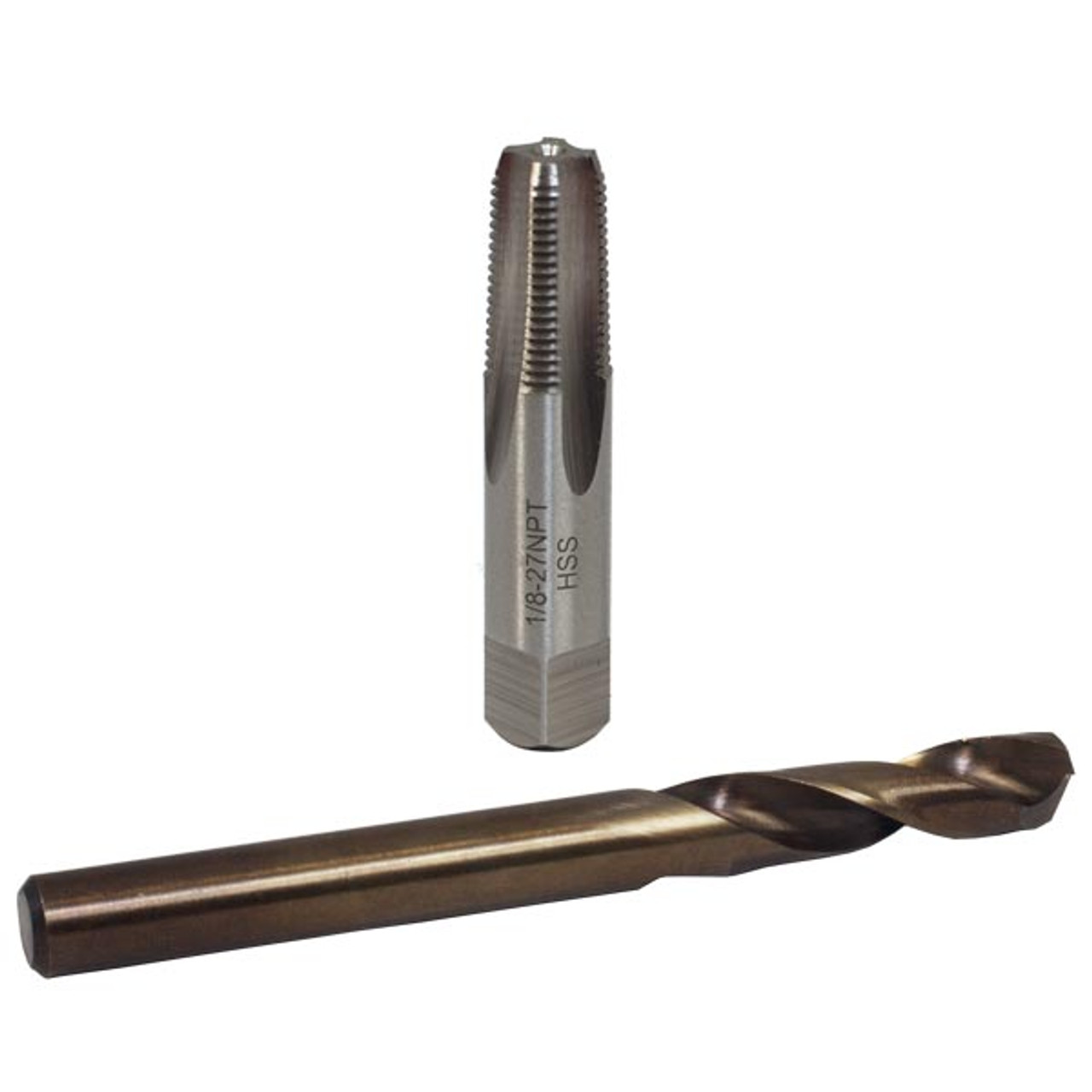
Not all taps are the same. For NPT threads, you want a true pipe tap, not a straight thread tap. Pipe taps have a tapered design and are often marked with “NPT. ” Using a straight tap will not create a leak-proof seal.
There are two main types of NPT taps:
- Taper Pipe Tap: The standard for most pipe threads.
- Pipe Tap with Interrupted Threads: Used for hard materials; easier chip removal.
For home shops, the standard taper pipe tap is enough.
How Deep To Tap A 1/8 Npt Thread
The depth of tapping is important. For a 1/8 NPT thread, the tap should go deep enough that a standard 1/8 NPT fitting will engage 2-3 full turns by hand before tightening with a wrench.
- Minimum tapped depth: 0.44 inches (11.1 mm)
- Recommended full thread: At least 3/8 inch (9.5 mm)
Deeper tapping is allowed, but don’t go too deep or the fitting may thread in too far and bottom out.
Credit: www.glowshiftdirect.com
When To Use Teflon Tape Or Pipe Sealant
NPT threads are designed to seal by metal-to-metal contact, but in practice, most plumbers and machinists use a thread sealant or Teflon tape for extra security.
- Teflon tape: Wrap 2-3 turns around the male thread before assembly.
- Pipe dope: Apply a thin layer on the male thread.
Sealant fills tiny gaps and prevents leaks, especially with older or slightly damaged threads.
Checking Your Work: Thread Fit And Seal
After tapping, always test the fit with a standard 1/8 NPT fitting. If it threads in by hand for 2-3 turns and tightens securely with a wrench, you did it right. If it only goes in one turn, the hole is too small.
If it goes in more than 4-5 turns, the hole is too big.
For leak checks, use soapy water under pressure or a vacuum test. Watch for bubbles to find leaks.
Comparison: Npt Vs. Other Thread Standards
NPT is only one type of pipe thread. Others include BSP (British Standard Pipe) and NPS (National Pipe Straight). These use different tap sizes and drill bits.
| Thread Standard | Tap Size | Drill Bit Size | Type |
|---|---|---|---|
| NPT | 1/8 NPT | Q (0.332″) | Tapered |
| BSP | 1/8 BSP | 8.8 mm | Parallel |
| NPS | 1/8 NPS | Q (0.332″) | Straight |
Always check your fitting’s standard before drilling or tapping.
Tools And Accessories That Make The Job Easier
Having the right tools improves accuracy and results. For 1/8 NPT tapping, consider:
- Drill press for perfect straight holes
- Tap wrench for even pressure
- Center punch for accurate starting
- Deburring tool or countersink for clean edges
- Cutting fluid for long tap life
- Thread gauge to check tap size
Investing in quality tools saves time and reduces frustration, especially if you work with pipe threads often.
Safety Tips When Drilling And Tapping
Drilling and tapping can be dangerous if not done carefully. Always:
- Wear safety glasses to protect your eyes from chips
- Secure your workpiece to prevent movement
- Use cutting fluid to reduce heat and tool wear
- Work slowly and never force the tap
- Clear chips often to avoid jamming
A stuck or broken tap is difficult to remove, so patience pays off.
How To Fix Common Problems
If you make a mistake, not all is lost. Here’s how to fix common issues:
- Hole too big: Use a thread repair insert (like Heli-Coil) or step up to the next NPT size if possible.
- Tap breaks in hole: Try to remove with a tap extractor. If not, drill out and start over.
- Threads strip: Fill with epoxy, then re-tap, or use a thread insert.
- Leaking fitting: Remove, clean threads, and use more sealant or tape.
It’s better to double-check measurements before tapping to avoid these problems.
Expert Tips For Perfect Threads
- Use a thread gauge to confirm tap size before you start.
- Mark your drill bit with tape to avoid drilling too deep.
- Keep taps clean—dirty taps make rough threads.
- Test fit early—don’t wait until the part is installed to check the fit.
- Practice on scrap material if you’re new to tapping NPT threads.
Many machinists keep a set of “thread gauges” or even old fittings to test every tapped hole for quality control.
Where To Buy The Right Drill Bits And Taps
You can find Q size bits and 1/8 NPT taps at most hardware stores, industrial suppliers, or online retailers. Look for reputable brands for long life and reliable results. In some countries, metric equivalents are easier to find; always check the decimal size to confirm compatibility.
For more technical details, you can refer to the official ANSI/ASME B1.20.1 pipe thread specification at the Wikipedia NPT article.
Credit: www.6gtools.com
Frequently Asked Questions
What Is The Exact Drill Bit Size For A 1/8 Npt Tap?
The standard recommended drill bit size is a Q size bit (0.3320 inches or 8.44 mm). This matches the requirements for a 1/8 NPT thread, providing enough room for the tapered tap to cut full threads for a leak-proof seal.
Can I Use A 21/64 Inch Drill Bit Instead Of A Q Size For 1/8 Npt?
Yes, you can use a 21/64 inch bit (0.3281 inches) if you do not have a Q bit. However, tapping will be tighter and may require more effort. The thread fit might also be slightly tighter, so check carefully with your fitting.
How Deep Should I Drill For A 1/8 Npt Tap?
Drill to at least 5/8 inch (16 mm) depth to allow the tap to cut enough threads. The minimum tapped thread depth is 0.44 inches (11.1 mm). Check the length of your tap and fitting to avoid bottoming out.
Do I Need To Use Lubricant When Tapping 1/8 Npt Threads?
Yes, always use a cutting fluid or oil when tapping, especially in steel or hard materials. Lubrication extends tap life, produces cleaner threads, and reduces the risk of breaking the tap.
Why Does The 1/8 Npt Tap Not Match The Actual Hole Size?
The “1/8” size refers to the pipe’s nominal diameter, not the actual hole or tap diameter. NPT threads are tapered and designed for sealing, so the actual tap and drill bit sizes are always larger than 1/8 inch.
Choosing the right drill bit for a 1/8 NPT tap is an essential skill for anyone working with pipes, fittings, or custom projects. By using the standard Q size bit and following careful tapping practices, you’ll get strong, leak-free threads every time.
Remember, accuracy in drilling and patience in tapping are the keys to professional results.