Milwaukee Vs Hilti Hammer Drill
Choosing between a Milwaukee and Hilti hammer drill is a challenge many professionals and serious DIYers face. Both brands have built strong reputations for reliability, performance, and innovation in the power tool industry. However, the right choice often depends on your specific needs, jobsite demands, and even personal preferences. This guide will break down the critical differences, strengths, and weaknesses of both Milwaukee and Hilti hammer drills, helping you make an informed decision without feeling overwhelmed by marketing language or technical jargon.
Whether you are a contractor searching for a tool that can handle daily concrete work, or a homeowner who wants a drill that lasts for years, understanding the real-world performance, durability, and value of these tools is essential. We will look closely at build quality, power, battery technology, ergonomics, pricing, warranty, and more—offering insights that go beyond what you see on the product label.
By the end, you will know which brand is likely to serve you best and why.
Brand Backgrounds
Understanding the history and focus of each brand provides context for their hammer drills.
Milwaukee
Founded in 1924 in the United States, Milwaukee Tool is known for its focus on innovation and practical solutions for tradespeople. Their tools are widely used on North American jobsites, and the brand is famous for its M18 FUEL lineup, which emphasizes cordless performance. Milwaukee’s commitment to durability and user-focused features has earned a loyal following among plumbers, electricians, and construction workers.
Hilti
Hilti is a Liechtenstein-based company, established in 1941. It targets the professional construction industry and is recognized for its premium build quality and exceptional customer service. Hilti tools are common on large commercial projects, where reliability and longevity are critical. Hilti not only sells tools but also offers fleet management and on-site support, positioning itself as a partner to major contractors.
Hammer Drill Basics
A hammer drill combines rotary drilling with a rapid hammering action. This makes it ideal for drilling into tough materials like concrete, stone, and masonry. Both Milwaukee and Hilti offer SDS-Plus and SDS-Max hammer drills, as well as traditional hammer drill/driver models.
- Rotary hammer drills: Use a piston mechanism for stronger hammering, suitable for heavy-duty tasks.
- Hammer drill/drivers: Regular drills with a hammering function, better for light masonry and multi-purpose use.
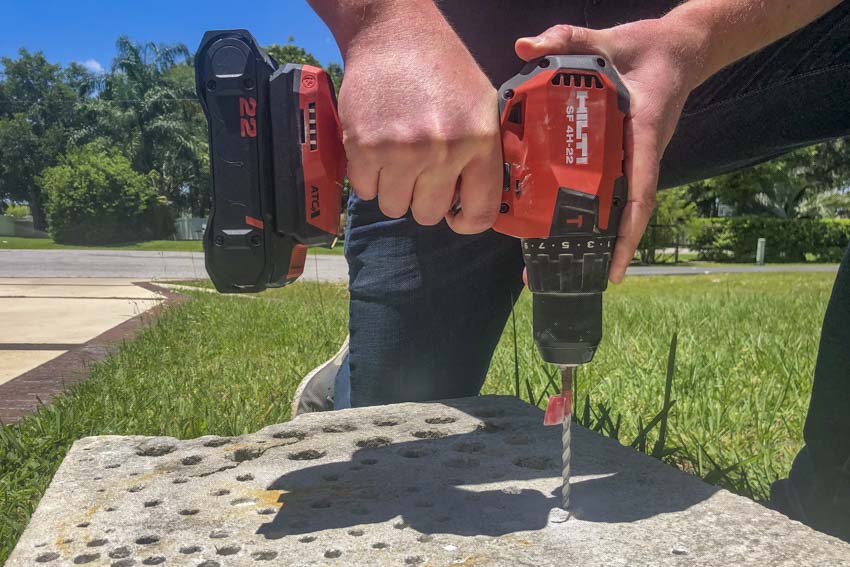
Credit: www.protoolreviews.com
Build Quality And Durability
A key reason professionals invest in high-end brands is build quality.
Milwaukee
Milwaukee hammer drills use metal gear cases and reinforced housing to survive drops and jobsite abuse. Most models include REDLINK PLUS intelligence, protecting the tool from overload and overheating. Users report that Milwaukee tools last for years, even under daily stress.
Hilti
Hilti is synonymous with ruggedness. Many of their hammer drills are made with fiber-reinforced plastics and advanced sealing to keep out dust and moisture. The brand is famous for its “drop test” videos showing drills surviving extreme conditions. Hilti’s reliability often justifies its higher price, especially for contractors who need a tool that will not fail in the middle of a critical job.
Non-obvious insight: Hilti’s build quality is not just about toughness—it is also about precision manufacturing. Their tools tend to have tighter tolerances, which can mean smoother operation and less vibration.
Power And Performance
Performance is more than just maximum torque or blows per minute. It’s about how the tool handles under real workload.
Milwaukee
Milwaukee’s cordless hammer drills, like the M18 FUEL SDS-Plus, deliver up to 1.7 ft-lbs of impact energy and 1,400 RPM. Their brushless motors offer consistent power, and their battery technology keeps performance steady as the battery drains. For corded models, Milwaukee is competitive but focuses more on cordless innovation.
Hilti
Hilti rotary hammers, such as the TE 6-A36, deliver up to 2.2 ft-lbs of impact energy and are designed for continuous heavy-duty use. Their corded models, like the TE 30, are considered the gold standard in many commercial applications, offering up to 3.6 ft-lbs. Hilti’s tools rarely bog down, even in tough material.
Non-obvious insight: Hilti’s power ratings are often conservative. In real-world use, their drills sometimes outperform competitors with higher “paper” specs, thanks to better energy transfer and motor efficiency.
Battery Technology
Cordless hammer drills rely heavily on battery performance.
Milwaukee
The M18 REDLITHIUM batteries are famous for long runtime, quick charging, and cold weather performance. Milwaukee offers a wide range of battery sizes (from compact 2.0Ah to massive 12.0Ah) that fit all M18 tools, making it easy to share batteries across your tool kit. Their smart battery monitoring system helps prevent over-discharging, which extends battery life.
Hilti
Hilti’s CPC (Cordless Power Care) batteries are engineered for tough environments. They are known for cell separation technology that reduces heat buildup, and for having robust shock protection. Hilti batteries are expensive but last longer under heavy use. The brand’s battery management system also allows users to track battery health via the Hilti app.
Practical example: If you are drilling large holes in concrete all day, Hilti’s 36V packs will often outlast Milwaukee’s 18V packs, but for mixed-use and convenience, Milwaukee’s system is hard to beat.
Ergonomics And User Experience
Comfort and ease of use can make a big difference over a long workday.
Milwaukee
Milwaukee hammer drills are generally lighter and more compact than Hilti’s. Their handles are designed with textured rubber for a secure grip, and most models feature anti-vibration technology to reduce fatigue. The controls are straightforward, making them easy to use even with gloves.
Hilti
Hilti’s focus is on balanced weight distribution and minimizing vibration. Many of their drills feature Active Vibration Reduction (AVR), which noticeably lowers user fatigue, especially when drilling above shoulder height. Their triggers and speed controls feel precise, and the overall tool balance is excellent.
Beginner mistake: Many users focus only on power, forgetting that a heavier tool may slow them down or tire them out more quickly.
Feature Comparison
Below is a direct comparison of two leading models: the Milwaukee M18 FUEL SDS-Plus and the Hilti TE 6-A36.
| Feature | Milwaukee M18 FUEL SDS-Plus | Hilti TE 6-A36 |
|---|---|---|
| Voltage | 18V | 36V |
| Impact Energy | 1.7 ft-lbs | 2.2 ft-lbs |
| Weight (with battery) | 7.0 lbs | 8.1 lbs |
| Vibration Reduction | Yes (basic) | Yes (AVR) |
| Max Hole Diameter (concrete) | 1 in. | 1 in. |
| Warranty | 5 years | 2 years (free repair) |
Accessory Systems And Compatibility
Milwaukee’s M18 and M12 battery platforms allow users to share batteries among many tools, from drills to saws to lights. This flexibility is ideal for users building a kit over time. Their ONE-KEY system adds tool tracking and customization for certain models.
Hilti’s cordless lineup is more focused, with a smaller range but all tools built for heavy-duty work. Their Dust Removal Systems (DRS) are among the best, protecting users from silica dust. Hilti’s accessories are often proprietary, which can be a downside for some users.
Non-obvious insight: Milwaukee offers more choices for general construction, while Hilti’s ecosystem is tightly integrated for concrete and masonry specialists.
Pricing And Value
Price is often a deciding factor, but value includes more than just initial cost.
Milwaukee
Milwaukee hammer drills are generally mid-priced. A typical M18 FUEL hammer drill kit (with two batteries and a charger) costs around $300-$400. Replacement batteries are affordable, and the wide platform means your investment goes further if you buy more Milwaukee tools.
Hilti
Hilti hammer drills are premium-priced. The TE 6-A36 kit can cost $700-$900 or more, depending on battery size and accessories. Hilti’s batteries are among the most expensive on the market. However, the company’s service plan includes free repairs and sometimes tool replacement within the first two years, plus discounted repair costs after.
Beginner mistake: Comparing only the upfront cost can be misleading. Hilti’s higher price often includes after-sales support and longer tool life, which can lower total cost over time for professionals.
Warranty And Service
Warranty and service can make or break the ownership experience.
Milwaukee
Milwaukee offers a five-year warranty on most power tools, with a three-year warranty on batteries. Their service network is widespread in North America, making repairs and replacements relatively easy.
Hilti
Hilti provides a two-year no-cost repair period (including wear and tear), followed by a 20-year limited warranty on defects. What sets Hilti apart is their fast turn-around—often returning repaired tools in 1-3 days. They also offer fleet management, where you can rent tools and swap them for new ones as they age.
Practical example: For a contractor with tight deadlines, Hilti’s service means minimal downtime if a tool fails.
Real-world Performance
Field tests and user reviews reveal important differences between Milwaukee and Hilti hammer drills.
- Concrete drilling: Hilti drills often complete tasks faster, especially with larger holes or continuous use. Milwaukee keeps up well in short bursts or lighter jobs.
- Battery runtime: Hilti’s 36V packs last longer in heavy-duty applications, but Milwaukee’s 18V packs are more versatile for smaller jobs.
- Comfort: Users report less hand fatigue with Hilti after a full day of drilling, mainly due to better vibration control.
- Maintenance: Hilti’s sealed design results in fewer dust-related problems, reducing maintenance needs on busy jobsites.
User Profiles: Who Should Choose Which?
The right hammer drill depends on how and where you work.
Choose Milwaukee If:
- You want flexibility and a large tool system
- Price is a significant concern
- You do a mix of woodworking, electrical, and some masonry
- You want a lighter, more compact tool
- You need a tool that is easy to service locally
Choose Hilti If:
- You are a full-time contractor or work on large commercial projects
- Reliability is more important than initial cost
- You drill into concrete, stone, or masonry every day
- You value fleet management or tool tracking
- You need top-tier dust protection and vibration control
Common Mistakes When Choosing
- Focusing only on specs: Impact energy and RPM numbers do not tell the whole story. Field performance and user comfort are just as important.
- Ignoring ecosystem: Matching your drill with batteries and accessories you already own can save money and hassle.
- Underestimating service: Downtime is expensive on a jobsite. Fast, reliable service and warranty support can be more valuable than a “better” tool on paper.
- Buying too much tool: A heavy-duty Hilti may be overkill for occasional home repairs; likewise, a lighter Milwaukee may not survive daily demolition work.
Pros And Cons Summary
To help clarify, here is a quick overview of strengths and weaknesses:
| Brand | Pros | Cons |
|---|---|---|
| Milwaukee |
|
|
| Hilti |
|
|

Credit: www.youtube.com
Expert Tips For Choosing
- Test before buying: Many dealers will let you try the tools in store. Even 5 minutes of drilling can reveal differences in comfort and control.
- Consider long-term needs: If your projects are growing, investing in a higher-quality tool now may save money later.
- Ask about service: Check how quickly each brand can repair or replace tools in your area.
- Look for deals: Milwaukee often has promotions and combo kits, while Hilti sometimes offers trade-in or fleet deals for professionals.
- Check for dust regulations: Some jobsites require tools with advanced dust management, which Hilti excels at.
Sustainability And Environmental Impact
Both Milwaukee and Hilti have made efforts to reduce their environmental footprint.
- Milwaukee uses recyclable packaging and is developing more energy-efficient battery technology.
- Hilti has made strides in tool recycling and offers battery recycling programs in many countries.
While not a main factor for most buyers, these efforts show each brand’s commitment to responsible manufacturing.
Final Thoughts
Choosing between a Milwaukee and Hilti hammer drill is not just about picking the “better” tool—it’s about selecting the right tool for your work, budget, and future plans. Milwaukee offers flexibility, affordability, and a large ecosystem, making it a smart choice for many users. Hilti delivers industry-leading durability, service, and performance, justifying its premium price for demanding professionals.
The smartest buyers look beyond specs and price tags. They consider comfort, long-term value, and after-sales support. By matching the tool to your real-world needs, you can avoid costly mistakes and ensure your investment pays off for years.
For more detailed technical comparisons and user reviews, you can visit the Pro Tool Reviews website.
Frequently Asked Questions
Which Brand Is Better For Concrete Drilling?
Hilti is generally preferred for heavy-duty concrete drilling due to its higher impact energy, better vibration control, and longer battery life under load. However, Milwaukee is excellent for lighter concrete work and general construction.
Are Milwaukee Batteries Compatible With Hilti Tools?
No, Milwaukee and Hilti use different battery platforms. Milwaukee’s M18 batteries only fit Milwaukee tools, while Hilti’s batteries are designed for their own cordless lineup.
Is Hilti Worth The Extra Cost For Home Users?
For most home users, Milwaukee offers better value. Hilti’s higher price is justified mainly for professionals who need maximum reliability, service, and performance in demanding environments.
How Long Do Milwaukee And Hilti Hammer Drills Typically Last?
With proper care, Milwaukee hammer drills can last 5-8 years, while Hilti models often last 10 years or more, especially with regular service. Jobsite conditions, maintenance, and usage intensity all impact lifespan.
What Is Unique About Hilti’s Service Plans?
Hilti’s service plans include free repairs for two years (including wear and tear), fast turnaround, and options for fleet management. This reduces downtime and long-term costs for professional users, making Hilti a favorite among large contractors.

Credit: www.youtube.com