The drill press stands as one of the most essential and versatile machines in workshops, garages, and industrial facilities worldwide. Its precise power and adaptability have made it indispensable for metalworkers, woodworkers, mechanics, and even jewelry makers. Whether you’re a seasoned professional or a curious hobbyist, understanding what a drill press is used for, and how it can elevate the accuracy and quality of your work, can dramatically broaden your project possibilities.
Unlike handheld drills, the drill press offers unmatched stability, repeatability, and power. This stationary machine uses a lever to lower the drill bit into materials with controlled force, resulting in cleaner, straighter, and more consistent holes. But the drill press isn’t limited to just drilling; its functions extend to tapping, sanding, mortising, and even light-duty milling.
This in-depth guide explores the full range of drill press applications, types, key features, and best practices, enabling you to harness its full potential.
Key Takeaways
- Drill presses offer superior precision, repeatability, and safety compared to handheld drills.
- Uses include drilling, reaming, countersinking, mortising, sanding, and tapping.
- Different types, benchtop, floor, radial, and magnetic, suit various materials and tasks.
- Key features such as variable speed, depth stops, and adjustable tables enhance versatility.
- Proper setup, maintenance, and safety practices are critical for optimal performance.
What Is A Drill Press? Core Functions And How It Works
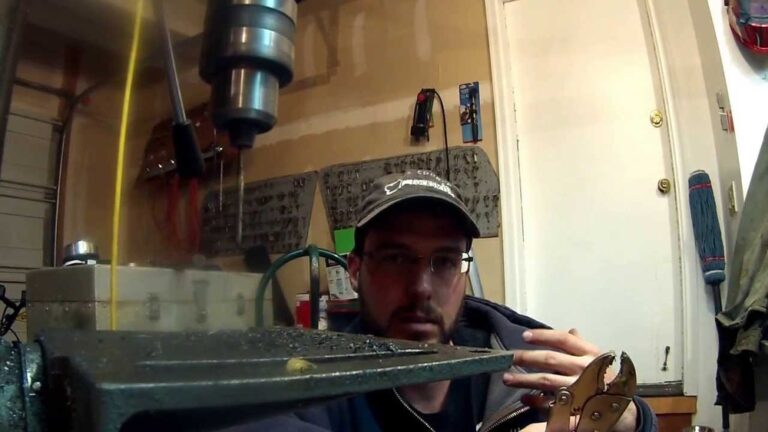
A drill press is a stationary machine tool designed to bore precise holes in various materials. Unlike handheld drills, the drill press mounts the workpiece on a fixed table and uses a vertically moving spindle to guide the drill bit with exceptional accuracy. The operator controls the spindle’s descent using a lever or a feed wheel, applying uniform pressure.
Anatomy Of A Drill Press
Understanding its main components is crucial to mastering its use:
- Base: Provides stability and support for the entire machine.
- Column: A vertical pillar connecting the base to the head, ensuring rigidity.
- Table: Adjustable surface where materials rest; can move vertically or tilt for angled drilling.
- Spindle: Holds and rotates the drill bit at variable speeds.
- Chuck: Clamping device that secures the drill bit.
- Motor: Powers the spindle, typically offering variable speed settings.
Core Drilling Functions
The fundamental function is to drill clean, straight holes. The drill press excels in:
- Boring holes with precise control over depth and diameter.
- Repetitive drilling, ensuring every hole is consistent, a must in production settings.
- Drilling at angles by tilting the table or using jigs.
Controlled Power And Speed
Most modern drill presses feature variable speed controls. This lets users adjust RPMs to match the material:
- High speeds for wood and soft metals
- Low speeds for steel and hard alloys
This precise speed management reduces bit wear and improves hole quality.
Example: Precision In Cabinet Making
Cabinetmakers often use a drill press to bore consistent shelf pin holes. When I tested this process, the drill press’s depth stop and fence system enabled me to drill a dozen perfectly aligned holes, something extremely difficult with a handheld drill.
Major Uses Of The Drill Press Across Materials
The versatility of the drill press allows it to handle a wide array of operations and materials. Let’s break down the primary uses:
Drilling Clean, Straight Holes
The most common application, but with advantages over portable drills:
- Straightness: Gravity and rigidity keep the bit perpendicular.
- Repeatability: Built-in depth stops and fences ensure uniformity.
- Reduced bit wandering: The fixed spindle minimizes deviation.
Reaming, Countersinking, And Counterboring
- Reaming: Enlarges or finishes an existing hole to a precise diameter.
- Countersinking: Creates a conical recess for screw heads to sit flush.
- Counterboring: Produces a flat-bottomed recess for bolt heads.
These specialized bits require the stability and torque a drill press provides.
Tapping And Threading
A drill press can be used to drive taps into pre-drilled holes, producing internal threads with perfect vertical alignment. This is critical in metal fabrication, where off-axis tapping can ruin workpieces.
Mortising For Woodworking
Woodworkers frequently adapt drill presses with mortising attachments to cut square or rectangular holes for mortise and tenon joinery. This technique is invaluable for creating strong, precise joints.
Sanding And Surface Preparation
By fitting sanding drums or flap wheels, a drill press becomes a stationary sander. This is useful for:
- Edge sanding: Achieving smooth, even finishes on curved or small parts.
- Surface preparation: Prepping metal or wood before finishing.
Light-duty Milling And Shaping
With specialized attachments, the drill press can handle light milling tasks, such as slotting or shaping soft materials. However, it’s not a substitute for a true milling machine.
Real-world Example: Metal Fabrication Shop
In a metal fabrication shop, drill presses are used daily to bore bolt holes in steel plates. According to Wikipedia, the drill press’s ability to maintain perpendicularity is crucial for ensuring bolts fit correctly and structural components align.
Data Table: Common Drill Press Operations By Material
| Operation | Wood | Metal | Plastic |
|---|---|---|---|
| Drilling | ✓ | ✓ | ✓ |
| Reaming | ✓ | ✓ | ✓ |
| Countersinking | ✓ | ✓ | ✓ |
| Mortising | ✓ | , | , |
| Tapping | , | ✓ | ✓ |
| Sanding | ✓ | ✓ | ✓ |
Types Of Drill Presses And Their Specialized Uses
Drill presses come in several configurations, each tailored to different needs and environments. Understanding the differences helps you select the right model for your tasks.
Benchtop Drill Press
- Compact and portable, ideal for small workshops and hobbyists.
- Typically limited to lighter-duty tasks and smaller workpieces.
- Ideal for woodworking, jewelry making, and model building.
Floor-standing Drill Press
- Larger and more powerful, designed for heavy-duty industrial use.
- Accommodates larger materials and offers greater throat depth.
- Common in metal fabrication, automotive, and professional woodworking shops.
Radial Drill Press
- Adjustable arm allows the spindle to move horizontally and pivot.
- Enables drilling at multiple points without repositioning large workpieces.
- Preferred in metalworking shops for drilling large, heavy plates.
Magnetic Drill Press
- Portable and attaches magnetically to steel surfaces.
- Used for drilling holes in large, fixed steel structures (e.g., I-beams).
- Essential for construction, shipbuilding, and field repairs.
Comparison Table: Drill Press Types
| Type | Best For | Power | Mobility | Material Capacity |
|---|---|---|---|---|
| Benchtop | DIY, Small Parts | Low | High | Small |
| Floor-Standing | Industrial, Heavy-Duty | High | Low | Large |
| Radial | Large Workpieces | Medium-High | Medium | Very Large |
| Magnetic | On-Site Metalwork | Medium | Very High | Medium |
Example: Automotive Repair Shop
In my experience, floor-standing drill presses are indispensable in automotive repair shops. They’re used to bore precision holes in engine blocks, brackets, and custom parts, tasks where accuracy is vital to ensure proper fit and function.
Key Features That Enhance Drill Press Performance
The performance and versatility of a drill press depend heavily on its features. When evaluating or using a drill press, consider these elements:
Variable Speed Control
- Allows for adjusting spindle speed to match material type and bit size.
- Prevents overheating and extends bit life.
- Essential for switching between wood, metal, and plastic.
Adjustable Table
- The work table can be raised, lowered, and tilted for angled drilling.
- Facilitates working with different material sizes and shapes.
- Some tables feature slots for clamps and vises.
Depth Stop
- Enables precise, repeatable hole depths.
- Critical for applications such as dowel joinery or countersinking.
Laser Guide And Led Light
- Integrated laser guides project crosshairs for exact hole positioning.
- LED lights illuminate the work area, improving accuracy and safety.
Spindle Travel And Throat Depth
- Spindle travel: The maximum distance the spindle can move vertically. Longer travel suits deeper holes.
- Throat depth: Distance from the spindle to the column, dictating how far from the edge a hole can be drilled.
Safety Features
- Emergency stop buttons and clear guards protect operators.
- Keyless chucks allow quick bit changes, reducing downtime.
Pro Tip:
Always match drill speed and bit type to the material for optimal results and to prevent damage.
Best Practices For Setting Up And Using A Drill Press
Proper setup and operation are critical for safe, precise, and efficient drill press use. Here’s how to get the most from your machine:
Secure The Workpiece
- Always clamp the workpiece to the table to prevent spinning or shifting.
- Use a drill press vise for small or irregularly shaped items.
Select The Right Drill Bit
- Choose bit type and size to match material and hole requirements.
- Inspect bits for wear or damage before use.
Adjust Speed And Table Position
- Set the spindle speed according to material hardness and bit size.
- Position the table so the bit aligns with the mark on the workpiece.
Use The Depth Stop
- Set the depth stop for consistent hole depth, especially in repetitive tasks.
Maintain Cleanliness
- Regularly remove chips and debris from the table and spindle area.
- Lubricate moving parts as recommended by the manufacturer.
Prioritize Safety
- Wear safety glasses and avoid loose clothing.
- Keep hands clear of the bit and use a brush (not hands) to remove chips.
Real-world Example: Jewelry Workshop
In a jewelry workshop, benchtop drill presses are used to bore tiny holes in silver and gold pieces. The variable speed and fine control ensure delicate materials aren’t damaged, and the adjustable table allows precise alignment for intricate designs.
Drill Press Accessories And Attachments That Expand Its Capabilities
The utility of a drill press extends far beyond basic drilling when paired with the right accessories and attachments.
Vises And Clamps
- Drill press vises hold materials firmly for accurate drilling.
- Clamps secure large or awkwardly shaped workpieces.
Mortising Attachments
- Convert the drill press for square hole cutting in woodworking.
- Attachments guide a special chisel and bit to produce mortises for joinery.
Sanding Drums And Sleeves
- Attach to the spindle for sanding curves, edges, and small surfaces.
- Ideal for smoothing wood, plastic, and even soft metals.
Circle Cutters
- Specialized attachments that let you cut perfect circles in wood and soft materials.
- Adjust the cutting radius for different diameters.
Tapping Attachments
- Simplify creating threaded holes in metal or plastic.
- Maintain perfect alignment to prevent cross-threading.
Table Extensions And Fences
- Table extensions support larger workpieces.
- Fences provide straight edges for repetitive drilling or mortising.
Data Table: Common Drill Press Attachments
| Attachment | Primary Use | Best Material |
|---|---|---|
| Vise | Secure Workpiece | All |
| Mortising Attachment | Square Holes | Wood |
| Sanding Drum | Sanding Curves/Edges | Wood, Plastic |
| Circle Cutter | Cutting Circles | Wood, Plastic |
| Tapping Attachment | Threading Holes | Metal, Plastic |
Advantages And Limitations Of Drill Presses
While drill presses offer numerous benefits, understanding their limitations ensures you select the right tool for each job.
Key Advantages
- Precision: Delivers straight, accurate holes every time.
- Consistency: Ideal for repetitive drilling, reducing error rates.
- Power: Handles harder materials and larger bits than handheld drills.
- Versatility: With attachments, can sand, mortise, tap, and more.
- Safety: Stationary setup keeps hands clear and reduces bit breakage.
Main Limitations
- Space requirements: Floor-standing models take up significant room.
- Portability: Generally stationary, except for magnetic models.
- Material size limits: Throat depth and spindle travel restrict maximum workpiece size.
- Not for heavy milling: Lacks the rigidity for full-scale milling operations.
Example: Furniture Manufacturing Facility
A large-scale furniture manufacturer relies on floor-standing drill presses for dowel joinery and mortising. However, for heavy-duty shaping or milling, they switch to dedicated milling machines, highlighting the drill press’s specialization in precise drilling.
Maintenance And Safety: Keeping Your Drill Press Reliable
Proper maintenance and adherence to safety protocols are essential for long-lasting, trouble-free drill press operation.
Routine Maintenance Tips
- Lubricate moving parts as per the manufacturer’s schedule.
- Inspect belts and pulleys for wear and replace as needed.
- Clean the table and base regularly to prevent buildup of chips and dust.
- Check the chuck and spindle for runout (wobble) and tighten if necessary.
Essential Safety Practices
- Always disconnect the power before changing bits or performing maintenance.
- Use guards and shields where provided.
- Never wear gloves, ties, or loose clothing near the spindle.
- Keep a clear workspace and store tools safely.
Warning:
Never attempt to stop the spindle by hand or remove chips while the machine is running.
Real-world Example: School Technology Lab
In a high school technology lab, teachers emphasize strict safety protocols. Students learn to clamp all workpieces and wear eye protection at all times, drastically reducing accidents and machine damage.
Frequently Asked Questions
What Materials Can A Drill Press Work With?
A drill press can handle a wide range of materials including wood, metals (such as steel, aluminum, and brass), plastics, composites, and even ceramics with the right bit and speed settings. The machine’s versatility depends on the motor power, bit selection, and variable speed control. For particularly hard or brittle materials, specialized bits and coolants may be necessary.
Can A Drill Press Be Used For Mortising Without Special Attachments?
While a drill press can create the pilot holes for mortises, producing clean, square mortises requires a mortising attachment that pairs a chisel and auger bit. Without this, you’ll only achieve round holes, which may then need chiseling by hand to square the corners, less efficient and less precise than using the dedicated attachment.
How Is A Drill Press Different From A Milling Machine?
Although both machines appear similar, a drill press is primarily for drilling vertical holes, while a milling machine is built to handle side-to-side forces for cutting slots, grooves, and complex shapes. Milling machines are much more rigid, can move the workpiece in multiple axes, and are better suited for heavy-duty shaping or cutting operations.
What Are The Most Important Safety Accessories For A Drill Press?
Key safety accessories include clear acrylic guards around the spindle and chuck, emergency stop buttons, and workpiece clamps or vises to prevent spinning. For added safety, some operators install foot switches to cut power instantly. Always wear ANSI-rated safety glasses when operating the machine.
How Do I Reduce Drill Bit Wandering When Starting A Hole?
To minimize wandering, start with a center punch to make a small dimple at the drilling location. This guides the bit and keeps it from skidding across the surface. For especially hard materials, use a pilot hole: drill a small-diameter hole first, then enlarge it with the final bit. Slow, steady feed and the right speed setting are also crucial.
The drill press remains an invaluable tool for both professionals and DIY enthusiasts, prized for its accuracy, safety, and adaptability. By understanding its full range of uses, choosing the right model and attachments, and following best practices, you can dramatically improve the quality and consistency of your projects. For those ready to take their workshop skills to the next level, investing in a quality drill press is a decision that pays dividends in both productivity and craftsmanship. For more technical specifications and industrial applications, visit the Machine Tool Help website.