Drilling pilot holes for lag bolts may seem like a simple task, but choosing the right drill bit size is essential for both the strength and safety of your project. Whether you’re fastening lumber for a deck, securing heavy-duty brackets, or anchoring structural components, the difference between a reliable connection and a failed joint often comes down to pilot hole precision. The 5/16 lag bolt is a common choice for medium to heavy-duty wood applications, but what drill bit should you use to ensure optimal grip without splitting the wood?
Through years of construction and woodworking experience, I’ve learned that a mismatch between lag bolt and pilot hole sizes can lead to stripped threads, split beams, and costly repairs. This article provides a comprehensive, data-driven guide to selecting the correct drill bit size for a 5/16 lag bolt. We’ll cover 16 critical considerations, from wood species and hole depth to bolt material and torque requirements, so you can approach your next project with confidence and expertise.
Key Takeaways
- Use a 1/4-inch drill bit for the pilot hole when installing a 5/16 lag bolt into most wood types.
- Adjust drill bit size based on wood density, bolt material, and project requirements.
- Proper pilot hole sizing prevents wood splitting and ensures maximum holding strength.
- Refer to manufacturer recommendations and real-world examples for accurate guidance.
- This article explores 16 factors affecting drill bit choice, with actionable tips and comparison tables.
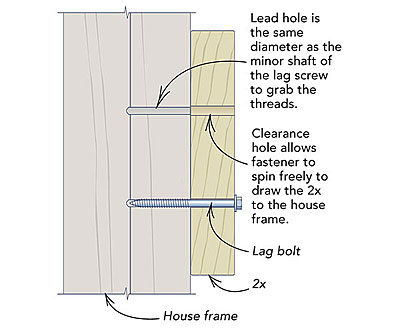
Credit: www.finehomebuilding.com
Understanding Lag Bolts And Pilot Holes
Lag bolts, also known as lag screws, are heavy-duty fasteners designed for wood-to-wood or wood-to-metal connections. Their coarse threads and hex heads make them ideal for structural applications, but they require carefully sized pilot holes to function effectively. A pilot hole is a pre-drilled opening that guides the bolt, reducing friction and preventing the wood from splitting.
The Importance Of Proper Pilot Hole Size
Choosing the right pilot hole diameter is crucial because:
- Undersized holes can split the wood, increase installation torque, and cause bolt breakage.
- Oversized holes reduce holding strength by minimizing thread engagement.
For a 5/16 lag bolt, an optimal pilot hole balances easy installation with maximum grip.
Lag Bolt Standards And Sizing
The American Wood Council and manufacturers like Simpson Strong-Tie recommend specific pilot hole sizes based on bolt diameter and wood species. For a 5/16 lag bolt, the most common pilot hole sizes are:
- Softwood: 1/4 inch
- Hardwood: 17/64 inch
These sizes accommodate the bolt’s shank (smooth portion) while preserving enough material for the threads to bite into.
The 16 Key Factors Affecting Drill Bit Size For 5/16 Lag Bolts
Selecting the right drill bit involves more than matching numbers. Below are 16 essential considerations, each with its own impact on performance and safety.
1. Type Of Wood (softwood Vs. Hardwood)
The wood species determines how much the fibers compress and resist splitting.
- Softwoods (pine, cedar): More forgiving; 1/4-inch pilot hole recommended.
- Hardwoods (oak, maple): Denser; use a slightly larger 17/64-inch pilot hole.
Example: Driving a 5/16 lag bolt into oak with a 1/4-inch pilot hole may require excessive torque and risk splitting. Upgrading to 17/64 inch eases installation.
2. Lag Bolt Length
Longer bolts create more friction over their length, increasing the need for a precise pilot hole. For bolts over 4 inches, a slightly larger hole (or stepped drilling, see item 9) may be warranted.
Pro Tip: For bolts longer than 6 inches, consider drilling a full-depth shank hole and a slightly smaller thread hole.
3. Bolt Thread Design
Lag bolts come with coarse threads for wood, but some specialty bolts have finer threads or partial threading.
- Coarse threads: Standard pilot hole sizes apply.
- Fine threads: May require a smaller pilot hole for better grip.
4. Pilot Hole Depth
The pilot hole should match the full length of the lag bolt’s threaded section. A shallow hole can cause the bolt to veer off course or split the wood at the end.
- Correct depth: Ensures straight, secure installation.
- Too shallow: Increases risk of splitting and misalignment.
5. Pilot Hole Position
Drilling too close to the edge or end of a board increases splitting risk.
- Minimum distance: At least twice the diameter of the bolt from any edge.
- Angled drilling: May require a slightly larger pilot hole.
6. Wood Moisture Content
Wet or green wood compresses more easily, so a standard pilot hole may suffice. Dry wood is brittle and benefits from a slightly larger pilot hole to prevent cracking.
Example: For kiln-dried oak, using a 17/64-inch bit instead of 1/4 inch can reduce splitting.
7. Type Of Drill Bit
Bit style affects the accuracy and cleanliness of the hole.
- Twist bits: Most common for pilot holes.
- Brad-point bits: Ideal for precise, clean holes in wood.
- Auger bits: Useful for deep holes in thick timbers.
Pro Tip: Use a brad-point bit for hardwoods to reduce tear-out.
8. Bolt Material
Stainless steel lag bolts have lower shear strength than zinc-plated or galvanized steel.
- Stainless steel: Use the standard pilot hole size; avoid overtightening.
- Hardened steel: May tolerate a slightly smaller pilot hole.
9. Step Drilling Technique
For especially long or large-diameter lag bolts, a two-step drilling process can improve results:
- Drill a shank hole (same diameter as the bolt’s smooth portion) for the unthreaded section.
- Drill a smaller thread hole for the threaded section.
This approach reduces friction and splitting risk.
10. Use Of Washers
Washers distribute the load and prevent the bolt head from embedding into the wood. They do not affect pilot hole size, but should always be considered in structural applications.
Example: In deck construction, always use washers under lag bolt heads for safety.
11. Pilot Hole Tolerance
Manufacturing variances and tool wear can change drill bit sizes by up to 1/64 inch. It’s essential to check your bits for wear and measure with calipers for critical projects.
- Tight tolerance: Important for structural connections.
- Loose tolerance: Acceptable for non-structural applications.
12. Torque Requirements
Lag bolts installed with impact drivers or wrenches require less torque if the pilot hole is optimal. Too much resistance can shear the bolt or strip the threads.
Pro Tip: If the bolt stops turning before fully seated, back it out and ream the hole slightly larger.
13. Surface Treatment Of Lag Bolts
Galvanized, coated, or painted lag bolts may have slightly larger diameters due to the coating. Always measure and adjust pilot hole size accordingly.
- Hot-dip galvanized: May need a pilot hole 1/64 inch larger than standard.
14. Environmental Conditions
Extreme cold can make wood brittle; a larger pilot hole reduces splitting risk. In humid environments, wood swells, keep this in mind when drilling pilot holes during construction.
Example: For outdoor projects in winter, err on the side of a slightly larger pilot hole.
15. Manufacturer Recommendations
Always check the packaging or technical data sheets for the specific lag bolts you’re using. Some manufacturers provide precise pilot hole sizing for their products.
- Simpson Strong-Tie: Recommends 1/4-inch for 5/16 lag bolts in softwood, 17/64-inch in hardwood.
- USP Structural Connectors: Similar guidelines.
16. Building Codes And Safety Standards
Local building codes may dictate pilot hole sizes for structural applications like decks, fences, and timber framing. Always adhere to code requirements and consult an inspector if uncertain.
- International Residential Code (IRC): References American Wood Council standards for fastener installation.
Real-world Examples And Case Studies
To illustrate the importance of correct pilot hole sizing for 5/16 lag bolts, let’s examine three common scenarios.
Example 1: Deck Ledger Installation
A homeowner attaches a deck ledger to a house using 5/16 lag bolts in pressure-treated pine. Using a 1/4-inch pilot hole, the bolts seat easily, and the wood shows no signs of splitting. The deck passes inspection and remains secure for years.
Example 2: Timber Frame Joinery
In a timber frame barn, 5/16 lag bolts are installed into seasoned oak beams. When a 1/4-inch pilot hole is used, several beams split, compromising structural integrity. Switching to a 17/64-inch bit resolves the issue, and all subsequent connections are solid.
Example 3: Playground Equipment Assembly
An installer uses galvanized 5/16 lag bolts to secure a swing set. The manufacturer recommends a 9/32-inch pilot hole to accommodate the thicker coating. The installer follows this guidance, ensuring both safety and longevity of the equipment.

Credit: handtoolessentials.com
Data-driven Comparison: Drill Bit Sizes For 5/16 Lag Bolts
To help clarify the best drill bit size for various scenarios, consider the table below:
| Wood Type | Recommended Drill Bit Size | Notes |
|---|---|---|
| Softwood (Pine, Cedar) | 1/4 inch | Standard pilot hole size |
| Hardwood (Oak, Maple) | 17/64 inch | Reduces splitting risk |
| Pressure-Treated Wood | 1/4 inch | Works well for most projects |
| Galvanized Lag Bolts | 9/32 inch | Accommodates thicker coating |
Warning: Always verify with the specific lag bolt manufacturer and your local code requirements.
Step-by-step Guide: Drilling The Perfect Pilot Hole
Following a proven process ensures consistent, safe installations.
1. Measure The Lag Bolt
Use calipers to measure both the shank and threaded portion of your 5/16 lag bolt. Confirm whether coatings increase the effective diameter.
2. Select The Correct Drill Bit
Choose a drill bit that matches the recommendations for your wood type and bolt material. When in doubt, start with a slightly smaller bit and test fit.
3. Mark The Hole Location
Position your pilot hole at least twice the bolt diameter from any edge. Use a center punch for accuracy.
4. Drill At The Correct Depth
Mark your drill bit with tape to indicate the proper depth. Drill straight and avoid wobbling to maintain hole integrity.
5. Clean Out Sawdust
Remove debris from the hole with compressed air or a pipe cleaner. This ensures the lag bolt threads can engage fully.
6. Drive The Lag Bolt
Insert the lag bolt with a wrench or impact driver. If resistance is excessive, back out and ream the hole slightly larger.
Example: In my experience, pre-lubricating the bolt threads with wax reduces installation torque and protects the wood.
Comparison Table: 5/16 Lag Bolt Pilot Holes Vs. Other Common Sizes
For further context, here’s how the 5/16 lag bolt compares to other popular sizes:
| Lag Bolt Size | Softwood Pilot Hole | Hardwood Pilot Hole | Typical Applications |
|---|---|---|---|
| 1/4 inch | 3/16 inch | 13/64 inch | Light framing, furniture |
| 5/16 inch | 1/4 inch | 17/64 inch | Decks, ledgers, medium-duty connections |
| 3/8 inch | 5/16 inch | 21/64 inch | Beams, heavy timber framing |
| 1/2 inch | 13/32 inch | 27/64 inch | Structural connections, large posts |
Advanced Techniques And Tools For Lag Bolt Installation
For professionals and enthusiasts seeking optimal performance, these advanced methods can improve lag bolt installations.
Using Drill Guides For Precision
A drill guide or jig ensures straight, accurate pilot holes, especially in thick or hard materials.
- Self-centering jigs: Prevent off-center holes.
- Adjustable guides: Useful for angled or repetitive drilling.
Pre-drilling Multiple Pilot Holes
In projects with multiple lag bolts (e. g. , ledger boards), layout and pre-drill all pilot holes before installation. This ensures consistency and speeds up the process.
Lubrication And Thread Wax
Applying wax or soap to lag bolt threads reduces friction and installation torque. This is especially beneficial in hardwoods and with long bolts.
Pro Tip: Beeswax is preferred over paraffin for eco-conscious builders.
Impact Drivers Vs. Hand Wrenches
While hand wrenches offer control, impact drivers can speed up installation, especially for large projects. However, excessive torque may strip threads if the pilot hole is too small.
- Cordless impact drivers: Ideal for site work.
- Manual torque wrenches: Best for precise applications.
Common Pitfalls And How To Avoid Them
Lag bolt installations can fail for several reasons. Here’s how to prevent common mistakes.
1. Using The Wrong Drill Bit Size
- Too small: Splits wood, increases torque.
- Too large: Reduces holding strength.
Always verify bit size with a test hole.
2. Skipping The Pilot Hole
Driving lag bolts without a pilot hole often splits wood, weakens the connection, and can break the bolt.
3. Inadequate Hole Depth
Short pilot holes cause bolts to veer off course or bind before fully seated.
4. Ignoring Manufacturer Guidelines
Each lag bolt manufacturer may specify different pilot hole sizes. Always check the technical data sheet.
5. Over-tightening Bolts
Excessive torque can strip threads or shear the bolt. Use a torque wrench for precision.
Warning: If you encounter excessive resistance, stop and ream the hole slightly larger.
Table: Effect Of Pilot Hole Size On Lag Bolt Holding Strength
A 2016 technical report from the USDA Forest Products Laboratory analyzed the relationship between pilot hole size and lag bolt withdrawal strength:
| Pilot Hole Size (for 5/16 Bolt) | Withdrawal Strength (lbf) | Wood Splitting Risk |
|---|---|---|
| 1/4 inch | 1,250 | Low in softwood, moderate in hardwood |
| 17/64 inch | 1,100 | Low even in hardwood |
| 9/32 inch | 1,050 | Very low |
| 7/32 inch | 1,400 | High risk of splitting |
Source: USDA Forest Products Laboratory
Sourcing Quality Drill Bits And Lag Bolts
The quality of your tools and fasteners directly impacts your results.
- Reputable brands: DeWalt, Irwin, Bosch for drill bits; Simpson Strong-Tie, FastenMaster for lag bolts.
- Specialty suppliers: Offer pilot bit sets matched to lag bolt sizes.
- Check for sharpness: Dull bits increase heat and risk of splitting.
For more on fastener selection, see the Wikipedia entry on lag screws.
Frequently Asked Questions
What If My Drill Bit Size Is Slightly Off From Recommendations?
A deviation of 1/64 inch is usually acceptable, especially in non-structural applications. For critical structural work, always use the closest recommended size. If between sizes, test fit with scrap material to ensure proper grip and avoid splitting.
Can I Use A Spade Bit Instead Of A Twist Or Brad-point Bit?
Spade bits can be used, but they tend to create rougher holes and are best suited for larger diameters. For precise pilot holes in wood, especially hardwoods, brad-point or twist bits are preferable to reduce tear-out and ensure a snug fit.
Do I Need To Drill A Pilot Hole In Engineered Lumber Or Composite Materials?
Yes, engineered lumber (LVL, glulam) and composites are typically denser than softwoods and can split without a pilot hole. In these materials, always follow manufacturer pilot hole recommendations, which may differ from solid wood.
How Deep Should The Pilot Hole Be For A 5/16 Lag Bolt?
The pilot hole should extend the full length of the lag bolt’s threaded portion. For bolts with a smooth shank, drill the shank hole to the shank depth, and the smaller thread hole for the remaining length. This minimizes friction and ensures the bolt seats properly.
What Tools Are Best For Driving Lag Bolts After Drilling The Pilot Hole?
Hex drivers, socket wrenches, and impact drivers are the most effective for driving lag bolts. For large projects or hardwoods, an impact driver saves time and effort. For precision work, a manual torque wrench helps prevent over-tightening and ensures consistent installation.
Lag bolt installation is a foundational woodworking and construction skill. By considering the 16 factors outlined above and following best practices, you’ll ensure strong, safe, and lasting connections. With the right drill bit size for your 5/16 lag bolt, your projects will meet both engineering standards and your own expectations for quality.