Choosing the right drill bit size for an 8-32 screw might seem like a minor detail, but it is the difference between a sturdy, professional-quality assembly and a loose, unreliable fit. Whether you are a seasoned machinist, a DIY enthusiast, or a maintenance technician, knowing how to select the correct bit is essential for efficient, safe, and lasting results.
The 8-32 screw is a staple in electronics, furniture assembly, and general hardware applications, so getting this right impacts a wide range of projects.
Mistakes with drill bit sizing can lead to stripped threads, weakened joints, or even material damage. This article provides a thorough, data-backed exploration of the ideal drill bit size for 8-32 screws, with dedicated coverage of eight critical factors that influence your choice.
Expect real-world examples, comparison tables, and actionable guidance. By the end, you’ll have the confidence to drill precise pilot holes and achieve professional outcomes every time.
Key Takeaways
- The recommended drill bit size for an 8-32 screw is typically #29 (0.1360 inch) for tapping.
- Material type, screw length, and thread engagement directly affect optimal bit selection.
- There are eight key factors to consider, including pilot hole size, material hardness, and tap drill charts.
- Incorrect drill bit size can compromise thread strength or cause screw failure.
- Using a tap chart and considering thread percentage yield the best results.
- Real-world examples and tables in this article help clarify selection for wood, metal, and plastics.
Understanding The 8-32 Screw: Specifications And Applications
What Is An 8-32 Screw?
An 8-32 screw refers to a screw with a nominal size of #8 (an external diameter of 0.164 inches) and 32 threads per inch (TPI). This Unified Thread Standard (UTS) size is common in the United States and is widely used in electronics, automotive, and general hardware.
The “8” denotes the screw’s size, and “32” is the number of threads per inch. The combination results in a fine-thread screw suitable for precise fastening, especially where vibration resistance is required.
Common Uses For 8-32 Screws
8-32 screws are found in various industries and everyday products:
- Electrical outlets and switch plates
- Computer cases and mounting hardware
- Furniture assembly
- Automotive panels
- Appliance repair
Their versatility comes from the balance between strength and compatibility with thinner materials, making them ideal for sheet metal, plastic, and softwoods.
Physical And Mechanical Properties
The properties of 8-32 screws include:
- Major diameter: 0.1640 inches (4.166 mm)
- Threads per inch: 32
- Standard thread class: UNC (Unified National Coarse) or UNF (Unified National Fine), but 8-32 is always fine-thread
- Common materials: Steel (zinc-plated, stainless), brass, nylon
The fine thread offers more resistance to loosening from vibration, but requires greater precision in pilot hole drilling to avoid stripping.
Thread Engagement And Holding Power
Thread engagement refers to how much of the screw’s thread is in contact with the host material. For 8-32 screws, 60-75% thread engagement is ideal for most applications. Too small of a hole increases insertion torque and may cause breakage; too large reduces holding strength.
Example: In my experience assembling PC cases, an 8-32 screw with proper thread engagement provides enough strength to secure heavy components like power supplies without risk of loosening.

Credit: envisionco.org
8 Essential Factors In Selecting Drill Bit Size For 8-32 Screws
Choosing a drill bit for 8-32 screws is not one-size-fits-all. Here are the eight most important factors, each with a dedicated explanation to ensure you make the right choice every time.
1. Tap Drill Chart Recommendations
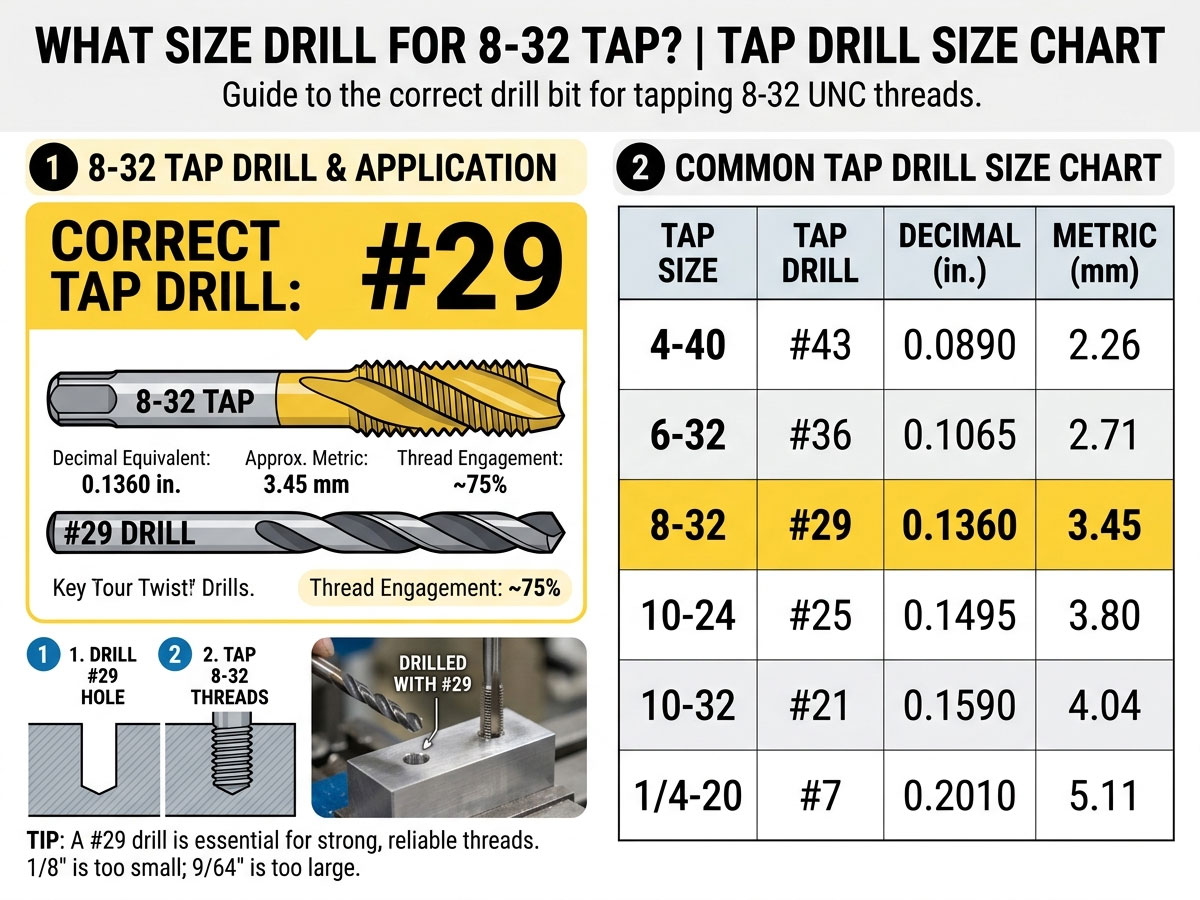
Tap drill charts are the gold standard for selecting bit size. For an 8-32 screw, the chart typically suggests a #29 drill bit (0.1360 inch or 3.45 mm). This size creates a pilot hole that allows the tap to cut proper threads for the screw.
Pro Tip: Always refer to an up-to-date tap drill chart, especially when working with unique materials or high-strength fasteners.
Tap Drill Chart Example
| Screw Size | Threads Per Inch | Recommended Tap Drill (Inch) | Recommended Tap Drill (mm) |
|---|---|---|---|
| 8-32 | 32 | #29 (0.1360″) | 3.45 mm |
| 8-36 | 36 | #29 (0.1360″) | 3.45 mm |
2. Material Type (wood, Metal, Plastic)
The material being drilled greatly affects the ideal drill bit size:
- Metal: Use the tap chart size (#29) for most metals, including steel and aluminum.
- Wood: Often, a slightly smaller bit is used for hardwoods to ensure tight thread engagement.
- Plastic: Use the recommended size, but test-fit first; plastics may expand or contract with drilling.
Drilling into metal requires precise sizing to avoid stripping, while wood can tolerate a little variance due to its compressibility.
Example: Drilling for an 8-32 screw in oak (a hardwood) may require a #30 bit (0.1285 inch) for extra grip, but in aluminum, the standard #29 is optimal.
3. Pilot Hole Size And Function
A pilot hole serves several key purposes:
- Guides the screw for straight insertion.
- Reduces risk of splitting material (especially in wood).
- Lowers required driving torque.
- Ensures clean thread formation.
For 8-32 screws, the pilot hole should accommodate the screw’s core diameter, not the outer thread diameter.
Pilot Hole Sizing Table
| Material | Recommended Drill Bit | Pilot Hole Diameter (inches) |
|---|---|---|
| Steel | #29 | 0.1360 |
| Hardwood | #30 | 0.1285 |
| Softwood | #31 | 0.1200 |
| Plastic | #29 | 0.1360 |
4. Thread Engagement Percentage
Thread engagement is a critical metric for joint strength. The ideal percentage varies:
- 60-75% is standard for most assemblies.
- 50% may be used in soft materials or non-critical applications.
- 80%+ can over-stress the screw and make driving difficult.
Use the formula:
Tap drill diameter = Major diameter – (0.974 × Pitch)
For 8-32:
- Major diameter = 0.1640 in
- Pitch = 1/32 = 0.03125 in
- Tap drill diameter ≈ 0.1640 – (0.974 × 0.03125) ≈ 0.1336 in (close to #29)
Warning: Exceeding 75% engagement may cause screw breakage or stripped threads, especially in hard metals.
5. Screw Length And Application Depth
Longer screws require more precise pilot holes, as insertion friction increases with depth. In deep holes, slightly increasing the pilot diameter can reduce the risk of breaking the screw.
- For short screws (less than 1 inch): Use standard #29.
- For longer screws (over 1 inch): Consider #28 (0.1405 inch) if the material is especially hard or deep.
Example: Installing an 8-32 screw 2 inches deep in steel may benefit from a #28 bit to ease tapping and insertion.
6. Drill Bit Type And Quality
Drill bits come in several materials:
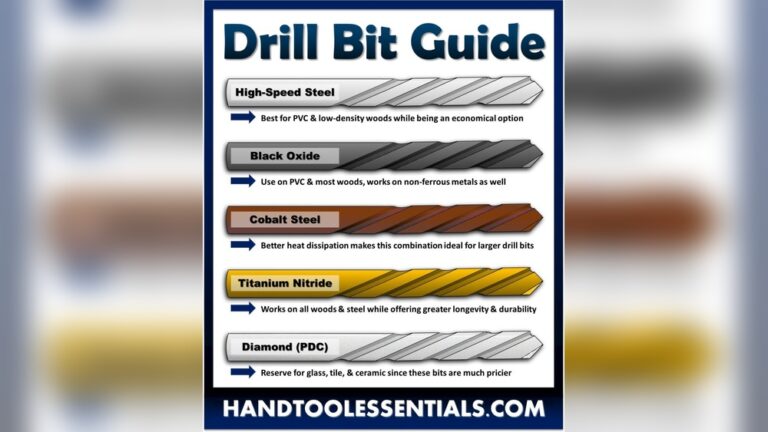
- High-Speed Steel (HSS): General-purpose, works for most metals and woods.
- Cobalt: Best for hardened steel or stainless.
- Carbide: For abrasive materials or high-volume work.
Bit quality affects accuracy and hole roundness. Cheap bits may cut oversize or wander, leading to poor thread fit.
Pro Tip: For critical applications, measure the bit with calipers before drilling to confirm its actual diameter matches the marking.
7. Manual Vs. Power Tapping
The method you use to create threads can dictate bit selection:
- Manual tapping: Standard #29 suffices; careful, controlled pressure avoids oversizing.
- Power tapping or thread-forming screws: May require a slightly larger pilot to reduce torque and prevent tap breakage.
Example: In a machine shop, using a power tap for 8-32 threads in stainless steel, a #28 bit can prevent tool failure.
8. Alternative Fastener Types And Specialty Screws
Not all “8-32” applications are standard. Specialty fasteners like thread-forming or self-tapping screws may need different pilot holes:
- Thread-forming screws: Often require a pilot hole 5-15% smaller than standard to allow threads to form without stripping.
- Self-tapping screws: May use a slightly larger hole in brittle materials to avoid cracking.
Always consult manufacturer recommendations for specialty screws.
Example: For a thread-forming 8-32 in polycarbonate, a #31 bit (0.1200 inch) is common.
Credit: www.stylecnc.com
Real-world Examples And Case Studies
Example 1: Electronics Assembly
A technician installing circuit boards into aluminum enclosures uses 8-32 screws. Using a #29 HSS bit ensures consistent, tight thread engagement in aluminum, providing reliable electrical grounding and vibration resistance.
Example 2: Furniture Construction
In woodworking, 8-32 machine screws are used to join hardwood components. The craftsman selects a #30 bit for the pilot hole, increasing thread grip in oak, which resists loosening despite repeated assembly and disassembly.
Example 3: Automotive Panel Repair
A car restorer replaces dashboard panels with 8-32 screws in steel. After a failed attempt with a dull #29 bit (producing an oversize hole), switching to a high-quality cobalt #29 bit yields perfect threads and a flush fit.
Credit: www.fastenere.com
Data-driven Drill Bit Comparison For 8-32 Screws
Selecting between fractional, numbered, and metric drill bits can be confusing. The table below compares common options for 8-32 screws.
| Drill Bit Type | Size (inch) | Size (mm) | Thread Engagement (%) | Typical Use Case |
|---|---|---|---|---|
| #29 (Numbered) | 0.1360 | 3.45 | 70 | Standard metal, plastic |
| #30 (Numbered) | 0.1285 | 3.26 | 80 | Hardwood, denser plastics |
| #28 (Numbered) | 0.1405 | 3.57 | 60 | Deep holes, hard metals |
| 3.5 mm (Metric) | 0.1378 | 3.5 | 68 | International use, close match |
| 9/64″ (Fractional) | 0.1406 | 3.57 | 60 | Readily available, general use |
Pro Tip: When in doubt, test on a scrap piece before committing to your project material.
Advanced Considerations For Precision Work
Tolerance And Bit Wear
Tolerance is the allowable deviation in hole size. High-precision work (e.g., aerospace, medical devices) may specify tight tolerances, requiring bit calibration and frequent replacement.
- Bit wear increases hole size over time. Use sharp, high-quality bits and check regularly with a gauge.
- For tight tolerance, consider reaming after drilling for exact sizing.
Lubrication And Cooling
Drilling into metal, especially stainless steel, generates heat. Use cutting oil or lubricant to:
- Reduce bit wear
- Improve hole finish
- Prevent work hardening
Example: When tapping 8-32 holes in steel brackets, applying oil extends bit life and produces cleaner threads.
Drill Speed And Feed Rate
Proper drill speed (RPM) and feed rate prevent bit burning and material damage.
- HSS in steel: 700-1000 RPM
- HSS in aluminum: 1200-1500 RPM
- HSS in plastic: 500-1000 RPM (to avoid melting)
Consult manufacturer charts for best results. Lower speeds are safer for large bits and hard materials.
Measurement Verification
After drilling, verify hole size using:
- Pin gauges: For precise measurement
- Digital calipers: For quick checks
Incorrect sizing is best caught before tapping or threading.
Drill Bit Sizing For 8-32 Screws In Specific Materials
Metal
- Use a #29 bit for most metals.
- For stainless steel, cobalt bits are recommended.
- Use cutting oil for smoother holes and longer tool life.
Wood
- For hardwoods, try #30 or #31 for better thread grip.
- For softwoods, #31 or even #32 can prevent splitting.
- Pre-drilling is crucial to avoid wood damage.
Plastic
- Use #29 or #30 depending on plastic density.
- Drill at slower speeds to prevent melting.
- Clear chips frequently for a clean hole.
Example: Mounting a control panel in ABS plastic, a #30 bit produced optimal thread fit with no cracking.
Troubleshooting Common Issues
Stripped Threads
Caused by too large a pilot hole or excessive torque. Solution: Use a smaller bit or a thread repair insert.
Broken Drill Bits
Often due to too-small a pilot hole or hard material. Solution: Increase bit size slightly or use better-quality bits.
Misaligned Holes
Happens when the drill wanders. Solution: Use a center punch to mark the hole location before drilling.
Loose Screws
Result from oversized pilot holes. Solution: Use a thread locker or switch to a larger screw if possible.
Safety And Best Practices
- Always wear safety glasses when drilling.
- Clamp workpieces securely.
- Use sharp, undamaged bits for best results.
- Keep a tap chart handy for quick reference.
Warning: Do not force the drill, let the bit do the work to avoid breakage or injury.
Frequently Asked Questions
What Happens If I Use The Wrong Drill Bit Size For An 8-32 Screw?
Using too large a bit results in weak threads and loose screws. Too small, and the screw may break or the material could crack. It’s vital to match the bit size to the material and application, referencing a tap chart whenever possible.
Can I Use A Metric Drill Bit For An 8-32 Screw?
Yes, a 3.5 mm metric bit is a close substitute for the #29 bit (0.1360 inch) typically used for 8-32 screws. While not perfect, it delivers similar thread engagement, especially in less critical applications.
Do I Need To Use A Lubricant When Drilling For 8-32 Screws?
Lubrication is recommended when drilling into metals, especially stainless steel or thick aluminum. It reduces heat, extends bit life, and results in smoother holes. For wood and plastic, lubrication is generally not needed.
How Do I Ensure My Hole Is Straight When Drilling For 8-32 Screws?
Start with a center punch to mark the hole. Use a drill press for maximum precision or a drill guide for hand drills. Check alignment frequently, especially in critical assemblies.
What If My Screw Doesn’t Fit After Drilling And Tapping?
If the screw doesn’t fit, the hole may be too small or threads may be damaged. Try running the tap through again to clean the threads, or use a slightly larger bit and re-tap if necessary. Always test with a spare screw first to avoid damaging your workpiece.
References
Whether you’re assembling electronics, building furniture, or repairing equipment, selecting the right drill bit for an 8-32 screw is crucial for strength, safety, and quality. By considering material type, thread engagement, and the eight key factors detailed above, you’ll achieve consistently reliable results.
Always test your setup, consult up-to-date charts, and work safely for the best possible outcomes.