Ryobi Vs Craftsman Drill: Which Brand Should You Choose?
Finding the right drill can feel confusing, especially with so many brands on the market. Ryobi and Craftsman are two names you see everywhere—in big stores, in online reviews, and even in your neighbor’s garage. But which brand is better for you? Whether you’re a DIY beginner or someone who works with tools every weekend, picking the right drill matters. This guide will walk you through the details, the pros and cons, and even a few things most people overlook when comparing Ryobi vs Craftsman drills.
Brand Backgrounds: Ryobi And Craftsman
Before you compare their drills, it’s important to know a little about each brand. Ryobi is owned by Techtronic Industries and is well known for its bright green tools. The brand focuses on affordable, user-friendly tools mainly for homeowners and light-duty pros. Craftsman is owned by Stanley Black & Decker, a company with a long history in tool manufacturing. Craftsman tools have been trusted by generations and are often seen as reliable and solid for both home and light professional use.
Both brands compete in the same price range and market, but their approach and history shape their products in different ways. Ryobi often aims for innovation and versatility, while Craftsman leans on tradition and trust.
Design And Build Quality
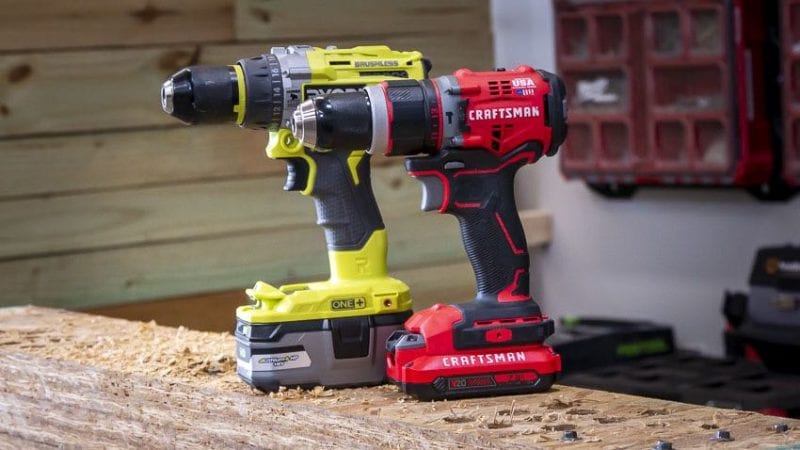
When you pick up a drill, the first thing you notice is how it feels in your hand. Ryobi drills are known for their lightweight plastic bodies and ergonomic handles. The green color isn’t just for looks—it helps you spot your tool easily in a cluttered workshop.
Craftsman drills, on the other hand, often feel a bit heavier. They use a mix of metal and high-quality plastic. The red and black finish gives them a classic, sturdy appearance. Some users feel Craftsman drills are more “solid” or “tough,” while Ryobi drills are easier to handle for long periods.
One detail many overlook is the grip texture. Ryobi often uses a softer rubber that’s more comfortable during long jobs, while Craftsman offers a firmer grip, which some people prefer for precise control.
Durability
In terms of durability, both brands perform well for light and medium jobs. Ryobi drills can take some drops and bumps, but Craftsman’s slightly heavier build and stronger casing offer better protection for the internal motor and gears. If you plan to use your drill every day or in rough conditions, Craftsman may offer a slight advantage.
Power And Performance
Both Ryobi and Craftsman offer a wide range of drills, from basic 12V models to powerful 20V options. But how do they really compare when you need to get the job done?
Motor Strength And Torque
Most Ryobi cordless drills in the 18V One+ range deliver around 340-400 inch-pounds of torque, which is enough for most home tasks—like drilling holes in wood or metal and driving screws into drywall.
Craftsman’s 20V cordless drills can reach up to 320-420 inch-pounds of torque, making them competitive with Ryobi. Both brands also offer brushless motor options, which last longer and provide more power.
Speed Settings
Ryobi and Craftsman drills usually offer two-speed gearboxes. This means you can choose a slower speed for driving screws (for more control) or a faster speed for drilling holes (for more power). The maximum RPM (revolutions per minute) is typically between 1,500 and 2,000 for both brands’ top models.
Battery Life
Battery life is one area where Ryobi stands out. The One+ battery system allows you to use the same battery with over 260 Ryobi tools. Craftsman’s V20 battery system is newer but growing, with about 100 compatible tools.
Battery runtime for both brands is similar if you use their standard 2.0Ah packs—expect around 30-45 minutes of continuous use. But Ryobi’s larger battery lineup can give you more flexibility if you already own other Ryobi tools.
Here’s a quick look at how their standard drill models compare on specs:
| Feature | Ryobi 18V One+ Drill | Craftsman V20 Drill |
|---|---|---|
| Voltage | 18V | 20V |
| Max Torque | 400 in-lbs | 420 in-lbs |
| Max Speed | 1,750 RPM | 1,800 RPM |
| Battery Compatibility | 260+ tools | 100+ tools |
| Weight (with battery) | 3.1 lbs | 3.4 lbs |
Drill Lineups: Options And Versatility
You’ll find many different drills under each brand, but which types do they offer, and what are their best uses?
Drill Types
Ryobi offers:
- Standard cordless drills for basic tasks
- Hammer drills for drilling into concrete or brick
- Right-angle drills for tight spaces
- Impact drivers for heavy screwing
Craftsman offers:
- Cordless drills in 12V and 20V
- Hammer drills for masonry
- Impact drivers and combo kits
If you plan to expand your tool collection, Ryobi’s One+ system makes it easy to add more tools that use the same batteries. Craftsman’s V20 system is catching up, but its range is not as wide yet.
Combo Kits
Combo kits save money and give you more flexibility. For example, you can often find Ryobi and Craftsman kits that include a drill, impact driver, two batteries, a charger, and a carrying bag. These kits are popular with both DIYers and professionals starting a new set.
Special Features
Ryobi drills sometimes include LED work lights at the base, magnetic trays for holding bits, and even built-in bubble levels. Craftsman drills often feature better metal chucks for holding bits more tightly and improved clutch settings for greater control.
A small but important detail: Ryobi batteries have built-in fuel gauges (so you see battery life easily), but some Craftsman models lack this feature.
Credit: www.protoolreviews.com
Price And Value
Price is a major factor for most buyers. Ryobi and Craftsman both target the “value” segment, but there are differences.
Drill Cost
- Ryobi 18V One+ Drill/Driver Kit: Usually $60–$90 with one battery and charger.
- Craftsman V20 Drill/Driver Kit: Typically $70–$100 with battery and charger.
Hammer drill and brushless models cost more, sometimes $120–$180 per kit. Combo kits can save money, with two-tool kits around $120–$150.
Warranty
Ryobi offers a 3-year limited warranty on most power tools. Craftsman also provides a 3-year limited warranty. Both require you to keep your receipt and register your product for the best service.
A key insight: While both warranties sound the same, Craftsman is often easier to service at local stores like Lowe’s, while Ryobi’s service may require shipping tools to authorized centers.
Long-term Value
If you already have tools from one system, sticking with that brand can save you money, since you can use existing batteries and chargers. If you’re starting from scratch, check which brand has the tools you’ll need in the future.
Ergonomics And User Experience
How a drill feels in your hand can matter as much as specs. Ryobi drills are lighter and better for people with smaller hands, or for those who need to work for hours at a time. Their trigger sensitivity is smooth, making it easy to start slow and speed up.
Craftsman drills are a little heavier, which some users say gives them more control, especially for tough jobs. The balance of Craftsman drills is often praised—they don’t feel “top-heavy” when you add a bigger battery.
Noise And Vibration
Both brands keep noise to a minimum, but Craftsman drills tend to be slightly quieter. Ryobi drills can vibrate a bit more under heavy load, especially older models.
One detail many miss: Craftsman’s better chuck design reduces bit wobble, which not only improves accuracy but also reduces vibration on your wrist.
Accessories And Expansion
A drill is just the start. What about drill bits, batteries, and other add-ons?
Batteries And Chargers
Ryobi’s One+ batteries are famous for their cross-compatibility—even with tools made a decade ago. You can choose from basic 1.5Ah packs up to massive 9.0Ah batteries.
Craftsman’s V20 batteries are available in 1.3Ah, 2.0Ah, and up to 6.0Ah sizes. Both brands offer quick chargers, letting you top up a 2.0Ah battery in about 30 minutes.
Drill Bits And Attachments
Both brands sell their own drill bit sets, but you can use any standard 1/4-inch hex bits or round-shank bits. Craftsman’s bits are generally higher quality, but Ryobi’s accessory kits often offer more variety for the price.
Expansion Possibilities
If you plan to buy more power tools, Ryobi’s system is much bigger. Over 260 tools use the same battery—everything from saws to lawnmowers. Craftsman’s V20 lineup is growing but still has fewer options outside the core power tool range.
Customer Support And Service
After-sales support can make or break your experience. Ryobi’s customer service is mainly online or through authorized service centers. Response times can be slow, especially if you need a repair.
Craftsman, now sold mainly at Lowe’s and other big retailers, offers in-store support for some products. This can be a big help if you need a quick swap or advice.
A non-obvious tip: Craftsman’s legacy means you may find more third-party repair options or parts, especially for older models.

Credit: www.youtube.com
User Reviews And Community Opinions
Looking at thousands of reviews, both brands score well for reliability and ease of use. Ryobi is often praised by DIYers and first-time tool buyers for its value and simplicity. Craftsman gets high marks from users who appreciate its solid feel and classic look.
A pattern that pops up: Ryobi owners are more likely to buy extra tools for their system, while Craftsman owners focus on a few core tools that last many years.
Pros And Cons Summary
It’s helpful to see the main advantages and disadvantages side by side.
| Ryobi | Craftsman | |
|---|---|---|
| Pros | – Wide tool selection – Good battery compatibility – Lighter and more ergonomic – Affordable price – Innovative features |
– Solid build quality – Reliable performance – In-store service (Lowe’s) – Strong chuck design – Classic reputation |
| Cons | – Slightly less durable for heavy use – More vibration under load – Fewer in-store service options |
– Heavier than Ryobi – Smaller battery/tool ecosystem – Fewer extra features – Slightly higher price for some models |
Which Is Better For You? Use Cases
Let’s break it down by what you actually want to do:
- For beginners or casual DIYers: Ryobi’s lighter weight, lower price, and wide tool range make it easier to start and expand your collection.
- For those with tough jobs: Craftsman drills can handle more frequent or heavy-duty use thanks to their stronger build and better chuck.
- For homeowners with lots of Ryobi tools: Sticking with Ryobi saves money and hassle since all your batteries work together.
- For loyal Craftsman fans: If you value tradition and in-store support, Craftsman is hard to beat.
A real-world example: If you plan to build furniture, install shelves, or do small repairs, Ryobi’s lightweight drill won’t tire your arm. If you’re working on car repairs or need to drill into brick, Craftsman’s hammer drill and stronger chuck will be helpful.
Common Mistakes When Choosing
Many buyers make these errors:
- Ignoring battery compatibility: People often buy a drill, then realize they need different batteries for other tools. Check which system you want to stick with.
- Focusing only on specs: Higher torque or voltage doesn’t always mean better. Comfort, weight, and grip matter a lot.
- Not checking warranty service: Some assume all brands have easy local service, but that’s not always true. Craftsman usually has an edge here.
- Buying more power than needed: A bigger, heavier drill can be harder to control for simple tasks. Choose the size that matches your needs.
- Overlooking accessory costs: Some kits include only basic bits or one small battery. Factor in the cost of extra batteries or bits.
Two Insights Most Beginners Miss
- Tool Ecosystem Matters More Than Specs: It’s tempting to buy the drill with the highest torque or fastest speed. But in practice, you’ll save time and money by choosing a brand with a wide range of tools using the same battery. This is why so many DIYers end up with a full Ryobi One+ set.
- Service and Parts Are Easier With Craftsman: While both brands offer similar warranties, Craftsman’s wide network of stores means getting parts, repairs, or support is usually faster and less stressful.
Environmental And Safety Considerations
Both brands have started making changes to reduce their environmental impact. Ryobi’s batteries are recyclable at many locations, and their newer tools use more efficient motors. Craftsman also supports battery recycling programs and has switched to more eco-friendly packaging.
Safety features include automatic shut-off for overheating and improved grip designs to prevent slips. Always remember to wear safety glasses and follow the safety instructions in the manual, no matter which drill you choose.
Where To Buy
You can find Ryobi drills mainly at Home Depot and online, while Craftsman is sold at Lowe’s, Ace Hardware, and also online. Both are easy to find, but it’s worth checking for sales or combo kits to get the best deal.
For more technical details on cordless drills, the Wikipedia page on cordless drills offers a helpful overview.
Frequently Asked Questions
Is Ryobi Or Craftsman Better For Beginners?
Both are good for beginners, but Ryobi is often easier to use thanks to its lighter weight and simpler controls. Ryobi also gives you more tool options if you want to expand your set later.
Which Brand Has A Longer Warranty?
Ryobi and Craftsman both offer a 3-year limited warranty on their cordless drills. However, Craftsman has more in-store service options, which can be more convenient for some users.
Can I Use Ryobi Batteries In Craftsman Drills?
No, the batteries are not interchangeable. Ryobi uses the One+ system, while Craftsman uses the V20 system. Always use the battery designed for your specific tool brand.
Are Ryobi And Craftsman Drills Suitable For Professional Use?
They are designed mainly for home and light professional work. For heavy daily use, some professionals prefer higher-end brands, but both Ryobi and Craftsman drills are reliable for most tasks.
What Should I Look For When Buying A Drill?
Check the battery system compatibility, torque, speed settings, weight, grip comfort, and warranty. Also, consider the range of compatible tools if you plan to expand your collection.
Choosing between Ryobi and Craftsman drills is easier when you focus on what matters most to you. Whether it’s price, comfort, tool variety, or after-sales support, both brands have strengths that can match your needs. Take the time to handle each drill if you can, and remember: the best drill is the one that fits your hand, your project, and your future plans.

Credit: toolguyd.com