Choosing the right cordless drill can be overwhelming, especially when you are deciding between two of the most respected brands in the power tool world: Ridgid and DeWalt. Both companies have a loyal following, and their drills are used by professionals and DIYers alike. But which one is truly better for your needs? This in-depth comparison between the Ridgid 18V Drill and the DeWalt 20V Drill will help you understand the key differences, strengths, and weaknesses of each. We’ll look at performance, battery life, design, durability, and value for money. Whether you are a contractor, a hobbyist, or just someone who loves fixing things at home, this guide will help you make a confident choice.
Brand Overview
Understanding the reputation and philosophy behind each brand can help you see why their products are designed a certain way.
Ridgid: Durability First
Ridgid is known for making tools that last. Their power tools are famous for their tough build quality. Many users choose Ridgid because of their lifetime service agreement—a program that covers batteries, parts, and service for as long as you own the tool (if you register it). Ridgid tools are often seen as a practical choice for people who want reliability without a premium price tag.
Dewalt: Professional Power
DeWalt has a long history of serving professionals in construction and woodworking. Their tools are known for strong performance, user-focused design, and innovation. DeWalt’s 20V Max line has become a standard in the industry, with a wide range of compatible tools. They are often the first pick for people who want top performance on the job site.
Voltage: 18v Vs 20v—does It Matter?
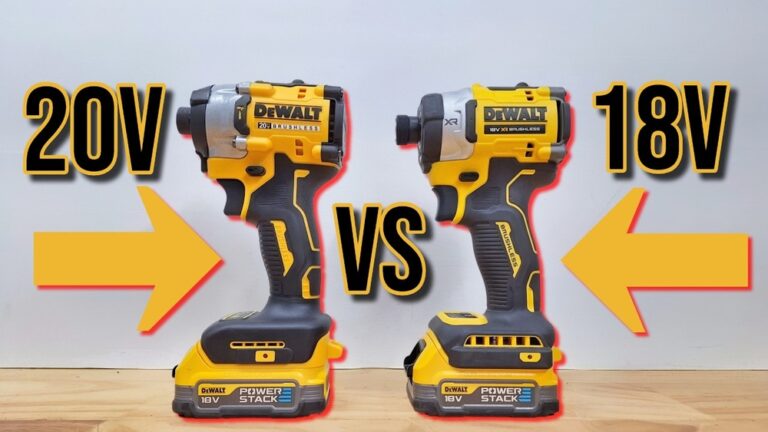
At first, it looks like the DeWalt 20V drill is more powerful than the Ridgid 18V. But in reality, the difference is mostly in marketing.
18V and 20V Max refer to the same battery cell voltage. Both use 5-cell lithium-ion packs. The “20V Max” label comes from the maximum voltage right after charging (5 cells x 4.0V = 20V). The “18V” refers to the normal running voltage (5 cells x 3.6V = 18V). In use, both give the same power. So, don’t let the numbers fool you—focus on real-world performance instead.

Credit: powertoolsadapters.com
Performance And Power
To see which drill is stronger, we need to look at torque, speed, and how they handle tough jobs.
Ridgid 18v Drill
- Torque: Ridgid’s 18V drill/driver typically delivers around 525 inch-pounds of torque. This is enough for most drilling and driving tasks, even in hardwoods and thick materials.
- Speed: Two-speed gearbox; low gear for more power (around 0-550 RPM), high gear for speed (up to 2,000 RPM).
- Hammer Function: Some Ridgid models include a hammer drill mode, which is useful for masonry and concrete.
- Clutch Settings: Usually 24+ settings, letting you fine-tune the force for delicate jobs like cabinetry.
Dewalt 20v Drill
- Torque: The DeWalt DCD791 or DCD796 (popular 20V models) offer up to 530 inch-pounds of torque—very close to Ridgid.
- Speed: Two-speed transmission; 0-550 RPM in low, 0-2,000 RPM in high. This means fast drilling in wood and smooth control for screws.
- Hammer Function: Many 20V models have a hammer feature, making them versatile for brick and concrete.
- Clutch Settings: Usually 15-16 settings. Slightly less than Ridgid, but enough for most jobs.
Real-world Power
Both drills can handle:
- Driving large screws into 2×4 lumber
- Drilling holes in thick hardwood or metal
- Making pilot holes for construction
In side-by-side tests, the DeWalt often edges out Ridgid in speed for heavy drilling, but the difference is small. For most users, both offer plenty of power.
Battery Life And Charging
A cordless drill is only as good as its battery. Let’s compare battery tech, run time, and charging speeds.
Ridgid 18v Battery System
- Standard Packs: Usually come with 2.0Ah or 4.0Ah lithium-ion batteries.
- Run Time: Good for most home and job site tasks. A 2.0Ah battery can drive up to 300 screws per charge.
- Charger: Standard charger refills a 2.0Ah battery in about 40 minutes.
- Warranty: Lifetime service agreement covers batteries if registered.
Dewalt 20v Battery System
- Standard Packs: 2.0Ah or 4.0Ah batteries are common, but DeWalt also offers 5.0Ah, 6.0Ah, and FlexVolt packs for longer run time.
- Run Time: A 2.0Ah battery can drive around 350 screws per charge—slightly more than Ridgid in some tests.
- Charger: DeWalt’s fast charger can fill a 2.0Ah battery in about 30 minutes.
- Warranty: Three-year limited warranty on batteries.
Battery Compatibility
Both brands have a wide range of compatible tools that run on their battery systems. If you already own other Ridgid or DeWalt tools, sticking with the same battery platform saves money.
Battery Table Comparison
Here’s a quick look at battery specs for both brands:
| Brand | Battery Voltage | Common Capacities | Charge Time (2.0Ah) | Warranty |
|---|---|---|---|---|
| Ridgid 18V | 18V (nominal) | 2.0Ah, 4.0Ah | 40 mins | Lifetime (with registration) |
| DeWalt 20V | 20V Max (18V nominal) | 2.0Ah, 4.0Ah, 5.0Ah, 6.0Ah | 30 mins | 3 years |

Credit: www.amazon.com
Tool Design And Ergonomics
How a drill feels in your hand can make a big difference, especially if you use it for long periods.
Ridgid 18v Drill
- Weight: Around 3.5 lbs with battery. Heavier than some, but feels balanced.
- Grip: Overmolded rubber grip; comfortable even with gloves.
- LED Light: Built-in, but sometimes shadowed by the chuck.
- Belt Clip: Included, useful for working on ladders.
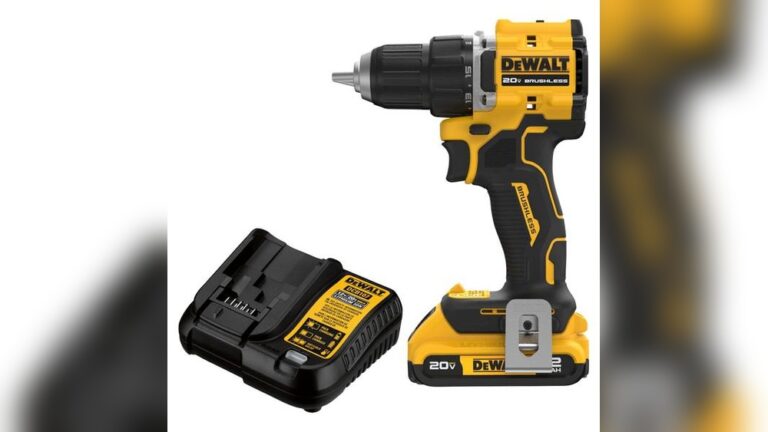
Dewalt 20v Drill
- Weight: About 3.4 lbs with battery. Lighter models are available.
- Grip: Ergonomic handle with textured rubber. Many users say it feels “just right.”
- LED Light: Strong and well-placed for good visibility.
- Belt Hook: Included, sturdy metal clip.
Not-so-obvious Insights
- Trigger Sensitivity: DeWalt drills often have a smoother, more responsive trigger. This helps when starting screws or drilling slowly.
- Chuck Quality: Ridgid’s chuck is very solid, but DeWalt’s ratcheting chuck holds bits tighter, especially for repetitive work.
Design Comparison Table
| Feature | Ridgid 18V | DeWalt 20V |
|---|---|---|
| Weight | ~3.5 lbs | ~3.4 lbs |
| Grip Comfort | Good | Excellent |
| LED Light | Built-in | Built-in, better position |
| Chuck | Solid | Ratcheting, very secure |
Durability And Build Quality
No one likes replacing tools. Let’s see how each drill stands up to tough use.
Ridgid 18v Drill
Ridgid drills are built with reinforced housings and strong chucks. Many users report their Ridgid tools lasting for years, even with daily use. The build feels rugged, and the switches and battery latches are sturdy. Ridgid’s lifetime service agreement gives extra peace of mind.
Dewalt 20v Drill
DeWalt’s reputation for job site toughness is well-earned. Their 20V drills are often dropped, banged, or exposed to dust—and keep working. The motors are brushless (on most models), which means fewer parts to wear out. Even after years, DeWalt drills often feel tight and reliable.
Insider Tip
Some Ridgid drills use a brushed motor (older models), while most DeWalt 20V drills now use brushless motors. Brushless motors last longer, run cooler, and deliver more power per charge.
Features And Extras
Both drills come with features that make your work easier, but there are some differences.
Ridgid 18v Features
- Lifetime Service Agreement: Covers batteries, parts, and service.
- Micro-Texture Grip: Reduces slipping.
- Bit Holder: Handy for quick bit changes.
- LED Light: Good for low-light work.
Dewalt 20v Features
- Brushless Motor: Standard on most models. More efficient.
- 3-Mode LED Light: Adjustable brightness (some models).
- Compact Design: Fits in tight spaces.
- Precision Drive Mode: Helps avoid overtightening (impact driver models).
Price And Value For Money
Cordless drills range from budget to premium. How do these two compare on cost?
Ridgid 18v Drill Pricing
A typical Ridgid 18V drill kit (with charger and 2 batteries) costs about $120–$150. You get good performance, a solid build, and a lifetime service agreement.
Dewalt 20v Drill Pricing
DeWalt’s comparable kits usually cost $150–$180. The price is higher, but you get a brushless motor, better ergonomics, and longer battery options.
Which Offers Better Value?
- If you want maximum warranty coverage, Ridgid is hard to beat.
- If you want the latest technology (like brushless motors), DeWalt often leads.
- If you already own tools from one brand, sticking with the same battery system saves money.
Accessory And Tool Ecosystem
Both brands offer a wide range of tools that use the same battery platform. This means you can expand your tool collection without buying new batteries or chargers.
Ridgid 18v System
The Ridgid 18V family includes:
- Drills
- Impact drivers
- Saws
- Sanders
- Lights
- Shop vacuums
If you need tools for home repair, woodworking, or light construction, Ridgid’s lineup covers most needs.
Dewalt 20v System
DeWalt’s 20V Max system is even bigger:
- Drills and drivers
- Grinders
- Oscillating tools
- Rotary hammers
- Nailers
- Job site radios
- Lawn and garden tools
For heavy-duty work or specialized tools, DeWalt has more choices.
Warranty And Customer Support
Ridgid
- Lifetime Service Agreement: Covers defects, batteries, and even normal wear and tear if you register within 90 days.
- Service Centers: Supported through Home Depot and Ridgid-authorized shops.
Dewalt
- Three-Year Limited Warranty: Covers defects in materials or workmanship.
- One-Year Free Service: Free maintenance and replacement of worn parts.
- Customer Support: Large network, easy access to service centers.
Important Note
Getting the lifetime service with Ridgid requires registration soon after purchase. If you miss this, the warranty drops to three years.
User Experience And Reviews
Ridgid 18v User Feedback
Most users praise Ridgid drills for:
- Value for money
- Toughness
- Great warranty
Some say the drill feels a little heavier and the LED light could be better placed. Others mention that Ridgid’s service agreement process can be slow.
Dewalt 20v User Feedback
DeWalt users love:
- Ergonomics and grip
- Brushless motor power
- Fast charging
A few wish the kits included more batteries or a hard case. Some report higher prices compared to similar brands.
Not-so-obvious Insights
- Aftermarket Batteries: DeWalt batteries are widely available, including third-party replacements. Ridgid’s are harder to find outside official stores.
- Tool Theft: DeWalt’s popularity means their tools are sometimes targeted by thieves. Mark your tools or use smart tracking if possible.
Which Should You Choose?
Still unsure? Here’s a quick summary of who should pick each drill.
Choose Ridgid 18v If:
- You want long-term peace of mind with a lifetime service agreement.
- You value rugged build quality and don’t mind a slightly heavier tool.
- You’re building a collection for home, garage, or general use.
Choose Dewalt 20v If:
- You want a brushless motor for longer life and better battery run time.
- You need a tool that’s lighter and more ergonomic.
- You plan to expand your tool collection with many specialty tools.

Credit: www.ebay.com
Side-by-side Comparison Table
This table gives you a direct look at the most important features:
| Feature | Ridgid 18V Drill | DeWalt 20V Drill |
|---|---|---|
| Max Torque | 525 in-lbs | 530 in-lbs |
| Motor Type | Brushed/Brushless (model-dependent) | Brushless (most models) |
| Battery Warranty | Lifetime (if registered) | 3 years |
| Drill Weight | ~3.5 lbs | ~3.4 lbs |
| LED Light | Standard | 3-mode (some models) |
| Price (kit) | $120–$150 | $150–$180 |
| Service Agreement | Lifetime (if registered) | 1-year free, 3-year limited warranty |
Practical Advice For First-time Buyers
- Test the Grip: Go to a store and hold both drills. Comfort matters more than specs for long projects.
- Check Your Toolbox: If you already own Ridgid or DeWalt batteries, stick with that brand.
- Read the Fine Print: Register Ridgid tools right away to get the full lifetime coverage.
- Think About Expansion: DeWalt’s 20V line offers more tool options if you plan to add saws, grinders, or outdoor tools later.
- Consider Local Support: Make sure you have a service center nearby for warranty claims or repairs.
Frequently Asked Questions
Which Drill Is More Powerful: Ridgid 18v Or Dewalt 20v?
Both drills are very close in real power. The DeWalt 20V drill may have a slight edge in torque, but the difference is small. For most users, both are powerful enough for home and job site tasks. The key is to pick the one that feels best in your hand and fits your battery system.
Are Ridgid And Dewalt Batteries Interchangeable?
No, Ridgid and DeWalt batteries are not compatible. Each brand uses a unique design and connection. You must use Ridgid batteries with Ridgid tools and DeWalt batteries with DeWalt tools.
Which Drill Has A Better Warranty?
Ridgid offers a lifetime service agreement if you register your tool after purchase. This covers batteries and repairs. DeWalt gives a three-year limited warranty and one year of free service. Ridgid’s coverage is better, but only if you follow the registration steps.
Do Both Brands Offer Brushless Motors?
Most DeWalt 20V drills now use brushless motors, which last longer and run cooler. Some Ridgid 18V models use brushless motors too, but not all. If you want the latest technology, check the specific model before buying.
Where Can I Learn More About Cordless Drill Technology?
For a deeper look at cordless drill systems and battery technology, you can visit the Cordless Drill Wikipedia page.
Choosing between the Ridgid 18V Drill and the DeWalt 20V Drill isn’t just about numbers or specs—it’s about matching your needs with the right tool. Both brands make excellent drills that will serve you well for years. The best choice depends on your budget, how you use your tools, and whether you want a lifetime warranty or the latest features. Test them out, read reviews, and you’ll make a decision you won’t regret.