When you need a reliable drill, two brands often come up: Black and Decker and Craftsman. Both are well-known names in the world of tools, especially for home projects and DIY enthusiasts. But which one should you choose? Picking the right drill can save you time, money, and frustration. The differences can be small, but they matter—especially when you want something that fits your needs, lasts long, and feels comfortable in your hand.
This guide will help you make a smart decision. You’ll discover the strengths and weaknesses of Black and Decker and Craftsman drills, with real examples and facts. We’ll look at their history, price, performance, design, and more. Whether you are buying your first drill or looking to upgrade, you’ll find clear answers.
By the end, you’ll know which drill suits your tasks best—and why.
Background: Black And Decker And Craftsman
Before comparing the drills, it’s good to know where these brands come from. Black and Decker started in 1910. They were the first to make a portable electric drill. Today, they focus on affordable, easy-to-use tools for homeowners and hobbyists. Their drills are found in many homes and are often among the first tools people buy.
Craftsman began in 1927. For many years, they were sold mainly by Sears. Craftsman has a strong reputation for toughness and reliability. In recent years, Stanley Black & Decker bought Craftsman, but the brand kept its own style and standards. Craftsman drills are popular with both DIYers and people who want a little more power for bigger jobs.
Knowing this history helps you see why each brand makes certain choices in design and features.
Drill Types: What’s On Offer?
Both Black and Decker and Craftsman offer a wide range of drills. Understanding the main types will help you choose the right one.
- Cordless Drills – These use batteries and are very popular. Both brands have 12V, 18V, and 20V models.
- Corded Drills – These plug into the wall. They offer steady power but less mobility.
- Hammer Drills – These drills can punch into concrete or brick. They’re for tougher tasks.
- Drill/Driver Combos – These can drill holes and drive screws, making them very flexible.
Both brands cover all these types, but there are differences in battery systems, features, and price.
Credit: www.reddit.com
Performance And Power
One of the first things people compare is how powerful the drills are. Let’s look at some facts.
Power Rating
Drills are often rated by voltage (for cordless) and amperage (for corded). More voltage or amps usually means more power.
- Black and Decker’s most popular cordless drill is the 20V MAX. It delivers enough power for most home tasks: Drilling wood, drywall, or metal.
- Craftsman’s V20 line also offers 20 volts, but many users say it feels a bit stronger and faster, especially under heavy use.
With corded drills, both brands offer models between 5-7 amps. For most home projects, this is enough. If you need to drill concrete, a higher amp hammer drill is better.
Speed And Torque
Torque is the twisting power. Speed is measured in rotations per minute (RPM). Higher torque is better for driving long screws or drilling large holes.
- Black and Decker 20V drills usually offer around 115 inch-pounds of torque and 650 RPM.
- Craftsman V20 drills often reach 280 unit watts out (UWO) and up to 1,500 RPM. This means Craftsman drills are faster and usually stronger, so they can handle tougher jobs.
Real-world Example
Suppose you want to build a wooden deck. You’ll be driving long screws into thick wood. Here, the extra torque and speed from a Craftsman drill can save time and reduce frustration. But for putting together furniture or hanging shelves, both brands perform well.
Battery System And Runtime
The battery is the heart of any cordless drill. If you run out of power quickly, even the best drill becomes useless.
Battery Types
Both Black and Decker and Craftsman use lithium-ion batteries. These are lighter, hold a charge longer, and have a longer life than old nickel-cadmium batteries.
- Black and Decker’s 20V MAX batteries are popular and easy to find. They’re often smaller (1.5Ah to 2.0Ah), which keeps the tool light.
- Craftsman’s V20 batteries range from 2.0Ah up to 4.0Ah or more. Higher amp-hour (Ah) means more runtime. Craftsman also makes “high capacity” batteries for longer jobs.
Battery Compatibility
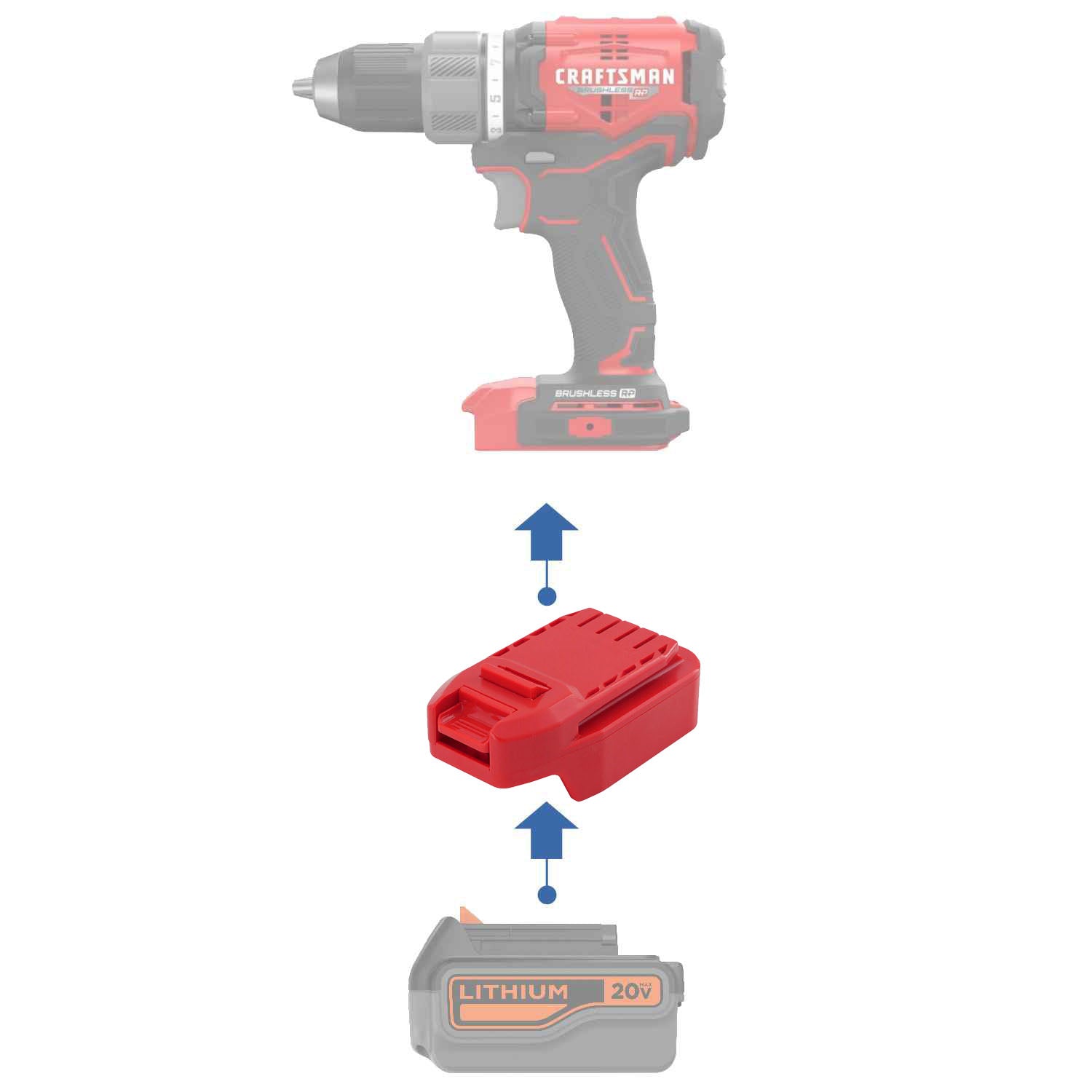
- Black and Decker’s batteries often work only with Black and Decker tools.
- Craftsman V20 batteries fit all Craftsman V20 tools—drills, saws, lights, and more.
This means if you plan to buy more tools from the same brand, Craftsman’s battery system offers more flexibility.
Charging Time
Both brands offer standard and “fast” chargers. Craftsman’s fast charger can recharge a 2. 0Ah battery in about 30-45 minutes. Black and Decker’s chargers are usually slower—about 1 hour for a full charge.
Practical Insight
Many beginners forget to check battery compatibility. If you buy a drill with one battery, you may end up paying more later to get extra batteries that fit. Always check which tools use the same battery before you buy.
Design, Comfort, And Build Quality
How a drill feels in your hand matters. If it’s heavy, awkward, or unbalanced, you’ll get tired faster. Here’s how the two brands compare.
Weight
- Black and Decker drills are often lighter, usually between 2.5 to 3.5 pounds with the battery. This makes them easy to use for long periods.
- Craftsman drills are a bit heavier, often 3.5 to 4.5 pounds. The extra weight comes from a stronger motor and bigger battery.
Grip And Balance
- Black and Decker uses a simple rubber over-mold grip. It’s comfortable for small to medium hands.
- Craftsman’s grip is thicker and more textured. People with larger hands often prefer it.
Both brands design their drills with the battery under the handle, which keeps the balance good. But Craftsman’s drills feel more solid and rugged, which is helpful if you drop them or work in tough conditions.
Durability
Craftsman drills are built with more metal parts in the gearbox and chuck. Black and Decker uses more plastic, especially in cheaper models. For light home use, both are fine. For tougher jobs or daily use, Craftsman will usually last longer.
Hidden Detail
Some Craftsman drills have an LED light near the trigger. This helps you see your work in dark corners. Many Black and Decker drills lack this feature.
Features And Extras
Drills are more than just motors. Features can make your work easier or safer.
Clutch Settings
A drill’s clutch controls how much torque is applied. More settings let you fine-tune the drill for different jobs.
- Black and Decker: Often 11 clutch settings.
- Craftsman: Usually 15 or more.
This extra control can help you avoid stripping screws or overdriving them into soft material.
Chuck Size
- Black and Decker: Most drills use a 3/8-inch keyless chuck.
- Craftsman: Many models have a 1/2-inch keyless chuck.
A 1/2-inch chuck holds bigger bits, which is useful for drilling large holes or using specialty bits.
Speed Settings
Both brands offer drills with 2-speed transmissions. This means you can choose a slower speed for more torque or a faster speed for drilling holes.
Extras
- Craftsman often includes a belt clip and bit holder. These make it easier to carry and swap bits.
- Black and Decker sometimes adds a magnetic screw holder on the drill body.
Noise And Vibration
Craftsman drills tend to be quieter and have less vibration, which is noticeable if you use the tool for long periods.
Credit: www.reddit.com
Price And Value
Price is a big factor for many buyers. Here’s what you can expect.
Average Prices
- Black and Decker 20V drills: $40–$70 for a kit (drill, battery, charger).
- Craftsman V20 drills: $70–$120 for a kit. More expensive kits include two batteries or extra features.
What You Get For The Money
Black and Decker focuses on affordability. Their kits often have fewer features but get the job done for simple home projects. Craftsman is more expensive but often includes a better battery, stronger motor, and more features.
Long-term Value
If you need a drill for the occasional shelf or picture frame, Black and Decker is hard to beat. If you plan to build furniture, work in the yard, or do regular repairs, Craftsman’s extra cost pays off in durability and speed.
Warranty
- Black and Decker: 2-year limited warranty.
- Craftsman: 3-year limited warranty (and lifetime on hand tools).
That extra year can be important if you plan to use the tool a lot.
Real-world Comparison: Key Models
To make things clearer, let’s compare two popular models side by side.
| Feature | Black and Decker 20V MAX (LDX120C) | Craftsman V20 Cordless Drill (CMCD700C1) |
|---|---|---|
| Voltage | 20V MAX | 20V MAX |
| Torque | 115 in-lbs | 280 UWO (about 350 in-lbs) |
| RPM | 0-650 | 0-350 / 0-1,500 |
| Clutch Settings | 11 | 16 |
| Chuck Size | 3/8 in | 1/2 in |
| Weight | 3.3 lbs | 3.7 lbs |
| Battery | 1.5Ah | 2.0Ah |
| LED Light | No | Yes |
| Warranty | 2 years | 3 years |
| Price (kit) | $50–$60 | $80–$100 |
This table shows how Craftsman offers more power and features but at a higher price.
Who Should Choose Black And Decker?
Black and Decker drills are a smart choice if:
- You do light household tasks (like hanging pictures, assembling furniture, or drilling into drywall).
- Budget is your top concern.
- You want a lightweight, simple tool.
- You don’t need extra features or lots of power.
Many beginners start with Black and Decker. It’s easy to use, the price is low, and you can find parts and batteries almost everywhere.
Who Should Choose Craftsman?
Craftsman drills fit best if:
- You do regular or tough jobs (like building decks, drilling into masonry, or using large bits).
- You want more power and features.
- You plan to buy more tools and use the same battery system.
- Durability matters to you.
If you’re a serious DIYer or want a drill that can grow with your needs, Craftsman is usually worth the higher price.
Common Mistakes To Avoid
Many buyers make simple mistakes when picking a drill. Here are a few to watch out for:
- Choosing by price only. A cheap drill may not last or may struggle with tougher tasks.
- Ignoring battery compatibility. Mixing batteries from different brands can get expensive.
- Overestimating needs. Don’t pay extra for a heavy-duty drill if you only hang curtains twice a year.
- Forgetting about comfort. A drill that feels awkward will make any job harder.
- Missing the warranty details. A longer warranty can save money if something breaks.
Accessories And Add-ons
Both brands sell accessories like extra batteries, drill bit sets, and carrying cases. Craftsman tends to have more options for high-end accessories, like impact-rated bits and specialty kits. Black and Decker keeps things simple, focusing on basic accessories that work with their tools.
If you plan to use your drill for many tasks, check what accessories are available before you buy.
User Reviews And Feedback
What do real users say? Looking at reviews gives useful insights.
- Black and Decker: Users love the price and ease of use. Most complaints are about the lower power and batteries that don’t last as long on tough jobs.
- Craftsman: People like the strong motor, fast charging, and comfortable grip. Some wish the price was lower, but most feel the quality is worth it.
Many beginners miss that Black and Decker’s lighter weight and simple controls make it less tiring for long, simple tasks. On the other hand, Craftsman’s extra power and features help with more complex projects.
Comparing Warranty And Customer Support
A drill is an investment, so support matters if things go wrong.
| Brand | Drill Warranty | Customer Support | Battery Warranty |
|---|---|---|---|
| Black and Decker | 2 years | Phone/Email, Online Manuals | 2 years |
| Craftsman | 3 years | Phone/Email, Online Chat, Extensive Service Centers | 3 years |
Craftsman’s longer warranty and better support network are helpful if you use your drill often or rely on it for big projects.
Credit: powertoolsadapters.com
Longevity And Replacement Parts
Another detail often missed: replacement parts. Craftsman drills are designed to last, and parts like chucks, brushes, and switches are easy to find. Black and Decker’s entry-level models are not built for repair—they are often replaced when they wear out.
If you want a drill that can be fixed and kept working for years, Craftsman has the edge.
Environmental And Safety Considerations
Both brands are improving battery recycling. Craftsman’s batteries are easier to recycle at major hardware stores. Black and Decker also encourages recycling, but their older NiCd batteries (if you find them) are less eco-friendly.
For safety, both brands follow industry standards. Craftsman often includes more safety features, like a brake that stops the chuck quickly when you release the trigger.
Where To Buy
- Black and Decker: Widely sold at Walmart, Amazon, Target, and most hardware stores.
- Craftsman: Sold at Lowe’s, Ace Hardware, Amazon, and some specialized tool stores.
Craftsman tools can sometimes be harder to find in smaller towns, but online availability is strong.
Summary Of Key Differences
To help you remember, here’s a quick summary:
- Black and Decker: Cheaper, lighter, basic features, good for simple home use.
- Craftsman: More powerful, durable, extra features, better for regular or tough jobs, higher price.
If you want more technical details, the Wikipedia Drill Page explains how drills work and what the numbers mean.
Frequently Asked Questions
What Is The Main Difference Between Black And Decker And Craftsman Drills?
The main difference is power and durability. Craftsman drills are stronger, last longer, and have more features, but cost more. Black and Decker drills are lighter, cheaper, and best for simple home tasks.
Can I Use Black And Decker Batteries In Craftsman Drills?
No, Black and Decker and Craftsman batteries are not compatible. Each brand uses a different battery design and connection.
Which Drill Is Better For Beginners?
For most beginners, Black and Decker is a smart choice. It’s easy to use, affordable, and handles common home jobs well. If you plan to do more complex projects, Craftsman might be better.
Are Craftsman Drills Worth The Extra Cost?
If you need more power, plan to use the drill often, or want features like extra clutch settings and a bigger battery, Craftsman is usually worth the higher price.
How Long Do Black And Decker And Craftsman Drills Last?
For light use, Black and Decker drills can last several years. Craftsman drills often last longer, especially with regular or tough use, thanks to better build quality and a longer warranty.
Choosing between Black and Decker vs Craftsman drill depends on your needs, budget, and how often you’ll use the tool. With the facts and tips above, you’re ready to make a smart choice and get started on your next project.