Milwaukee Cordless Drill Vs Dewalt: In-depth Comparison For Buyers
Choosing a cordless drill is a big decision, whether you are a DIY fan or a professional. Two top brands—Milwaukee and Dewalt—often stand out. Their tools are everywhere: home garages, construction sites, and workshops. But which one should you choose? This is not a simple question. Each brand has its own fans, features, and unique advantages.
This guide explores the Milwaukee cordless drill vs Dewalt debate from every angle. You will learn about performance, battery life, price, durability, and more. By the end, you will feel confident in choosing the right drill for your needs, not just the most popular name.
Along the way, you’ll find some surprising facts that many buyers miss, and answers to questions you might not have thought to ask. Let’s get started.
Brand Backgrounds: Milwaukee And Dewalt
Understanding the story behind each brand helps explain why their tools are different.
Milwaukee Tool began in 1924 in Wisconsin, USA. The company focused on heavy-duty tools for professionals. Over the years, Milwaukee earned a reputation for innovation, especially in battery technology and brushless motors. Their red and black designs are hard to miss.
Dewalt started in 1924 as well, in Pennsylvania. The company became famous for its first woodworking machines, and later expanded into power tools. Dewalt is known for tough, reliable tools that work well in harsh environments. Their tools are easy to recognize with their yellow and black color.
Both brands are owned by larger companies: Milwaukee by Techtronic Industries (TTI), and Dewalt by Stanley Black & Decker. But they still compete fiercely and continue to improve their cordless drill lines each year.
Key Features: What Makes A Cordless Drill Great?
Before comparing models, let’s look at the main features that matter in any cordless drill:
- Power (Torque and Speed): Higher torque means the drill can handle tougher materials. Speed settings help for different jobs.
- Battery System: Battery life, type, and compatibility with other tools are crucial.
- Build Quality: How solid and durable the drill feels in your hand.
- Ergonomics: Comfort, weight, and grip matter, especially for long jobs.
- Features: Brushless motors, LED lights, belt hooks, and clutch settings can make work easier.
- Price and Value: What you get for your money.
- Warranty and Support: Good after-sales support offers peace of mind.
Now, let’s compare Milwaukee and Dewalt based on these features.
Performance And Power: Head-to-head
For most users, performance is the first thing they notice. Both Milwaukee and Dewalt offer drills with impressive torque and speed, but there are differences.
Torque And Speed
Milwaukee’s M18 Fuel drill/driver (for example, the 2803-20) can deliver up to 1,200 in-lbs of torque and has a speed range of 0-2,000 RPM. Dewalt’s DCD996B 20V Max XR brushless drill offers a maximum 820 UWO (unit watts out), which translates to about 820 in-lbs of torque, and speeds up to 2,000 RPM.
Speed is important for drilling into wood and metal, while torque is key for driving screws into tough materials like concrete or hardwood. Milwaukee often wins on torque, while Dewalt matches or slightly exceeds Milwaukee in speed.
Real-world Example
Imagine driving 3-inch screws into pressure-treated lumber. Milwaukee’s extra torque means less strain and faster work. However, Dewalt’s three-speed transmission gives you more control for delicate work, like cabinetry.
Brushless Motors
Both brands use brushless motors in their mid-range and premium models. Brushless motors are more efficient, last longer, and generate less heat. This is standard in their top models, but make sure to check when buying entry-level options.
Battery System And Runtime
The battery is the heart of a cordless drill. Milwaukee and Dewalt both have their own battery ecosystems.
Milwaukee: M18 And M12
Milwaukee’s main cordless line is called M18 (18 volts). They also have a smaller M12 (12 volts) line for compact tools. Milwaukee’s RedLithium batteries are known for long life and fast charging. High-output batteries are available for more demanding jobs.
Dewalt: 20v Max And Flexvolt
Dewalt’s main line is 20V Max (which is actually 18 volts nominal, but labeled 20V for marketing). Dewalt also offers FlexVolt batteries, which can switch between 20V and 60V tools. This makes them very flexible if you own several Dewalt tools.
Runtime And Compatibility
Both brands offer similar runtime in real-world use. Milwaukee batteries are praised for their durability and hold charge well in cold weather. Dewalt’s FlexVolt system is unique, letting you use the same battery across a wide range of tools.
Here’s a comparison of the most popular battery packs:
| Brand | Standard Battery | Ah (amp hours) | Max Voltage | Compatible Tools |
|---|---|---|---|---|
| Milwaukee | RedLithium M18 | 2.0–12.0Ah | 18V | M18 series |
| Dewalt | 20V Max / FlexVolt | 2.0–12.0Ah | 20V / 60V (FlexVolt) | 20V Max, 60V FlexVolt |
Non-obvious tip: If you already own other cordless tools from one brand, sticking with the same battery system saves money and space.
Durability And Build Quality
A drill’s durability is often tested in tough conditions—like drops, dust, or rain.
Milwaukee
Milwaukee drills use all-metal gear cases and solid chucks. The grip is firm, and the body feels balanced. Many users report their Milwaukee drills lasting over five years, even with daily use.
Dewalt
Dewalt tools are designed for harsh environments. Their drills feature nitro-carburized metal chucks and reinforced housings. Some Dewalt drills have survived being dropped from ladders or left in wet conditions without problems.
Long-term Reliability
Both brands have stories of drills surviving years of abuse. However, Milwaukee’s reputation for ruggedness is especially strong among construction professionals.
Non-obvious insight: Dewalt’s service network is wider in the US, so if you need repairs, you might find Dewalt easier to fix quickly.
Ergonomics And User Comfort
Weight, grip, and balance make a big difference if you use your drill often.
Milwaukee
Milwaukee drills are often a bit heavier but feel solid in the hand. The handle is contoured for comfort, and the trigger is responsive. Some users with smaller hands find Milwaukee’s grip slightly large.
Dewalt
Dewalt drills are usually lighter by a few ounces. Their handles are slimmer, making them easier for people with smaller hands or less grip strength. The balance is excellent, which reduces fatigue during overhead work.
Vibration And Noise
Both brands manage vibration well in their brushless models, but Milwaukee’s drills are slightly quieter. Dewalt’s motors produce a distinct whine, which you may or may not like.
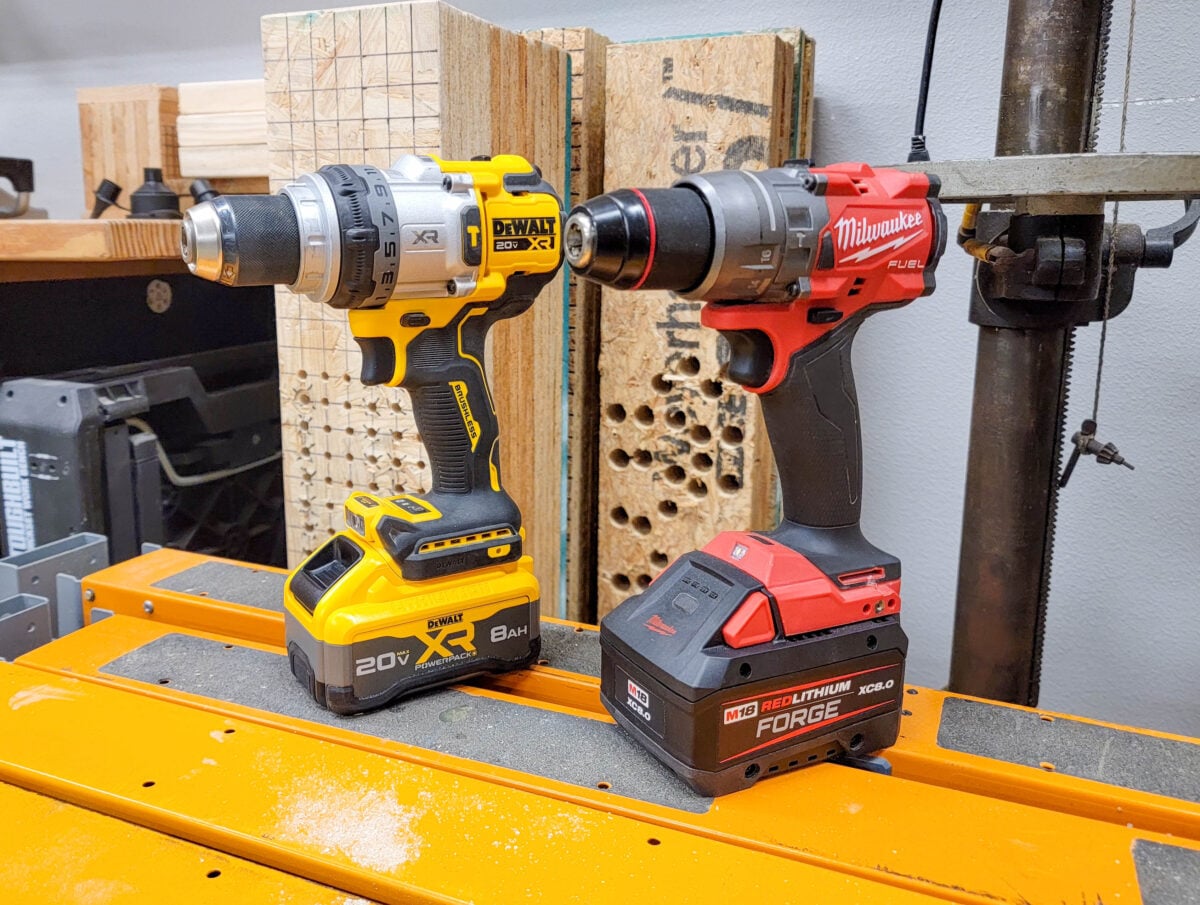
Credit: www.protoolreviews.com
Features And Technology
Cordless drills have become smarter and more useful over time. Let’s see how Milwaukee and Dewalt compare on features.
Milwaukee
- RedLink Plus Intelligence: This system protects the tool and battery from overheating and overload.
- LED Lighting: Most Milwaukee drills have bright LED lights positioned to reduce shadows.
- All-Metal Chuck: Durable and holds bits tightly.
- Multiple Clutch Settings: Up to 24 positions for precise control.
Dewalt
- 3-Speed Transmission: Dewalt’s premium drills offer three speed ranges, which is rare.
- LED Spotlight Mode: Some Dewalt drills have a special light mode that stays on for 20 minutes—useful in dark spaces.
- Ergonomic Belt Hook: Easy to attach to your tool belt.
- Precision Drive Mode: On some models, this feature prevents overdriving screws.
Here’s a quick feature comparison:
| Feature | Milwaukee | Dewalt |
|---|---|---|
| Brushless Motor | Yes (most models) | Yes (most models) |
| LED Light | Yes (standard) | Yes (with spotlight mode on some) |
| Clutch Settings | 24 | 11–15 |
| Speed Ranges | 2 | 2–3 |
| Tool Connect/Bluetooth | On some models | On some models |
Practical tip: If you do a lot of work in dark areas (attics, crawl spaces), Dewalt’s spotlight mode can be a game-changer.
Price And Value For Money
Cordless drills range from budget to premium. Milwaukee and Dewalt are both considered professional brands, so their prices are higher than entry-level brands.
Typical Prices
- Milwaukee M18 Fuel Drill/Driver Kit: $180–$250 (with two batteries and charger)
- Dewalt DCD996B 20V Max XR Kit: $170–$240 (with two batteries and charger)
Bare tool prices (no battery or charger) are about $110–$150 for either brand.
Value Analysis
Milwaukee often costs a bit more but includes a slightly longer warranty and higher torque. Dewalt is sometimes cheaper and offers special deals or bundles.
Buyer mistake to avoid: Don’t buy just on price. The battery system and included accessories (like a second battery or carrying case) add real value over time.
Warranty And Customer Support
When buying a tool, a good warranty provides peace of mind.
Milwaukee
- Tool Warranty: 5 years on most cordless drills
- Battery Warranty: 2–3 years (depending on model)
- Service Centers: Fewer locations, but generally fast service
Dewalt
- Tool Warranty: 3 years limited warranty, 1 year free service
- Battery Warranty: 2 years
- Service Centers: Many locations across the US and worldwide
Non-obvious insight: Dewalt’s “1 year free service” means you can get normal wear repairs for free in the first year—helpful if you use your drill a lot.
Range Of Models And Options
Both brands offer a wide range of cordless drills, from compact 12V models to high-powered hammer drills.
Milwaukee
- M12 Compact Drill/Driver: Lightweight, for small jobs
- M18 Drill/Driver: Standard, for most users
- M18 Fuel Hammer Drill: High torque, for heavy jobs
Dewalt
- Atomic 20V Max: Compact, good power-to-size ratio
- XR 20V Max: Extended runtime, brushless motor
- FlexVolt 60V Max: Maximum power, for demanding work
If you often do masonry work, both brands offer hammer drill versions. Milwaukee’s “Fuel” line and Dewalt’s “XR” or “FlexVolt” are the top performers.

Credit: www.youtube.com
Accessories And Expandability
A cordless drill is more useful with the right accessories.
- Milwaukee: Offers a wide range of drill bits, bit holders, and other attachments. M18 batteries work with over 200 tools.
- Dewalt: Also offers many accessories and compatible tools. Their 20V Max battery fits over 180 tools.
Practical example: If you plan to add a saw, grinder, or light to your toolbox, check which brand has the tools you want on the same battery platform.
User Reviews And Real-world Feedback
Looking at customer reviews and jobsite stories gives valuable insights.
Milwaukee
- Users praise the power and battery life.
- Many note the solid feel and durability.
- Some say Milwaukee drills are heavier, which can tire out the wrist over long periods.
Dewalt
- Users love the lightweight design and ergonomic grip.
- Many appreciate the 3-speed setting for different jobs.
- Some report that Dewalt’s chucks can loosen over time if not maintained.
Both brands get high marks for reliability, but Milwaukee tends to win with professionals, while Dewalt is popular with both pros and serious DIYers.
Who Should Choose Milwaukee?
- Professionals who need maximum torque and rugged durability.
- People who already own Milwaukee M18 tools.
- Users working in cold climates (Milwaukee batteries perform well in the cold).
- Those who want the longest warranty.
Who Should Choose Dewalt?
- DIYers and homeowners who want good value for money.
- People who prefer a lighter, more comfortable grip.
- Users who need flexibility with FlexVolt batteries.
- Those who live near Dewalt service centers.
Common Mistakes When Choosing A Cordless Drill
- Ignoring the battery system: Mixing brands means more chargers, batteries, and cost.
- Buying too much power: High-torque drills are heavier and more expensive. Match the tool to your tasks.
- Overlooking accessories: Kits with extra batteries or cases often save money.
- Not testing comfort: Try holding the drill before buying. Grip and balance are personal.
- Focusing only on price: Cheap drills often lack durability and service support.
Real-world Comparison: Jobsite Test
To give you a clearer picture, here’s how each drill performed in a real-world test driving 3-inch screws into double-stacked 2x4s:
- Milwaukee M18 Fuel: Drove 100 screws on one 5.0Ah battery, no slowdown. Motor felt cool after heavy use. Weight with battery: about 4.5 lbs.
- Dewalt DCD996B: Drove 92 screws on one 5.0Ah battery, slight warmth in motor. Lighter at 4.1 lbs. Better for overhead work.
In a tie-breaker, Milwaukee finished faster (thanks to higher torque), but Dewalt was less tiring for long jobs.
Which Brand Is More Future-proof?
Both Milwaukee and Dewalt invest in new technologies. Milwaukee’s battery system is very stable, and their M18 line expands each year. Dewalt’s FlexVolt system lets you use one battery for many tools, a clear advantage if you plan to expand your tool collection.
Non-obvious tip: Sometimes, local dealers offer brand-specific promotions or trade-in deals. These can tip the scales if you find a good offer near you.
Environmental Impact
Both brands are working to reduce their environmental footprint. Milwaukee uses recyclable battery materials and offers recycling programs. Dewalt has a “Guaranteed Tough” recycling initiative and aims to reduce waste in its manufacturing.
While not the main factor for most buyers, it’s worth noting if you care about sustainability.

Credit: www.youtube.com
Summary Table: Milwaukee Vs Dewalt
Here is a quick comparison of key factors:
| Category | Milwaukee | Dewalt |
|---|---|---|
| Torque | Higher (up to 1,200 in-lbs) | High (up to 820 in-lbs) |
| Battery System | M18 (18V), M12 | 20V Max, FlexVolt (20/60V) |
| Warranty | 5 years tool, 2–3 years battery | 3 years tool, 2 years battery |
| Weight | Heavier | Lighter |
| Ergonomics | Solid, large grip | Comfortable, slim grip |
| Price | Slightly higher | Competitive |
| Service Network | Smaller | Wider |
Final Thoughts
Choosing between Milwaukee and Dewalt cordless drills depends on your needs, your hand feel, and your plans for other cordless tools. Milwaukee wins on raw power and ruggedness. Dewalt is often lighter, more comfortable, and offers better value for homeowners and hobbyists.
The best choice is the one that fits your hand, your work style, and your long-term plans. If possible, visit a store and try the drills yourself before buying. Either way, you’ll get a tool that will last for years if you maintain it well.
For further reading on power tool technology and battery advances, you can visit the Wikipedia page on cordless drills.
Frequently Asked Questions
Which Brand Lasts Longer, Milwaukee Or Dewalt?
Both brands are known for long life. Milwaukee often lasts longer in heavy professional use, but Dewalt’s drills can also survive years of tough work if maintained well.
Can I Use Milwaukee Batteries In Dewalt Drills?
No, Milwaukee and Dewalt batteries are not cross-compatible. Each brand uses unique battery designs and connectors.
Which Drill Is Better For A Beginner?
Dewalt is a bit lighter and usually simpler to use, making it a good choice for beginners. Milwaukee is better for those who want maximum power or plan to use their drill heavily.
Are Brushless Drills Really Better?
Yes, brushless drills are more efficient, run cooler, and last longer than brushed models. Both Milwaukee and Dewalt offer brushless options in their mid-range and premium lines.
Is It Worth Buying The More Expensive Kits?
If you plan to use your drill often or need extra batteries, the more expensive kits offer better value. They often include more features, longer-lasting batteries, and carrying cases, which save money over time.
With this guide, you should now have a clear understanding of the Milwaukee cordless drill vs Dewalt debate, and feel ready to make the best choice for your workshop or jobsite.