When it comes to power tools, two names often stand out: DeWalt and Milwaukee. Both brands are trusted by professionals and DIY enthusiasts alike. But when you need a hammer drill—a tool that can power through concrete, brick, and tough surfaces—how do you choose? The answer isn’t as simple as picking the most popular name. Each brand brings its own strengths, features, and loyal following. In this guide, you’ll discover how DeWalt and Milwaukee hammer drills really compare, what matters most for real users, and the key differences that can help you make a smart decision.
What Is A Hammer Drill And Why Does Brand Matter?
A hammer drill combines rotation with a rapid hammering action. This lets you drill holes into hard materials like masonry, stone, or concrete—jobs a regular drill can’t handle. The right hammer drill can save you time, energy, and frustration.
But not all hammer drills are equal. Some deliver more power. Others last longer. Many users also care about comfort, battery life, and even the warranty. That’s where brand reputation makes a difference. DeWalt and Milwaukee have spent decades refining their tools, and each has its own technology and approach.
Dewalt Hammer Drills: Strengths And Highlights
DeWalt has been a respected name in the tool industry for nearly a century. Their hammer drills are known for:
- Strong performance in both cordless and corded models
- Ergonomic design for comfortable, all-day use
- FlexVolt battery system for flexible power options
- Wide availability in stores and online
Power And Speed
DeWalt hammer drills typically offer high torque—a measure of turning power. For example, the DCD996 model delivers up to 820 unit watts out (UWO), with three speed settings. This makes it versatile for drilling wood, metal, or masonry.
Many DeWalt hammer drills also feature a brushless motor, which means less friction, longer lifespan, and more efficient use of battery power. This is important if you work on longer projects or need reliable performance.
Durability And Construction
DeWalt tools are designed to handle tough jobsite conditions. Many users notice:
- Metal gear housing for extra strength
- Over-molded grips for better control
- Sealed switches to block dust and debris
These features help DeWalt hammer drills survive drops, dirt, and rough handling—common issues on real work sites.
Battery System
The FlexVolt system stands out. DeWalt batteries can switch between 20V and 60V, depending on the tool. For users who already own DeWalt cordless tools, this means you can share batteries across many devices. It also means you can boost power for heavy-duty jobs without carrying extra batteries.
User Experience And Comfort
DeWalt often gets praise for:
- Lighter weight compared to some competitors
- Balanced feel in the hand
- Easy-to-read settings
This matters when you’re drilling for hours or working overhead.
Range Of Models
DeWalt offers a broad range of hammer drills, from basic homeowner models to high-end professional tools. This makes it easier to find a drill that matches your budget and needs.
Milwaukee Hammer Drills: Strengths And Highlights
Milwaukee is another top brand, famous for innovation and build quality. Their hammer drills are known for:
- High power output and fast drilling speeds
- Advanced electronics for smart control
- RedLithium battery system for long run time
- Heavy-duty build for professional use
Power And Performance
Milwaukee often leads the way in raw power. The popular M18 Fuel series, for example, can deliver up to 1,200 in-lbs of torque and 2,000 RPM. This lets users drill larger holes, faster—even in hard materials.
Their brushless motors (marketed as “POWERSTATE”) are designed for maximum efficiency and durability. Combined with Redlink Plus Intelligence, these drills can sense overloads and adjust to prevent damage—something DeWalt’s basic models may lack.
Durability And Engineering
Milwaukee hammer drills are built for the toughest conditions:
- All-metal chucks for strong bit grip
- Reinforced components to handle drops
- Protective electronics to keep dust and moisture out
These drills often feel heavier and more solid in the hand—a plus for professionals, though it can be tiring for casual users.
Battery Technology
Milwaukee’s RedLithium batteries are famous for long run times and cold-weather performance. Some users report up to 50% longer work time compared to older battery tech. The batteries also have built-in fuel gauges, so you know exactly how much power is left.
Milwaukee has stuck with the M18 system for years, which means older and newer tools use the same batteries—useful for anyone building a tool collection.
User Experience
Milwaukee hammer drills are designed for demanding users. Key advantages include:
- Fast clutch adjustments for switching between modes
- Strong LED work lights
- Electronic clutch for precision control
Some models even connect with your phone for tool tracking and customization, thanks to the ONE-KEY system.
Range Of Models
Milwaukee offers everything from compact homeowner drills to massive high-torque machines. Their product line is especially deep for professionals who need the toughest tools.
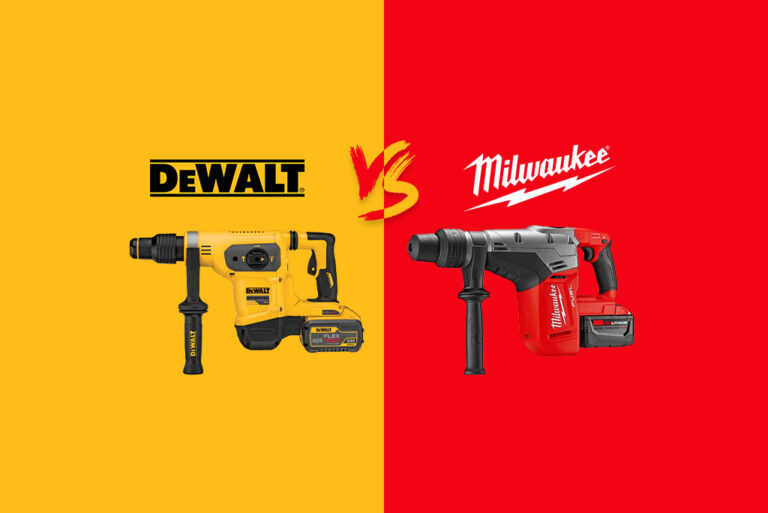
Key Differences: Dewalt Vs Milwaukee Hammer Drills
While both brands make excellent tools, there are important differences. Here’s a head-to-head look at what really sets them apart.
| Feature | DeWalt | Milwaukee |
|---|---|---|
| Power Output (Torque) | Up to 820 UWO (approx. 820 in-lbs) | Up to 1,200 in-lbs |
| Battery System | FlexVolt (20V/60V) | RedLithium (M18) |
| Weight | Typically lighter | Heavier, more solid |
| Warranty | 3 years (most models) | 5 years (most models) |
| Smart Features | Basic on most models | ONE-KEY on select models |
Non-obvious Insights
- Battery Longevity: Milwaukee’s RedLithium batteries tend to last longer between charges, especially in cold weather. This can matter a lot if you work outside in winter.
- Trigger Sensitivity: DeWalt drills often have smoother, more sensitive triggers. This gives you better control when starting holes, especially in delicate materials.
- Service Networks: DeWalt has more repair centers in North America, making it easier to get your tool fixed quickly. Milwaukee offers mail-in service but has fewer walk-in locations.
Credit: resources.ksrsales.com
Performance In Real-world Scenarios
How do DeWalt and Milwaukee hammer drills perform in common situations? Here are some examples based on real user feedback and jobsite tests.
Drilling Into Concrete
Both brands handle concrete, but Milwaukee’s higher torque often means faster holes, especially with larger bits. The difference becomes clear when drilling many holes in a row, like for anchoring railings or mounting shelves. Milwaukee drills tend to keep going without bogging down.
Overhead Work
If you’re drilling overhead—like installing lights or hanging ceiling brackets—the lighter weight of DeWalt can save your arms and shoulders. For long days, this comfort adds up.
Long Work Sessions
Milwaukee batteries usually outlast DeWalt in side-by-side tests. But DeWalt’s quick chargers can help you get back to work faster. If you keep two batteries and swap them, the difference may not matter.
Dusty Or Dirty Conditions
Both brands seal their switches and electronics, but Milwaukee’s added electronic protection gives it an edge in the worst conditions—think demolition sites or outdoor projects.
Comparing Flagship Models: Dewalt Dcd996 Vs Milwaukee M18 Fuel 2804-20
For a direct comparison, let’s look at two flagship cordless hammer drills: the DeWalt DCD996 and the Milwaukee M18 Fuel 2804-20.
| Specification | DeWalt DCD996 | Milwaukee 2804-20 |
|---|---|---|
| Max Torque | 820 UWO (~820 in-lbs) | 1,200 in-lbs |
| Motor Type | Brushless | Brushless |
| Weight (with battery) | 4.7 lbs | 4.5 lbs |
| Max RPM | 2,250 | 2,000 |
| Max BPM (Blows Per Minute) | 38,250 | 32,000 |
| Battery | 20V Max/FlexVolt | M18 RedLithium |
| LED Light | 3-mode, high/med/low | Single LED |
What Do These Specs Mean For You?
- Torque: Milwaukee wins on paper. If you need to drive big bits or drill large holes, this is a real advantage.
- RPM and BPM: DeWalt spins and hammers faster, which can mean smoother holes in softer concrete or brick.
- Weight: Both are similar, but DeWalt sometimes feels better balanced.
- LED Lighting: DeWalt’s 3-mode light is helpful in dark corners or attics.
Which Brand Is Right For You?
Choosing between DeWalt and Milwaukee isn’t just about specs. It’s about the kind of work you do, your budget, and even your brand loyalty. Here’s what to consider.
You Might Prefer Dewalt If:
- You value lighter weight and comfort for overhead or all-day work.
- You already own other DeWalt tools and batteries.
- You want fast charging and battery flexibility (especially with FlexVolt).
- You want more local repair and service options.
You Might Prefer Milwaukee If:
- You need maximum torque for heavy-duty drilling or driving.
- You work in extreme conditions (cold, dust, heavy use).
- You want smart features like ONE-KEY for tracking and customization.
- You want the longest battery life and a 5-year warranty.
Price And Value: What Should You Expect To Pay?
Both brands offer hammer drills in a wide range of prices. As of 2024:
- Entry-level DeWalt hammer drills: $99–$149 (bare tool)
- Mid-range DeWalt (with battery/charger): $179–$249
- Flagship DeWalt kits: $279–$349
- Entry-level Milwaukee hammer drills: $119–$169 (bare tool)
- Mid-range Milwaukee (with battery/charger): $229–$299
- Flagship Milwaukee kits: $329–$399
Milwaukee often costs a bit more, especially for their top-end models. But the longer warranty and battery life can offset the higher price for professionals.
What Do You Get In The Box?
Most kits include:
- Hammer drill body
- Battery (1 or 2)
- Charger
- Carrying case or bag
- Side handle (for control during heavy drilling)
Some DeWalt kits also include extra bits, while Milwaukee sometimes bundles impact drivers or saws in combo kits.
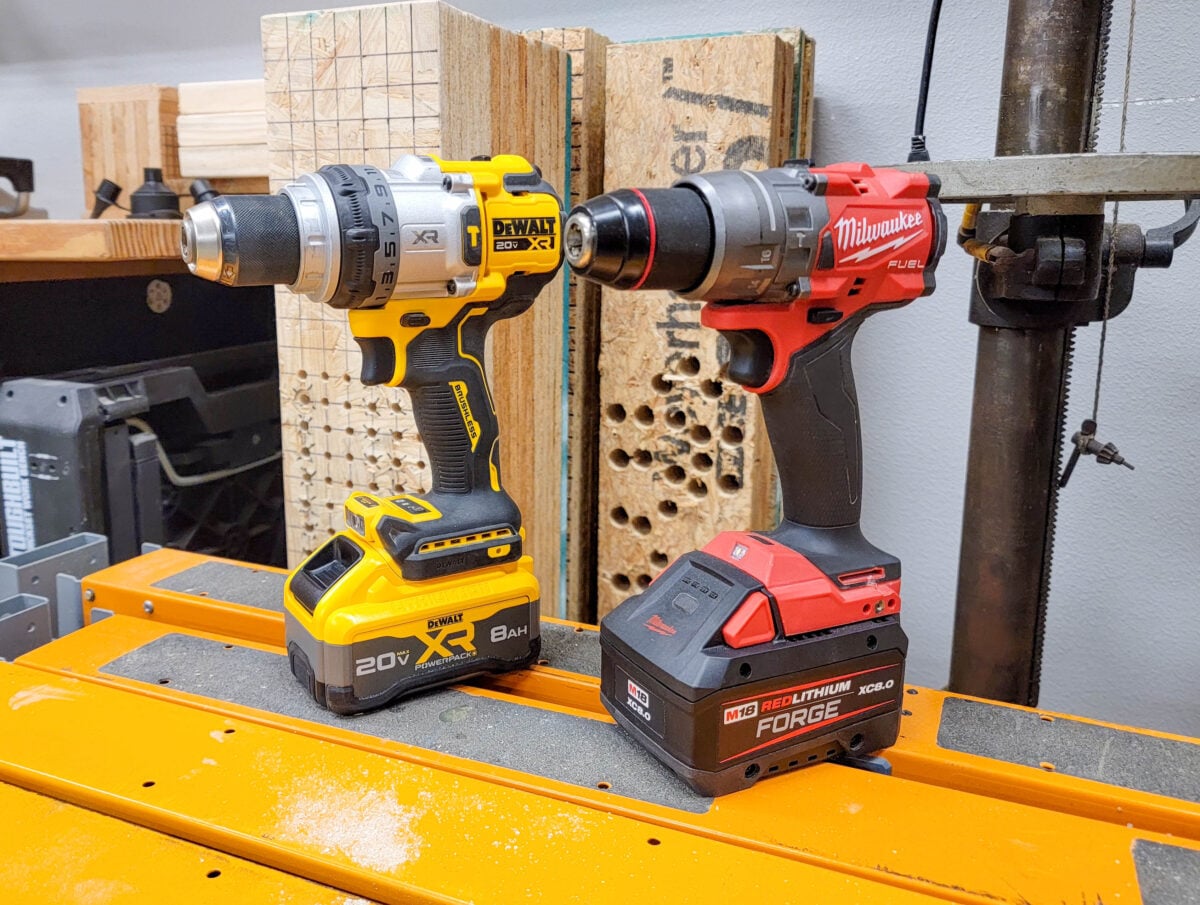
Credit: www.protoolreviews.com
What Really Matters When Choosing?
- Power Needs: For most homeowners and light pros, either brand delivers enough power. For heavy commercial work, Milwaukee usually wins.
- Battery System: If you own other tools, staying within one brand saves money and hassle.
- Comfort and Weight: If you drill overhead or for long periods, DeWalt’s design can reduce fatigue.
- Features: Smart features like ONE-KEY or advanced lights may be worth the extra cost for some users.
- Service and Warranty: Milwaukee’s 5-year warranty is a big plus, but DeWalt’s network makes repairs easier in some areas.
Common Mistakes When Comparing Dewalt And Milwaukee Hammer Drills
Many buyers focus only on advertised torque or price and ignore key factors. Here are mistakes to avoid:
- Ignoring Battery Compatibility: Buying a new brand means buying new batteries and chargers, which adds cost.
- Underestimating Weight: A few extra ounces seem small, but matter during long or overhead jobs.
- Missing Smart Features: If you work on big sites, tool tracking (Milwaukee ONE-KEY) can prevent lost tools.
- Confusing Chuck Size: Some models use a smaller chuck, limiting bit size—always check before buying.
- Not Considering Service: A longer warranty is great, but only if you can get service easily.
Real User Feedback: What Pros And Diyers Say
Many users share their experiences online and on job sites.
- Contractors often prefer Milwaukee for the extra torque and battery life. They mention the tools “just keep going,” even after drops and dust.
- Electricians and plumbers like DeWalt for overhead work and the lighter feel. They appreciate the quick chargers and simple controls.
- Homeowners are often happy with either brand, but tend to choose DeWalt for price and availability at big-box stores.
One non-obvious insight: Some pros carry both brands. They use Milwaukee for the toughest jobs and DeWalt for lighter, faster drilling.
How Do Accessories Compare?
Both DeWalt and Milwaukee offer a wide range of drill bits, side handles, and cases. Milwaukee bits are often considered longer-lasting for masonry, but DeWalt’s bits are easier to find in stores. Many bits and accessories are cross-compatible, but always check for fit.
Environmental And Ergonomic Factors
DeWalt focuses on lighter, balanced tools—useful for users with smaller hands or less grip strength. Milwaukee’s heavier tools can feel more stable but may cause fatigue. Both brands have made strides in reducing vibration, which helps prevent hand and wrist strain over long use.
Which Is Better For Diy Vs Professional Use?
- DIY/Home Use: DeWalt’s mid-range hammer drills are often the sweet spot. They’re powerful, affordable, and easy to handle.
- Professional/Trade Use: Milwaukee tends to dominate for high-demand tasks, especially in commercial construction, framing, and heavy installs.
However, either brand can handle most tasks. The “best” choice often comes down to what batteries and tools you already own.

Credit: www.youtube.com
The Role Of Brand Loyalty
Many tool owners stick with one brand for years. This is often about battery compatibility, but also trust and habit. If you’ve had good experiences with DeWalt or Milwaukee, there’s nothing wrong with staying loyal—as long as the tool meets your needs.
Warranty And Service: What To Expect
- DeWalt: 3-year limited warranty, 1-year free service, 90-day money back.
- Milwaukee: 5-year limited warranty on most tools.
Both have strong customer service, but DeWalt has more physical service centers in the US and Canada. Milwaukee handles most repairs through authorized dealers or mail-in service.
For the latest warranty details, always check the official sites. You can find more on the DeWalt Warranty Page.
Frequently Asked Questions
Is A Hammer Drill Really Necessary For Home Use, Or Is A Regular Drill Enough?
For most basic drilling in wood or drywall, a regular drill works fine. But if you need to drill into concrete, brick, or stone—like mounting shelves or installing anchors—a hammer drill is much more effective. It makes tough jobs faster and easier.
Can I Use Dewalt Batteries In Milwaukee Tools, Or Vice Versa?
No. DeWalt and Milwaukee use different battery systems. Their batteries are not cross-compatible. If you already own one brand’s batteries, it’s usually smarter to stay with that brand.
Which Hammer Drill Is Better For Drilling Into Concrete: Dewalt Or Milwaukee?
Milwaukee typically has more torque and can drill faster in hard concrete, especially with larger bits. However, DeWalt’s higher RPM and BPM can make smoother holes in softer masonry. Both can handle concrete, but Milwaukee has a slight edge for heavy-duty jobs.
Are There Any Safety Features I Should Look For?
Yes. Look for side handles (for control during heavy drilling), electronic clutches (to prevent bit binding), and sealed switches (to keep out dust and moisture). Milwaukee’s Redlink Plus and DeWalt’s electronic controls add extra layers of safety.
How Long Do These Hammer Drills Typically Last?
With proper care, both DeWalt and Milwaukee hammer drills can last many years—even a decade or more for pro-grade models. Key factors are regular maintenance, using genuine batteries, and following the manual. Milwaukee’s 5-year warranty and DeWalt’s service network both add peace of mind.
Choosing between DeWalt and Milwaukee hammer drills isn’t easy. Both brands deliver outstanding performance, reliability, and value. By focusing on your real needs—power, comfort, battery system, and warranty—you can pick the right tool for your work and enjoy years of trouble-free drilling.