What is a 5/16 drill bit and what does it actually look like? Many people see drill bits as just another tool in a box, but understanding the details can make a big difference in your work. If you have ever picked up a drill bit and wondered about its size, shape, and uses, you are not alone. In fact, the 5/16 drill bit is one of the more common sizes in both home and professional toolkits. But what does “5/16” really mean, and how can you recognize this bit among all the others?
This article will guide you through every aspect of the 5/16 drill bit. We will explore its physical appearance, measurements, materials, and markings. You will also learn how to identify it, compare it with similar sizes, and understand its main uses.
By the end, you will have a complete picture of what a 5/16 drill bit looks like, how to spot it, and why it matters in real-life situations.
Understanding Drill Bit Sizes
Before we look at the 5/16 drill bit specifically, it helps to know how drill bit sizes work. Drill bit sizes are measured by their diameter, which is the width of the circular hole they make. In the United States, many drill bits are sized in fractions of an inch, while other countries often use millimeters.
A 5/16 drill bit means that the diameter is five-sixteenths of an inch. In decimals, this is 0.3125 inches or about 7.94 mm. This size is larger than a 1/4 inch bit (0.25 inches, 6.35 mm) and smaller than a 3/8 inch bit (0.375 inches, 9.53 mm). Knowing the exact size is important for tasks where a precise hole is needed, like fitting a specific bolt or anchor.
Drill bits also come in different lengths, but the diameter is the key factor when choosing the right bit for the job. The 5/16 size is popular for wood, metal, and plastic, making it a versatile choice.
The Five Key Aspects Of A 5/16 Drill Bit’s Appearance
To answer the question “What does a 5/16 drill bit look like? ” you need to consider five main features. Each one gives you a clue about the bit’s identity and use. Let’s explore each aspect in detail.
1. Physical Dimensions
The first thing you notice about a 5/16 drill bit is its physical size. The diameter is exactly 5/16 of an inch, which is a little wider than a standard pencil. But dimensions mean more than just diameter—they include length, shape, and proportion.
A typical 5/16 drill bit for home use is around 4 to 6 inches long. The length can vary depending on whether it’s a regular twist bit, a brad-point, or a long “jobber” bit. Some specialty bits, like masonry bits, may be even longer.
Here’s a simple data comparison to help you see where the 5/16 bit fits among other common sizes:
| Drill Bit Size | Inches (Decimal) | Millimeters | Common Use |
|---|---|---|---|
| 1/4 | 0.2500 | 6.35 | Small screws, dowels |
| 5/16 | 0.3125 | 7.94 | Bolts, anchors |
| 3/8 | 0.3750 | 9.53 | Larger bolts, pipes |
When you hold a 5/16 drill bit, it feels noticeably thicker than a 1/4 inch bit but not bulky. Its shaft is straight and smooth, unless it’s a specialty bit with a reduced shank. The fluted part (the twisted grooves) may take up most of its length.
Non-obvious insight: Many people overlook that the overall length of the bit does not affect the diameter of the hole it creates. Even a very long 5/16 bit will always make a 5/16 hole.
2. Flute Design And Tip Shape
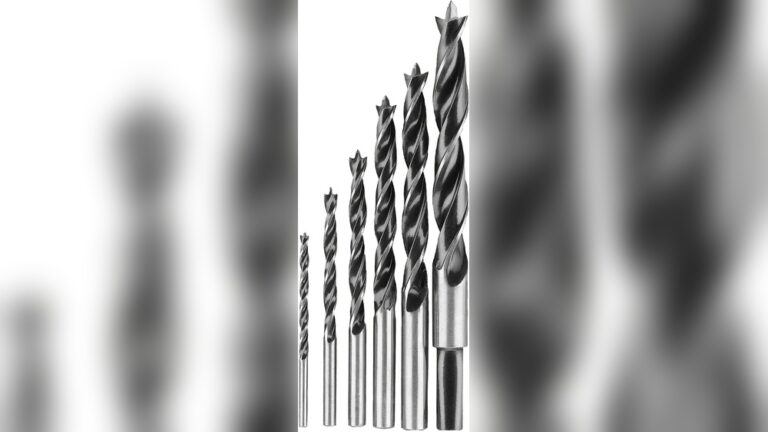
The next important aspect is the flute design—the spiral grooves that run along the body. These flutes help remove debris from the hole and affect how the bit cuts. The standard 5/16 bit is usually a twist drill bit, with two spiral flutes.
However, you might also see other designs:
- Brad-point bits: Have a sharp center point and outer spurs, ideal for clean wood holes.
- Masonry bits: Feature a wider, chisel-shaped tip and often a carbide insert.
- Spade bits: Flat paddle-shaped ends with a center point, used for drilling large holes in wood.
The tip shape also matters. Standard twist bits have a conical tip with an angle of about 118 degrees (sometimes 135 degrees for metal bits). Brad-point bits have a sharp spike at the center, while masonry bits may have a blunter, more robust tip.
When you look at the tip under good light, you can usually see if it’s designed for wood, metal, or stone by the angle, sharpness, and material at the very tip.
Non-obvious insight: The cutting edge of the tip is often slightly raised or beveled. This helps start the hole more smoothly and prevents wandering, especially in metal.
3. Material And Coating
Another way to identify a 5/16 drill bit is by what it’s made of and how it looks on the surface. Most standard drill bits are made from high-speed steel (HSS), which has a slightly grey or metallic shine. Some bits have a black oxide coating, making them look darker, almost black. Others are titanium-coated, giving them a gold or bronze color.
For tougher jobs, you may find cobalt bits (often a dull gold color) or carbide-tipped bits (with a shiny silver tip on a grey body). Masonry bits often have a silver or grey carbide tip welded onto the end.
Here’s a quick comparison:
| Material/Coating | Color/Finish | Main Use |
|---|---|---|
| High-Speed Steel (HSS) | Grey/metallic | General purpose |
| Black Oxide | Dark black/grey | Reduces friction, rust resistant |
| Titanium-Coated | Gold/bronze | Longer life, less heat |
| Cobalt | Dull gold | Stainless steel, hard metals |
| Carbide-Tipped | Shiny silver tip | Masonry, tile |
When you see a gold-colored 5/16 bit, it’s likely titanium-coated. If the tip looks extra hard or is a different metal, it may be carbide-tipped for concrete or stone.
Non-obvious insight: The color or finish is not just for looks. It signals the bit’s durability and ideal use. Many beginners ignore this and use the wrong bit, wearing it out quickly.
4. Shank And Markings
Look closely at the end of the drill bit that goes into the drill. This is called the shank. Most 5/16 bits have a straight shank—the same diameter as the body—so they fit standard chucks. Some have a reduced shank, allowing you to use a larger bit in a smaller drill.
You might also see a hex shank (six-sided), especially on bits designed for quick-change chucks or impact drivers. The hex shank is easier to grip and less likely to slip.
Another important feature is the markings on the shank. Good-quality bits are stamped or laser-etched with their size and sometimes the material. Look for “5/16” or “7.9 mm” near the base. On some, you may also see the brand or part number.
Confident guidance: Always check the shank for markings before you start. This helps you avoid grabbing the wrong size, especially if you store bits loose in a box.
5. Packaging And Presentation
The last way to recognize a 5/16 drill bit is by how it’s packaged or presented for sale. Manufacturers often display the size clearly on the package, either in inches, millimeters, or both.
You may find a 5/16 bit sold by itself, in a set with other sizes, or as part of a specialty kit (like a masonry set). On hanging cards or boxes, look for the fractional size in bold. Sometimes the size is color-coded or highlighted on the packaging.
When new, the bit may have a protective tip cover or oil coating to prevent rust. In sets, the 5/16 spot is usually labeled, making it easy to spot at a glance.
Non-obvious insight: In mixed sets, the 5/16 bit is often the largest one that fits in smaller home drills. If you’re missing that one, it’s because it’s popular for common DIY tasks!
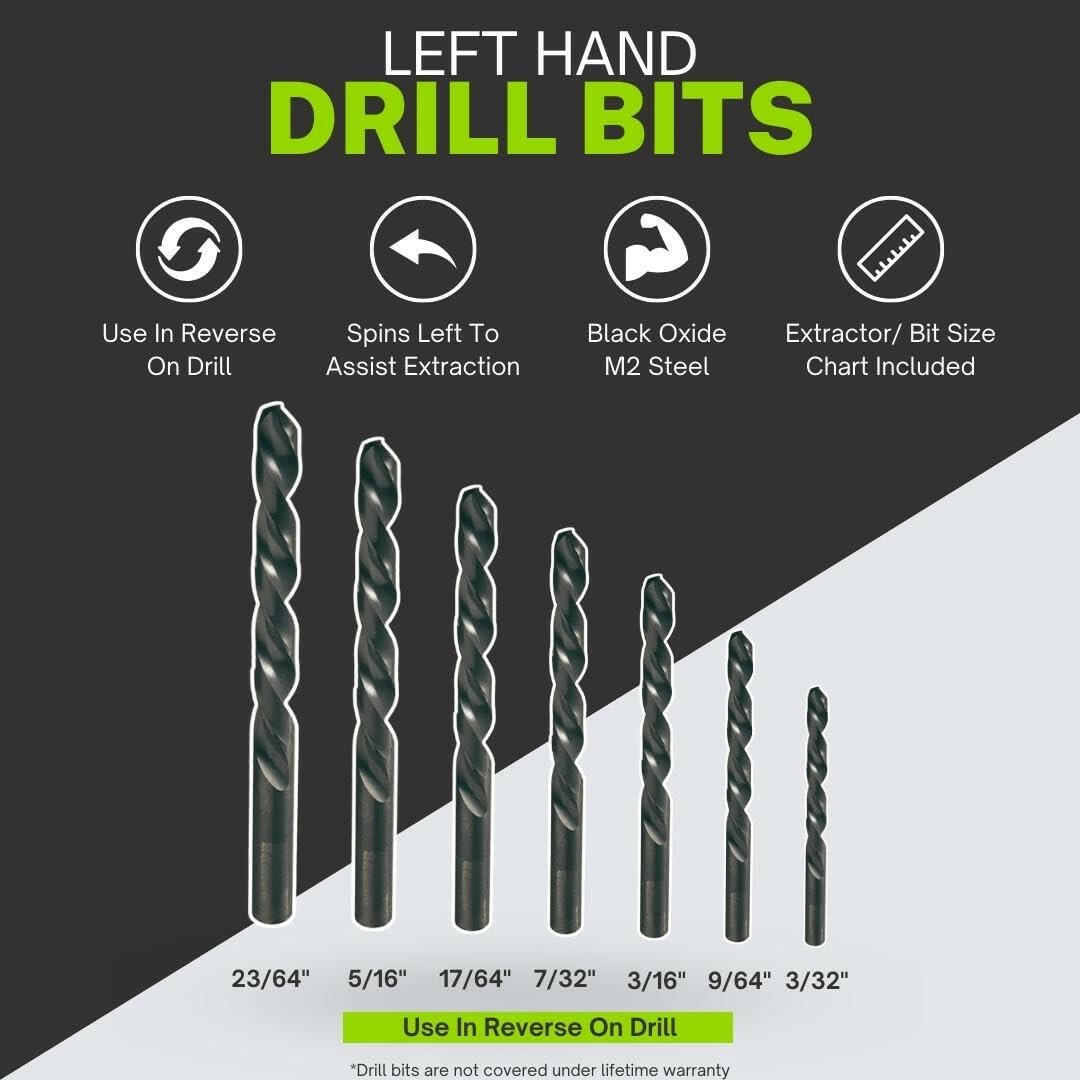
Credit: www.gripedgetools.com
How To Identify A 5/16 Drill Bit In Your Toolbox
Finding the right bit in a crowded toolbox can be tricky. Here’s a practical, step-by-step approach:
- Check for Markings: Look at the shank for “5/16” or “7.9 mm”. Use a magnifier if needed.
- Compare by Diameter: Line up your bits by eye. The 5/16 is noticeably larger than 1/4 but smaller than 3/8.
- Use a Caliper: If you want to be exact, use a digital caliper to measure the diameter. It should read close to 0.3125 inches or 7.94 mm.
- Check Packaging: If you have the case, look for the labeled spot.
- Feel the Weight: The 5/16 bit is heavier than smaller bits, especially in HSS or cobalt.
Pro tip: Organize your bits by size in a labeled box or holder. This saves time and prevents mix-ups.
Comparing 5/16 Drill Bit To Nearby Sizes
Many people confuse the 5/16 bit with 1/4 or 3/8 bits. Here’s how they stack up:
- 1/4 inch bit: Thinner and lighter, common for small screws and pilot holes.
- 5/16 inch bit: Mid-sized, used for bolts, anchors, and general-purpose holes.
- 3/8 inch bit: Noticeably thicker, used for heavy-duty holes and large fasteners.
Here’s a side-by-side visual guide:
| Feature | 1/4 Inch Bit | 5/16 Inch Bit | 3/8 Inch Bit |
|---|---|---|---|
| Diameter (inches) | 0.2500 | 0.3125 | 0.3750 |
| Diameter (mm) | 6.35 | 7.94 | 9.53 |
| Common Use | Pilot holes | Bolts, anchors | Pipes, large bolts |
| Visual Size | Thin | Medium | Thick |
Practical tip: If you are ever unsure, measure the bit against a known-size drill gauge. These metal plates have holes for each standard size.
Common Uses For A 5/16 Drill Bit
So why do so many people reach for the 5/16 bit? Here are some typical uses:
- Drilling holes for bolts and anchors in wood, metal, or masonry. Many anchor sleeves and lag bolts require a 5/16 pilot hole.
- Fitting dowels or pegs in woodworking projects. The size is ideal for medium-strength joints.
- Pre-drilling for lag screws in construction. This prevents splitting and ensures a tight fit.
- Installing wall plugs for medium-weight shelves, curtain rods, or TV mounts.
- Making clearance holes for plumbing or electrical conduit.
The 5/16 bit is a “just right” size for many medium-duty tasks around the home or shop.
Non-obvious insight: Using the correct bit size prevents stripping screws, breaking bolts, or cracking material. Many DIYers use a too-small bit, causing frustration.
Visual Examples: What To Look For
To help you spot a 5/16 drill bit in real life, here’s what you’ll notice:
- Length: About as long as a standard ballpoint pen (4–6 inches).
- Thickness: Wider than a pencil, but not as thick as a marker.
- Shank: Usually straight, sometimes with a hex end.
- Markings: “5/16”, “7.9 mm”, or both near the end.
- Color: Depends on material—shiny metallic, black, gold, or with a silver tip.
- Flutes: Two spiraling grooves along the length (for twist bits).
- Tip: Pointed for metal/wood, blunt and reinforced for masonry.
If you place it next to a 1/4 bit and a 3/8 bit, it will be in the middle.

Credit: www.amazon.ae
Mistakes Beginners Make When Identifying Drill Bits
- Ignoring markings: Many people don’t check the shank for size, leading to wrong choices.
- Confusing diameter and length: The drill bit’s length doesn’t tell you the size of the hole.
- Assuming color means size: The coating shows material, not diameter.
- Not organizing bits: Mixing different sizes makes identification harder.
- Not measuring: Eyeballing is helpful, but a caliper or drill gauge is more accurate.
Confident guidance: Always double-check before drilling. The wrong bit size can ruin your project or damage your tools.
How Manufacturers Label And Package 5/16 Drill Bits
Most major brands label their bits clearly. Here is what to look for:
- On the bit: Stamped or laser-etched “5/16” or “7.9 mm”.
- On the package: Large, bold numbers on the front. Sometimes both inches and millimeters.
- In sets: Bits are arranged from smallest to largest, with the 5/16 spot labeled.
- By color: Some brands use a color code for metric and imperial sizes.
Quality brands like DeWalt, Bosch, and Milwaukee all follow these standards. If you buy a bit online, check the specs for “5/16 inch diameter.”
Extra tip: If you want to learn more about drill bit standards and sizing, see the guide on Wikipedia.
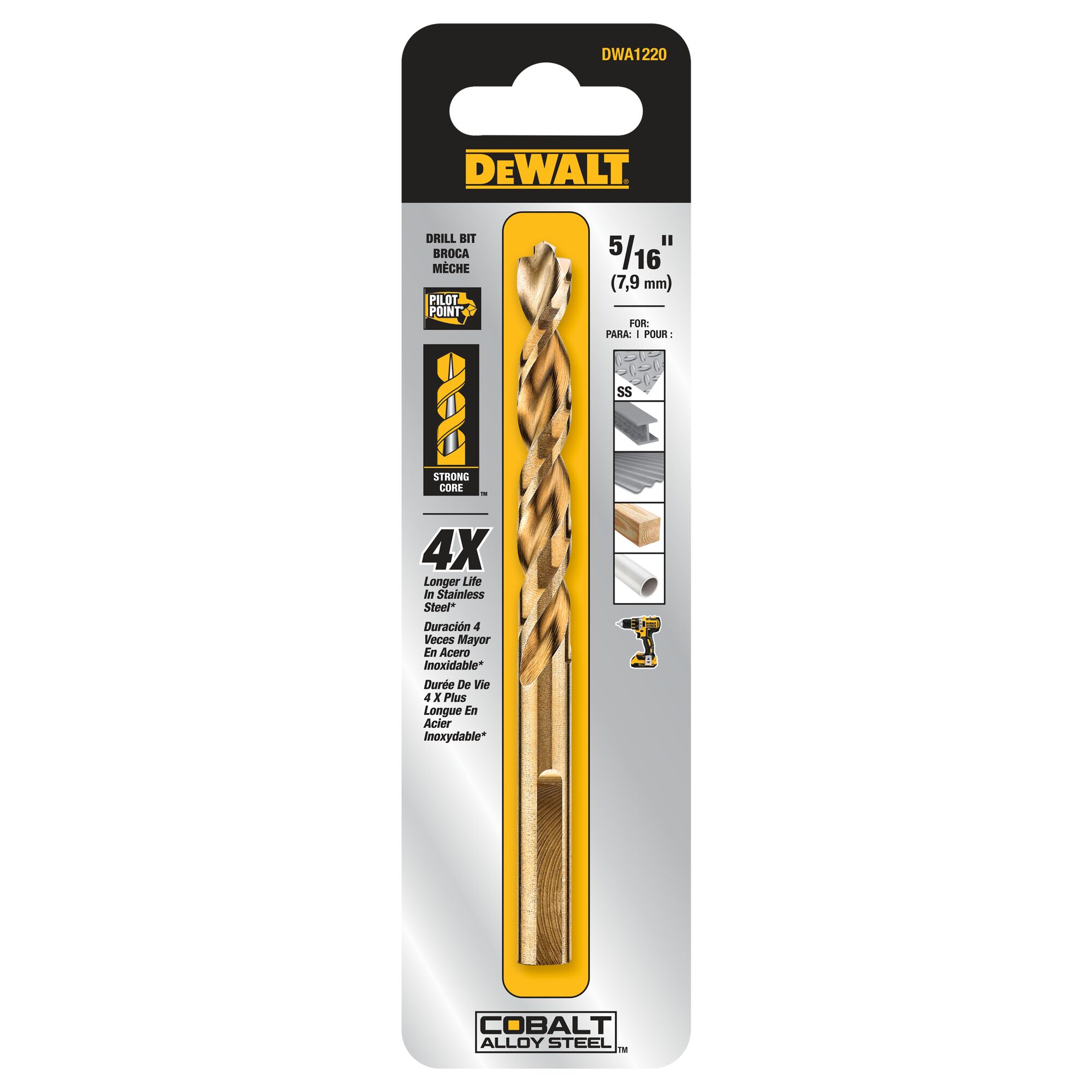
Credit: www.lowes.com
When To Use A 5/16 Drill Bit—and When Not To
The 5/16 size is not for every job. Use it when:
- The hardware (bolt, anchor, dowel) calls for a 5/16 hole.
- You need a medium-sized hole for strength but not bulk.
- The material is wood, metal, plastic, or masonry (with the right bit type).
Do not use a 5/16 bit if:
- The screw or anchor is much smaller—this will make the hole too loose.
- You need a pilot hole for small screws (use a smaller size instead).
- The drill cannot handle the bit size (older drills may slip or stall).
Practical advice: Always check the instructions for your hardware and match the bit size exactly.
Caring For And Storing Your 5/16 Drill Bit
A good drill bit lasts years if you take care of it. Here’s how:
- Clean after use: Wipe off dust and debris.
- Store in a labeled box: Keep bits organized by size.
- Avoid rust: Store in a dry place, and consider a light oil coating.
- Sharpen regularly: If the tip gets dull, use a bit sharpener or take it to a tool shop.
- Do not use on wrong material: For example, don’t use a wood bit on concrete.
Confident guidance: Well-maintained bits cut cleaner, last longer, and are safer to use.
Frequently Asked Questions
What Does “5/16” Actually Mean In A Drill Bit?
The “5/16” in a drill bit refers to its diameter, measured in inches. It means the bit is five-sixteenths of an inch wide (0.3125 inches), which is about 7.94 mm. This tells you the size of the hole the bit will make.
Can I Use A 5/16 Drill Bit For Both Wood And Metal?
Yes, you can use a 5/16 drill bit for both wood and metal, but you must choose the right type of bit. Use a twist bit or brad-point for wood, and a high-speed steel or cobalt twist bit for metal. Never use a wood bit on metal or masonry.
How Can I Tell If My Drill Bit Is 5/16 If There Are No Markings?
If your bit has no markings, measure its diameter with a caliper or a drill gauge. The diameter should be close to 0.3125 inches or 7.94 mm. Comparing it side-by-side with labeled bits also helps.
Why Is My 5/16 Drill Bit Gold Or Black?
The color of your 5/16 drill bit comes from its coating or material. Gold usually means titanium-coated for longer life and less friction. Black often means a black oxide coating for rust protection. The coating does not change the size, just the durability.
What Is The Most Common Use For A 5/16 Drill Bit?
The most common use for a 5/16 drill bit is drilling holes for bolts, anchors, and dowels in wood, metal, or masonry. It’s a popular size for medium-duty fastening and general-purpose tasks in home and construction projects.
A 5/16 drill bit is easy to recognize when you know what to look for: its physical dimensions, flute design, material, markings, and packaging all give clues. By paying attention to these five key aspects, you can confidently choose and use the right drill bit for your next project. Proper identification, storage, and care mean you will get the best results every time you pick up your drill.