When you need to drill a hole, the tool you choose can make all the difference. Two of the most popular types for tough jobs are carbide drill bits and titanium drill bits. Both are trusted by professionals and hobbyists alike, but each comes with its own strengths, weaknesses, and best uses. If you’ve ever stood in the hardware store, staring at racks of drill bits and wondering which one to buy, you’re not alone. The answer isn’t always simple, but with the right information, you can pick the perfect bit for your next project.
This guide breaks down everything you need to know about carbide and titanium drill bits. You’ll learn how they’re made, what makes them special, when to use each one, and even some tips that most beginners miss. We’ll look at real performance data, compare costs, and answer the most common questions.
By the end, you’ll know exactly which drill bit to grab—and why.
What Are Carbide Drill Bits?
Carbide drill bits are not made from pure metal. Instead, they use a compound called tungsten carbide. This material is a blend of tungsten and carbon, fused together at high heat. The result is a metal that’s much harder than steel. In fact, carbide is so tough that it can cut through hardened steel, stainless steel, tile, and even some stones.
Usually, a carbide drill bit isn’t solid carbide. Most bits have a steel body with a carbide tip. This makes them less likely to snap, but still gives you the cutting power of carbide right where you need it.
Carbide bits are commonly used in:
- Industrial manufacturing
- Metalworking
- Masonry and tile work
- Automotive repair
They’re designed for jobs where you need to drill into very hard materials, or where precision and durability matter most.
Key Properties
- Extremely hard: Carbide is much harder than most metals.
- High heat resistance: Can handle high temperatures without losing strength.
- Brittle: While hard, carbide is not very flexible and can snap if bent.
- Long-lasting: Stays sharp for a very long time with correct use.
What Are Titanium Drill Bits?
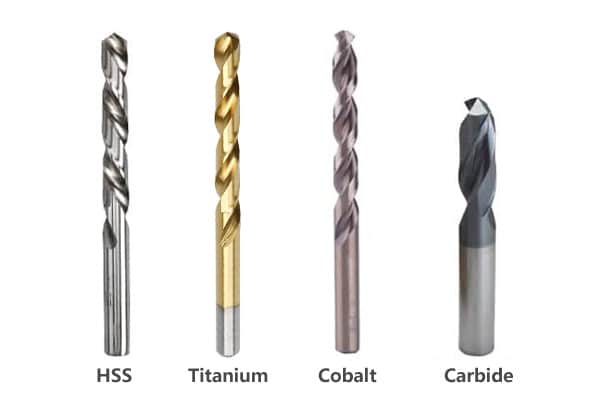
Titanium drill bits are actually high-speed steel (HSS) bits coated with a thin layer of titanium nitride (TiN) or sometimes titanium carbonitride (TiCN). The titanium coating makes the surface harder and smoother, so the bit can cut faster and last longer than plain HSS bits.
The most common type is titanium nitride coated. This gives the bit a gold or bronze color. Some premium bits use other coatings, which can look blue, purple, or even black.
Titanium bits are popular for:
- General metal drilling
- Woodworking
- Plastic drilling
- DIY and home repair
They’re a step up from regular steel bits, but not as specialized (or expensive) as carbide.
Key Properties
- Surface hardness: The coating is harder than steel, but not as hard as carbide.
- Reduced friction: Titanium coatings reduce heat buildup and friction.
- Good for speed: Cuts faster than plain HSS.
- Coating wears off: Over time, the coating can fade, especially if you sharpen the bit.
How Are They Made?
Understanding how these bits are made helps explain their differences.
Carbide Drill Bit Manufacturing
Carbide bits are made using powder metallurgy. Fine tungsten carbide powder is mixed with a binder (usually cobalt), pressed into shape, and then sintered at very high temperatures. This process fuses the powder into a solid piece.
For most bits, the tip is made of carbide and the body is steel. The two are joined by brazing, which is a type of high-strength welding.
This method creates a bit with:
- A super-hard, wear-resistant tip
- A tough, flexible body to reduce breakage
Solid carbide bits exist, but they’re rare and used mainly in CNC machines or for extremely tough jobs.
Titanium Drill Bit Manufacturing
Titanium bits start as high-speed steel (HSS). The HSS blank is ground to shape, then cleaned and polished. Next, the bit is placed in a vacuum chamber and coated with titanium nitride using a process called physical vapor deposition (PVD). This creates a thin, hard, gold-colored layer.
The coating is only a few microns thick—much thinner than a human hair. It’s enough to reduce wear and friction, but the core strength comes from the steel inside.
Performance Comparison: Carbide Vs Titanium Drill Bits
When you’re picking a drill bit, you want to know which one will do the job faster, cleaner, and with fewer replacements. Let’s compare the two side by side in several key areas.
Hardness
Hardness is a measure of how well a bit resists wear and dulling. The higher the hardness, the longer the bit stays sharp.
| Drill Bit Type | Material Hardness (Vickers) | Typical Application |
|---|---|---|
| Carbide (Tungsten Carbide) | ~1,600–2,000 HV | Hardened steel, stone, masonry |
| Titanium-Coated HSS | ~800–900 HV (coating) | Wood, soft metals, plastics |
Carbide is nearly twice as hard as titanium-coated HSS. This means carbide bits stay sharp much longer, especially when drilling tough materials.
Heat Resistance
Drilling creates heat. High heat can dull or warp a drill bit. Carbide bits handle temperatures up to 1,000°C (1,832°F) or more, while titanium-coated bits are good up to about 600°C (1,112°F).
This makes carbide the better choice for heavy, continuous drilling or when working with hard metals.
Durability And Lifespan
Carbide bits last longer in tough conditions, but they can chip or snap if misused. Titanium bits are more forgiving—they bend a bit before breaking, but the coating wears off after repeated use or sharpening.
In real-world testing, carbide bits can last 5–10 times longer than titanium bits when used correctly on hard materials. But for simple jobs, a titanium bit may last plenty long and cost less up front.
Cutting Speed
Cutting speed depends on both the bit’s sharpness and its ability to handle heat. Carbide bits can be run at higher speeds without losing their edge. Titanium bits cut faster than plain HSS, but not as fast as carbide.
Precision
Carbide bits offer greater precision because they resist flexing and dulling, even in very hard materials. This is why they’re used for industrial CNC drilling and applications where accuracy matters.
Cost Comparison
Cost is always a factor. Here’s a rough price comparison:
| Bit Type | Average Price (per bit, USD) | Cost Over Time (frequent use) |
|---|---|---|
| Carbide | $8–$50+ | Lower (less frequent replacement) |
| Titanium-Coated | $2–$10 | Higher (replaced more often) |
While carbide bits cost more upfront, they can save money over time if you’re drilling tough materials often.

Credit: www.reddit.com
When To Use Carbide Drill Bits
Carbide isn’t always the right choice, but for certain jobs, it’s unbeatable.
Best Uses For Carbide
- Drilling hardened steel: Regular or titanium bits will dull quickly; carbide cuts through.
- Masonry and tile: Carbide’s hardness lets it handle brick, concrete, tile, and stone.
- High-volume, industrial use: When you need hundreds or thousands of clean, precise holes.
- Glass and ceramics: With specialized tips, carbide bits can drill delicate yet hard surfaces.
- When longevity matters: Carbide bits keep their edge much longer in demanding settings.
When To Avoid Carbide
- Soft materials: For wood or plastic, carbide’s extra hardness is overkill and may cause chipping.
- Handheld drills: Carbide bits are more brittle; sudden movement can snap them.
- Budget projects: If you only need a few holes in soft metal or wood, titanium bits are cheaper.
When To Use Titanium Drill Bits
Titanium-coated bits fill the gap between plain HSS and expensive carbide.
Best Uses For Titanium
- Drilling wood and plastics: The coating reduces friction and helps with clean holes.
- Soft metals: Aluminum, brass, and mild steel are all good candidates.
- DIY and home repairs: For most household tasks, titanium bits are more than enough.
- General workshop use: They’re affordable and last longer than plain steel bits.
When To Avoid Titanium
- Hardened steel or stone: The coating will wear off quickly, and the bit will dull.
- Continuous heavy-duty use: If you drill tough materials all day, invest in carbide.
Real-world Example: Drilling Hardened Steel
Imagine you need to drill through a piece of hardened steel, such as a broken bolt.
- Titanium bit: You might get one hole—if you go slowly, use oil, and avoid heat. The bit will dull fast, and you may need to replace it.
- Carbide bit: Cuts through the steel with less effort and stays sharp for several holes. Less chance of overheating or dulling.
This is why machine shops and auto repair centers keep carbide bits on hand for the toughest jobs.
Common Mistakes When Choosing Drill Bits
Many beginners make these errors:
- Choosing by price alone: Cheap bits can cost more in the long run if you keep replacing them.
- Using the wrong bit for the material: Forcing a titanium bit through hardened steel can ruin both the bit and your workpiece.
- Not considering drill speed: Carbide handles high speeds; titanium-coated bits are best at moderate speeds.
- Improper cooling/lubrication: Drilling metal generates heat. Without oil or coolant, any bit can fail early.
Practical Tips For Getting The Most From Your Drill Bits
- Match the bit to the material: Always check what you’re drilling before picking a bit.
- Use the right speed: Harder materials need slower speeds, except for carbide, which tolerates higher speeds.
- Use lubricant: Especially on metal, a drop of oil can extend bit life.
- Don’t force it: Let the bit do the work. Pushing too hard causes heat and damage.
- Sharpen carefully: You can sharpen HSS and titanium bits, but sharpening removes the coating. Carbide bits need special diamond wheels for sharpening.
- Store properly: Keep bits dry and organized to prevent rust and damage.
How To Identify Carbide Vs Titanium Drill Bits
Sometimes, you’re not sure what kind of bit you have. Here’s how to tell them apart:
- Color: Titanium bits are usually gold or bronze. Carbide tips are silver-gray.
- Markings: Look for “Carbide” or “HSS TiN” stamped on the shank.
- Weight: Carbide bits are heavier for their size.
- Magnet test: Steel parts (including titanium-coated) are magnetic; carbide is much less so.
Environmental And Safety Considerations
Drill bits are tools, but they’re also made with energy-intensive processes. Carbide production uses more energy and rare materials, so it’s less eco-friendly than titanium-coated HSS. However, carbide’s long life means fewer bits end up in the landfill.
Safety tip: Carbide bits can snap and send shards flying. Always wear safety glasses and secure your workpiece. Titanium bits are less brittle but can still break under stress.
Data Table: Performance Summary
To quickly see how each type compares, here’s a summary.
| Property | Carbide Drill Bit | Titanium Drill Bit |
|---|---|---|
| Hardness | Very high | Moderate (coating only) |
| Heat Resistance | Excellent | Good |
| Durability | Long (if used correctly) | Medium |
| Cost | High | Low to medium |
| Best for | Hard metals, masonry, glass | Wood, plastics, soft metals |
| Sharpenability | Difficult (needs special tools) | Easy, but removes coating |
| Brittleness | High (can snap) | Low (flexes before breaking) |
Credit: www.tenyutool.com
Two Insights Most Beginners Miss
1. Sharpening Destroys Titanium’s Edge
Many people try to sharpen their titanium drill bits when they get dull. However, sharpening removes the thin titanium coating, exposing the softer steel underneath. After sharpening, the bit behaves like a standard HSS bit—losing most of its advantages. This is why titanium bits are often considered “disposable” for pros, while carbide bits can sometimes be professionally resharpened.
2. Carbide’s Brittleness Isn’t Always A Downside
It’s true that carbide bits can snap if twisted or bent. But this brittleness also means they don’t flex or wander, which leads to much cleaner, more accurate holes—especially in hard materials. For CNC machines or precision jigs, carbide’s rigidity is a benefit, not a bug.
Which Drill Bit Should You Choose?
- If you’re drilling into wood, plastic, or soft metals and don’t want to spend a lot, go with titanium-coated HSS.
- If you’re working with hardened steel, tile, or stone, or drilling hundreds of holes, invest in carbide.
- For most DIY users, a set of titanium bits will cover almost every need. Keep one or two carbide bits for the toughest jobs.
When in doubt, check the manufacturer’s recommendations for your project. Investing in the right bit pays off in time saved, cleaner work, and fewer broken bits.
For more on the science behind drill bits and coatings, see the Wikipedia page on drill bits.

Credit: guesstools.com
Frequently Asked Questions
What Is The Main Difference Between Carbide And Titanium Drill Bits?
Carbide drill bits are made with a super-hard tungsten carbide tip or body. They excel at drilling hard materials like steel and masonry. Titanium drill bits are high-speed steel with a titanium coating, making them better than plain steel but not as tough as carbide. Titanium bits are best for wood, plastic, and soft metals.
Can Titanium Drill Bits Be Used On Stainless Steel?
Titanium bits can drill stainless steel, but they wear out quickly. The coating will fade fast, especially if you drill many holes. For occasional holes in stainless, they work, but for repeated use, carbide bits are much better.
Are Carbide Drill Bits Worth The Extra Cost?
If you often drill hard materials or need very precise holes, carbide drill bits are worth it. They last much longer and give cleaner results. For light, occasional use, titanium bits are usually enough and cost less.
Can You Sharpen Titanium Or Carbide Drill Bits At Home?
You can sharpen titanium bits, but it removes the coating, making them act like plain HSS bits. Carbide bits require a diamond grinding wheel and careful technique. Most users replace them rather than sharpen at home.
Which Drill Bit Lasts Longer: Carbide Or Titanium?
Carbide drill bits last much longer when used correctly, especially on hard materials. Titanium bits lose their coating over time and wear out faster, but are fine for lighter tasks.
Choosing the right drill bit is all about matching your tool to your material and project. With the knowledge above, you’ll get cleaner holes, save money, and make your next project go smoother.