For both professionals and DIY enthusiasts, choosing the right cordless drill can make a huge difference in work speed, comfort, and results. Two brands that often lead the conversation are Festool and Milwaukee. Each has a strong reputation, but their tools serve users with different needs and preferences. If you are deciding between these two, it is important to look beyond marketing and focus on real-world performance, durability, features, and value. This article will guide you through a detailed comparison, using clear examples and real data, so you can make a choice that matches your work style and expectations.
Brand Backgrounds: Festool And Milwaukee
Understanding the companies behind the tools helps explain why they are built the way they are.
Festool
Festool is a German brand known for top-quality engineering and innovative designs. Founded in 1925, Festool focuses on tools for woodworking, carpentry, and other precise trades. Their drills are famous for their accuracy, smooth operation, and unique features. Festool’s products often cost more than average, but users praise them for lasting many years and delivering high-quality results.
Milwaukee
Milwaukee Tool started in 1924 in the United States. It built its reputation on durability and performance for construction and industrial work. Milwaukee is well-known for pushing battery technology, with a huge range of cordless tools. Their drills are popular among electricians, plumbers, and general contractors who need reliable power day after day.
Product Lineup Overview
Both Festool and Milwaukee offer several drill models. Here’s a quick view of what you might find from each brand.
Festool Drills
- CXS/C 18 Compact Drills: Lightweight, good for tight spaces and assembly work.
- T 18+3 / TID 18: More powerful, with brushless motors and smart electronics.
- QUADRIVE TPC 18/4: Festool’s flagship, with four gear settings and extreme precision.
Milwaukee Drills
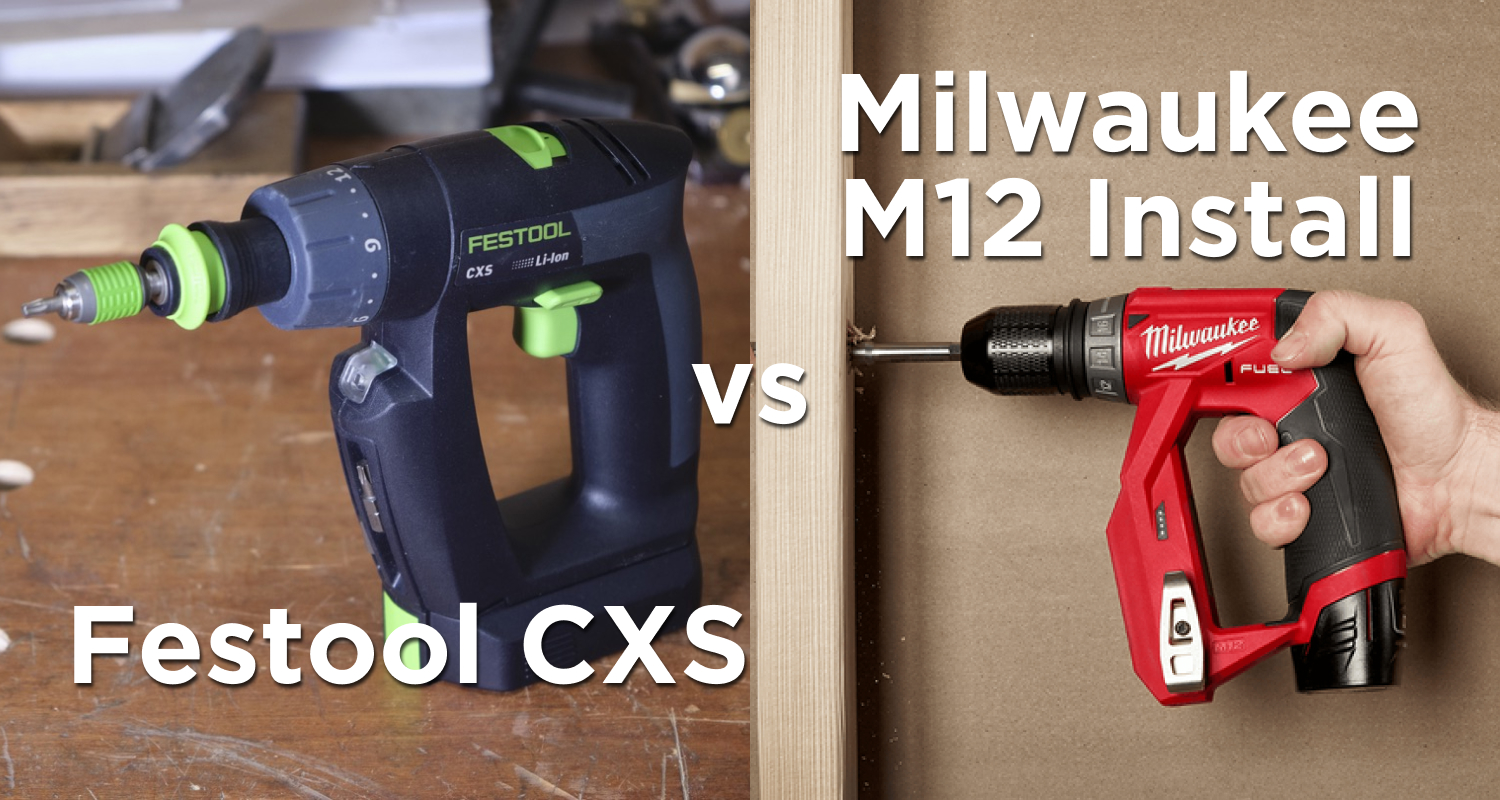
- M12 Series: Compact, 12V drills for light to medium tasks.
- M18 Series: 18V drills, including hammer drills and brushless models, for heavier work.
- FUEL Line: Top of Milwaukee’s range, using advanced motors and electronics for maximum power and runtime.
Design And Ergonomics
How a drill feels in your hand makes a big difference, especially if you use it for hours.
Festool’s Approach
Festool puts a strong focus on balance and weight distribution. Handles are designed to reduce wrist strain. For example, the CXS drill has an offset grip, which many find more comfortable for overhead work. The rubber over-molding is soft but durable, and the drill often feels lighter than its specifications suggest.
Festool also keeps the controls simple. Gears and speed settings are easy to change, even with gloves. The attention to detail is clear — every button and dial feels solid, not cheap.
Milwaukee’s Feel
Milwaukee drills are built for tough environments. The handles are thicker and often have aggressive texturing for a secure grip, even with sweaty or dirty hands. The tool balance is good, though some larger models may feel front-heavy when using big batteries.
Milwaukee tends to make its tools a bit more rugged, with thicker plastic and reinforced chucks. This can make them slightly heavier, but many users appreciate the feeling of toughness.
Side-by-side Comparison
Below is a direct comparison of two popular models: Festool T18+3 and Milwaukee M18 Fuel.
| Feature | Festool T18+3 | Milwaukee M18 Fuel |
|---|---|---|
| Weight (with battery) | 1.7 kg | 2.0 kg |
| Handle Design | Slim, offset grip | Thick, straight grip |
| Build Material | Glass-fiber reinforced plastic | Reinforced polymer |
| Vibration Control | Excellent | Very Good |
Power And Performance
The main job of a drill is to drive screws and drill holes quickly and reliably. Power, speed, and torque are the key numbers, but real performance depends on more than specs.
Festool: Precision Over Raw Force
Festool drills are not always the most powerful on paper, but they are very precise. Their brushless motors deliver smooth, controlled power, especially at low speeds. This is important for woodworkers who need to avoid splitting wood or overdriving screws.
The QUADRIVE TPC 18/4, for example, has four gear settings. This gives a wide range of speeds and torques, making it easy to switch from delicate work to heavy drilling. Festool also uses electronic clutches, which stop the motor instantly to avoid stripping screws.
Milwaukee: High Torque And Fast Drilling
Milwaukee drills, especially the M18 Fuel line, are designed for maximum torque and fast drilling. Many models deliver over 135 Nm of torque, which is enough for large spade bits or long lag screws. Their hammer drills can go through masonry and concrete without much trouble.
Milwaukee’s electronics protect the motor and battery from overheating, but they do not have as many fine control features as Festool. Still, the overall speed and power are impressive for professionals who need to work fast.
Performance Data Comparison
Here are numbers from two flagship models:
| Specification | Festool QUADRIVE TPC 18/4 | Milwaukee M18 Fuel 2804-20 |
|---|---|---|
| Max Torque | 50 Nm (soft), 75 Nm (hard) | 135 Nm |
| No Load Speed (max) | 3600 RPM | 2000 RPM |
| Gear Settings | 4 | 2 |
| Hammer Function | Yes | Yes |
Non-obvious Insights
- Festool’s electronic clutch is a feature many beginners overlook. It prevents overdriving screws and avoids material damage, which saves time and money on repairs.
- Milwaukee’s torque numbers are impressive, but maximum torque is rarely needed for most wood or plastic projects. Using too much power can actually damage workpieces or strip screws.
Battery Technology And Runtime
Cordless drills are only as good as their batteries. Both Festool and Milwaukee use lithium-ion cells, but their battery systems are quite different.
Festool’s Battery System
Festool uses an 18V battery platform with advanced cell management. Their batteries include built-in electronics for monitoring temperature and charge, which keeps the battery healthy for many cycles. Festool also focuses on fast charging — their rapid chargers can fill an empty 5.2Ah battery in about 60 minutes.
Festool batteries are compatible with many of their other tools, making it easy for professionals to swap batteries between drills, saws, and sanders.
Milwaukee’s Battery System
Milwaukee’s M18 REDLITHIUM batteries are among the best in the industry. They come in sizes from compact 2.0Ah to large 12.0Ah “High Output” packs. Milwaukee’s battery management system protects against overload, overheat, and deep discharge.
One unique point is the backward compatibility: Milwaukee’s M18 batteries work with every M18 tool made since 2008. This is a huge advantage if you already own other Milwaukee tools.
Battery Life Comparison
Let’s compare average drilling times with a 5Ah battery for both brands (drilling 1/2” holes in pine):
- Festool T18+3: About 140 holes per charge
- Milwaukee M18 Fuel: About 160 holes per charge
While Milwaukee usually runs a bit longer, Festool’s batteries are lighter, which some users prefer.
Charging Times Table
Here’s a quick look at charging times for each brand with a 5Ah battery:
| Brand | Battery Capacity | Charger Model | Full Charge Time |
|---|---|---|---|
| Festool | 5.2Ah | Rapid Charger TCL 6 | 60 mins |
| Milwaukee | 5.0Ah | Rapid Charger M12/M18 | 75 mins |
Features And Innovations
Both brands try to stand out with unique features. Here’s a closer look at what you get.
Festool Standout Features
- FastFix System: Lets you quickly swap chucks (standard, right angle, offset, or keyless) without tools. This is a big time-saver for cabinet makers and installers.
- Electronic Clutch: Prevents overdriving and protects both screw and material.
- LED Light: Positioned to avoid shadows.
- Bluetooth Connectivity: Some models can connect to Festool dust extractors, turning them on automatically when you start drilling.
Milwaukee Standout Features
- REDLINK PLUS Intelligence: Electronics that protect against overload and optimize power delivery.
- All-Metal Chuck: Durable and strong, reduces slippage.
- ONE-KEY Technology: App-based tool customization and tracking (on select models).
- Belt Clip and Bit Holder: Standard on most models for convenience.
Non-obvious Features
- Festool’s interchangeable chucks are not just for convenience. They allow you to drill in corners or between studs without buying a separate right-angle drill.
- Milwaukee ONE-KEY is useful for contractors managing many tools, letting you set custom speed or torque profiles for different jobs.

Credit: www.reddit.com
Durability And Build Quality
If you are investing in a high-end drill, it should survive years of use — and some abuse.
Festool’s Build Quality
Festool tools are built in Europe with strict quality control. The plastics are reinforced with glass fibers, and the electronics are sealed against dust. Users often report their drills lasting 8–10 years with regular maintenance. Festool also offers a three-year all-inclusive service, covering repairs and even theft in some regions.
Milwaukee’s Durability
Milwaukee drills are known for surviving drops, rain, and heavy use. The all-metal gear housing and thick battery base protect the tool on construction sites. Milwaukee offers a five-year warranty on most drills, but coverage may be more limited outside North America.
Real-world Examples
- Many cabinet installers keep the same Festool drill for over a decade.
- On construction forums, users share videos of Milwaukee drills being dropped from ladders and still working fine.
Price And Value
Here’s where the brands differ most.
Festool Pricing
Festool drills are expensive. A T18+3 kit can cost $450–$550 USD, with extra chucks and batteries adding to the price. However, the included features, warranty, and long lifespan mean the total cost of ownership can be reasonable for professionals.
Milwaukee Pricing
Milwaukee drills are more affordable, especially the M18 series. A typical M18 Fuel kit costs $200–$300 USD. Replacement batteries and parts are also cheaper. For most users, Milwaukee offers more value per dollar, especially for heavy-duty work.
Value Considerations
- Festool: Best for users who need extreme precision and use their drill daily for fine work.
- Milwaukee: Ideal for those who want raw power and reliability at a lower price.
Common Mistakes
- Choosing only by specs: High torque is not always better if you are doing precision work.
- Ignoring battery compatibility: Buying into the wrong system can make adding new tools expensive later.
User Experience And Support
Beyond the tool itself, after-sales service and community support are important.
Festool Support
Festool’s customer service is known for being responsive and generous, especially in Europe and North America. The three-year service all-inclusive program covers almost everything, including free shipping for repairs.
Milwaukee Support
Milwaukee also has a strong reputation for service. Their five-year warranty is one of the best, but repair centers can be busy in some regions. Online support and parts are easy to find.
Community And Resources
Milwaukee has a larger user base, so you’ll find more online tutorials, forum posts, and videos. Festool’s community is smaller but very dedicated, with lots of tips for getting the most from unique features.
Best Use Cases: Who Should Choose Which?
To make things clearer, here are real-world examples of who benefits most from each brand.
Festool Is Best For:
- Cabinet makers and carpenters who need perfect holes and delicate screw driving.
- Remodelers working in finished homes, where mistakes are costly.
- Users who value low vibration and quiet operation, especially in workshops.
Milwaukee Is Best For:
- General contractors and builders who need maximum power for framing and large fasteners.
- Electricians and plumbers working with metal, masonry, and tough materials.
- Anyone building a large cordless tool collection — Milwaukee’s platform is huge.
Credit: machineatlas.com
Environmental And Sustainability Considerations
Many buyers today consider environmental impact.
- Festool uses recyclable packaging and offers a battery recycling program. Their tools are built to last, which reduces waste.
- Milwaukee also has recycling programs, and their backward-compatible battery system extends the life of older tools.
Both companies are working to reduce their carbon footprints, but Festool’s focus on longevity is a standout.
Final Thoughts: Which One Wins?
There is no single winner in the Festool drill vs Milwaukee debate. The best choice depends on what you value most.
- If you want precision, innovative features, and ultra-long tool life, Festool is hard to beat. The cost is high, but many users see it as an investment.
- If you need raw power, speed, and a huge tool ecosystem for less money, Milwaukee is a top pick. You get great performance and can add more tools without breaking the bank.
Before buying, consider what jobs you do most, how much you use your tools, and whether you plan to expand your cordless tool collection in the future.
For official specifications and further comparisons, you can visit the Festool Official Site.

Credit: www.youtube.com
Frequently Asked Questions
What Makes Festool Drills More Expensive Than Milwaukee?
Festool drills use high-grade materials, advanced electronics, and unique systems like FastFix. Each tool is made with precision and tested carefully, which raises costs. Their long warranty and reputation for lasting many years also add value.
Can I Use Milwaukee Batteries On Festool Drills Or Vice Versa?
No, Festool and Milwaukee use different battery designs and electronics. Their batteries are not compatible with each other. Always use the correct battery for your tool brand.
Which Brand Is Better For Woodworking?
Festool is usually better for woodworking because of its smooth power delivery, electronic clutch, and precision controls. Milwaukee is good for heavy-duty framing or rough carpentry, but Festool excels at fine work.
Are Milwaukee Drills As Durable As Festool?
Both brands are durable, but in different ways. Milwaukee drills are built to survive tough job sites and impacts. Festool drills focus more on lasting performance and protection against dust and wear in workshop settings.
Is It Worth Paying Extra For Festool If I Only Use A Drill Occasionally?
If you only drill a few holes per month, Milwaukee or even a cheaper brand may be enough. Festool’s extra cost makes sense for professionals or serious hobbyists who use their drill every day and need perfect results.
Choosing between Festool and Milwaukee is not just about specs — it’s about fit. Think about your main tasks, your budget, and your future tool needs. Both brands offer quality and reliability, but each shines in its own way.