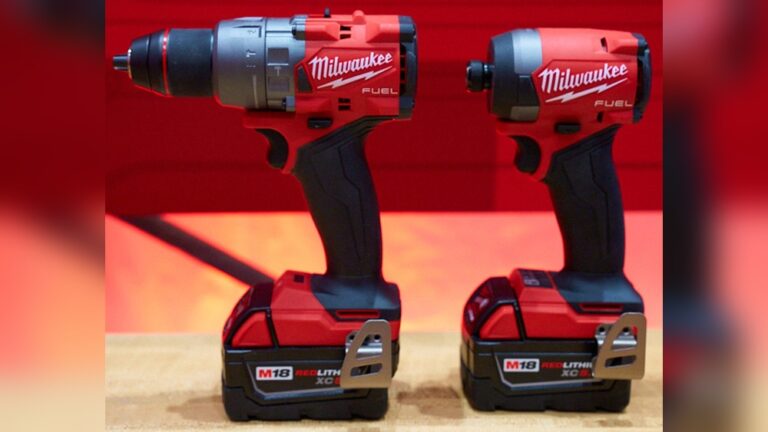
Milwaukee M12 Vs M18 Drill: Full Comparison of 12 Key Differences
Choosing between the Milwaukee M12 and M18 drill can feel confusing, especially if you are new to power tools. Both lines are top-rated, trusted by professionals and homeowners around the world. But they are not the same—and picking the right one can save you money, time, and frustration. This guide will help you understand all the important differences, so you can make a confident choice for your next project. Whether you want a drill for simple repairs or heavy-duty construction, knowing these 12 key differences will make your decision much easier.
1. Power Output
Power is one of the biggest differences between the Milwaukee M12 and M18 drills. M12 tools use a 12-volt battery, while M18 tools use an 18-volt battery. This jump in voltage means the M18 drill can deliver more torque and handle tougher jobs. For example, the M12 Fuel Hammer Drill produces up to 350 in-lbs of torque, while the M18 Fuel Hammer Drill can produce over 1,200 in-lbs. This means the M18 is better for drilling into hard materials like thick wood, metal, or concrete. If you often work with demanding materials, the higher power of the M18 will make your tasks faster and easier.
However, if you only need to drill small holes in drywall or assemble furniture, the M12’s power is often enough. Beginners sometimes believe they always need the most powerful drill, but this can actually make the tool heavier and harder to control for light tasks.
2. Battery Size And Runtime
The battery is the heart of any cordless drill. Milwaukee M12 batteries are smaller and lighter, ranging from 1.5Ah to 6.0Ah. M18 batteries are larger and come in capacities up to 12.0Ah. In practice, this means an M18 drill will often last longer on a single charge, especially if you use high-capacity batteries. Professionals who work all day appreciate this extra runtime.
But there’s a trade-off: bigger batteries add weight and cost more. For quick, simple tasks, an M12 battery will get the job done and keep your drill lighter. If you want to drill for hours or use your drill for big projects, the M18’s longer runtime is a real advantage. One insight many beginners miss: battery care matters more than most people think. Keeping batteries charged and stored properly can double their lifespan, no matter which system you use.

Credit: www.youtube.com
3. Tool Weight And Ergonomics
When you pick up an M12 and an M18 drill, you’ll notice the difference right away. The M12 drill is lighter and more compact, often weighing around 2.3 lbs with a battery. The M18 drill, with its larger battery and motor, often weighs 4 lbs or more. For overhead work or tight spaces, the lighter M12 is much easier on your arms and wrists.
If you have small hands or need a tool for all-day use, the M12 feels less tiring. The handle size and balance also make a difference. Milwaukee designs both lines with comfort in mind, but the M18’s extra size may be awkward for some users.
This is especially important if you do detailed work or need to drill in difficult positions.
4. Speed And Performance
Speed in drills is measured in RPM (rotations per minute). Most M12 drills offer up to 1,700 RPM, while many M18 models can reach up to 2,000 RPM or more. Higher RPM allows you to drill faster through softer materials. However, what really matters is how drills combine speed and torque.
The M18 line often includes more advanced electronics, like REDLINK PLUS, which helps protect the tool from overheating and gives you smoother speed control. This means the M18 can maintain high speed and torque without burning out, even under stress.
For most basic tasks, the M12’s speed is more than enough, but if you want maximum performance, the M18 has the edge.

Credit: www.reddit.com
5. Drill Size And Form Factor
Space matters, especially if you work in cabinets, corners, or under sinks. The M12 drill is designed to be compact. Many models are less than 7 inches long, making them ideal for tight spots. In comparison, the M18 is usually bigger—some models reach 8 inches or more in length.
The smaller size of the M12 helps when you need to carry your drill everywhere or work in awkward places. On the other hand, the larger M18 body is built to handle bigger bits and heavier workloads. This is a classic trade-off: go for M12 if you value mobility, or pick M18 if size is less important than raw power.
6. Range Of Tools In The System
Milwaukee’s M12 and M18 lines are more than just drills—they are full tool systems. The M12 family has over 100 compatible tools, while the M18 line has more than 200. If you plan to expand your tool collection, consider this carefully.
The M18 system includes not just drills, but also saws, grinders, and other heavy-duty tools. This means one battery can power almost any jobsite tool you might need. The M12 line is great for lighter tools: inspection cameras, ratchets, and compact lights. If you want to keep your batteries and chargers simple, it’s smart to pick the system that matches your future needs.
A common beginner mistake is mixing systems, which means you end up with too many chargers and incompatible batteries. Planning ahead saves money and shelf space.
7. Price And Value
Price is a key factor for most buyers. Generally, M12 drills cost less than M18 models. For example, an M12 Fuel Drill/Driver Kit with two batteries can cost around $120–$150, while an M18 Fuel kit may cost $180–$250 or more, depending on the included batteries and features.
Replacement batteries for M18 are also more expensive. However, the higher price of the M18 is justified by its increased power, longer runtime, and broader tool compatibility. If you only need a drill for occasional home repairs, the M12 offers excellent value.
For those who use their tools daily or need more versatility, the investment in M18 pays off over time.
One detail many overlook: buying combo kits or waiting for sales can save significant money, especially during holiday seasons or tool events.
8. Types Of Drills Available
Both systems offer a range of drill types, but with some differences. In the M12 line, you’ll find compact drill/drivers, hammer drills, and right-angle drills—mostly focused on light to medium tasks. The M18 line includes all these, but also offers more powerful hammer drills, high-torque impact drivers, and specialty tools designed for professional trades.
If your work requires drilling into concrete or masonry, the M18 hammer drill is the clear winner. For electrical work or tight spots, the M12 right-angle drill is a favorite. Understanding the types of drills in each lineup helps you choose the right tool without buying more than you need.

Credit: www.reddit.com
9. Durability And Build Quality
Milwaukee is famous for durability, but there are differences between the M12 and M18 build quality. The M18 line is usually built with heavier-duty materials and reinforced parts, as it is designed for jobsite abuse. Many M18 models are rated for dust and water resistance, which is valuable for construction environments.
The M12 tools are strong, but focus more on being lightweight and portable. They are perfect for home use, maintenance, and electrical work, but may not last as long under constant, heavy-duty stress. One often-missed point: cleaning your drill and keeping the vents clear extends its life, no matter the model.
10. Features And Technology
Milwaukee packs both lines with smart features, but the M18 line often gets the newest technology first. Both M12 and M18 Fuel drills include brushless motors, REDLINK electronics for overload protection, and LED work lights. The M18 models may offer extra features like ONE-KEY (Bluetooth tracking and tool customization), higher power brushless motors, and advanced clutch settings.
For example, with ONE-KEY, you can track your tool using your smartphone, set custom speed profiles, and even lock your drill remotely if it is lost or stolen. While these features are not always needed for simple projects, they can be essential for professionals who want full control over their tools.
11. User Skill Level And Application
Choosing between M12 and M18 is not just about specs—it’s about matching the tool to your skill and the job. Beginners and DIYers often find the lighter, simpler M12 easier to use and less intimidating. If you mostly do home repairs, hanging pictures, or assembling furniture, the M12 is perfect.
For tradespeople, contractors, or anyone working with dense materials, the M18 is usually the better choice. It has the power and toughness needed for daily, heavy-duty use. One insight for new users: starting with an M12 can help you learn proper drill control and technique before moving to larger, more powerful tools.
12. Accessories And Compatibility
The final key difference is in accessories and compatibility. Both lines use standard Milwaukee chucks and bits, but the M18 can handle larger bits thanks to its stronger motor and bigger chuck size (often 1/2 inch vs. 3/8 inch on many M12 models). This means you can use bigger hole saws, augers, and specialty bits with the M18.
Also, M18 batteries can power high-demand accessories like jobsite radios and floodlights, while M12 batteries are best for smaller tools. If you plan to use your drill with a wide range of accessories, the M18 system offers more flexibility and options.
But for most household tasks, the M12’s compatibility is more than enough.
Comparison Table: Milwaukee M12 Vs M18 Drill Core Specs
Here’s a quick look at how the M12 and M18 drills compare on key technical features:
| Feature | Milwaukee M12 | Milwaukee M18 |
|---|---|---|
| Voltage | 12V | 18V |
| Max Torque | ~350 in-lbs | ~1,200+ in-lbs |
| Max RPM | 1,700 | 2,000+ |
| Weight (with battery) | ~2.3 lbs | ~4 lbs |
| Battery Capacity | 1.5–6.0Ah | 1.5–12.0Ah |
| Chuck Size | 3/8 inch (common) | 1/2 inch (common) |
| System Tools | 100+ | 200+ |
Table: Typical Use Cases
To help you decide which drill matches your needs, see some common scenarios below:
| Task | M12 Drill | M18 Drill |
|---|---|---|
| Furniture Assembly | Excellent | Excellent |
| Drilling into Concrete | Not Recommended | Ideal |
| Electrical Work in Tight Spaces | Ideal | Good |
| Heavy-Duty Construction | Poor | Excellent |
| Everyday Repairs | Great | Great |
| All-Day Use | Fair | Excellent |
Pros And Cons: M12 Vs M18
Understanding both the positives and negatives of each drill line helps you choose wisely.
Milwaukee M12 Pros
- Lightweight and compact
- Lower cost
- Easy to use for beginners
- Great for tight spaces and overhead work
- Good battery efficiency for smaller jobs
Milwaukee M12 Cons
- Lower power
- Limited to lighter tasks
- Smaller accessory compatibility
Milwaukee M18 Pros
- High power and torque
- Long battery runtime
- Compatible with a wider range of tools
- Handles heavy-duty tasks
- More advanced features available
Milwaukee M18 Cons
- Heavier and larger
- Higher cost
- Can be overkill for simple tasks
Real-world Examples
Consider two real users:
Anna is a homeowner who assembles furniture, hangs shelves, and repairs cabinets. She chooses the M12 drill because it’s light and easy to handle, even for long periods. She never runs out of power during her projects and finds the M12 perfect for the small jobs she does every week.
Mike is a contractor who works on large renovations. He drills into studs, installs large fasteners, and sometimes needs to bore holes in concrete. For Mike, the M18 drill saves time and energy. Its extra power and runtime mean he finishes tough jobs faster and does not worry about stopping to recharge.
How To Decide: Key Questions To Ask
Before you buy, ask yourself:
1. What Type Of Projects Do I Do Most Often?
Light home tasks fit the M12, while construction or renovation jobs need the M18.
2. Will I Expand My Tool Collection?
If you want to invest in more tools later, pick the system with the most options for your needs.
3. How Important Is Weight And Size?
If you work in tight or overhead spaces, the M12’s light weight is a big advantage.
4. Do I Need Advanced Features?
Features like ONE-KEY matter more for professionals.
5. What Is My Budget?
The M12 is more affordable, but the M18 delivers more value for heavy users.
Common Mistakes When Choosing
Many first-time buyers make these errors:
- Choosing the most powerful drill “just in case.”
This often leads to unnecessary expense and a tool that is too heavy for everyday use.
- Not thinking about tool system compatibility.
Mixing M12 and M18 means more chargers, more batteries, and less convenience.
- Ignoring ergonomics.
A drill that is too heavy or too large will cause fatigue and slow your work.
- Underestimating battery needs.
Running out of power in the middle of a project is frustrating. Always consider your average working time.
Where To Learn More
If you want to dive deeper, Milwaukee’s official website has technical specifications, videos, and user guides for all M12 and M18 tools. For a broader comparison of cordless power tool systems, see this resource at Wikipedia.
Frequently Asked Questions
What Is The Main Difference Between Milwaukee M12 And M18 Drills?
The main difference is power and size. M12 drills use 12-volt batteries, making them lighter and suited for smaller tasks. M18 drills use 18-volt batteries, giving them more power for heavy-duty jobs.
Can I Use M12 Batteries In M18 Drills?
No, M12 and M18 batteries are not interchangeable. Each system has its own battery size and connector. Always use the correct battery for your drill.
Is The M18 Drill Too Powerful For Home Use?
Not always, but the M18 can be overkill for simple household tasks. If you only do light repairs, the M12 is easier to handle and costs less.
Are Milwaukee M12 And M18 Drills Both Good For Professionals?
Yes, but for large-scale or demanding work, the M18 is preferred by most professionals. The M12 is popular for specialized trades like electrical work, where compact size matters.
How Do I Maintain My Milwaukee Drill For A Long Life?
Keep your drill clean and dry, charge batteries before they run completely empty, and store the tool in a safe place. Avoid dropping it and check for dust in the vents to prevent overheating.
Choosing between the Milwaukee M12 and M18 drill is about more than just numbers. Think about your real needs, your workspace, and your future plans. With the right information, you’ll pick the tool that saves you time and helps you work smarter for years to come.