When working with threaded holes, choosing the correct drill bit size is essential for achieving strong, reliable threads. Many DIYers and professionals face uncertainty when tapping threads, especially for popular sizes like 3/4″ tap. Selecting the right drill bit can mean the difference between durable threads and costly errors or weak connections. This comprehensive guide will clarify exactly what size drill bit is needed for a 3/4 tap, break down the specifics for different thread types (such as 3/4-10 UNC, 3/4-16 UNF, and 3/4 NPT), and provide practical, data-driven advice you can trust.
Whether you’re fabricating machinery, installing piping, or repairing equipment, tapping a 3/4″ thread is a common but critical task. Mistakes can lead to stripped threads, leaks, or failed connections. In this article, you’ll discover not just the right drill size, but also why it matters, how to apply best practices, and how to avoid common pitfalls.
We’ll also compare different drill bit options, examine real-world examples, and answer the most pressing questions, all while adhering to the latest standards for precision and safety.
Key Takeaways
- The correct drill bit size for a 3/4″ tap depends on the thread type: UNC, UNF, or NPT.
- Using the wrong drill size can weaken threads or damage taps.
- Industry standards recommend a 21/32″ drill bit for 3/4-10 UNC, 11/16″ for 3/4-16 UNF, and 59/64″ for 3/4 NPT.
- Always reference official charts and tap guides for specific applications.
- Factors like material, tap type, and thread engagement influence final drill bit selection.
Understanding Tap Sizes And Thread Types
Selecting the right drill bit for tapping starts with understanding the thread system you’re working with. In the United States, the most common thread standards are Unified National Coarse (UNC), Unified National Fine (UNF), and National Pipe Tapered (NPT). Each has unique dimensions and applications, which directly affect drill size selection.
Unified National Coarse (unc)
UNC threads are standard for bolts and machine screws in general structural applications. The “3/4-10” designation means a 3/4-inch major diameter with 10 threads per inch. This coarse thread is preferred for quick assembly and disassembly, and for materials where thread stripping is a concern.
Unified National Fine (unf)
UNF threads have a higher thread count (finer pitch) than UNC, offering better holding power and more precise adjustment. The “3/4-16” tap has the same major diameter but 16 threads per inch, making it ideal for applications requiring high strength and resistance to vibration.
National Pipe Tapered (npt)
NPT threads are used for joining pipes and fittings, where a taper ensures a tight, leak-resistant seal. A “3/4 NPT” tap is designed for pipe threads, where the diameter changes slightly along the length. The drill size for NPT is significantly larger to accommodate the tapered thread and wall thickness.
Drill Bit Sizes For 3/4″ Tap: The Three Key Standards
Choosing the wrong drill size is a common mistake, but each 3/4 tap standard requires a specific drill bit. Let’s examine each one individually.
3/4-10 Unc Tap: Drill Bit Size
For a 3/4-10 UNC tap, the recommended drill bit size is 21/32″.
- Why 21/32″?
- This size produces the correct minor diameter for the tap to cut threads with approximately 75% thread engagement, balancing strength and ease of tapping.
- Metric Equivalent: 21/32″ is approximately 16.67 mm.
Application Example
A machinist fabricating a steel bracket for an industrial conveyor system needs to tap a 3/4-10 UNC hole. Using a 21/32″ drill bit ensures the threads are robust enough to withstand heavy loads without stripping.
3/4-16 Unf Tap: Drill Bit Size
For a 3/4-16 UNF tap, the recommended drill bit size is 11/16″.
- Why 11/16″?
- UNF threads have a finer pitch, so a slightly larger minor diameter is necessary. 11/16″ provides the ideal size for clean, strong threads.
- Metric Equivalent: 11/16″ is approximately 17.46 mm.
Application Example
In automotive applications, such as tapping a hole in an aluminum cylinder head for a sensor port, 3/4-16 UNF is preferred for vibration resistance. The 11/16″ drill bit ensures threads are precise and secure.
3/4 Npt Tap: Drill Bit Size
For a 3/4 NPT tap, the correct drill bit size is 59/64″.
- Why 59/64″?
- NPT threads are tapered, so the hole must be larger to allow for full thread depth and sealing. 59/64″ provides the required taper engagement for leak-free connections.
- Metric Equivalent: 59/64″ is approximately 23.41 mm.
Application Example
A plumber installing a new gas line must tap a 3/4 NPT thread in a steel pipe. The 59/64″ drill bit produces the correct pre-tap hole, ensuring the pipe threads will seal tightly.
Comparison Table: Drill Bit Sizes For 3/4 Tap Standards
To simplify your selection, here’s a quick-reference table for the most common 3/4″ tap types:
| Tap Size | Thread Pitch | Drill Bit Size (Imperial) | Drill Bit Size (Metric) | Common Application |
|---|---|---|---|---|
| 3/4-10 UNC | 10 TPI | 21/32″ | 16.67 mm | Structural, machinery |
| 3/4-16 UNF | 16 TPI | 11/16″ | 17.46 mm | Automotive, high strength |
| 3/4 NPT | N/A (Tapered) | 59/64″ | 23.41 mm | Piping, plumbing |
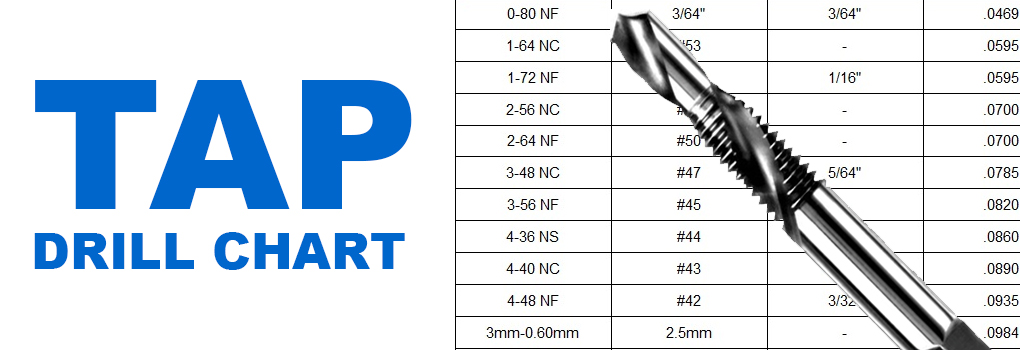
Pro Tip: Always double-check tap charts or manufacturer recommendations for specialty taps or unusual materials.
Credit: www.fastenere.com
The Science Of Thread Engagement And Drill Size Selection
Thread engagement refers to the percentage of the tap’s thread height that actually forms in the workpiece material. Too much engagement makes tapping difficult and increases tap breakage risk; too little reduces thread strength.
Calculating Thread Engagement
- Optimal thread engagement: 65, 75% is standard for most applications.
- Calculation formula: Drill size = Major diameter, (1 / Threads per inch)
- For 3/4-10 UNC: 0.750″, (1/10) = 0.650″ (rounded up to 21/32″ or 0.65625″)
Impact On Thread Strength
Proper engagement maximizes holding power without excessive torque. Overly tight threads may cause tap breakage, while loose threads can strip under load.
Example:
In my experience, using a slightly undersized drill bit in aluminum resulted in a broken tap, emphasizing why precision matters. For critical applications, always use a calibrated drill bit.
Material Considerations
- Hard materials (e.g., stainless steel): Consider increasing drill size by 0.005, 0.010″ to reduce tapping torque.
- Soft materials (e.g., aluminum, plastics): Standard drill size provides sufficient engagement.
Tapping Techniques For Reliable Threads
Tapping is more than just drilling a hole. Proper technique ensures the tap cuts clean threads and prolongs tool life.
Step-by-step Tapping Process
- Center punch the hole location to prevent drill wandering.
- Drill the hole using the appropriate size bit for your tap.
- Deburr the hole to remove sharp edges.
- Apply tapping fluid to reduce friction and improve thread quality.
- Start the tap perpendicular to the surface, using a tap wrench.
- Advance slowly, reversing often to break chips.
- Remove the tap and clean out debris.
Common Mistakes To Avoid
- Using the wrong drill size (too small or too large)
- Failing to use lubricant, causing broken taps
- Misaligning the tap, leading to crooked threads
- Not backing out the tap to clear chips
Tap Types: Hand, Spiral Point, Spiral Flute
- Hand taps: General purpose, for through or blind holes.
- Spiral point taps: Best for through holes; push chips ahead.
- Spiral flute taps: Ideal for blind holes; pull chips out.
Choosing the right tap type for your application further enhances thread quality.
Real-world Applications And Case Studies
Understanding how these guidelines apply in actual projects helps cement the knowledge.
Industrial Machinery Repair
A maintenance technician at a manufacturing plant must re-tap a worn 3/4-10 UNC thread in a cast iron housing. Using a 21/32″ drill bit ensures full thread restoration. The technician avoids downtime and saves thousands by repairing rather than replacing the assembly.
Automotive Fabrication
A custom car builder installs a high-strength fastener using a 3/4-16 UNF tap in a steel chassis. By drilling with an 11/16″ bit, the builder guarantees maximum thread engagement and safety for the high-stress environment.
Plumbing And Pipe Fitting
A plumber needs to tap a 3/4 NPT thread in a black iron pipe for a gas line. The 59/64″ bit is used, and the resulting taper provides a leak-free connection that passes inspection, preventing dangerous leaks.
Factors Affecting Drill Bit Selection For Tapping
Several variables can influence the exact drill size you should use, even when standard charts provide a baseline.
Material Hardness And Ductility
- Harder materials: Increase drill size slightly to reduce tap torque and wear.
- Softer materials: Stick to standard sizes for strong threads.
Tap Condition
- Worn taps: May require a slightly larger hole to avoid breakage.
- New taps: Cut to nominal size and require standard holes.
Thread Fit Tolerance
- Class 2B (standard): Use recommended drill size for general applications.
- Class 3B (precision): May require tighter tolerances and more precise drilling.
Drilling Equipment And Bit Quality
- Use sharp, high-quality drill bits to maintain accuracy.
- Dull bits can oversize the hole, weakening threads.
Pro Tip: Always use a drill press for best results, especially in steel or other hard materials. Hand drilling can create oversized, off-center holes.
Advanced Tapping Strategies For Professionals
For critical or production environments, advanced techniques and tools help ensure consistency and quality.
Pre-tap Reaming
After drilling, a reamer can fine-tune the hole diameter and roundness, ensuring perfect tap alignment and engagement.
Use Of Thread Gauges
After tapping, a thread plug gauge can verify thread fit, ensuring the tap and drill bit sizes were correctly matched.
Tapping In Composite Materials
Special taps and drilling techniques are required for composites (e. g. , fiberglass, carbon fiber). Consult manufacturer guides for best practices.
Power Tapping
In high-volume settings, power tapping machines automate the process, requiring precise drill bit sizing and rigid setups.
Alternative Drill Sizes: When And Why To Deviate
While standard sizes work for most jobs, certain scenarios warrant deviation.
Oversize Drilling For Difficult Materials
For tough alloys like stainless steel, increasing the drill size by 0.005, 0.010″ can reduce tap breakage, especially with hand taps.
Undersize For Maximum Strength
In situations where maximum thread engagement is needed and the material is soft, using a drill bit 0. 005″ smaller can increase holding power. However, this increases tapping torque and risk.
Metric Bit Substitutes
If imperial bits are unavailable, metric bits close to the required size can be used with care.
| Imperial Size | Closest Metric Equivalent | Difference (mm) | Use Case |
|---|---|---|---|
| 21/32″ | 16.5 mm | -0.17 | 3/4-10 UNC in mild steel |
| 11/16″ | 17.5 mm | +0.04 | 3/4-16 UNF in soft metals |
| 59/64″ | 23.5 mm | +0.09 | 3/4 NPT in plastics |
Warning: Always verify that substituting metric for imperial bits does not compromise thread strength or fit, especially in safety-critical applications.
Reference Resources And Tap Drill Charts
Relying on authoritative sources ensures accuracy. The Machinery’s Handbook is the industry standard for tap and drill sizes, and many manufacturers publish their own tap drill charts.
- Online Tap Drill Charts: Reliable resources like Engineers Edge and Wikipedia: Tap and Die provide quick lookups.
- Printed Guides: Keep a printed chart in your toolbox for easy reference.
| Resource | Type | Coverage |
|---|---|---|
| Machinery’s Handbook | Book | All standard tap/drill sizes, formulas |
| Engineers Edge | Website | Online tap drill chart, calculators |
| Wikipedia: Tap and Die | Website | Standards, history, usage |
Pro Tip: For metric threads, always use metric tap drill charts, as the formulas and conventions differ from imperial.
Frequently Asked Questions
What Happens If I Use The Wrong Drill Bit Size For A 3/4 Tap?
Using a drill bit that’s too small increases the risk of tap breakage and can make tapping extremely difficult, especially in hard materials. Conversely, a drill bit that’s too large will result in threads that are shallow and weak, often stripping under load. In critical applications, always verify your drill size with an authoritative tap chart.
Can I Use A Metric Drill Bit For A 3/4 Tap If I Don’t Have The Exact Imperial Size?
Yes, you can use a metric drill bit close to the required imperial size, but with caution. For example, 16.5 mm can substitute for 21/32″ in many cases. However, the slight difference can affect thread engagement and strength. Always check if the fit meets your requirements before finalizing the work.
How Do I Ensure My Tap Starts Straight When Tapping A Large Hole Like 3/4″?
For large taps such as 3/4″, starting straight is crucial. Use a drill press to drill the hole perfectly perpendicular to the workpiece. When starting the tap, use a tap guide or square to keep the tap aligned. For production work, consider using a tapping fixture for best results.
What Lubricants Are Best For Tapping Different Materials?
- Steel: Use high-quality tapping oil or cutting fluid.
- Aluminum: Kerosene or a light tapping fluid helps prevent galling.
- Stainless steel: Use a sulfurized oil or paste for maximum lubricity.
- Plastics: Often do not require lubricant, but a small amount of water or dish soap can reduce friction.
Always choose a lubricant suited to the material to increase tap life and improve thread quality.
Are There Safety Risks When Tapping Large Holes, And How Can I Mitigate Them?
Tapping large holes like 3/4″ can generate significant torque. Secure the workpiece in a vise or fixture, wear safety goggles, and use a proper tap wrench for leverage. Never force a tap; if resistance increases, back off, clear chips, and reapply lubricant. For power tapping, ensure all guards and safety devices are in place.
Choosing the correct drill bit size for a 3/4 tap is more than a technicality, it’s a cornerstone of reliable, safe, and durable threaded connections. By understanding the requirements for 3/4-10 UNC, 3/4-16 UNF, and 3/4 NPT taps, and applying best practices in drilling and tapping, you ensure the success of your projects.
Always consult trusted resources, use quality tools, and adapt your approach based on material and application. With these insights, your next tapped hole will be strong, precise, and built to last.