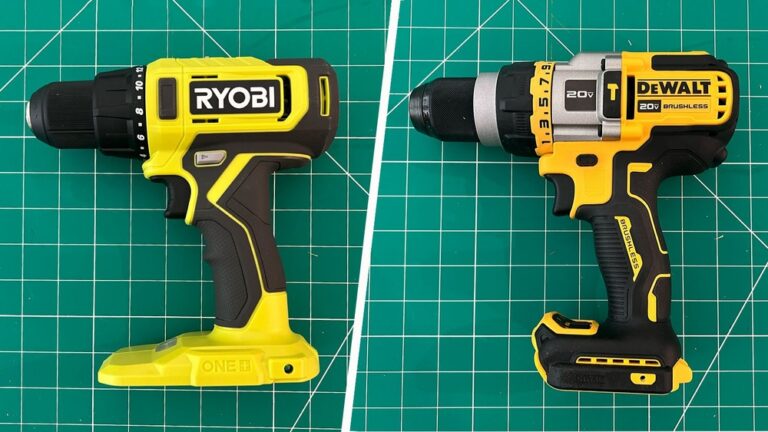
Ryobi Compact Vs Regular Drill: Which One Fits Your Needs Best?
Choosing the right power drill can feel confusing, especially when you see both Ryobi compact and regular drills on the shelf. At first, they look similar. Both have the famous Ryobi green color, both can drive screws and drill holes, and both are powered by batteries. But the differences between a compact and a regular (sometimes called “full-size”) Ryobi drill matter a lot for your projects, your comfort, and your budget.
Maybe you’re a DIY beginner wanting to hang shelves or build furniture. Or you’re a homeowner who needs a tool that can fix things around the house. You might even be a hobbyist or semi-pro who wants to upgrade their tool collection. No matter your level, understanding the real pros and cons of compact vs regular Ryobi drills will save you time, money, and frustration.
Let’s break down every key difference, go deep into performance, battery life, and handling, and answer the questions most people never ask. By the end, you’ll know exactly which Ryobi drill fits your needs best—and you’ll avoid the mistakes that many first-time buyers make.
What Makes A Drill “compact” Or “regular”?
Before comparing, it’s important to know what these terms really mean. Ryobi, like most brands, uses “compact” to describe drills that are smaller, lighter, and easier to handle. These are sometimes called “sub-compact” or “mini” drills. Regular drills are the standard size, with a larger motor and more power.
Compact drills are:
- Shorter in length and height
- Lighter (usually under 3 pounds with battery)
- Designed for tight spaces and overhead use
Regular drills are:
- Bigger and heavier (often 3.5–4.5 pounds with battery)
- Built for more demanding tasks
- Sometimes called “full-size” or “standard” drills
But the differences go beyond size and weight. The motor, torque, speed, and features also change. Let’s compare them in detail.
Size, Weight, And Ergonomics
For many users, the first thing they notice is how a drill feels in their hand. If a tool is too heavy or bulky, it quickly becomes tiring.
How Big Is A Ryobi Compact Drill?
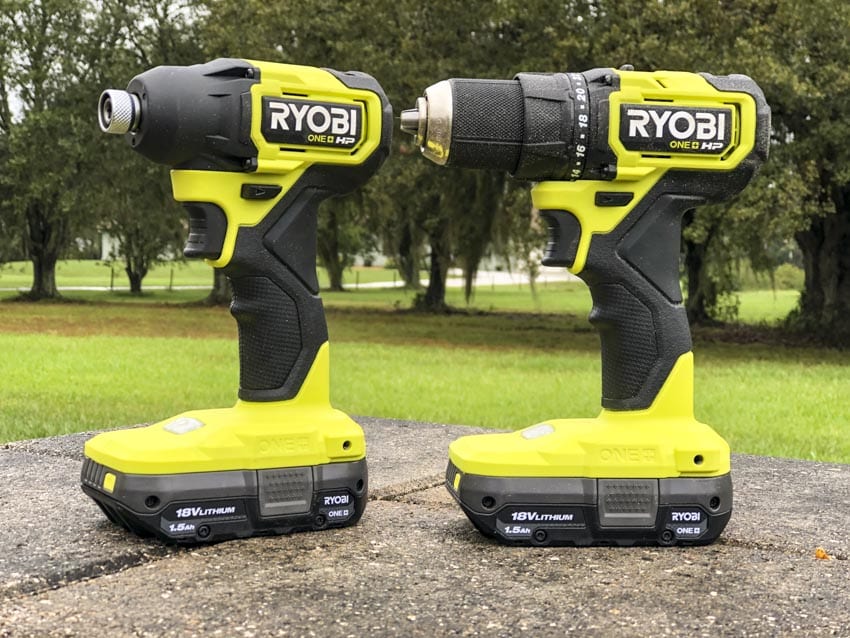
A typical Ryobi compact drill, like the Ryobi ONE+ HP 18V Compact Drill/Driver (Model PSBDD01), measures about 6.7 inches in length and weighs just under 2.6 pounds with a small battery attached. Its slim body and short head make it easy to grip and control, even for people with smaller hands.
How Big Is A Ryobi Regular Drill?
The Ryobi ONE+ 18V Drill/Driver (Model P215), a popular regular model, is around 7.5 to 8 inches long and weighs 3 to 3.5 pounds with a battery. That extra inch in length and pound in weight doesn’t sound like much—until you’re drilling above your head or squeezing into a cabinet.
Why Size And Weight Matter
- Compact drills let you work longer without fatigue. They’re ideal for tasks where you need to hold the drill at arm’s length or in awkward positions.
- Regular drills might feel more stable for heavy-duty work, but they can tire your wrist and arm faster.
Non-obvious insight: Many beginners think a bigger drill means “more professional.” In reality, compact drills often give you better control and less hand strain, especially for home projects.
Power And Torque: What Can Each Drill Handle?
The heart of any drill is its motor. Power decides what materials you can drill and how easily you can drive screws.
Measuring Power: Voltage And Torque
- Voltage (V) tells you how much energy the drill’s motor can use. Both compact and regular Ryobi drills commonly use 18V batteries.
- Torque (measured in inch-pounds, or in-lbs) tells you the turning force. Higher torque means the drill can handle tougher materials.
Typical Ryobi Compact Drill Power
Most compact models deliver around 350 to 400 in-lbs of torque. This is enough for:
- Drilling into wood, drywall, and plastic
- Driving screws up to 3 inches
- Light metal drilling (with the right bit)
Typical Ryobi Regular Drill Power
Regular models jump up to 500–600+ in-lbs of torque. This extra power helps with:
- Drilling into hardwoods or thick lumber
- Driving long lag bolts or screws
- Drilling larger holes with spade or hole saw bits
Is More Power Always Better?
Not always. More power means more weight and less precision. For small tasks, too much torque can strip screws or damage delicate materials. Compact drills offer better finesse for most home jobs.
Non-obvious insight: For 80% of DIY tasks, you’ll never use the full power of a regular drill. Most people buy “too much drill” and struggle with control.
Battery Life And Charging
Both compact and regular Ryobi drills use the ONE+ 18V battery system, which is famous for being interchangeable across dozens of Ryobi tools.
Compact Drill Battery Use
Compact drills usually come with smaller batteries (like 1.5Ah or 2.0Ah). These keep the tool light, but also mean less runtime—around 30–45 minutes of moderate use per charge.
Regular Drill Battery Use
Regular drills often include larger batteries (2.0Ah, 3.0Ah, or even 4.0Ah). These add weight but give longer runtime—up to 1.5–2 hours for heavy use.
Charging Time
Ryobi’s standard charger takes about 60 minutes to recharge a 2.0Ah battery. Fast chargers can do it in half the time.
Real-world Example
If you’re building a deck, a regular drill with a big battery will last longer between charges. If you’re installing curtain rods, a compact drill with a small battery is lighter and still lasts through the project.
Tip: All Ryobi ONE+ batteries fit all Ryobi 18V drills. Buy extra batteries if you hate waiting.
Features And Functions
Features can make a drill easier to use, safer, and more versatile. Let’s look at what you get—and sometimes lose—when you pick compact vs regular.
Common Features In Both
- Keyless chuck (usually 1/2″ or 3/8″ size): Easy bit changes
- Variable speed trigger: More control
- LED light: Illuminates work area
- Belt clip: For carrying during work
Extra Features Found More Often In Regular Drills
- Hammer mode: For drilling into concrete or brick
- Clutch with more settings: For precise screw driving
- Side handle attachment: For better control during heavy drilling
What Compact Drills Usually Leave Out
- Hammer mode is rare (but not impossible)
- Smaller chuck size (often 3/8″)
- Fewer clutch settings
Which Features Matter Most?
If you need to drill into masonry or concrete, you need a regular drill with hammer mode. For most home tasks, a compact drill’s features are enough.
Example: Mounting shelves into drywall? Compact is perfect. Installing a mailbox post in concrete? Regular with hammer mode is better.
Handling And Precision
How a drill feels when you use it is as important as raw numbers.
Compact Drill Handling
- Slim grip fits smaller hands
- Less weight means less “drift” when starting holes
- Better for overhead work or tight corners
Regular Drill Handling
- Larger grip suits bigger hands
- More weight can help keep the drill steady for large holes
- Needs two hands for control during heavy-duty work
Precision Work
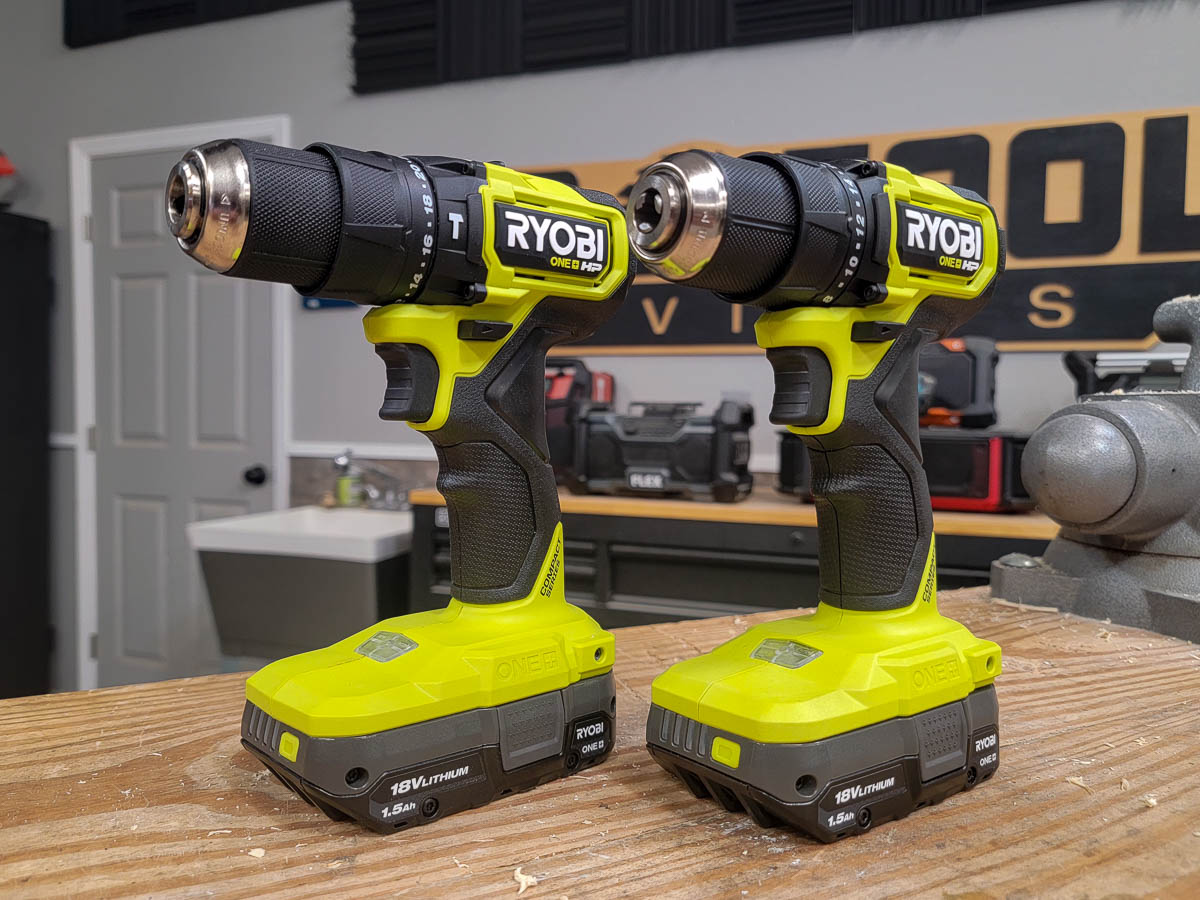
Compact drills excel at delicate work—like assembling furniture, hanging pictures, or electronics. Their lower torque and smaller size mean you’re less likely to over-drive screws or split wood.
Credit: www.protoolreviews.com
Durability And Build Quality
Ryobi’s quality is consistent across both types, but there are a few differences.
- Compact drills use more plastic to keep weight low. They’re tough, but not meant for daily abuse on a construction site.
- Regular drills have beefier gearboxes and more metal parts. They’re designed to survive drops, dust, and harder jobs.
Real-world Durability
If you drop a compact drill from a ladder, it may crack more easily than a regular model. But for normal home use, both last for years with basic care.
Price Comparison
Budget is always a factor. Here’s how the two types stack up:
What Do Ryobi Compact Drills Cost?
- Tool only: $60–$80
- With battery and charger: $90–$120
What Do Ryobi Regular Drills Cost?
- Tool only: $70–$110
- With battery and charger: $120–$150
Is The Price Difference Worth It?
For most homeowners, the compact drill gives better value. Only spend extra on a regular drill if you plan to use it for big projects, construction, or masonry.
Credit: www.protoolreviews.com
Typical Use Cases: Which Drill For Which Job?
Sometimes, the right choice depends on the job you need to do. Here are examples:
Best Jobs For Ryobi Compact Drill
- Hanging curtains, shelves, or pictures
- Assembling IKEA-style furniture
- Installing cabinet hardware
- Electrical work in tight spaces
- Hobby projects (model building, crafts)
- Light carpentry (birdhouses, planters)
Best Jobs For Ryobi Regular Drill
- Building a deck or fence
- Framing walls or heavy carpentry
- Drilling into thick hardwoods
- Mixing paint or thin-set with a paddle bit
- Drilling into brick, concrete (with hammer mode)
- Automotive work (removing rusted bolts)
Tip: If you’re not sure, think about your “heaviest” likely project. If it’s hanging shelves, compact is fine. If you’re rebuilding a shed, regular is safer.
Noise, Vibration, And Comfort
No one likes a tool that vibrates too much or makes your ears ring.
- Compact drills: Quieter, less vibration, easier on the hands
- Regular drills: Louder, more vibration, can be tiring over time
Vibration Example
Drilling into softwood: Compact drill is comfortable.
Drilling into concrete: Regular drill vibrates more, but handles the task.
Ryobi Compact Vs Regular Drill: Direct Data Comparison
Here’s a head-to-head look at two popular models, the compact PSBDD01 and the regular P215.
| Feature | Ryobi Compact Drill (PSBDD01) | Ryobi Regular Drill (P215) |
|---|---|---|
| Length | 6.7 inches | 7.7 inches |
| Weight (with 2.0Ah battery) | 2.6 lbs | 3.5 lbs |
| Torque | 400 in-lbs | 515 in-lbs |
| Chuck Size | 3/8″ | 1/2″ |
| Hammer Mode | No | No (but some regular models have it) |
| Variable Speed | 0–1700 RPM | 0–1750 RPM |
| LED Light | Yes | Yes |
Long-term Ownership: Maintenance And Reliability
How Do They Hold Up Over Years?
Ryobi drills are famous for their reliability. Most users report years of use with only basic maintenance (wiping dust, charging batteries properly).
- Compact drills: Less to go wrong, but avoid pushing them past their limits (like drilling into concrete).
- Regular drills: Can handle more abuse but need occasional lubrication for the chuck and gearbox if heavily used.
Battery Life Over Time
All lithium-ion batteries lose capacity with age—expect to replace them after 3–5 years of regular use. Keeping batteries out of extreme heat and fully charging before storage helps them last longer.
Portability And Storage
If space is tight, compact drills win. They fit in drawers, small tool bags, and are easier to carry up ladders or into attics.
Regular drills need more storage space and may require a bigger case. For people with limited workshop space, this matters.
Common Mistakes When Choosing
Many buyers pick the wrong drill for their needs. Here are mistakes to avoid:
- Assuming more power is always better: For most home jobs, a compact drill is plenty.
- Ignoring tool weight: A heavy drill quickly becomes a problem during longer tasks.
- Not considering battery compatibility: If you already own Ryobi tools, make sure your batteries fit.
- Overlooking features you’ll actually use: Hammer mode sounds nice, but if you never drill masonry, it’s wasted.
- Buying the cheapest kit: Sometimes the cheapest drill comes with a weak charger or low-capacity battery—read the details.
Who Should Buy A Ryobi Compact Drill?
- Apartment dwellers
- DIY beginners
- Anyone who mainly works indoors on light projects
- People with limited strength or grip issues
- Users who value portability
Who Should Buy A Ryobi Regular Drill?
- Homeowners doing major renovations
- DIYers building decks, sheds, or fences
- Hobbyists working with thick hardwoods or metal
- Anyone who might need hammer mode or maximum torque

Credit: www.youtube.com
User Reviews And Real-world Feedback
A look at user reviews reveals:
- Compact drills get high marks for maneuverability and comfort. Users love them for everyday tasks, especially women and older users who don’t want a heavy tool.
- Regular drills are praised for their power. Users say they “never bog down” on big projects but are sometimes “overkill” for simple jobs.
Example: One user reports using a compact drill to assemble kitchen cabinets and hang blinds in a weekend without sore hands. Another prefers the regular model for building a large deck, noting the extra torque made driving long screws “a breeze.”
Compact Vs Regular Drill: Quick Feature Comparison
Here’s a side-by-side comparison for fast decision-making:
| Feature | Compact Drill | Regular Drill |
|---|---|---|
| Size | Smaller | Larger |
| Weight | Lighter | Heavier |
| Torque | Lower | Higher |
| Best For | Light to medium jobs | Heavy-duty tasks |
| Battery Life | Shorter (with small battery) | Longer (with big battery) |
| Price | Lower | Higher |
| Portability | High | Moderate |
Environmental Impact And Sustainability
Both compact and regular drills use lithium-ion batteries, which are more eco-friendly than older nickel-cadmium batteries. Ryobi’s ONE+ system encourages users to buy only “tool only” kits, reducing waste.
- Tip: Recycle old batteries at approved centers. Never throw them in the trash.
For more on lithium-ion recycling and battery safety, check the official EPA battery recycling page.
Final Thoughts: Which Should You Choose?
If you want one drill for all-around home use, the Ryobi compact drill is the best choice for most people. It’s easy to handle, powerful enough for 90% of home tasks, and won’t tire you out.
Pick the regular Ryobi drill if you know you’ll be tackling big projects, drilling into dense materials, or need maximum torque. For professionals or serious DIYers, owning both is not a bad idea—compact for finesse, regular for brute force.
Remember, the best drill is the one you’ll actually use. Don’t overspend for power you won’t need, and don’t settle for a tool that leaves you struggling.
Frequently Asked Questions
What Is The Main Difference Between A Ryobi Compact And Regular Drill?
The main difference is size and power. Compact drills are smaller, lighter, and have less torque, making them ideal for light to medium tasks. Regular drills are larger, heavier, and more powerful, suitable for heavy-duty work.
Can A Compact Ryobi Drill Handle All Home Diy Tasks?
A compact Ryobi drill can handle most home tasks like drilling in wood, drywall, or soft metals and driving screws. However, for drilling into concrete, thick hardwood, or driving very large fasteners, a regular drill is better.
Are Ryobi Compact And Regular Drills Compatible With The Same Batteries?
Yes, both types use the Ryobi ONE+ 18V battery system. All Ryobi 18V batteries work with all their 18V drills, so you can share batteries between tools.
Is It Worth Buying A Regular Ryobi Drill For Occasional Use?
For occasional, light use, a compact drill is usually enough and more comfortable. A regular drill is only worth it if you expect to do heavy-duty work or want extra power for future projects.
Which Drill Is Better For Beginners?
A compact Ryobi drill is usually better for beginners. It’s easier to control, less tiring, and still powerful enough for most DIY projects around the house.
With this deep dive, you now know exactly what sets Ryobi compact and regular drills apart. Choose with confidence, and let your projects begin!