Choosing between a mill and a drill press can be confusing, especially if you are new to working with metal or wood. Both machines look similar at first glance, and they both drill holes. But their real abilities, strengths, and uses are very different. Picking the right one can make your projects easier, faster, and produce better results. If you choose the wrong tool, you might struggle with poor accuracy, wasted material, or even damage to your machine. This article will help you clearly understand the differences, when to use each, and how to decide which one fits your needs best.
What Is A Mill?
A mill, or milling machine, is a powerful tool used for shaping solid materials, like metal, wood, or plastic. It uses a rotating cutting tool to remove material, not only drilling holes but also cutting slots, shaping edges, and creating complex 3D shapes. Mills can move the workpiece (the thing you are cutting) in several directions: up and down, left and right, and forward and backward.
There are different types of mills, such as vertical mills (where the spindle is vertical) and horizontal mills (where the spindle is horizontal). Most home workshops use small vertical mills because they are more versatile and take up less space.
A mill is much more than a fancy drill. It is designed for precision and multi-axis movement. That means you can cut in different directions, not just straight down. This ability makes mills essential for making machine parts, prototypes, or anything that needs careful shaping.
What Is A Drill Press?
A drill press is a machine for making straight holes in wood, metal, or plastic. It uses a rotating drill bit that moves up and down (vertically). The workpiece stays still on a table, and you lower the bit into the material. Drill presses come in different sizes, from small benchtop models to big floor-standing machines.
Drill presses are designed for accuracy and repeatability when making holes. They are stronger and more stable than hand drills, so you get cleaner holes with less effort. But their main job is drilling straight up and down. They are not made for sideways cutting or shaping.
Some drill presses have extra features, like adjustable tables, depth stops, and variable speeds. But even with these features, they are still limited compared to mills.
Credit: www.reddit.com
Key Differences Between Mill And Drill Press
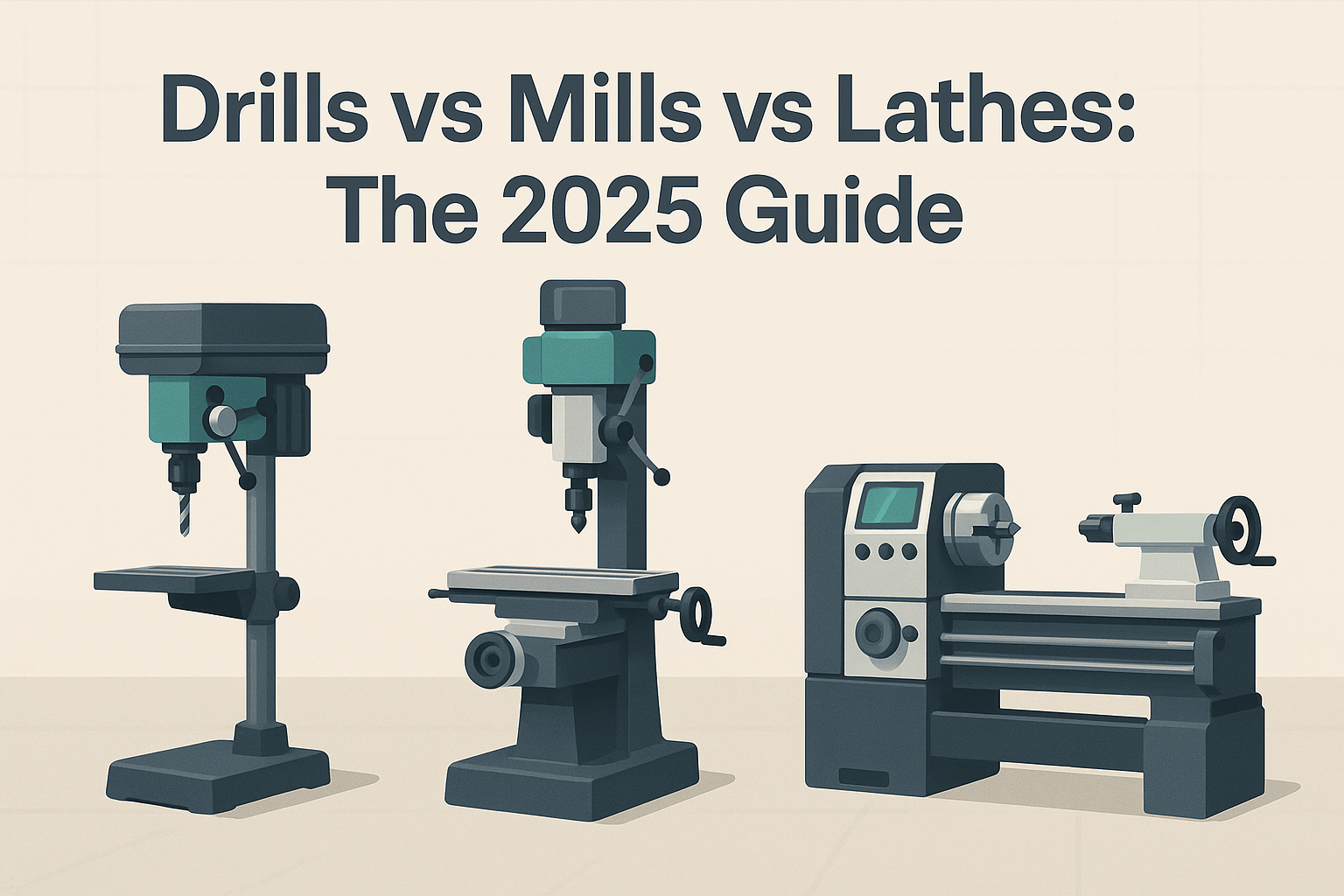
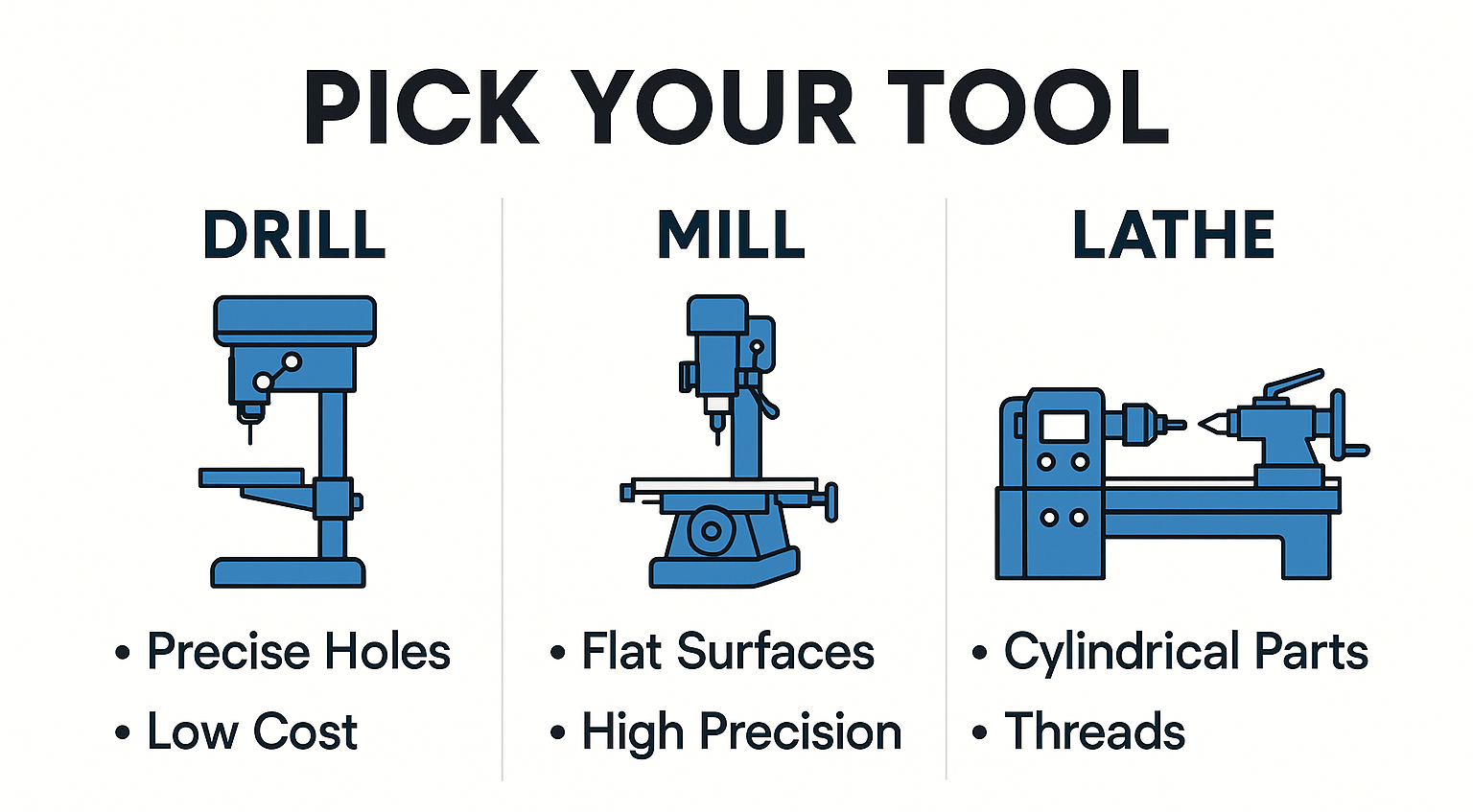
At first, a mill and a drill press look similar. Both have a column, a spindle, a motor, and a table. But their design goals and capabilities are very different.
Movement And Precision
- Mill: The milling table can move the workpiece in three directions: left-right (X), forward-back (Y), and up-down (Z). The cutting tool can also move in some models. This multi-axis movement allows for complex cuts, slots, and shapes.
- Drill Press: Only moves the drill bit up and down (Z-axis). The table can sometimes be shifted left or right, but not during drilling. The main focus is on vertical holes.
Cutting Actions
- Mill: Can drill, but also side mill, surface, slot, and contour. The cutting tool removes material on the side as well as the tip.
- Drill Press: Only drills straight holes. Sideways cutting or shaping is not safe or precise.
Rigidity And Power
- Mill: Built for heavy, precise work. The column, spindle, and table are very rigid, so there is little vibration. This means you get more accurate cuts, even in hard materials.
- Drill Press: Less rigid. Designed for pushing a bit straight down. Side pressure can bend or damage the spindle.
Tool Holding And Speed
- Mill: Uses special tool holders (collets or chucks) for holding cutting tools. Has a range of speeds and often higher torque for cutting metal.
- Drill Press: Uses a chuck for drill bits. Speed ranges are more limited, and not designed for heavy side loads.
Table Comparison
Here’s a side-by-side look:
| Feature | Mill | Drill Press |
|---|---|---|
| Main Use | Cutting, shaping, and drilling | Drilling holes only |
| Movement | X, Y, Z axis | Z axis only |
| Rigidity | Very high | Medium |
| Precision | High (0.001” possible) | Good (0.01” typical) |
| Tool Types | Milling cutters, end mills, drill bits | Drill bits only |
| Cost | High | Low to medium |
Common Uses: When To Choose A Mill Or Drill Press
Understanding what each machine does best will help you make the right choice for your work.
When To Use A Mill
- Making complex parts: If you need to cut slots, grooves, or shapes in metal or wood, a mill is the only choice.
- Precision work: For projects that require tolerance within 0.001 inches (like machine parts), a mill is essential.
- Multi-directional cutting: If you need to cut sideways or at angles, only a mill can do it safely and accurately.
- Surface finishing: If you want a flat, smooth surface, a mill can skim the top of a part, which a drill press cannot do.
- Prototyping: For inventors or engineers making custom shapes, a mill gives much more creative freedom.
When To Use A Drill Press
- Drilling many holes: If you need to make a lot of straight holes quickly and accurately, a drill press is perfect.
- Repetitive work: For tasks like making furniture, shelves, or metal brackets with standard holes, a drill press is faster and easier.
- Woodworking: Drill presses are popular in woodworking shops for making dowel holes, mortises, and other joinery.
- Budget projects: If you only need to drill, a drill press is much cheaper and takes less space.
Pros And Cons: Mill Vs Drill Press
No tool is perfect for every job. Here are the main advantages and disadvantages of each machine.
Mill: Pros
- Versatility: Can cut, shape, drill, and slot.
- Precision: Very tight tolerances.
- Strength: Handles tough materials like steel.
- Creative freedom: Make almost any shape.
Mill: Cons
- Expensive: High initial cost (often $1,000+).
- Heavy: Hard to move; may need a strong bench or floor.
- Complex: More parts to maintain and adjust.
- Learning curve: Takes time to master all features.
Drill Press: Pros
- Affordable: Many models under $300.
- Simple: Easy to use, even for beginners.
- Fast: Set up and drill holes quickly.
- Space-saving: Smaller models fit on a bench.
Drill Press: Cons
- Limited use: Only drills vertically.
- Lower precision: Not for fine metal work.
- Weaker: Cannot handle heavy side pressure.
- Less flexibility: Cannot make slots or complex shapes.
Can A Mill Replace A Drill Press?
This is a common question. The answer depends on your needs.
- A mill can do everything a drill press can do, and more. It can drill holes as well as cut slots and shapes. But mills are slower to set up for simple drilling, heavier, and more expensive.
- A drill press cannot safely do the work of a mill. Trying to use it for side milling or shaping can be dangerous and will damage the machine.
If you mostly drill holes and only sometimes need to cut shapes, some people buy a mill-drill combo. These hybrid machines can do light milling and drilling, but are not as strong or precise as a real mill.
Non-obvious insight: Even though mills can drill, their setup time is longer. Swapping from a cutting tool to a drill bit, or adjusting for different hole sizes, can slow down your workflow. Many professionals keep both machines in their shop for this reason.
Credit: wurthmachinery.com
Safety Differences
Safety is a big concern in any workshop. Mills and drill presses have different risks.
Mill Safety
- Flying chips: Mills throw small, hot pieces of metal or wood. Always wear eye protection.
- Pinch points: Moving tables and spinning tools can catch fingers or clothing.
- Heavy parts: Lifting or moving heavy workpieces can cause injury.
Drill Press Safety
- Loose workpieces: If the part is not clamped, the drill bit can grab and spin it, causing injury.
- Long hair/clothing: Spindles and chucks can catch loose items.
- Bit breakage: Forcing the drill or using the wrong speed can snap bits.
Practical tip: Always clamp your work securely on both machines. Never hold a part by hand while drilling or milling.
Real-world Examples
Here are a few practical examples to help you see the difference.
Example 1: Making A Metal Bracket
- Drill Press: Can drill holes for mounting bolts, but cannot cut the bracket’s shape or slots.
- Mill: Can cut the outer shape, make slots for bolts, and drill holes—all on one machine.
Example 2: Making Wooden Shelves
- Drill Press: Perfect for drilling dowel holes or shelf pin holes.
- Mill: Overkill for this job; not necessary.
Example 3: Building A Custom Engine Part
- Drill Press: Not precise enough for tight-tolerance holes or slots.
- Mill: Can make the entire part, including shaped edges, threaded holes, and flat surfaces.
Non-obvious insight: Sometimes, you can make a jig or fixture to help a drill press do repetitive jobs, but you cannot make it as precise as a mill for complex metalwork.
Cost, Space, And Maintenance
Choosing the right tool also depends on your budget, workshop size, and how much time you can spend on care.
Cost
- Drill presses are much cheaper. Hobby models start around $100, while heavy-duty versions can be $500–$1,000.
- Mills start around $700–$1,200 for small bench models, but professional machines cost $2,000–$5,000 or more.
Space
- Drill presses are smaller. Benchtop models fit in a small workshop.
- Mills are heavy and need a strong, stable place. They take more space and may need special power (220V).
Maintenance
- Drill presses need little care: Just oil the spindle and keep it clean.
- Mills need regular lubrication, cleaning, and careful adjustment. Their moving parts are more complex.
Who Should Buy A Mill?
A mill is the right choice if:
- You need to cut shapes, not just drill holes.
- You work with metal and need high accuracy.
- You want to make custom parts or prototypes.
- You have the budget and space for a heavy machine.
Practical advice: If you want to start a small machine shop or build complex projects, a mill will give you more creative options.
Who Should Buy A Drill Press?
A drill press is best if:
- You mostly need to drill holes.
- You work with wood or soft metals.
- Your space and budget are limited.
- You want a simple, easy-to-use tool.
Practical advice: For most home workshops, a drill press is the first machine to buy. You can always add a mill later if you need more capability.
Upgrades And Accessories
Both machines have accessories that can improve their function.
For Mills
- Digital readouts (DRO): Show exact table position for higher accuracy.
- Power feed: Moves the table automatically for smoother cuts.
- Vise and clamps: Hold workpieces tightly.
- Coolant system: Keeps tools cool and extends life.
For Drill Presses
- Drum sanders: Turn your drill press into a light sander.
- Mortising attachments: Cut square holes in wood.
- Adjustable tables: For angled drilling.
Tip: Don’t overload a drill press with milling attachments. This can damage the machine.
Performance In Different Materials
How do mills and drill presses handle wood, metal, and plastic? Here’s a quick overview:
| Material | Mill | Drill Press |
|---|---|---|
| Wood | Excellent (may be overkill for simple holes) | Excellent |
| Aluminum | Excellent | Good for drilling; not for shaping |
| Steel | Excellent | Good for small holes; not for large or deep holes |
| Plastic | Very good (with correct speed) | Good |
Insight: Mills are more flexible, but drill presses are usually enough for wood and simple metal work.
Mistakes Beginners Make
- Trying to mill with a drill press: This is unsafe. Drill presses are not designed for side loads.
- Ignoring rigidity: Forcing cuts in a weak machine leads to poor results and damage.
- Skipping work holding: Not clamping your part can cause injury or ruined workpieces.
- Using the wrong speed: Each material needs the correct spindle speed. Too fast can burn tools; too slow can chatter.
- Expecting drill presses to be precise: They are accurate for holes, but not for fine shaping.
Pro tip: Always check your machine’s limits. If in doubt, start slow and use light cuts.
Credit: wurthmachinery.com
Should You Own Both Machines?
Many experienced machinists and woodworkers have both a mill and a drill press. Why?
- Efficiency: You can set up one machine for drilling, the other for milling, and switch between jobs quickly.
- Wear and tear: Use the drill press for rough work to keep your mill in top condition.
- Budget: Start with a drill press. Add a mill as your skills and needs grow.
If you have limited space or money, start with the tool you will use most often. But if you plan to do complex projects, owning both is ideal.
How To Choose The Right One For Your Needs
Here’s a quick decision guide:
- List your main projects. Do they need complex shapes or just holes?
- Check your budget. Can you afford a mill? Or does a drill press fit better?
- Measure your workshop space. Mills are heavy and large.
- Consider your skill level. Drill presses are easier to learn.
- Think about the future. Will your needs grow?
If you want more technical detail about how these machines work, you can read more at the Wikipedia Milling Machine article.
Frequently Asked Questions
What Is The Main Difference Between A Mill And A Drill Press?
The main difference is movement and capability. A mill can move the workpiece in multiple directions and cut shapes, slots, and surfaces. A drill press can only move the drill bit up and down to make straight holes.
Can You Use A Drill Press As A Mill?
No, you should not use a drill press for milling. Drill presses are not strong enough for side loads, and this can damage the machine or cause accidents. Always use the right tool for the job.
Which Is More Accurate, A Mill Or A Drill Press?
A mill is much more accurate. It can achieve tolerances as tight as 0.001 inches, while a drill press is usually accurate to about 0.01 inches. For most fine work, a mill is the better choice.
Is A Mill Worth The Extra Cost?
A mill is worth it if you need to make complex shapes, work with metal, or require high accuracy. For basic drilling jobs in wood or plastic, a drill press is more cost-effective.
Can A Beginner Use A Mill?
Yes, but mills have a steeper learning curve. Start with simple projects, read the manual, and watch tutorial videos. Always follow safety rules and take your time to learn how each feature works.
Choosing between a mill and a drill press is a big decision for any workshop. Understanding their strengths, limits, and best uses will help you get better results and avoid costly mistakes. Take your time, think about your real needs, and you’ll make the right choice for your projects.