Choosing between a Milwaukee 12V drill and an 18V drill can feel confusing, especially if you are not familiar with power tools. Both types are popular, reliable, and come from a brand known for quality. But which one is right for your needs? Many people simply look at the voltage and guess that higher is always better. The truth is more interesting. In this guide, you will discover the real differences, practical uses, and hidden details that help you make a smart decision—whether you are a homeowner, a DIY fan, or a professional.
What Do 12v And 18v Mean?
The voltage of a drill, like 12V or 18V, refers to the power the tool can use from its battery. More voltage usually means more power, but also more weight. The 12V models are lighter and smaller; 18V drills are usually more powerful and heavier. But there is more to the story. Milwaukee’s modern 12V drills are surprisingly strong, and 18V models are now more comfortable to hold than before.
Who Should Use A Milwaukee 12v Drill?
A Milwaukee 12V drill is designed for light and medium tasks. Think about jobs like installing shelves, assembling furniture, or drilling pilot holes. These drills are perfect for:
- Homeowners who want a tool for quick repairs.
- DIY users working on small projects.
- Contractors who need a backup or lightweight drill for overhead work.
- Electricians and plumbers who often work in tight spaces.
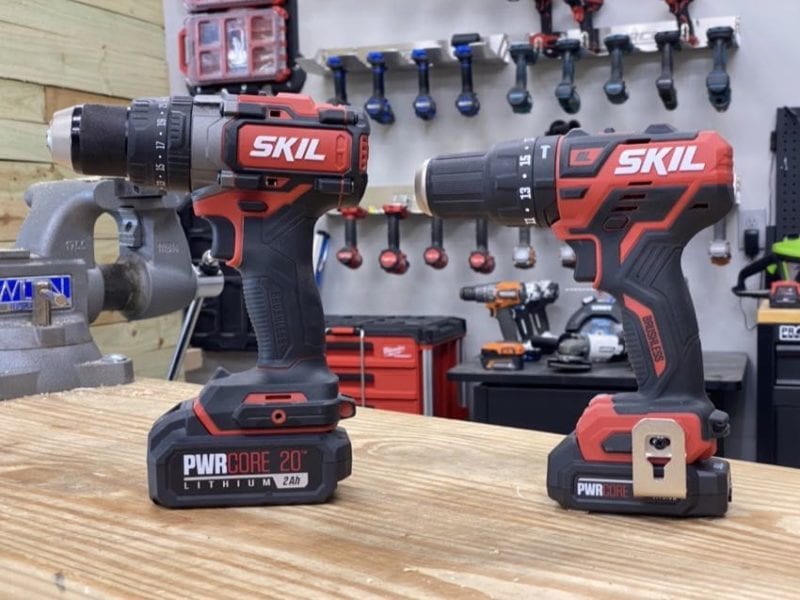
The 12V drill is easy to hold for long periods because of its small size and light weight. For example, the popular Milwaukee M12 Fuel drill weighs about 2. 3 pounds with a battery, while the 18V version can be a pound heavier.
Credit: www.protoolreviews.com
When Do You Need A Milwaukee 18v Drill?
A Milwaukee 18V drill is the choice for heavy work. It is made for professionals and anyone who needs more power. Use an 18V drill when you:
- Drill large holes in tough materials (like hardwood or metal)
- Drive long screws into thick lumber
- Mix paint or drywall mud using an attachment
- Work on construction sites
The Milwaukee M18 Fuel drill is a top pick for these tasks. It offers higher torque and speed, allowing you to finish tough jobs faster and with less strain.
Key Differences: Milwaukee 12v Vs 18v Drills
To truly compare, you need to look at several factors: power, size, battery life, features, and price. Here’s a detailed look.
Power And Performance
Torque is the measure of turning force. Milwaukee’s 12V models produce about 350-400 in-lbs of torque. The 18V models can reach up to 1,200 in-lbs or more. For most home tasks, 12V is enough. But for larger holes, lag bolts, or long screws, the 18V power makes a big difference.
RPM (rotations per minute) is another factor. Higher RPM means faster drilling. 18V drills usually offer up to 2,000 RPM, while 12V models top out at around 1,700 RPM. This matters for speed, but also for driving bits in tough materials.
Size And Weight
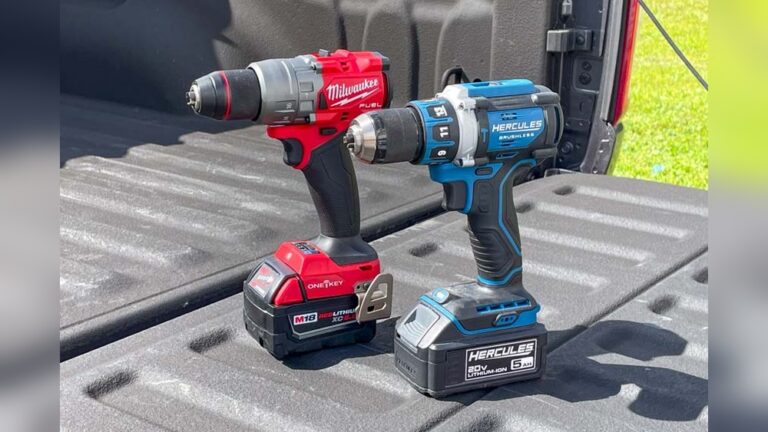
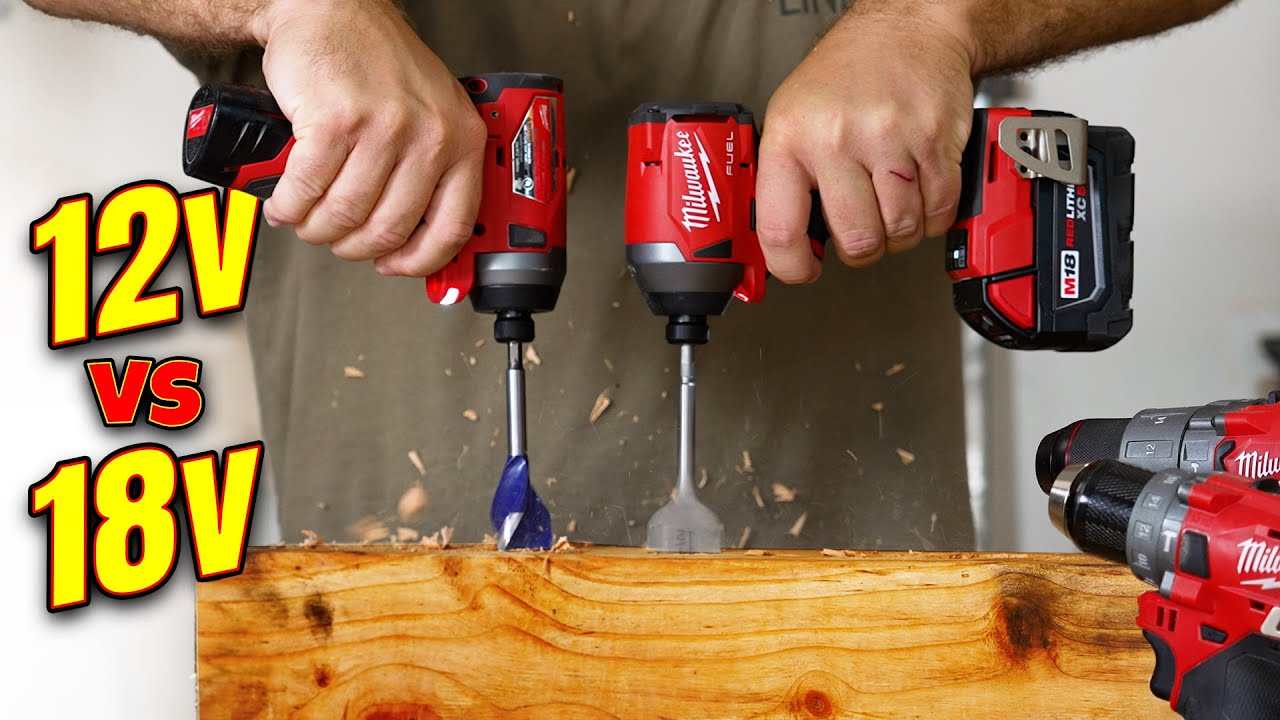
Milwaukee 12V drills are much smaller and lighter. This matters if you work overhead, in tight spaces, or for long periods. The difference is clear if you hold both drills side by side.
- 12V drill: About 6-7 inches long, 2.3 pounds with battery
- 18V drill: About 7-8 inches long, 3.5-4 pounds with battery
That extra pound may not sound like much, but it adds up during a long job.
Battery Life And Charging
Both systems use lithium-ion batteries. The 12V batteries are smaller, so they run out faster than 18V, especially under heavy use. However, for light jobs, a single 12V battery often lasts all day.
Milwaukee’s 18V batteries (called M18) offer more runtime and come in higher capacities (up to 12.0Ah). The 12V batteries (M12) usually go up to 6.0Ah. Larger capacity means longer work between charges, but also more weight.
Features And Technology
Both lines offer advanced features, but the 18V models have more options. For example, Milwaukee’s “Fuel” line uses a brushless motor for longer life and better efficiency. You’ll find brushless motors in the best 12V and 18V models, but only the 18V line has the most powerful versions.
Other features to compare:
- LED lights: Both have them for working in dark spaces.
- Clutch settings: Both allow you to adjust torque for different tasks.
- Belt clips and bit holders: Standard on most models.
- Tool Connect/Bluetooth: Only some 18V models offer smart tracking.
Price
The 12V drills are cheaper. A Milwaukee M12 drill kit (with battery and charger) costs about $100-$150. The M18 kits usually start at $180 and can go up to $300 for top models.
Buying extra batteries and accessories also costs more for the 18V system.
Tool Compatibility
Milwaukee uses two main battery systems: M12 (12V) and M18 (18V). Each battery fits only its matching tools. The M18 line has over 200 compatible tools, from saws to lights. The M12 line has about 100 tools, focused on compact and specialty needs.
If you plan to buy more Milwaukee tools, think about which platform fits your future needs.
Credit: www.youtube.com
Real-world Examples: When Each Drill Wins
Let’s look at some real-life tasks and see which drill works best.
- Installing kitchen cabinets: 12V is lighter, fits in tight spaces, and has enough power for screws and small holes.
- Building a deck: 18V is better. You need the extra torque for long deck screws and drilling into pressure-treated wood.
- Changing car license plates or door handles: 12V is perfect—quick, easy, no need for extra weight.
- Drilling into concrete with a hammer drill: Only 18V models offer this feature with enough strength for masonry.
- Working in an attic or crawl space: 12V is easier to carry and use for long periods.
It’s not just about power. Sometimes, less is more.
Milwaukee 12v Drill: Pros And Cons
Pros
- Lightweight and easy to handle
- Fits into tight spaces
- Lower cost
- Good battery life for small jobs
- Great for overhead work
Cons
- Not enough torque for large holes or long screws
- Batteries drain faster under heavy load
- Fewer advanced features than 18V models
- Smaller selection of compatible tools
Milwaukee 18v Drill: Pros And Cons
Pros
- High power and torque for tough jobs
- Longer battery life with higher capacity packs
- More advanced features (like Bluetooth, multiple speed settings)
- Huge range of compatible tools
- Can handle heavy-duty attachments
Cons
- Heavier and bulkier
- More expensive
- Overkill for simple home tasks
- Fatigue can be a problem for long periods
Comparing Milwaukee’s Top 12v And 18v Drill Models
To see how these drills stack up, here’s a side-by-side look at two of Milwaukee’s most popular models: the M12 Fuel 2503-20 and the M18 Fuel 2803-20.
| Feature | M12 Fuel 2503-20 | M18 Fuel 2803-20 |
|---|---|---|
| Voltage | 12V | 18V |
| Max Torque | 350 in-lbs | 1,200 in-lbs |
| Max RPM | 1,700 | 2,000 |
| Weight (with battery) | 2.3 lbs | 3.5 lbs |
| Length | 6.6 in | 6.9 in |
| Brushless Motor | Yes | Yes |
| Hammer Function | No | Yes (in some models) |
Battery Systems: M12 Vs M18
Milwaukee’s battery systems are a big reason people stay loyal to one platform. Let’s compare them.
| Aspect | M12 System | M18 System |
|---|---|---|
| Max Battery Capacity | 6.0Ah | 12.0Ah |
| Number of Tools | 100+ | 200+ |
| Weight of 4.0Ah Battery | ~0.8 lbs | ~1.6 lbs |
| Price (typical) | $40-$60 | $80-$120 |
| Compatibility | Only M12 tools | Only M18 tools |
Important Factors When Choosing Between 12v And 18v
1. Type Of Work
Think about what you really do most. If you often drill into thick wood, metal, or need to drive big fasteners, 18V is worth the weight and cost. For everyday use and smaller projects, 12V is usually enough.
2. Tool Ecosystem
Are you planning to grow your tool collection? M18 has more tools, including bigger saws and impact wrenches. If you already own some M12 or M18 tools, stick to that battery system for easy swapping.
3. Portability
If you need to carry your drill all day, work overhead, or climb ladders, lighter is better. The 12V drill’s comfort can make a big difference over time.
4. Budget
A Milwaukee 12V setup is usually cheaper. If your needs are simple, you can save money and still get a quality tool.
5. Work Environment
For tight or awkward spaces, the smaller drill wins. For big, open worksites or when speed and power matter, the 18V shines.
Non-obvious Insights Most Beginners Miss
- Battery temperature matters: 18V batteries can overheat if pushed too hard. Milwaukee has built-in protection, but letting batteries cool down between heavy jobs extends their life.
- Drill bits affect performance: Using high-quality, sharp drill bits makes even a 12V drill feel stronger. Dull bits stress the tool and drain the battery faster.
- Charger speed: Milwaukee’s rapid chargers can fill a battery in 30-60 minutes. Having a second battery and a fast charger means less downtime.
- Trigger control: The 18V drill can be harder to control on delicate jobs because of its high torque. For furniture or electronics, the 12V offers better finesse.
Common Mistakes When Choosing A Drill
- Assuming more voltage is always better: Bigger isn’t always best. If you only do small jobs, an 18V drill may feel heavy and awkward.
- Ignoring battery compatibility: You can’t use an M12 battery on an M18 tool, or vice versa. This limits flexibility if you buy from both lines.
- Forgetting about future needs: Buying a 12V drill for now is fine, but if you plan to grow your tool set for bigger jobs, starting with M18 can save money in the long run.
- Overlooking ergonomics: Try holding both drills before buying. The grip, balance, and weight make a real difference, especially for long jobs.

Credit: www.youtube.com
Which Drill Is Best For You?
If you are a homeowner who wants a tool for repairs, furniture assembly, or small projects, the Milwaukee 12V drill is probably all you need. It is easy to use, light, and costs less.
If you are a contractor, heavy DIYer, or someone who works on big projects often, the Milwaukee 18V drill is the better choice. It delivers more power, longer battery life, and supports a wider range of tools.
Some professionals actually own both: a 12V drill for light jobs and tight spaces, and an 18V drill for heavy-duty tasks. This gives maximum flexibility.
Tips For Getting The Most From Your Milwaukee Drill
- Store batteries at room temperature for best life.
- Keep drill bits sharp—replace or sharpen them as needed.
- Clean your drill after heavy use, especially if you work in dusty or dirty areas.
- Use the right clutch setting to avoid stripping screws.
- Don’t force the drill—let the tool do the work, especially with smaller models.
Latest Technology Updates
Milwaukee keeps improving its cordless drill technology. The latest models feature:
- RedLink Plus Intelligence for overload protection
- Brushless motors for longer life and more power
- Compact design without losing performance
- Rapid charging and battery health monitoring
Staying updated with the latest models can help you get the best value. Visit the official Milwaukee Tools website for the latest product announcements and details.
A Look At User Experiences
Many users report that the 12V drill is their “go-to” tool for 80% of jobs. It’s only when they need to drive long screws, drill into masonry, or build outdoor structures that they reach for the 18V. The 12V’s small size means you’re more likely to grab it for quick fixes.
One non-obvious insight: professionals often prefer the 12V drill for tasks like switch installation or electrical panels, where control is more important than brute power.
External Expert Opinion
According to a comprehensive review by Pro Tool Reviews, both Milwaukee 12V and 18V drills outperform many competitors in their class. The review highlights that for heavy-duty and high-speed applications, the 18V wins, but for daily use, the 12V’s comfort and control are hard to beat.
Frequently Asked Questions
What’s The Main Difference Between Milwaukee 12v And 18v Drills?
The main difference is power and size. The 18V drill offers much more torque and speed, making it better for tough jobs. The 12V drill is lighter, smaller, and easier for simple tasks or working in tight areas.
Can I Use The Same Battery For Milwaukee 12v And 18v Drills?
No, you can’t. M12 batteries only fit 12V tools, and M18 batteries only fit 18V tools. The systems are not interchangeable.
How Long Does The Battery Last On Each Drill?
A Milwaukee 12V battery can last several hours for light tasks, but drains faster with heavy use. The 18V batteries last longer, especially the larger packs, but runtime depends on the job and battery size.
Is It Worth Buying Both A 12v And 18v Drill?
If you do a variety of jobs—some light, some heavy—owning both gives you flexibility. Many professionals keep both to save time and effort.
What Should I Consider Before Buying A Milwaukee Drill?
Think about the type of work you do, your budget, where you’ll use the drill, and whether you plan to buy more tools in the same system. Try holding both drills to see which feels better in your hand.
Making the right choice between Milwaukee 12V vs 18V drills depends on your unique needs. Both lines are built to last, so you can feel confident in your investment. With the right information and careful thinking, you’ll pick a drill that makes your work easier, faster, and more enjoyable.