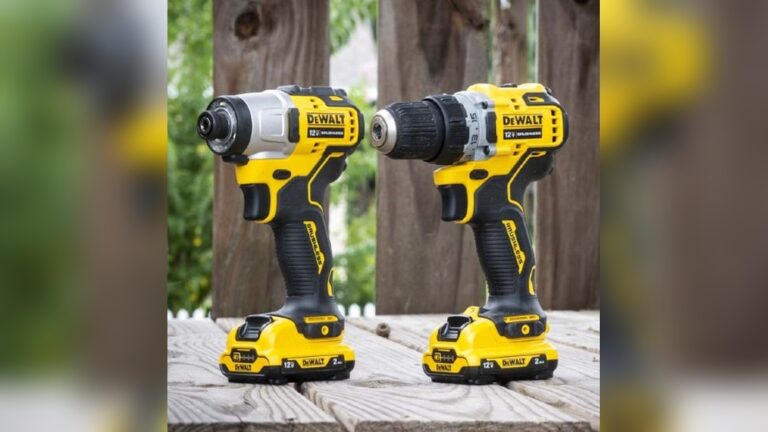
When you walk into a hardware store, the sheer number of power tools can feel overwhelming. Two tools that often cause confusion are the Dewalt hammer drill and the impact driver. Both look similar, both make loud noises, and both are designed for drilling or driving tasks. However, they are not interchangeable. Choosing the right tool can make your project faster, safer, and more successful. If you’re a DIY enthusiast, a homeowner, or a professional tradesperson, understanding the differences between these tools is essential. This guide will help you clearly see what sets a Dewalt hammer drill apart from an impact driver, when to use each, and what to consider before buying.
What Is A Dewalt Hammer Drill?
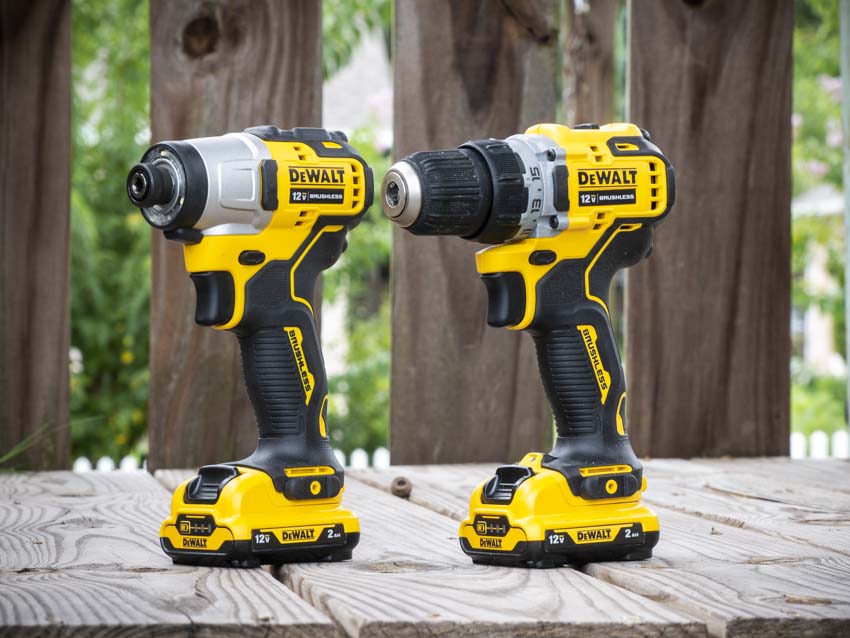
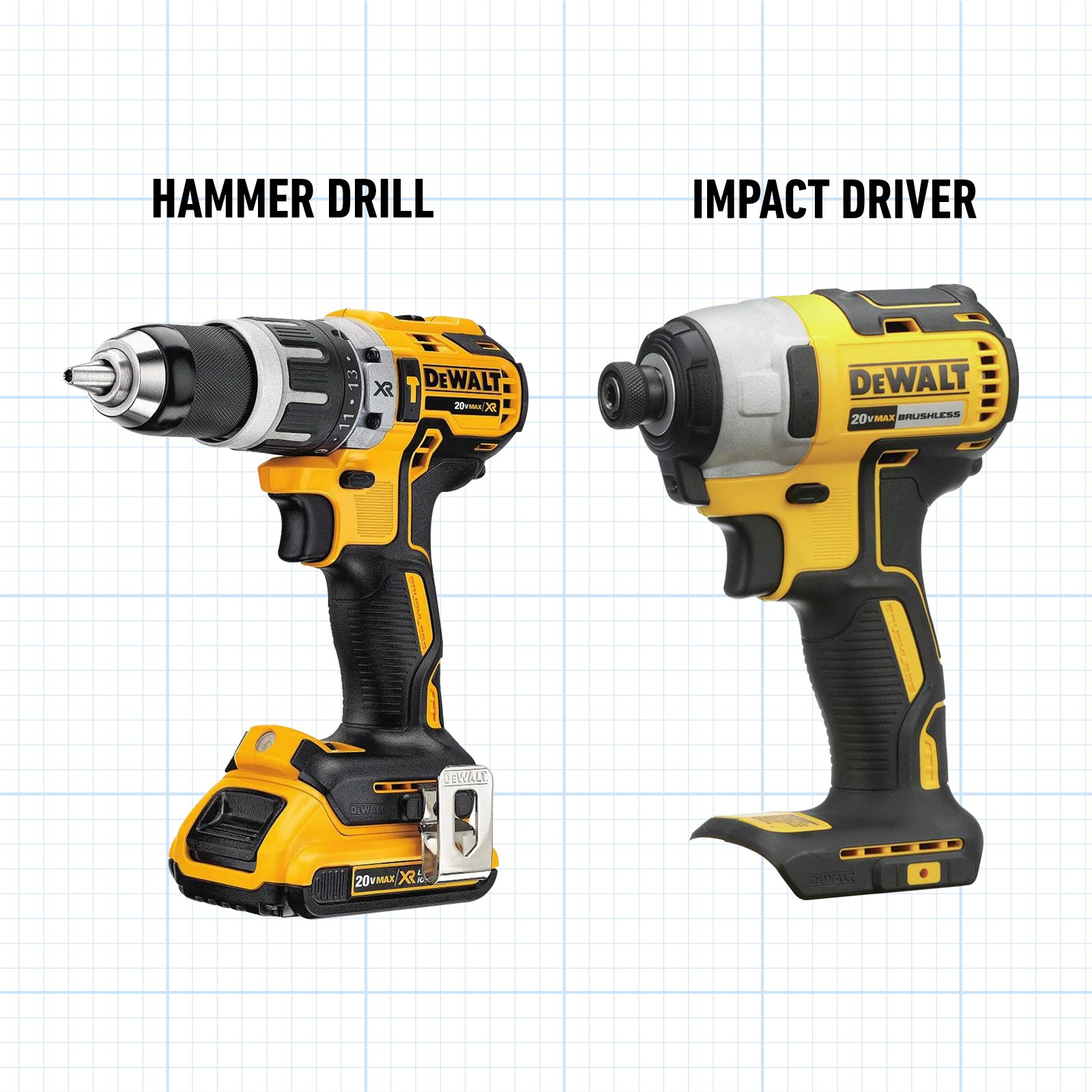
A hammer drill is a powerful tool designed for drilling into hard materials like concrete, brick, or stone. Dewalt is one of the most trusted brands for construction and DIY tools, known for their durability and innovation. The hammer drill looks much like a regular drill, but it has a special function: when you engage the hammer mode, the drill bit not only spins but also moves in a rapid forward-and-back motion, like a hammer striking repeatedly.
This extra action helps the bit break up tough material while spinning. You can still use a hammer drill as a regular drill by turning off the hammer function, making it a versatile tool for many tasks.
Key Features Of Dewalt Hammer Drills
- Hammering Mechanism: Provides thousands of blows per minute (BPM) to aid drilling in masonry.
- Variable Speed: Allows precise control for different tasks.
- Multiple Modes: Drill-only, hammer-drill, and sometimes even screwdriver mode.
- Adjustable Clutch: Prevents over-tightening screws.
- Chuck Size: Usually 1/2 inch, fitting larger bits for demanding jobs.
- Side Handle: Offers better grip and control during heavy drilling.
Common Uses
- Drilling holes in concrete, brick, or stone for anchors or fasteners.
- Making holes in wood or metal (with hammer mode off).
- Occasional screwdriving (not as efficient as a dedicated impact driver).
What Is A Dewalt Impact Driver?
An impact driver is designed mainly for driving screws and bolts with high torque. Dewalt’s impact drivers are widely respected for their reliability and strong performance. They look smaller and lighter than hammer drills, with a short head and a hex chuck that accepts 1/4-inch bits.
Unlike a hammer drill, an impact driver doesn’t hammer in the direction of the drill bit. Instead, it applies force sideways, delivering powerful rotational impacts. This makes it much easier to drive long screws or bolts into tough material without straining your wrist or the tool.
Key Features Of Dewalt Impact Drivers
- High Torque: Delivers more turning power than regular drills.
- Rotational Impact Mechanism: Reduces cam-out and stripped screws.
- Compact Size: Fits in tight spaces.
- Quick-Change Hex Chuck: Allows fast bit swaps.
- Variable Speed Trigger: Better control for delicate tasks.
Common Uses
- Driving long wood screws, lag bolts, and fasteners.
- Working with dense materials like hardwood or metal.
- Removing stubborn or rusted screws.
- Assembling furniture or decks.
How Does A Hammer Drill Differ From An Impact Driver?
At first glance, these tools may seem similar, but their internal mechanisms and best uses are quite different. Here’s a side-by-side comparison to clarify:
| Feature | Dewalt Hammer Drill | Dewalt Impact Driver |
|---|---|---|
| Primary Function | Drilling into hard materials | Driving screws/fasteners with high torque |
| Hammer Action | Forward/backward (in line with bit) | Rotational/sideways (around bit) |
| Chuck Type | Keyless chuck (usually 1/2″) | 1/4″ hex quick-release |
| Best For | Concrete, brick, masonry | Wood, metal, driving screws |
| Bit Compatibility | Round & hex shank bits | 1/4″ hex shank bits only |
| Size & Weight | Larger & heavier | More compact & lighter |
Power And Performance: Real-world Differences
Hammer Drill Power
Dewalt hammer drills are built for tough jobs. Their power is measured in volts (for cordless models) and BPM (blows per minute). Top Dewalt models deliver up to 38,250 BPM and 820 UWO (unit watts out), which is enough for most household and professional tasks.
The hammering action makes it possible to drill into 2-inch thick concrete blocks, something regular drills can’t handle. However, the extra power also means more vibration, noise, and weight.
Impact Driver Power
Impact drivers offer less raw drilling power but much higher torque. Some Dewalt impact drivers deliver up to 1,825 in-lbs of torque and 3,600 impacts per minute. This high torque is what allows you to drive large screws quickly and with less effort.
While you can use an impact driver to drill small holes in wood or metal (with the right bit), it’s not suitable for masonry. Also, the lack of a clutch means you need to be careful not to overdrive or snap small screws.
Noise And Vibration
Both tools are loud, but for different reasons. Hammer drills are noisy due to the pounding action against hard materials. Impact drivers make a sharp, repetitive clicking sound as the hammering mechanism engages. Hearing protection is a good idea with both.
When To Use A Hammer Drill
You should reach for a hammer drill when your project involves:
- Drilling holes in concrete to install anchors for shelves, TV mounts, or handrails.
- Making holes in brick walls for electrical wiring or plumbing.
- Drilling into stone or other masonry surfaces.
The hammer drill can also be used as a standard drill for wood or metal by switching off the hammer action. However, it’s usually heavier and bulkier than a regular drill, so it’s not ideal for overhead or precise work.
Non-obvious Insight
Many beginners do not realize that using the wrong bit with a hammer drill can damage both the bit and the tool. Always use masonry bits for concrete or brick, and switch to standard drill bits for wood or metal. Also, let the tool do the work—pushing too hard may overheat the bit or motor.
When To Use An Impact Driver
An impact driver is the best choice for:
- Driving long screws into wood, such as deck building or framing.
- Installing or removing lag bolts in heavy construction.
- Working in tight spaces where a regular drill won’t fit.
- Projects where you need to drive hundreds of screws, like drywall installation.
Impact drivers are not suitable for drilling into concrete or masonry. They can drill small holes in wood or metal with the right bit, but the lack of a clutch can make it easy to strip screws if you’re not careful.
Non-obvious Insight
A common mistake is using cheap bits with an impact driver. The high torque can easily snap low-quality bits, which can be dangerous. Invest in impact-rated bits for safety and better performance.
Credit: www.protoolreviews.com
Which Tool Is Better For Homeowners?
If you only want to buy one tool for home use, think about the projects you do most often.
- If your work is mainly woodworking, furniture assembly, or general repairs, an impact driver is more practical. It will make driving screws much faster and easier.
- If you plan to hang shelves on concrete walls or drill into brick, a hammer drill is essential.
Many homeowners eventually buy both, but if you must choose, start with an impact driver for its speed and ease with everyday tasks.
Which Tool Is Better For Professionals?
Professionals often need both tools. Most construction, electrical, or plumbing jobs require drilling into concrete and driving large fasteners. Dewalt offers combo kits with a hammer drill and an impact driver, which can save money.
For trades like masonry, a hammer drill is a must. For carpentry and framing, the impact driver will save you time and effort.

Credit: www.youtube.com
Detailed Pros And Cons
To help you decide, here’s a closer look at the advantages and disadvantages of each tool.
Dewalt Hammer Drill
Pros:
- Can drill into concrete, brick, stone, wood, and metal.
- Switchable modes for versatility.
- More control with adjustable clutch.
- Handles larger bits.
Cons:
- Heavier and bulkier.
- More vibration and noise.
- Less effective at driving screws than an impact driver.
Dewalt Impact Driver
Pros:
- High torque makes driving screws effortless.
- Compact and light—easy to use for long periods.
- Reduces risk of stripping screws or damaging bits.
- Great for tight spaces.
Cons:
- Not suitable for masonry drilling.
- Limited to hex-shank bits.
- No clutch—risk of overdriving fasteners.
Practical Scenarios: Which Tool To Use?
Let’s look at a few common tasks and which tool is best:
- Installing a TV Wall Mount on Concrete: Hammer drill (with masonry bit).
- Building a Wooden Deck: Impact driver (for screws), plus a regular drill or hammer drill for pilot holes.
- Hanging Shelves on Drywall: Impact driver or regular drill.
- Drilling Through Stone for Outdoor Lights: Hammer drill.
- Assembling Flat-Pack Furniture: Impact driver for screws, but be careful with delicate pieces.
Credit: www.familyhandyman.com
Popular Dewalt Models Compared
Dewalt offers several models of both hammer drills and impact drivers. Here is a direct comparison of two popular options:
| Model | Hammer Drill (DCD996B) | Impact Driver (DCF887B) |
|---|---|---|
| Max Power | 820 UWO | 1,825 in-lbs torque |
| Max Speed | 2,250 RPM | 3,250 RPM |
| Impacts per Minute | 38,250 BPM | 3,600 IPM |
| Weight | 4.7 lbs | 2.0 lbs |
| Chuck | 1/2″ All-metal ratcheting | 1/4″ Hex quick release |
What To Consider Before Buying
Choosing between a Dewalt hammer drill and an impact driver depends on your needs, but here are some factors to help you make a smart choice:
Type Of Projects
- Concrete or Masonry Work: Hammer drill is necessary.
- Woodworking, Decking, Assembly: Impact driver is best.
Tool Weight And Size
Hammer drills are heavier (usually 4-6 lbs) and longer. Impact drivers are lighter (2-3 lbs) and shorter, making them easier to use overhead or in tight spots.
Bit Compatibility
Hammer drills accept a wider range of bits (round and hex shank). Impact drivers require 1/4″ hex-shank bits, but these are widely available.
Battery Compatibility
If you already own Dewalt 20V MAX batteries, both tools will be compatible. Using the same batteries saves money and space.
Cost
Impact drivers are usually less expensive than hammer drills. Combo kits offer good value if you need both.
Key Safety Tips
- Wear hearing protection: Both tools are loud enough to damage hearing.
- Wear safety goggles: Masonry drilling creates flying debris.
- Use the right bit: Masonry bits for hammer drills, impact-rated bits for impact drivers.
- Let the tool do the work: Don’t force the tool—this can cause kickback or break bits.
- Check for hidden wires or pipes: Drilling into walls can be dangerous if you hit electrical or plumbing lines.
Common Mistakes To Avoid
- Using a hammer drill with regular bits in concrete (bits will fail).
- Trying to drill into masonry with an impact driver (it won’t work).
- Using non-impact-rated bits with an impact driver (bits can break).
- Over-tightening screws with an impact driver (no clutch).
- Forgetting to switch off hammer mode when drilling wood or metal (can damage the material).
Maintenance And Longevity
Both Dewalt hammer drills and impact drivers are built to last, but regular maintenance will extend their life:
- Clean vents after use to prevent dust buildup.
- Check and replace bits before they wear out.
- Lubricate chuck or moving parts if recommended by Dewalt.
- Store tools in a dry place to avoid rust.
- Charge batteries only with Dewalt-approved chargers to protect the battery life.
Table: Summary Of Dewalt Hammer Drill Vs Impact Driver
Here’s a quick-reference guide:
| Criteria | Hammer Drill | Impact Driver |
|---|---|---|
| Best For | Masonry, concrete, stone | Screws, bolts, wood, metal |
| Power Type | Rotational + Hammering | Rotational + Impact |
| Bit Holder | Keyless chuck | 1/4″ Hex quick-release |
| Weight | Heavier (4-6 lbs) | Lighter (2-3 lbs) |
| Precision | High (with clutch) | Moderate (no clutch) |
| Noise | Loud | Very loud (ratcheting) |
Real-world Examples
Case 1: Home Renovation
You need to install kitchen cabinets on a concrete wall. A Dewalt hammer drill with a masonry bit makes quick work of drilling anchor holes. An impact driver then drives long screws into the cabinet frames with minimal effort.
Case 2: Outdoor Deck Construction
Building a deck requires hundreds of screws driven into pressure-treated wood. An impact driver makes the process much faster and reduces fatigue. For securing metal brackets to concrete footings, a hammer drill is needed.
Case 3: Electrical Work
Running wires through brick walls? A hammer drill is essential for making clean holes. Mounting electrical boxes or panels? The impact driver will save time and prevent stripped screws.
Should You Buy Both?
If you’re serious about DIY or work in construction, having both a Dewalt hammer drill and an impact driver is a smart investment. Most professionals carry both because each tool excels at different tasks. Combo kits often include batteries and a charger, giving you a complete solution.
For casual users, start with the tool that fits your most common projects. You can always add the other as your needs grow.
Frequently Asked Questions
What Is The Main Difference Between A Dewalt Hammer Drill And An Impact Driver?
The main difference is in their mechanisms and uses. A hammer drill combines rotation with forward hammering for drilling into hard materials like concrete. An impact driver applies rotational impacts, making it ideal for driving screws and bolts.
Can A Dewalt Impact Driver Be Used As A Drill?
Yes, but with limitations. An impact driver can drill small holes in wood or metal with special hex-shank drill bits. However, it cannot drill into concrete or brick, and it lacks the precision of a drill with a clutch.
Is A Hammer Drill More Powerful Than An Impact Driver?
Not exactly. Hammer drills have more power for drilling into hard materials, but impact drivers deliver higher torque for driving screws. Each is powerful in its own way, designed for different tasks.
Do I Need Special Bits For A Hammer Drill Or Impact Driver?
Yes. Hammer drills need masonry bits for concrete or brick. Impact drivers require impact-rated bits with a 1/4″ hex shank to handle the high torque.
Where Can I Learn More About Power Tool Safety?
For more information about power tool safety, visit the OSHA Hand and Power Tools page, which provides official guidelines and tips.
Choosing the right tool makes your work faster, easier, and safer. Whether you pick a Dewalt hammer drill, an impact driver, or both, understanding their strengths will help you get better results with less effort. Invest wisely, use tools correctly, and your projects will turn out stronger and more professional every time.