Choosing the right tool can make all the difference in machining. When you need to make a hole or shape a material, you might reach for an end mill or a drill bit. At first glance, they may look similar. Both are cutting tools used in CNC machines and manual mills, and both remove material. However, they serve different purposes, have unique designs, and produce different results. Knowing when to use each tool and how to use them correctly can save you time, extend tool life, and improve your work quality.
This guide will help you understand the real differences between end mills and drill bits. We’ll dig into their design, uses, types, advantages, and limitations. You’ll learn how to choose the right tool for your project, and you’ll find practical advice that even many professionals miss.
Whether you’re new to machining, an experienced engineer, or just curious, this article will give you clear and useful information.
What Is An End Mill?
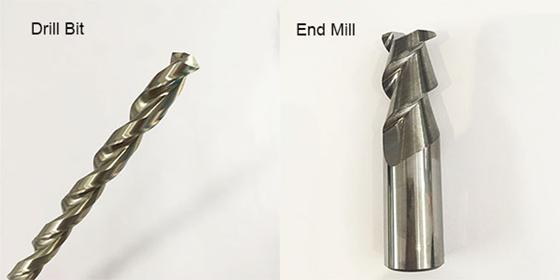
An end mill is a cutting tool used in milling machines and CNC machining centers. Unlike a drill bit, which only cuts straight down, an end mill can cut in multiple directions. This means it can move sideways, up, down, and even at angles. End mills are used for profiling, slotting, contouring, and surface finishing.
End mills have cutting edges on the sides and the tip. The sides allow them to remove material horizontally, while the tip allows for plunging (cutting straight down). They come in many shapes and sizes. Some common end mills include flat, ball nose, and corner radius types.
End mills are made from high-speed steel (HSS), carbide, and sometimes cobalt or ceramic materials. Carbide end mills are the most popular for high-speed applications, thanks to their hardness and wear resistance.
What Is A Drill Bit?
A drill bit is a tool designed to make cylindrical holes by cutting straight down into the material. It is used in drill presses, handheld drills, and sometimes milling machines for drilling operations. Drill bits can only cut in the direction of their axis—they cannot move sideways like end mills.
Drill bits have a pointed tip and spiral flutes that remove chips from the hole. The most common type is the twist drill bit, but there are many other types, such as spade bits, brad point bits, and masonry bits.
Drill bits are made from similar materials as end mills: HSS, carbide, cobalt, and others. The material you choose depends on the hardness of the workpiece and the speed required.
Credit: www.servicecore.com
Key Differences: End Mill Vs Drill Bit
Understanding the main differences helps you choose the right tool and avoid costly mistakes. Here’s a clear comparison:
| Feature | End Mill | Drill Bit |
|---|---|---|
| Primary Use | Side milling, slotting, profiling | Making round holes |
| Cutting Direction | Axial & Radial (sideways and down) | Axial only (straight down) |
| Cutting Edges | Sides and tip | Tip only |
| Shape | Flat, ball, radius, etc. | Mostly pointed tip |
| Common Machines | Milling machine, CNC | Drill press, hand drill, CNC |
| Chip Removal | Side flutes remove chips | Spiral flutes remove chips |
| Hole Quality | Not ideal for deep holes | Best for deep, straight holes |
| Versatility | Very high | Specialized for holes |
Design And Geometry
End Mill Design
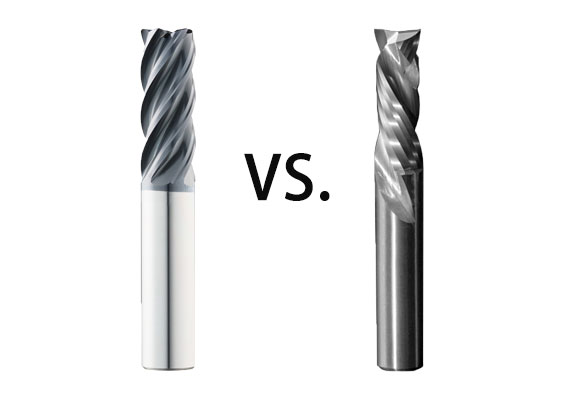
End mills have a shank (the part held by the machine) and a cutting portion. The cutting portion has one or more flutes. Flutes are grooves that allow chips to escape. More flutes mean a smoother finish but less space for chips. Fewer flutes can remove chips faster but might leave a rougher surface.
The tip can be flat (for sharp corners), ball-shaped (for smooth contours), or have a radius for added strength. The cutting edge is sharp and designed to remove material efficiently.
End mills also come in center-cutting and non-center-cutting styles. Center-cutting end mills can plunge directly into the material, while non-center-cutting ones cannot.
Drill Bit Design
Drill bits usually have a cylindrical shank and a pointed tip. The tip is ground at a specific angle, usually 118° or 135°, depending on the material. The spiral flutes wrap around the bit, carrying chips out of the hole.
Drill bits may have a split point for easier starting or a brad point for wood. The tip is always the main cutting part, and the sides do not cut—they only guide the bit.
Types Of End Mills
There are many different end mills, each designed for a specific purpose. Here are some common types:
- Flat End Mill: Has a flat tip. Used for cutting sharp edges, slots, and flat surfaces.
- Ball Nose End Mill: Has a rounded tip. Used for 3D contouring, molds, and dies.
- Corner Radius End Mill: Has a small radius at the tip corners. Adds strength and extends tool life.
- Roughing End Mill: Has serrated flutes for removing lots of material quickly.
- Finishing End Mill: Used for a smooth surface after roughing.
- Tapered End Mill: Used for angled cuts, such as in molds.
- Single Flute End Mill: Good for plastics and soft materials, allows for faster chip removal.
Each type has a special use. Choosing the right one can make your machining easier and more precise.
Types Of Drill Bits
Drill bits also come in many shapes for different jobs:
- Twist Drill Bit: The most common, good for metal, wood, and plastic.
- Brad Point Bit: Has a sharp tip for accurate wood drilling.
- Spade Bit: Flat with sharp edges for large holes in wood.
- Masonry Bit: Has a carbide tip for brick, stone, and concrete.
- Step Drill Bit: Tapered design for drilling multiple hole sizes in thin material.
- Forstner Bit: Makes flat-bottom holes in wood.
- Auger Bit: Large spiral, great for deep holes in wood.
- Cobalt Drill Bit: Made for hard metals like stainless steel.
Not all drill bits are suitable for every material. Using the wrong bit can damage your tool or workpiece.
When To Use An End Mill Vs A Drill Bit
Choosing between an end mill and a drill bit comes down to the job you need to do.
- Use a drill bit if you need a straight, round hole. Drill bits are best for making holes quickly and accurately.
- Use an end mill if you need to cut sideways, make slots, contours, or complex shapes. End mills can also make holes, but they are not as efficient as drill bits for deep, straight drilling.
Here are some examples:
- If you need to make a 10 mm hole through a steel plate, use a twist drill bit.
- If you need to cut a slot or pocket in aluminum, use a flat end mill.
- If you want to create a 3D shape, like a mold, use a ball nose end mill.
- If you want to enlarge a hole or finish the sides of a hole, use an end mill.
Advantages And Disadvantages
Understanding the pros and cons can help you avoid tool failure, poor finishes, or wasted material.
End Mill Advantages
- Can cut in multiple directions
- Versatile: Slots, pockets, profiles, contours
- Good for side milling
- Can be used for plunging (if center-cutting)
End Mill Disadvantages
- Not as fast at deep hole drilling
- More expensive than drill bits
- Requires more skill to use effectively
Drill Bit Advantages
- Fast and accurate for making holes
- Lower cost
- Easy to use, even by beginners
Drill Bit Disadvantages
- Only cuts straight down
- Not suitable for side milling or complex shapes
- Can wander if not started correctly
Credit: www.konetool.com
Common Mistakes When Choosing Tools
Many beginners and even experienced machinists make mistakes when selecting end mills or drill bits. Here are some to watch out for:
- Using a drill bit for side milling: Drill bits are not designed for sideways movement. This can break the tool or damage the workpiece.
- Trying to plunge with a non-center-cutting end mill: Not all end mills can cut straight down. Using the wrong type can lead to tool breakage.
- Choosing the wrong flute count: More flutes do not always mean better results. For soft materials, fewer flutes are often better.
- Ignoring material compatibility: Using a HSS bit on hardened steel will dull the bit quickly.
- Not using cutting fluid: Both end mills and drill bits last longer and cut better with the right lubricant or coolant.
- Over-speeding or under-speeding: Each tool and material has an ideal speed (RPM). Too fast causes heat, too slow causes poor cutting.
Tool Life And Maintenance
Tool life depends on many factors: material, speed, feed rate, and cooling. Here are some tips to extend tool life:
- Keep tools sharp: Dull tools cause heat and poor finishes. Replace or resharpen as needed.
- Use the right speed and feed: Check the manufacturer’s charts for guidance.
- Apply coolant or lubricant: This reduces friction and heat.
- Secure your workpiece: Vibration can chip or break tools.
- Clean chips regularly: Built-up chips can jam the tool and cause breakage.
One non-obvious insight: Many users ignore the importance of tool length. Using a tool that is too long increases vibration and reduces accuracy. Always use the shortest tool that can do the job.
Cost Considerations
End mills are generally more expensive than drill bits. The cost depends on size, material, and brand. Carbide tools cost more but last longer and cut faster. For high-volume production, the higher cost of carbide end mills pays off with longer tool life and better results.
Drill bits are cheaper and widely available. For most basic drilling, HSS drill bits are a good choice. For tough materials, cobalt or carbide is better, but the cost goes up.
If you are a hobbyist, you might be tempted to buy only basic HSS tools. However, investing in one or two good carbide end mills for your most-used sizes can make a big difference in finish quality and tool life.
Real-world Examples
Imagine you’re making a custom metal bracket. You need two holes and a slot. For the holes, you use a twist drill bit. For the slot, you switch to a flat end mill. If you tried to cut the slot with a drill bit, you’d damage the bit and get a poor slot.
If you tried to make the holes with an end mill, it would take longer, and the holes might not be as round.
In another example, a machinist wants to engrave text on a steel plate. He chooses a ball nose end mill for the smooth, curved letters. For simple center punching, he would use a small drill bit.

Credit: www.youtube.com
Advanced Tips Most Beginners Miss
- Spot Drilling Improves Accuracy: Before drilling a large hole, use a small spot drill or center drill to start the hole. This prevents the larger drill bit from wandering.
- Helical Milling for Large Holes: If you need a large hole and don’t have the right size drill bit, use an end mill to spiral (helical) into the material. This can create holes larger than your largest drill bit.
- Climb Milling vs. Conventional Milling: When using end mills, the direction of feed affects the finish and tool life. Climb milling gives a better finish but requires a rigid machine.
- Peck Drilling for Deep Holes: For deep holes, drill bits can get clogged with chips. Peck drilling means drilling in short steps, clearing chips between steps.
Choosing The Right Tool For The Job
Selecting the right tool is both art and science. Here’s a quick guide:
| Operation | Best Tool | Why |
|---|---|---|
| Drilling small, deep holes | Twist Drill Bit | Fast, accurate, and efficient |
| Milling slots | Flat End Mill | Makes straight slots with clean edges |
| Contour cutting (3D shapes) | Ball Nose End Mill | Creates smooth, curved surfaces |
| Large diameter holes | Helical Milling with End Mill | Can make holes bigger than any drill bit you own |
| Engraving | Small End Mill | Precision for fine details |
| Pocketing (removing material inside a border) | Flat End Mill | Efficient chip removal, clean corners |
Safety Considerations
Both end mills and drill bits are sharp and can break. Always:
- Wear safety glasses to protect your eyes from chips.
- Secure your material firmly—loose parts can spin or fly out.
- Never use a damaged tool.
- Make sure the tool is properly tightened in the chuck or collet.
- Remove chips with a brush, not your hands.
One extra point: Carbide tools are more brittle than HSS. They can shatter if dropped or misused, so handle with care.
Innovations In Cutting Tools
Technology moves fast, even with basic tools like end mills and drill bits. Some modern innovations:
- Coated tools: Titanium nitride (TiN) or diamond coatings increase tool life and reduce friction.
- Variable helix end mills: These have flutes at different angles to reduce vibration.
- Indexable end mills: Use replaceable inserts, saving money on large jobs.
- High-performance drill bits: New designs with split points and special flutes drill faster and last longer.
If you want the latest information or want to see detailed engineering data, check out Wikipedia’s drill bit article.
Frequently Asked Questions
What Is The Main Difference Between An End Mill And A Drill Bit?
The main difference is the direction of cutting. End mills can cut sideways and plunge into material, making them good for slots, profiles, and complex shapes. Drill bits only cut straight down and are best for making round holes.
Can I Use An End Mill To Drill A Hole?
Some end mills (center-cutting) can plunge and make holes, but they are not as efficient or accurate as drill bits for deep, straight holes. End mills are better for enlarging or finishing holes, not starting them.
Why Do End Mills Have More Flutes Than Drill Bits?
End mills often have more flutes to improve surface finish and allow for higher feed rates during side milling. Drill bits have fewer flutes to provide more space for chip removal during deep drilling.
How Do I Choose The Right Tool Material?
For soft materials, HSS is usually enough. For hard materials or high-speed work, carbide or cobalt tools last longer and cut better. Always match the tool material to your workpiece and job.
What Is Helical Milling And When Is It Used?
Helical milling is using an end mill to cut a hole by spiraling into the material, rather than drilling straight down. It’s used when you need a large hole or want a smooth finish, or when you don’t have a drill bit of the right size.
—
Knowing the difference between end mills and drill bits is key to good machining. With the right tool and a little knowledge, you can achieve smoother finishes, faster production, and fewer mistakes. Whether you’re making simple holes or complex parts, understanding your tools will help you get better results, save money, and keep your shop running smoothly.