How Do You Measure A Drill Bit
When you use a drill, the size of the drill bit is very important. If you pick the wrong size, your hole will be too big or too small. Many people think measuring a drill bit is simple, but there are tricks and details that can make a big difference. Whether you want to hang a shelf, fix furniture, or do woodworking, knowing how to measure a drill bit correctly helps you avoid mistakes, save time, and get better results. This article will guide you step-by-step, share practical tips, and explain advanced concepts. By the end, you will understand everything you need to know about measuring drill bits, even if you are a beginner.
Why Measuring Drill Bits Matters
Many projects fail because of wrong drill bit sizes. If you use a bit that is too large, the screw will not hold tightly. If it’s too small, you might split the wood or damage the material. Proper measurement is not just about accuracy—it helps with safety, efficiency, and the quality of your work.
For example, in metalwork, even a 0. 5 mm difference can ruin a part. In woodworking, a mismatched bit can cause cracks. In construction, wrong hole sizes might lead to weak structures. Most people overlook these risks, but professionals know that measuring a drill bit is a foundation for success.
Types Of Drill Bits And Their Measurement
Drill bits come in many shapes and sizes. Each type has a specific use and measurement method.
Twist Drill Bits
These are the most common bits. They have a spiral shape and are used for wood, metal, and plastic. You measure their diameter—the widest part of the spiral.
Masonry Drill Bits
Used for concrete, brick, and stone. The diameter is measured at the tip, where the cutting edges are.
Spade Bits
Flat and wide, spade bits are for large holes in wood. Measure the widest part of the blade.
Forstner Bits
These make clean, flat-bottom holes in wood. Measure across the cutting edge, not the shaft.
Auger Bits
Used for deep holes in wood. Measure the diameter at the tip.
Specialty Bits
Includes step bits, hole saws, and countersink bits. For step bits, measure each step; for hole saws, measure the outer diameter.
Understanding the type of bit is the first step. Not all bits are measured the same way, and knowing the difference helps you avoid confusion.
Tools You Need To Measure A Drill Bit
The right tool makes the job easy and accurate. Here are the main tools for measuring drill bits:
- Ruler or Tape Measure: Works for large bits, but not very precise.
- Caliper: Gives exact measurements, especially for small bits. Digital calipers are easy to read.
- Micrometer: Used for high precision, mainly in metalworking.
- Drill Bit Gauge: A plate with holes; you fit the bit into the holes to check size.
- Gauge Block: Used in engineering for precise measurement.
Each tool has its own uses. For most home projects, a ruler or caliper is enough. For professional work, calipers or micrometers are best.
Step-by-step Guide To Measuring A Drill Bit
Many beginners make mistakes by measuring the wrong part of the bit. Follow these steps for accurate results:
1. Clean The Drill Bit
Remove dust, oil, or debris. Dirt can affect the measurement.
2. Identify The Bit Type
Find out which part should be measured. For twist bits, measure the spiral; for spade bits, measure the blade.
3. Use The Right Tool
Pick a caliper or ruler. Place the bit between the jaws of the caliper.
4. Measure The Diameter
Close the caliper gently on the widest part. Read the value.
5. Check The Length (if Needed)
Some projects need a specific hole depth. Measure from the tip to the base of the bit.
6. Record The Size
Write down the measurement. Use millimeters or inches, depending on your project.
7. Double-check
Repeat the measurement to avoid errors.
Many people forget to double-check or measure the wrong spot. These are common mistakes you should avoid.
Metric Vs. Imperial Sizes
Drill bits are sold in metric (mm) and imperial (inch) sizes. Sometimes you need to convert between them.
Here is a useful comparison of common sizes:
| Metric Size (mm) | Imperial Size (inch) | Common Use |
|---|---|---|
| 1.5 mm | 1/16″ | Small pilot holes |
| 3 mm | 1/8″ | General purpose |
| 6 mm | 1/4″ | Wall anchors |
| 10 mm | 3/8″ | Large holes |
| 13 mm | 1/2″ | Heavy-duty |
Knowing how to convert sizes is important, especially when buying bits from different countries. Many people use online calculators, but it is better to learn the basic conversion: 1 inch = 25.4 mm.
Comparing Measuring Tools
Let’s compare the main tools used for measuring drill bits:
| Tool | Accuracy | Ease of Use | Best For |
|---|---|---|---|
| Ruler | Low | Easy | Large bits |
| Caliper | High | Medium | Small and medium bits |
| Micrometer | Very High | Hard | Precision work |
| Bit Gauge | Medium | Easy | Quick checks |
Calipers are the best choice for most people. Rulers are only good for rough checks, and micrometers are used when you need high accuracy.
Drill Bit Size Markings
Most drill bits have size markings printed or engraved. These markings show the diameter. However, markings can wear off or be hard to read.
- Laser markings: Last longer, found on quality bits.
- Stamped markings: Can fade after use.
- Painted markings: Easy to see but wear off quickly.
If you can’t read the marking, measuring with a tool is the safest method. Many beginners trust the markings, but old bits often lose them.
How To Measure Drill Bit Shank And Flute
The shank is the smooth end that fits into the drill. The flute is the spiral part that cuts. Most measurements are taken at the flute, but sometimes you need to measure the shank, especially for compatibility with your drill.
- For twist bits: Measure at the flute.
- For step bits: Measure at each step.
- For hex shank bits: Measure across the flats.
Some drills only accept certain shank sizes. Check both the flute and shank when buying new bits.
Measuring Drill Bits For Different Materials
The material you drill affects the bit size you need.
Wood
Wood is soft, so you can use slightly smaller bits for screws. Measure the bit to match the screw shaft, not the threads.
Metal
Metal is hard. Use the exact size recommended for bolts or rivets. Precision is important.
Masonry
For concrete or brick, use the size shown on the anchor packaging. Measure the bit at the tip.
Plastic
Plastic can crack, so use a bit slightly smaller than the screw. Measure carefully.
Many people forget that material matters. Always check the instructions for your project.
Common Mistakes When Measuring Drill Bits
Mistakes happen often, especially for beginners. Here are some you should avoid:
- Measuring the wrong part: Always measure the cutting edge, not the shank (unless required).
- Using a worn bit: Old bits can be smaller due to wear.
- Ignoring tolerances: Some projects need very precise sizes.
- Confusing metric and imperial: Double-check your units.
- Relying on faded markings: Measure, don’t guess.
Many people do not realize that worn bits change size. Always check the bit before starting your project.
Practical Tips For Accurate Measurement
Here are some tips that can help you measure drill bits correctly every time:
- Use digital calipers for quick, accurate readings.
- Clean the bit before measuring.
- Check the project requirements—sometimes you need a specific hole size.
- Measure twice to avoid mistakes.
- Record the size so you don’t forget.
One insight many beginners miss: Drill bits can vary slightly between brands. Always measure, even if you think you know the size.
How Drill Bit Measurement Affects Hole Size
The measured size of the drill bit is usually the size of the hole it will make. But sometimes, the hole can be slightly larger or smaller, depending on the material and the bit type.
- Soft materials: The hole might be a bit smaller.
- Hard materials: The hole can be slightly bigger, especially if the bit vibrates.
- Dull bits: Make smaller holes.
Some people do not realize that drill speed and pressure affect hole size. Always test the bit on scrap material before starting.

Credit: www.youtube.com
Special Cases: Step Drill Bits And Hole Saws
Some bits have unique measurement needs.
Step Drill Bits
These bits have several steps for different hole sizes. Measure each step individually.
Hole Saws
Hole saws are used for large holes. Measure the outside diameter of the saw.
| Bit Type | How to Measure |
|---|---|
| Step Drill Bit | Measure each step’s diameter |
| Hole Saw | Measure the outer edge diameter |
Many people forget to measure all steps on step bits, leading to wrong hole sizes.
Advanced Measurement: Tolerances And Fit
For some projects, you need to know tolerances—how much variation is allowed. In precision work, like engineering, even a small mistake can cause problems.
- Standard tolerance: ±0.1 mm for most home projects.
- Tight tolerance: ±0.01 mm in engineering.
To get tight tolerances, use a micrometer or high-quality caliper. Record the measurement carefully.
Most beginners do not realize how important tolerances are. For furniture or home repairs, a small error is okay. For machines or metalwork, measure very carefully.

Credit: www.youtube.com
Measuring Drill Bits For Screws And Anchors
When you use screws, bolts, or wall anchors, the drill bit size is critical.
- For screws: Use a bit slightly smaller than the screw shaft.
- For anchors: Use the size shown on the anchor package.
If you use a bit that is too large, the anchor will not hold. Too small, and the anchor will not fit.
Many people do not check the packaging for anchor size. Always follow the instructions.
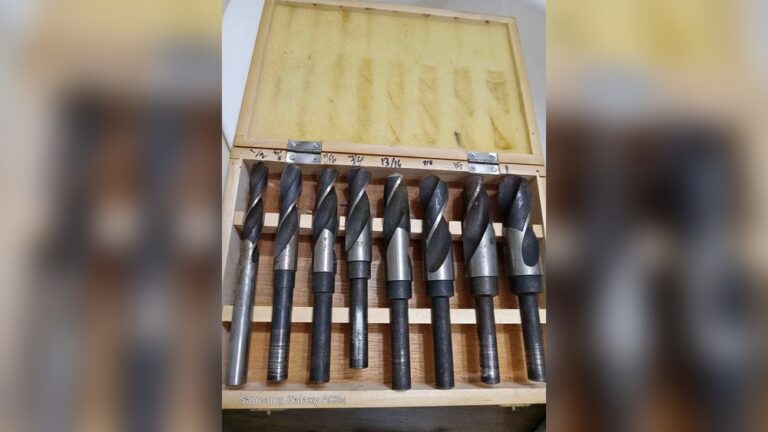
How To Store And Organize Measured Bits
After measuring, keep your bits organized. This helps you avoid mistakes and makes your work faster.
- Label each bit with its size.
- Use a bit holder or box.
- Separate metric and imperial bits.
One practical tip: Use a small sticker or marker to show the size if the original marking is gone.
How To Measure Worn Or Damaged Drill Bits
Worn bits can be smaller than their original size. If a bit is damaged, it might not cut correctly.
- Measure with a caliper.
- Compare to a new bit.
- Check for chips or dull edges.
If a bit is too worn, replace it. Many beginners keep using old bits, causing bad holes.
Real-life Examples
Let’s look at some examples:
Hanging A Shelf
You need a 6 mm hole for a wall anchor. Measure your bit at the tip with a caliper. If it is exactly 6 mm, you are ready.
Building Furniture
You want to drill a pilot hole for a screw. Measure the bit to match the screw shaft, not the threads.
Repairing Metal Parts
You need a tight tolerance. Use a micrometer to measure the bit. Even a 0. 05 mm error can cause problems.
Many people miss these details, leading to weak shelves, cracked wood, or loose bolts.

Credit: www.speedyfixings.com
Non-obvious Insights
Here are two insights most beginners miss:
- Bit wear changes size: After many uses, drill bits wear down. Always measure before important projects.
- Bit brand affects size: Some brands round up or down their sizes. Always check, do not assume.
These tips can help you avoid mistakes and improve your results.
When To Use Professional Measurement Tools
For home projects, a ruler or caliper is fine. For engineering or metalwork, use a micrometer or digital caliper.
- Use a micrometer for parts that must fit tightly.
- Use a drill bit gauge for quick checks.
If you need very precise holes, invest in quality tools. Professional tools save time and prevent errors.
Where To Find Reliable Information
If you want more details, visit Wikipedia. It has a lot of information about drill bits and their sizes.
Frequently Asked Questions
What Is The Most Accurate Way To Measure A Drill Bit?
The most accurate method is to use a digital caliper or micrometer. Place the bit between the jaws and read the value. These tools are precise and easy to use.
Should I Measure The Shank Or The Flute Of A Drill Bit?
Usually, you measure the flute—the spiral cutting part. The shank is only measured if your drill requires a specific size. For most projects, the flute size is what matters.
How Do I Convert Drill Bit Sizes Between Metric And Imperial?
To convert, use the formula: 1 inch = 25.4 mm. For example, a 6 mm bit is about 0.24 inches. Many online calculators are available, but learning the basic conversion is helpful.
What If My Drill Bit Marking Is Faded?
If you cannot read the marking, clean the bit and measure it with a caliper or drill bit gauge. Never guess the size—wrong measurements can ruin your project.
Can Drill Bit Size Change After Use?
Yes, drill bits wear down after many uses. The diameter can become smaller, especially on soft materials. Always measure before important jobs, and replace bits if they are too worn.
Measuring a drill bit might seem simple, but it is a skill that makes your projects better and safer. With the tips and steps in this guide, you can measure any drill bit with confidence and accuracy. Whether you are fixing something at home or working on a big project, good measurement is the key to success.