Choosing between an impact driver and a drill driver can feel overwhelming, especially when both tools look similar and are marketed for overlapping tasks. However, beneath their exteriors, these power tools serve distinctly different purposes, and selecting the right one could dramatically influence your workflow, project quality, and even long-term tool investment.
Whether you’re a home DIYer hanging shelves or a professional contractor assembling framing, understanding how each tool operates, and where it excels, makes the difference between frustration and efficiency.
This comprehensive guide breaks down the nuances of impact drivers versus drill drivers, using data-backed insights, real-world examples, and practical advice. You’ll learn about the mechanics, best-use scenarios, design differences, and user experiences that set these tools apart. By the end, you’ll be equipped to make an informed choice that matches your specific needs, budget, and skill level.
Key Takeaways
- Impact drivers deliver higher torque and are optimized for driving screws and fasteners, especially in tough materials, while drill drivers excel at drilling holes and light screwdriving.
- The internal mechanics of each tool, impact mechanisms vs clutch/gear systems, create distinct performance profiles, noise levels, and user experiences.
- Choosing the right tool reduces project time, prevents material damage, and extends tool life.
- Professionals often own both tools, using them for complementary tasks on complex jobs.
- Consider ergonomics, battery compatibility, and specific project demands before investing.
Understanding The Core Differences
The first step in choosing between an impact driver and a drill driver is recognizing their fundamental distinctions. Let’s explore their design, mechanics, and primary applications.
Mechanical Operation
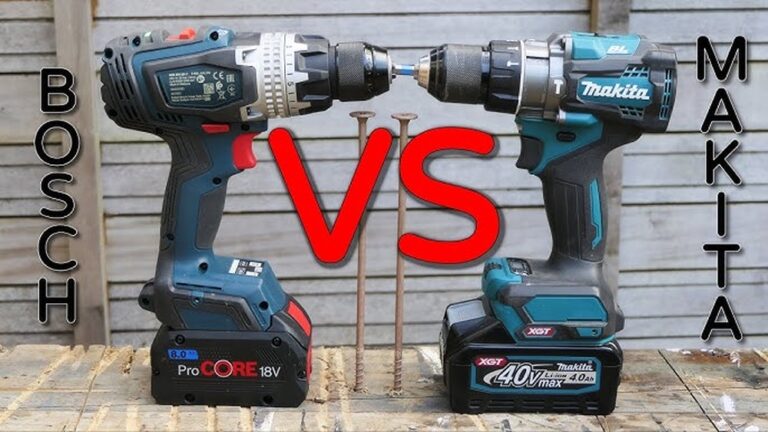
A drill driver uses a clutch and adjustable gear settings to control rotational speed and torque. This design is ideal for drilling clean holes and driving screws with precision, minimizing the risk of overdriving or stripping screws.
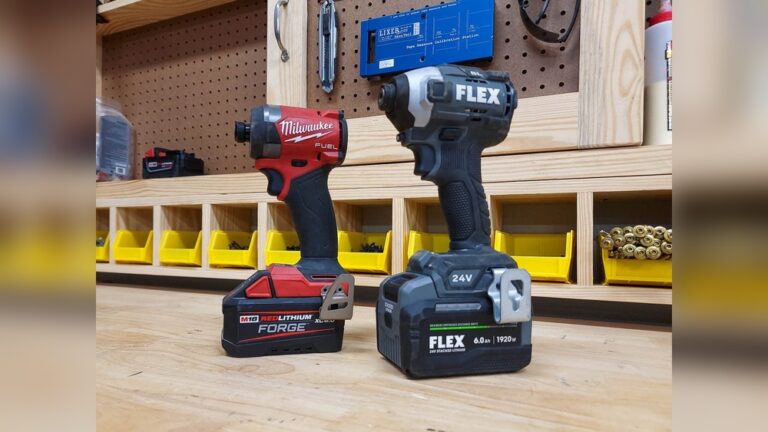
In contrast, an impact driver employs a spring-loaded, cam mechanism that delivers rapid bursts of rotational force, known as “impacts”, in addition to spinning. This pulsing action produces much higher torque, making it perfect for driving long or large-diameter fasteners into dense materials.
Primary Use Cases
- Drill drivers: Best for drilling into wood, metal, plastic, and light-duty screwdriving.
- Impact drivers: Best for driving screws, bolts, and fasteners into tough materials like hardwood, masonry, or metal.
Chuck And Bit Compatibility
Drill drivers feature a 3-jaw chuck that accommodates round and hex-shank bits of various sizes, making them versatile for both drilling and driving.
Impact drivers use a ¼-inch quick-change hex chuck, compatible only with hex-shank bits. This design enables faster bit changes but limits the range of usable accessories.
Speed And Torque
Drill drivers typically offer variable speed controls and multiple clutch settings for nuanced control. Impact drivers deliver less control over speed but provide significantly more torque, with some models reaching over 2,000 inch-pounds.
Weight And Ergonomics
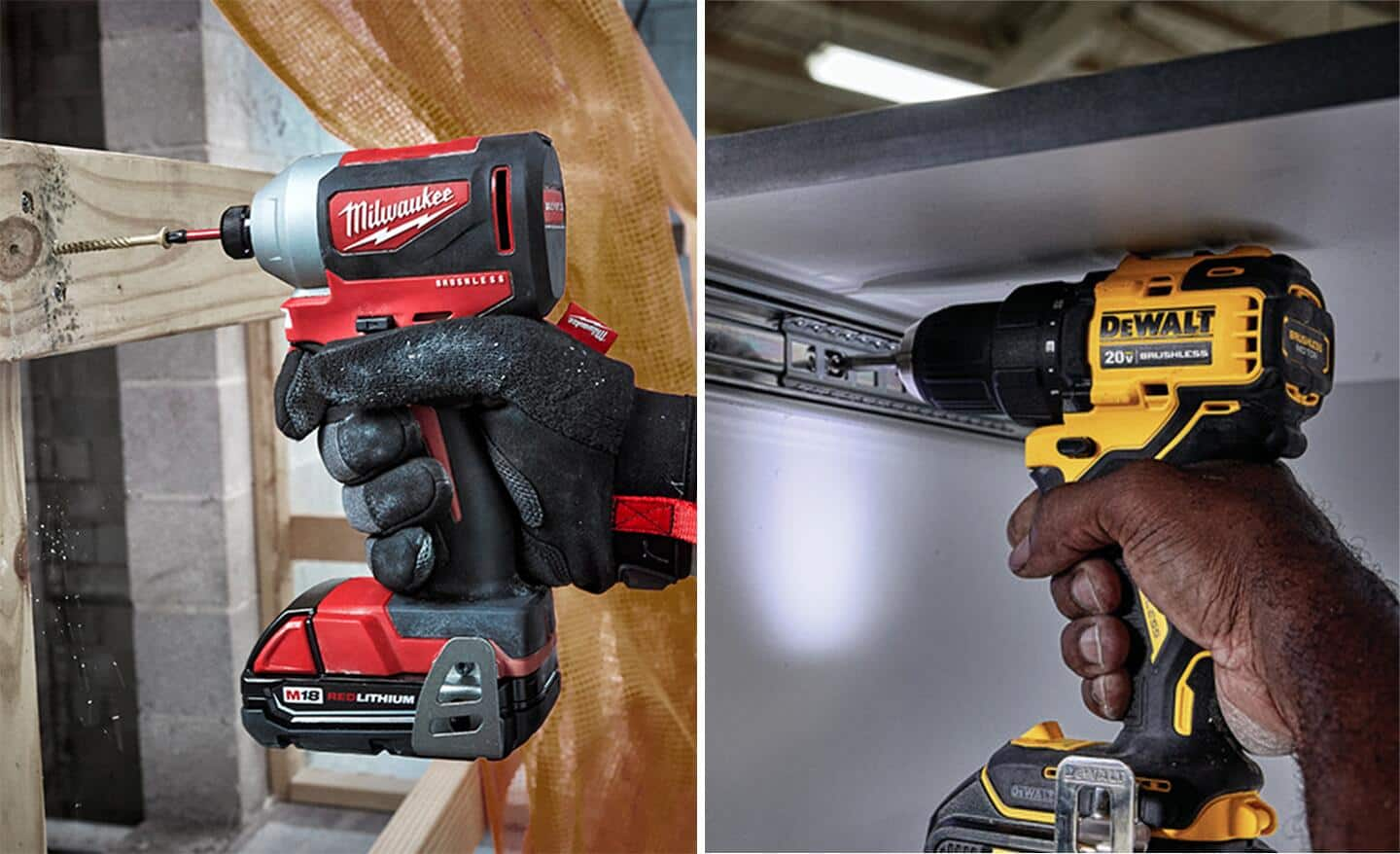
Impact drivers are often more compact and lighter than drill drivers, reducing fatigue during prolonged use. The reduced overall length also makes them ideal for working in tight spaces.

Credit: www.findbuytool.com
In-depth Comparison: Impact Driver Vs Drill Driver
Understanding the operational and design differences is crucial, but how do these tools perform side by side in real-world scenarios? Here’s a detailed comparison table:
| Feature | Impact Driver | Drill Driver |
|---|---|---|
| Primary Function | Driving screws/fasteners | Drilling holes & light screwdriving |
| Torque Output | High (up to 2,000+ in-lbs) | Moderate (400, 800 in-lbs) |
| Speed Settings | Single speed, variable trigger | 2, 3 speed ranges, clutch control |
| Chuck Type | 1/4″ hex quick-change | 3-jaw keyless |
| Bit Compatibility | Hex-shank only | Round & hex-shank |
| Size & Weight | Compact, lighter | Bulkier, heavier |
| Noise Level | Louder (percussive impacts) | Quieter |
| Best for Beginners? | Simple to use, but less control | More control, better for learning |
Example: Assembling A Deck
When building a deck, professionals often pre-drill holes with a drill driver to prevent wood splitting, then switch to an impact driver to sink long deck screws into pressure-treated lumber. The impact driver’s high torque and compact size allow for faster, fatigue-free fastener driving, especially over hundreds of repetitions.
Example: Cabinet Installation
For precision work like hanging cabinets, a drill driver’s clutch settings help avoid overdriving screws and damaging the wood or hardware. The ability to use drill bits and countersinks in the same tool streamlines the process.

Credit: www.thespruce.com
Performance In Real-world Applications
How do impact drivers and drill drivers stack up across various projects? Here, we break down their strengths and limitations in common construction, remodeling, and DIY scenarios.
Woodworking And Carpentry
- Impact driver: Excels at driving long screws and lag bolts into hardwoods or engineered wood. Its compact size allows for maneuvering inside cabinetry or tight framing.
- Drill driver: Superior for drilling accurate holes for dowels, pilot holes, or pocket screws. The clutch prevents overdriving and material damage.
Metalworking And Masonry
- Impact driver: Effective for driving self-tapping screws into sheet metal or fasteners into masonry anchors, but not suitable for drilling holes in hard materials.
- Drill driver: With the right bit, can drill into metal, plastic, and even masonry (if equipped with a hammer function).
Electrical And Plumbing
- Impact driver: Ideal for running long screws for conduit straps or electrical boxes, especially in dense framing.
- Drill driver: Better for drilling holes for wires, pipes, or fasteners through studs, joists, and panels.
Home Improvement And Furniture Assembly
- Impact driver: Great for quickly assembling pre-drilled furniture or driving screws into wall studs for shelving.
- Drill driver: Preferred for delicate assembly tasks where overdriving screws could crack particleboard or MDF.
Example: Fastening Drywall Screws
While an impact driver can drive drywall screws rapidly, it may overpower and damage the drywall. A drill driver, set to a low clutch setting, can stop at the right depth to avoid tearing the paper surface.
Credit: www.homedepot.com
Pros And Cons Of Each Tool
Selecting the right tool is about balancing advantages and drawbacks for your specific needs. Here’s a concise breakdown.
Impact Driver: Pros
- High torque for driving long or large fasteners
- Compact, lightweight design reduces fatigue
- Less wrist strain due to pulsing action
- Quick bit changes with hex chuck
- Fast performance for repetitive tasks
Impact Driver: Cons
- No clutch means less control over screw depth
- Limited bit compatibility
- Louder operation can be disruptive indoors
- Not suitable for drilling holes (except with special bits)
Drill Driver: Pros
- Versatile, drills holes and drives screws
- Clutch and speed settings for precise control
- Accepts a wide range of bits
- Quieter operation
- Ideal for beginners due to forgiving controls
Drill Driver: Cons
- Lower torque struggles with long or large fasteners
- Bulkier, heavier in hand
- Can stall or strip screws in tough materials
- Slower for repetitive heavy-duty driving
Example: Installing Fence Panels
In my experience, I used an impact driver to secure lag bolts in fence posts, saving significant time compared to a drill driver, which stalled and strained under the load. However, for attaching gate hardware, the drill driver’s clutch prevented overtightening and damaging the metal fittings.
Ergonomics, Battery Life, And Cost Considerations
Before investing in a tool, it’s important to evaluate comfort, battery compatibility, and long-term costs.
Ergonomics And Comfort
Impact drivers are generally more compact and balanced. Their shorter length allows access to corners and tight spots, and the lighter weight reduces fatigue during extended use.
Drill drivers can feel top-heavy, especially with larger batteries. The added length can hinder use in confined spaces, but the adjustable handle and trigger position often provide better fine control for delicate operations.
Battery Performance
Both tools increasingly use lithium-ion batteries, but performance varies:
- Impact drivers: Their high-torque, rapid-fire action can drain batteries faster under heavy loads, but the shorter operation time per screw can balance this.
- Drill drivers: Use less power per operation, but may take longer for heavy-duty driving.
Most major brands (e.g., DeWalt, Makita, Milwaukee) offer platform compatibility, allowing you to use the same battery across multiple tools. This can significantly reduce costs and increase convenience.
Cost Analysis
Impact drivers and drill drivers are priced similarly at the entry level, with pro-grade models and brushless motors commanding higher prices. Combo kits featuring both tools, two batteries, and a charger often offer the best value for those planning diverse projects.
| Tool Type | Entry-Level Price | Pro-Grade Price | Combo Kit (Both) |
|---|---|---|---|
| Impact Driver | $60, $120 | $150, $300 | $200, $400 |
| Drill Driver | $50, $110 | $130, $280 | $200, $400 |
Pro Tip: Always check battery and charger inclusion when comparing prices, as “tool-only” listings are common.
Choosing The Right Tool For Your Needs
The decision between an impact driver and a drill driver depends on your project requirements, tool experience, and budget. Here’s a structured approach to help you decide.
1. Assess Your Primary Tasks
- Mainly drilling holes? Choose a drill driver.
- Mostly driving fasteners? Opt for an impact driver.
- Doing both regularly? Consider owning both, or a combo kit.
2. Consider Material Types
- Soft woods and plastics: Drill driver is sufficient.
- Hard woods, metal, masonry: Impact driver excels for driving; drill driver for drilling with appropriate bits.
3. Evaluate Skill Level
- Beginners: Drill drivers offer more forgiveness and control.
- Experienced users: Impact drivers increase speed and efficiency, especially for repetitive tasks.
4. Factor In Tool Longevity And Versatility
- Versatility: Drill drivers can handle a broader range of jobs, while impact drivers are more specialized.
- Tool investment: If you plan to expand your tool collection, check for battery platform compatibility.
5. Budget Constraints
- Single-tool budget: Start with a drill driver for all-purpose use.
- Flexible budget: Combo kits provide the best long-term value.
Example: Home Renovation Scenario
A homeowner tackling a full kitchen remodel found that using a drill driver for cabinet assembly and an impact driver for mounting wall brackets and heavy drawer slides saved hours and prevented material damage. Having both tools on hand avoided the constant need to swap bits and settings, streamlining the workflow.
Innovations And Trends In Power Tool Design
Power tool manufacturers are constantly refining both impact drivers and drill drivers. Here’s how modern features are enhancing usability and safety.
Brushless Motors
Both tool types now feature brushless motors, which increase efficiency, extend battery life, and reduce heat. Brushless models are more expensive but offer better long-term durability.
Smart Features
Some premium models include smart electronics that adjust torque or speed automatically, monitor battery health, and even connect to mobile apps for tool tracking.
Compact And Subcompact Models
Manufacturers offer subcompact versions that retain high torque in an even smaller form factor. These are ideal for overhead work or confined spaces.
Enhanced Ergonomics
Improvements in grip design, balance, and vibration dampening have made both impact and drill drivers more comfortable for extended use.
Battery Advancements
Advances in lithium-ion technology have led to longer runtimes, faster charging, and universal compatibility within brands.
For more on the latest innovations, see the Wikipedia page on power tools.
Safety Considerations And Best Practices
Proper use of impact and drill drivers not only protects your investment but also ensures user safety.
Eye And Hearing Protection
Impact drivers are notably louder due to their percussive action. Always wear hearing protection when using them for extended periods. Both tools can send debris flying, making safety glasses essential.
Preventing Material Damage
- Use the clutch on drill drivers to avoid overdriving fasteners.
- Select the right bit for the material and fastener type.
- Pilot holes: When in doubt, pre-drill with a drill driver to prevent splitting, especially in hardwoods.
Bit And Accessory Safety
Only use impact-rated bits in impact drivers to prevent shattering. Standard bits may break under high torque.
Tool Maintenance
- Check chucks and collets for wear and debris.
- Inspect batteries for damage or swelling.
- Store tools dry and away from extreme temperatures.
Example: Cordless Tool Malfunction
A contractor using a non-impact-rated bit in an impact driver experienced bit shattering, sending shards across the workspace. Using the correct, impact-rated accessories would have prevented this.
For comprehensive guidelines, visit the OSHA Power Tool Safety Page.
Real-world Case Studies
Concrete examples reveal how the right tool choice affects workflow and results.
Case Study 1: Professional Framing Crew
A framing crew building a wood-framed house relied heavily on impact drivers to drive hundreds of 3-inch screws into engineered joists. The speed and torque of the impact drivers enabled each worker to complete tasks in half the time compared to traditional drill drivers.
However, the crew still used drill drivers for pre-drilling pilot holes, especially near edges where splitting was a concern.
Case Study 2: Diy Furniture Assembly
A hobbyist assembling Scandinavian flat-pack furniture found that an impact driver, even on light-duty settings, stripped screws and damaged the particleboard. Switching to a drill driver with a low clutch setting provided better control and preserved the integrity of the materials.
Case Study 3: Electrical Contractor
An electrical contractor installing junction boxes in commercial buildings relied on impact drivers to rapidly secure self-tapping screws to metal studs, reducing installation time. However, for drilling pass-through holes for conduit, the drill driver was essential.
Frequently Asked Questions
What Is The Main Difference Between An Impact Driver And A Drill Driver?
The main difference lies in their mechanics and intended tasks. An impact driver generates high torque using a pulsing action, making it ideal for driving large or long fasteners into tough materials. A drill driver uses a clutch and variable speed to provide precise control for drilling holes and light screwdriving. If you need to drill holes or handle a variety of bit types, a drill driver is more versatile.
Can An Impact Driver Be Used As A Drill?
While an impact driver can drive special hex-shank drill bits, it is not optimized for drilling precise holes. The lack of a clutch and the pulsing action can result in less accurate, rough holes and potential material damage, especially in softer woods or plastics. For clean, accurate holes, a drill driver is the preferred tool.
Do I Need Both An Impact Driver And A Drill Driver?
Owning both tools increases efficiency and versatility, especially for larger projects. Professionals often use a drill driver to pre-drill holes and an impact driver to drive fasteners, minimizing bit changes and optimizing each tool’s strengths. However, for occasional DIY tasks, starting with a drill driver is often sufficient.
Are Impact Drivers Safe For Beginners?
Impact drivers are generally safe for beginners, thanks to their simple controls and reduced wrist strain. However, the lack of a clutch and high torque can lead to overdriving or stripping screws if not used carefully. Beginners should practice on scrap material and consider starting with a drill driver for greater control.
What Kind Of Bits Do I Need For Impact Drivers?
Only use impact-rated bits with an impact driver. These bits are designed to withstand the high torque and pulsing action. Standard bits may break or wear prematurely. Hex-shank accessories are required for compatibility with the impact driver’s quick-change chuck.
Selecting between an impact driver and a drill driver is more than a matter of preference, it’s about matching tool capability to your specific tasks. By understanding the mechanics, strengths, and limitations of each, you can tackle projects more efficiently, safely, and with better end results.
Whether you’re adding to your tool collection or deciding on your first purchase, use this guide to inform your choice and make the most of your investment.