Drill rods are the backbone of many industrial and construction operations, yet their role is often misunderstood or overlooked. These cylindrical shafts provide the essential link between drilling machines and the cutting tools, enabling precise and efficient penetration through various materials, from soil to hard rock.
Whether you’re involved in mineral exploration, water well drilling, or geotechnical studies, understanding what a drill rod is, and why it matters, is crucial for optimizing performance, safety, and cost-effectiveness.
For engineers, project managers, and technicians, selecting the right drill rod can be the difference between a successful operation and costly downtime. The choice of material, size, and connection type determines the rod’s durability, flexibility, and compatibility with specific drilling applications.
In my experience working with both standard and custom rods, the nuances of drill rod selection have often affected everything from project timelines to equipment longevity. This article offers a comprehensive look at drill rods, unpacking their structure, uses, manufacturing processes, and performance comparisons to help you make informed decisions.
Key Takeaways
- Drill rods are cylindrical shafts used to transmit rotational force and torque in drilling operations.
- Material selection, such as carbon steel or alloy steel, directly impacts rod durability and performance.
- Drill rods are classified by length, diameter, thread type, and application-specific features.
- Manufacturing quality, maintenance, and proper storage are critical for maximizing rod lifespan.
- Real-world examples demonstrate the importance of matching rod type to project needs.
- Advanced rods and specialty designs are evolving to meet modern drilling challenges.
Drill Rod Basics: Definition And Core Functions
A drill rod is a straight, cylindrical bar designed to transmit rotational force, torque, and push from the drill rig to the drill bit. Its primary function is to enable the drilling bit to penetrate materials, such as earth, rock, or concrete, for various applications like mining, water well drilling, and geotechnical surveys.
Structure And Components
Drill rods are typically manufactured from high-quality steel or alloy materials, ensuring they withstand the stresses of drilling. Each rod features:
- Body: The main shaft, precisely machined for straightness and uniformity.
- Threads: Ends are threaded for connection to adjacent rods or the drilling bit.
- Couplings: Some rods use couplings for enhanced flexibility and easier assembly.
How Drill Rods Transmit Force
The drill rod acts as a conduit between the drill rig and the drill bit, transmitting:
- Rotational torque: Enables the bit to cut or grind through materials.
- Axial force: Pushes the bit downward, increasing penetration.
- Vibration and impact: Especially relevant in percussive drilling.
Standard Dimensions And Specifications
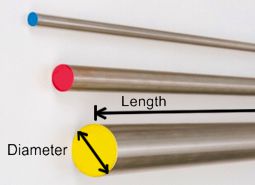
Drill rods are available in a range of sizes to accommodate different drilling rigs and purposes. Common diameters range from 0.5 inches to over 2 inches, while lengths can vary between 3 feet and 10 feet. Industry standards, such as the API (American Petroleum Institute) and ISO, govern manufacturing tolerances and thread types, ensuring compatibility and safety.
| Specification | Typical Range | Standard |
|---|---|---|
| Diameter | 0.5, 2.5 inches | API, ISO |
| Length | 3, 10 feet | API, ISO |
| Material | Carbon, Alloy Steel | ASTM, ISO |
| Thread Type | IF, REG, NW, HW | API, ISO |
Credit: diesupplies.com
Types Of Drill Rods And Their Applications
Choosing the right drill rod is essential for project success. Different types are tailored to specific drilling methods and environments.
Solid Drill Rods
Solid drill rods are the most common, offering high strength for demanding applications such as mineral exploration and oil drilling. They are less flexible but provide superior torque transmission.
- Applications: Deep mining, oil and gas, water well drilling.
- Advantages: High durability, excellent torque transmission.
- Limitations: Heavier, limited flexibility.
Hollow Drill Rods
Hollow drill rods feature a central bore, which allows for fluid circulation during drilling. This is especially important for cooling the bit and removing cuttings.
- Applications: Core drilling, geotechnical investigations, environmental sampling.
- Advantages: Enables fluid flow, lighter weight.
- Limitations: Slightly reduced strength compared to solid rods.
Wireline Drill Rods
Wireline rods are specialized for core sampling. They allow a wireline system to retrieve cores without removing the entire string, improving efficiency.
- Applications: Core extraction in mining and geology.
- Advantages: Faster core retrieval, reduces downtime.
- Limitations: Higher cost, requires specialized equipment.
Specialty Drill Rods
Some projects require custom or specialty rods, such as:
- Stainless steel rods: Used in corrosive environments.
- Heat-treated rods: For extra strength and wear resistance.
- Flexible rods: For directional drilling.
Comparison Of Drill Rod Types
| Type | Strength | Weight | Fluid Flow | Typical Use |
|---|---|---|---|---|
| Solid | High | Heavy | No | Oil, Gas, Deep Mining |
| Hollow | Medium | Lighter | Yes | Core, Geotechnical |
| Wireline | Medium | Medium | Yes | Core Sampling |
| Specialty | Variable | Variable | Optional | Custom Applications |

Credit: www.sinodrills.com
Materials And Manufacturing Processes
The quality of a drill rod depends largely on the materials used and the manufacturing process, which determines its strength, flexibility, and longevity.
Common Materials
Drill rods are most often made from:
- Carbon steel: Offers a balance of strength and cost-effectiveness.
- Alloy steel: Enhanced with elements like chromium, nickel, and molybdenum for superior durability.
- Stainless steel: Used in environments requiring corrosion resistance.
The selection of material is based on the drilling environment and desired performance characteristics.
Manufacturing Steps
Manufacturing drill rods involves several critical steps:
- Material selection: Choosing the appropriate grade of steel or alloy.
- Forging and machining: Forging the rod to shape, followed by precision machining for straightness.
- Heat treatment: Improves strength and wear resistance.
- Threading: Ends are threaded using CNC machines for accuracy.
- Inspection: Non-destructive testing, such as ultrasonic or magnetic particle inspection, ensures quality.
Quality Control Standards
Drill rods must meet stringent quality standards, including:
- API standards: Governing oil and gas drilling rods.
- ISO standards: Covering general engineering applications.
- ASTM standards: For material quality and mechanical properties.
Pro Tip: Always request certification and test reports when purchasing drill rods to verify compliance with standards.

Credit: www.sinodrills.com
Performance Factors: Durability, Flexibility, And Safety
The performance of a drill rod is determined by several key factors that affect both operational efficiency and safety.
Durability And Wear Resistance
Durability is essential for minimizing replacement costs and downtime. Factors influencing durability include:
- Material composition
- Heat treatment
- Surface hardening techniques
High-quality rods can last for thousands of drilling cycles, while inferior rods may fail prematurely.
Flexibility And Torque Transmission
Flexibility allows drill rods to withstand the bending and twisting forces encountered during drilling, especially in directional drilling. Too much flexibility, however, can reduce torque transmission and increase risk of breakage.
Safety Considerations
Safety is paramount, as drill rod failures can lead to equipment damage or injury. Key safety practices include:
- Routine inspection: Checking for cracks, wear, or thread damage.
- Proper assembly: Ensuring threads are properly engaged and lubricated.
- Correct storage: Protecting rods from corrosion and mechanical damage.
Example: In a major mining operation in Nevada, improper thread engagement led to a rod failure that halted drilling for several days, resulting in substantial financial losses. Regular training and inspection protocols can prevent such incidents.
Maintenance Tips
To extend drill rod lifespan:
- Clean rods after each use
- Store rods in a dry, covered area
- Apply anti-corrosion coatings as needed
- Use thread protectors during transport
Real-world Applications And Case Studies
Drill rods play a pivotal role across industries, with each application demanding specific rod characteristics.
Mineral Exploration
In mineral exploration, drill rods are used to obtain core samples from deep underground. The rods must withstand abrasive materials and high torque. Hollow wireline rods are commonly used for their efficiency in retrieving samples.
- Case Study: The Canadian Arctic Diamond Project relied on high-strength alloy rods for deep core drilling. The rods’ durability enabled continuous drilling in extreme conditions, reducing project delays.
Water Well Drilling
Water well drilling often uses solid rods to penetrate various soil layers. The rods must be long enough to reach aquifers, yet strong enough to resist bending.
- Example: A Texas-based drilling contractor reported increased efficiency after switching to heat-treated solid rods, cutting drilling time by 15% over six months.
Geotechnical Investigations
Geotechnical studies require precise sampling of soil and rock layers. Hollow rods allow for fluid circulation and sample extraction.
- Case Study: The construction of a new highway in California employed hollow rods to extract undisturbed soil samples, helping engineers design a stable foundation.
Oil And Gas Drilling
Oil and gas exploration demands rods capable of withstanding high pressures and temperatures. API-certified rods are standard, and specialty rods are used for directional drilling.
- Example: In offshore drilling, stainless steel rods are used to combat corrosion from saltwater exposure, extending rod lifespan significantly.
Drill Rod Selection: Criteria And Best Practices
Selecting the right drill rod involves careful consideration of several factors to match project requirements and optimize performance.
Project Requirements
Before choosing a drill rod, assess:
- Material to be drilled (soil, rock, concrete)
- Depth and diameter of borehole
- Drilling method (rotary, percussive, wireline)
- Fluid requirements (water, air, mud circulation)
Compatibility And Thread Types
Compatibility with the drill rig and bit is crucial. Thread types vary widely, including IF (Internal Flush), REG (Regular), NW, HW, and proprietary designs. Ensure the rod’s thread matches your equipment.
Budget And Lifecycle Costs
While upfront cost is important, consider total lifecycle cost, including maintenance, replacement, and downtime. Investing in higher-quality rods often pays off over time.
Supplier Reputation And Certification
Choose suppliers who offer:
- API, ISO, ASTM certifications
- Transparent quality control processes
- Reliable customer support
Wikipedia – Drill Pipe provides more insight into industry standards and specifications.
Innovations And Trends In Drill Rod Technology
The drill rod industry continues to evolve, with new technologies improving efficiency and safety.
Advanced Materials
Recent developments include:
- Composite rods: Combining steel and carbon fiber for lightweight strength.
- Nano-coatings: Increasing wear resistance and reducing friction.
Smart Rods
Some manufacturers are introducing smart drill rods equipped with sensors to monitor stress, temperature, and alignment in real time. These innovations enable predictive maintenance and reduce failure risks.
Environmental Considerations
Sustainable manufacturing processes and recyclable materials are gaining traction. Lower-impact coatings and energy-efficient forging methods are now available.
Future Outlook
With the rise of automation and data-driven drilling, drill rods are expected to become more specialized and integrated with digital systems. According to a 2026 report from International Association of Drilling Contractors, demand for high-performance rods is projected to grow 8% annually through 2027.
Frequently Asked Questions
What Is The Difference Between A Drill Rod And A Drill Pipe?
A drill rod is typically used in smaller-scale drilling operations, such as mineral exploration and geotechnical studies, while a drill pipe is designed for larger oil and gas drilling projects. Drill pipes are generally longer, thicker, and manufactured to withstand higher pressures. Drill rods often feature more varied thread types and are optimized for specific sampling or core extraction purposes.
How Can I Tell If A Drill Rod Is Failing Or Needs Replacement?
Signs of impending failure include visible cracks, excessive wear on threads, loss of straightness, and reduced torque transmission. Advanced inspection methods, such as ultrasonic testing, can detect internal flaws. If you notice increased vibration, difficulty connecting rods, or reduced drilling efficiency, it’s time to inspect and potentially replace the rod.
What Maintenance Practices Help Prolong The Life Of A Drill Rod?
Proper maintenance involves regular cleaning, inspection for wear and damage, lubricating threads, and storing rods in dry, protected areas. Using thread protectors during transport and applying anti-corrosion coatings can significantly extend rod lifespan. Establishing a routine maintenance schedule based on manufacturer recommendations is highly effective.
Are There Environmental Risks Associated With Drill Rod Manufacturing?
Yes, drill rod manufacturing can involve energy-intensive processes, emissions, and waste generation. However, many producers now employ sustainable practices, such as recycling scrap materials, using low-impact coatings, and optimizing energy use. Choosing suppliers with environmental certifications can minimize risks.
Can Drill Rods Be Customized For Unique Drilling Applications?
Absolutely. Custom drill rods can be manufactured to specific lengths, diameters, thread types, and material compositions. Specialty features, such as flexible bodies or corrosion-resistant coatings, are available for challenging environments. Customization is especially common in directional drilling, offshore operations, and research projects.
Selecting the right drill rod is vital for efficient, safe, and cost-effective drilling operations. By understanding the structure, materials, performance factors, and evolving technologies behind drill rods, you can make informed choices that directly impact project outcomes. Whether you’re a seasoned engineer or new to drilling, keeping these insights in mind will ensure your operations run smoothly and your equipment lasts longer.