Choosing the right power drill can make all the difference in your work, whether you are a DIY beginner or a professional contractor. Two brands stand out in hardware stores and online reviews: Skil and Dewalt. Both have a long history and offer a wide range of drills. But which one should you choose? The answer is not as simple as picking the one with the highest price tag or the most features. Your decision should depend on what you plan to use the drill for, your budget, and your long-term expectations.
This article will guide you through a detailed comparison of Skil and Dewalt drills. You will learn about their history, product lines, build quality, performance, battery systems, user experience, price points, and after-sales support. We will also highlight non-obvious factors that many beginners overlook, such as ergonomics and tool compatibility.
By the end, you will be able to make a confident choice that matches your needs.
The Brands: Skil And Dewalt
Before diving into technical details, it’s helpful to know the background of each brand. Skil was founded in 1924, famous for inventing the first portable circular saw. Over the years, Skil focused on making reliable, affordable tools for homeowners and light professionals. Their drills are often seen as budget-friendly, yet they have introduced many innovations, especially in cordless technology.
Dewalt, on the other hand, started in 1923 and quickly became a favorite among construction professionals. Known for their signature yellow and black design, Dewalt tools are built for heavy use and tough environments. Dewalt invests heavily in research and development, often leading the way with new features, more powerful motors, and advanced battery systems.
Understanding these brand philosophies gives you a hint: Skil aims for value and ease of use, while Dewalt pushes for performance and durability.
Drill Types And Product Range
Both Skil and Dewalt offer a variety of drill types. Knowing the main categories helps you pick the right tool for your tasks.
- Cordless Drills: These are battery-powered and offer mobility. Both brands offer 12V and 20V models, with Dewalt also providing 18V and 60V options for heavy-duty work.
- Corded Drills: These require a power outlet. Corded models are less common today, but still offered by both brands for continuous, high-power tasks.
- Hammer Drills: Designed for drilling into concrete or masonry, hammer drills add a percussive action to the rotation.
- Impact Drivers: Not technically drills, but often compared. Impact drivers are better for driving screws and bolts.
- Drill/Driver Combos: Kits that include both a drill and an impact driver, often with batteries and a charger.
Skil focuses mostly on the 12V and 20V cordless market, aiming at homeowners and light professionals. Dewalt’s range is wider, including high-torque 60V FlexVolt models for serious construction needs.
Example: Skil Pwrcore 20 Vs Dewalt 20v Max
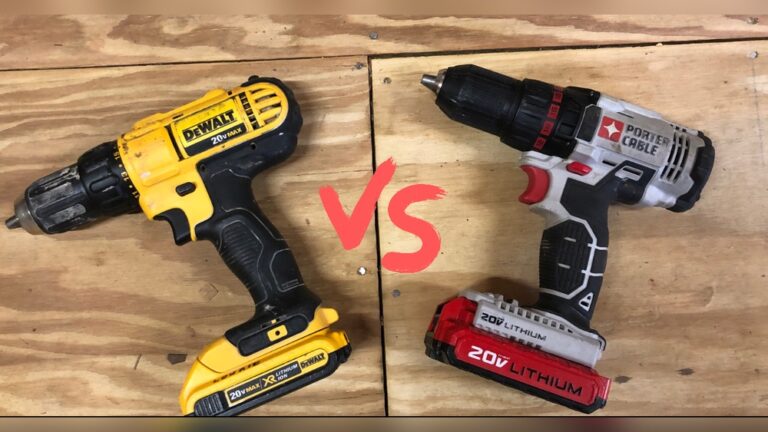
A common comparison is between the Skil PWRCore 20 cordless drill and the Dewalt 20V MAX. Both are popular in their category, offering similar voltage but different features, performance, and price points.

Credit: www.popularmechanics.com
Build Quality And Materials
Build quality is where the difference between Skil and Dewalt becomes more visible. Dewalt drills often use reinforced plastics, rubber overmolds, and metal gearboxes. This makes them more resistant to drops, dust, and heavy use. For example, many Dewalt drills pass the drop test from heights above 6 feet without losing function.
Skil drills, while well-made for their price range, use more basic plastics and lighter internals. They are suitable for home repairs, furniture assembly, and occasional use, but may show wear faster if used daily on tough jobsites.
A non-obvious insight: the extra weight in Dewalt drills often comes from sturdier components. This weight can feel tiring for long overhead work, but it also means the tool can take more abuse.
Performance And Power
Performance is a key factor for most buyers. It’s not just about the maximum speed (RPM) or torque (measured in inch-pounds), but also how the tool handles tough materials.
Power And Speed
- Dewalt 20V MAX: Typically offers 300-500 in-lbs of torque, with variable speeds up to 2,000 RPM. Some models have a brushless motor for better efficiency and longer life.
- Skil PWRCore 20: Usually delivers 350-450 in-lbs of torque, with speeds up to 1,800 RPM. Many models use a brushed motor, but brushless options are available.
Real-world Example
Drilling a 1/2-inch hole through 2×4 lumber: Both drills can handle it, but Dewalt will do it faster and with less strain, especially in hardwood. For concrete, Dewalt’s hammer drills are clearly stronger.
Impact Drilling
Dewalt’s impact drivers can deliver up to 1,825 in-lbs of torque, which is overkill for most homeowners but essential for professionals working with large lag bolts or construction screws. Skil’s impact drivers are strong enough for furniture assembly and deck building, but may struggle with larger fasteners.

Credit: www.popularmechanics.com
Battery Technology And Runtime
Cordless tools are only as good as their batteries. Here, both brands have made major advances, but with different priorities.
Dewalt: Flexvolt And 20v Max
Dewalt’s battery lineup is famous for the 20V MAX system, compatible with dozens of tools. Their FlexVolt batteries automatically switch between 20V, 60V, and even 120V (when paired in series) to power heavy-duty tools. This means one battery can run a compact drill or a large saw.
Dewalt batteries use high-quality cells and smart electronics to prevent overheating. Many include a fuel gauge so you know when to recharge.
Skil: Pwrcore 12 And 20
Skil’s PWRCore 12 and PWRCore 20 batteries use a unique cooling system that wraps each cell in temperature-management material. This helps extend battery life, especially during long use. Skil batteries often include a USB port, turning them into portable chargers for phones or other electronics.
Battery runtime depends on both capacity (measured in amp-hours, Ah) and tool efficiency. Dewalt’s higher-end batteries last longer under heavy loads, but Skil’s batteries are excellent for lighter work and casual use.
Charging Speed
Skil promotes their PWRJump chargers, which can deliver a 25% charge in just 5 minutes. This is useful for users who forget to charge overnight. Dewalt chargers are also fast, but not as quick as PWRJump for short bursts.
Ergonomics And User Comfort
A drill that feels good in your hand is easier to control, safer, and less tiring. Both brands put effort into ergonomics, but with different styles.
- Dewalt: Larger grip, more rubber overmold, balanced weight distribution. Feels solid, but can be heavy for small hands.
- Skil: Lighter weight, slimmer handle, less rubber. Easier to use for long periods, but may feel less stable on bigger jobs.
Non-obvious insight: Hand size matters more than you think. If you have smaller hands or wrist problems, a lighter Skil drill may be more comfortable, even if it’s less powerful.
Many Dewalt models include a belt hook, handy for professionals climbing ladders. Skil sometimes skips this feature on budget models.

Credit: www.youtube.com
Features And Technology
Modern drills offer much more than just spinning a bit. Here are some key features and how the brands compare:
- LED Light: Both brands include an LED work light. Dewalt often places it at the base for less shadow; Skil’s is usually above the trigger.
- Clutch Settings: Dewalt often offers more clutch positions (up to 15 or more) for fine control. Skil may have fewer, but enough for most home tasks.
- Brushless Motors: Dewalt leads in offering brushless models, which last longer and use less battery. Skil is catching up but still offers more brushed options.
- Bit Holder: Dewalt usually includes a magnetic bit holder; Skil often leaves it out.
- Battery Indicator: Both brands offer battery level indicators, but Dewalt’s are often easier to read.
A small but handy feature: Skil’s USB charging port on batteries is great for charging your phone on the go, especially if you work outside.
Price And Value For Money
Price is often the deciding factor for many buyers. Here’s what you can expect:
- Skil drills: $50–$120 for most kits, including battery and charger. Excellent value for home users or light professionals.
- Dewalt drills: $99–$250 for kits. More expensive, but you get higher durability, better performance, and advanced features.
If you only need a drill a few times a year, Skil is hard to beat for value. For daily use, the higher upfront cost of Dewalt pays off over time.
Durability And Warranty
Dewalt offers a 3-year limited warranty on most drills, plus a 1-year free service and 90-day money-back guarantee. This is among the best in the industry. Dewalt tools are known to last for years, even with heavy use.
Skil provides a 5-year limited warranty on many cordless tools and batteries, which is impressive for a budget brand. The catch: the warranty covers manufacturing defects, not wear and tear from heavy daily use.
Non-obvious insight: Warranty is only as good as the service network. Dewalt has more service centers, making it easier to get repairs or replacements quickly.
Accessory Compatibility
When you buy a drill, you often end up buying more batteries, chargers, and other tools. Dewalt’s 20V MAX and FlexVolt systems support over 200 tools, from saws to blowers to lights. This makes it easy to expand your toolkit without buying new batteries.
Skil’s PWRCore batteries are compatible with about 30–40 tools, a smaller but growing ecosystem. For most homeowners, this is enough. For professionals, Dewalt’s wider range is a big advantage.
Real-world User Feedback
Looking at online reviews and forums, certain patterns stand out:
- Home users are often very happy with Skil drills. They praise the price, ease of use, and lightweight design. Complaints usually mention that the drill feels less “solid” than more expensive brands.
- Professionals and advanced DIYers often prefer Dewalt for its power, reliability, and feel. They mention the drills can survive falls, rain, and dust. The main complaint is weight, especially with the largest batteries.
A common beginner mistake: Ignoring the total kit price. Sometimes, a Skil kit with two batteries and a charger is cheaper than a Dewalt tool-only purchase. Always check what’s included.
Comparing Popular Models
To give you a clearer picture, here’s a side-by-side look at two popular kits: Skil PWRCore 20 and Dewalt 20V MAX.
| Feature | Skil PWRCore 20 | Dewalt 20V MAX |
|---|---|---|
| Torque | 350–450 in-lbs | 300–500 in-lbs |
| Speed (RPM) | 0–1,800 | 0–2,000 |
| Weight (with battery) | 3.0–3.5 lbs | 3.5–4.5 lbs |
| Battery System | PWRCore 20 | 20V MAX |
| LED Light | Above trigger | Base-mounted, brighter |
| Warranty | 5 years | 3 years |
| Price (kit) | $80–$120 | $120–$200 |
Which Drill Is Best For You?
Let’s break down the decision by use case.
For Homeowners And Beginners
If you need a drill for hanging pictures, assembling furniture, or small repairs, Skil offers excellent value. The drills are light, easy to use, and affordable. The PWRJump charger and USB battery port are unique features that add convenience. The 5-year warranty is a strong bonus for peace of mind.
For Professionals And Heavy Users
If you work on jobsites, handle tough materials, or plan to build a large tool collection, Dewalt is the better choice. The drills offer more power, better battery life, and can survive rough treatment. Dewalt’s wide accessory compatibility is a big plus if you plan to expand your toolkit.
For Mixed Use
If you want one drill for both home projects and occasional heavy tasks, consider Dewalt’s entry-level 20V MAX models. They offer a good balance between power and price. If your budget is tight, a top-end Skil PWRCore 20 will handle most jobs, but may struggle with masonry or thick hardwoods.
Table: Skil Vs Dewalt Drill Pros And Cons
Here’s a simple breakdown to help you decide:
| Skil | Dewalt | |
|---|---|---|
| Best for | Home users, beginners | Professionals, heavy use |
| Strengths | Affordable, lightweight, easy charging | Durable, powerful, wide compatibility |
| Weaknesses | Less power, less durable | Heavier, higher price |
| Warranty | 5 years | 3 years |
| Key Feature | USB charging port | FlexVolt battery system |
Common Mistakes When Choosing
Many buyers—especially beginners—make mistakes when picking a drill. Here are a few to avoid:
- Only looking at voltage. Higher voltage is not always better. 20V is standard for most tasks; higher is only needed for specialty jobs.
- Ignoring tool weight. A powerful drill that’s too heavy for your hand will feel awkward and tiring.
- Not checking what’s in the box. Some kits include extra batteries or a case; others are “tool-only.”
- Forgetting about future needs. If you plan to buy more cordless tools, a wide battery system like Dewalt’s saves money long term.
- Overestimating your needs. Many homeowners buy pro-level drills, but never use half the features.
A non-obvious tip: Try holding the drill in person before buying, if possible. Comfort matters more than many people realize.
Expert Insights And Final Tips
- Don’t pay extra for features you won’t use. For example, if you never drill into concrete, a hammer drill adds weight and cost with no benefit.
- Brushless motors are worth the investment if you use your drill often. They last longer and use less battery.
- Buy from a store with a good return policy. Sometimes, the only way to know if a drill fits your hand is by trying it at home.
- Read the manual. Many problems come from not knowing about features like adjustable clutches or speed settings.
- Look for bundle deals. Especially around holidays, you can often get extra batteries or accessories for free.
Frequently Asked Questions
Is Dewalt Really Better Than Skil?
Dewalt is usually better for professionals and heavy use due to its higher power, durability, and tool compatibility. Skil is a top choice for home users who want a good-quality drill at a lower price. The best brand for you depends on your needs and budget.
Are Skil Drills Good For Woodworking?
Yes, Skil drills are suitable for most woodworking tasks, including drilling holes in softwood and hardwood, driving screws, and light construction. For very thick or hard wood, Dewalt may perform better, but Skil covers most home projects.
Can I Use Dewalt Batteries With Skil Tools?
No, Dewalt and Skil batteries are not compatible. Each brand uses its own battery shape, voltage, and connectors. Mixing brands is not possible unless you use special adapters, which can be unsafe and void warranties.
How Long Do Skil And Dewalt Drills Last?
With regular home use, a Skil drill can last 5–7 years or more. Dewalt drills, especially pro models, can last 10 years or longer with proper care. Battery life depends on charging habits and usage.
Where Can I Find More Detailed Technical Specs?
Official brand websites and tool review sites provide detailed specs. For accurate, up-to-date information, check the Dewalt official site.
Choosing between Skil and Dewalt drills is about more than just power or price—it’s about matching the tool to your real needs. With the right knowledge, you can pick a drill that will serve you well for years, whether you’re hanging a picture or building a house.