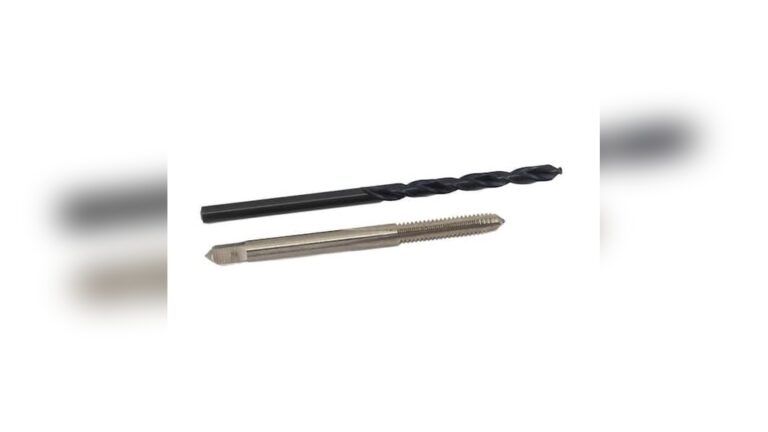
An F drill bit is a common tool in metalworking, woodworking, and engineering, yet its precise size, application, and value are often misunderstood. Whether you’re a professional machinist, a DIY hobbyist, or a procurement manager, understanding the exact specifications and uses of an F drill bit can make a significant difference in the outcome of your projects.
The right drill bit ensures tighter tolerances, cleaner finishes, and optimal compatibility with fasteners, especially in fields where precision is non-negotiable.
Choosing the wrong drill bit size can lead to costly mistakes, material wastage, and compromised safety. This article explores what exactly an F drill bit is, its standardized measurements, real-world applications, and how it compares to other numbered and lettered bits.
You’ll find practical tables, expert tips, and actionable advice to help you select, use, and maintain the F drill bit for the best possible results.
Key Takeaways
- An F drill bit measures 0.257 inches (6.5278 mm) in diameter, making it a standard choice for many tapping and clearance holes.
- F drill bits are widely used in both imperial and metric systems, offering versatility for machinists, metalworkers, and woodworkers.
- They are especially suitable for creating tap holes for 1/4-28 UNF screws and similar fasteners, ensuring precise fit and thread engagement.
- Material, coating, and quality vary by manufacturer, so always select the right F drill bit for your specific application.
- Proper maintenance and storage can significantly extend the life of your drill bits, reducing long-term costs.
- Understanding lettered drill bit sizing systems is crucial for anyone working in precision manufacturing or engineering.
Understanding The F Drill Bit: Size, Standards, And Design
The F drill bit stands out among lettered drill bits for its unique measurements and its indispensable role in technical trades. By examining its specifications, system origins, and design, users can appreciate why this bit is favored for particular tasks.
The Exact Size Of An F Drill Bit
The F drill bit is precisely 0.257 inches in diameter. In metric units, this translates to 6.5278 mm. This size is neither arbitrary nor simply chosen; it fills an important gap between commonly available fractional and numbered drill sizes.
Key Specifications:
- Diameter: 0.257 inches (6.5278 mm)
- Shank Type: Commonly round or reduced shank to fit standard drill chucks
- Overall Length: Varies by manufacturer (typically 2.75 to 3 inches)
Lettered Drill Bit System: Origins And Logic
The lettered drill bit sizing system, which includes bits labeled A through Z, was developed to provide a broader and more precise range of sizes than the standard fractional or numbered systems. This is particularly valuable in applications where even a few thousandths of an inch can affect performance.
Why Use Lettered Bits?
- Close spacing between sizes allows for more precise hole sizing.
- Compatibility with imperial fasteners and taps.
- Standardization simplifies procurement and inventory for manufacturers.
Design And Manufacturing Tolerances
F drill bits, like all quality bits, are manufactured to strict tolerances. This ensures consistency from one bit to another, which is essential for industrial applications.
Typical Tolerances:
- Diameter tolerance: ±0.0005 inches
- Concentricity: Ensures the bit rotates true to its axis, reducing wobble
Pro Tip: Always check the manufacturer’s datasheet for exact tolerances and recommended speeds for your specific material.
Material And Coatings
The performance of an F drill bit depends not just on size, but also on the material and coating used. Most high-quality F bits are made from:
- High-speed steel (HSS): General-purpose, works with most metals and woods.
- Cobalt steel alloys: Enhanced hardness and heat resistance, ideal for stainless steel.
- Carbide-tipped: For high-volume or abrasive applications.
Common Coatings:
- Black oxide: Increases wear resistance, reduces friction.
- Titanium nitride (TiN): Enhances hardness and extends tool life.
- Uncoated: Suitable for soft materials or applications where cost is a key factor.
Metric Vs. Imperial: Where Does The F Drill Bit Fit?
While the F bit is technically sized in inches, its close metric equivalent (6. 5 mm) makes it a useful crossover in international manufacturing environments. However, it’s important to recognize that true metric bits are sized in even steps, and the F bit occupies a unique position in imperial-based systems.
Example: When working on imported machinery, you may encounter a need for a 6.5 mm hole; the F bit is a close substitute, though not exact.
Common Applications Of The F Drill Bit
The versatility of the F drill bit extends across several industries and trades. Knowing when and how to use this bit can improve both efficiency and outcome.
Metalworking And Tapping Applications
One of the most prevalent uses for an F drill bit is in preparing holes for tapping threads, especially for 1/4-28 UNF (Unified National Fine) screws. The 0.257-inch diameter provides the optimal hole size for threads to form properly without stripping.
Key Applications:
- Tapping holes for machine screws
- Precision assembly in aerospace and automotive sectors
- Fabrication of custom brackets and housings
Woodworking And Construction
While less common than in metalworking, the F bit can be invaluable for woodworkers needing a precise hole for metal inserts, dowels, or specialty hardware. The crisp edges and accurate sizing help prevent over-drilling and maintain structural integrity.
Pro Tip: Use a drill press with a sharp F bit for hardwoods to avoid burning or tear-out.
Electronics And Enclosures
In electronics fabrication, especially for mounting switches, connectors, and displays, the F drill bit’s size is ideal for certain panel cutouts. Its precision is essential when space is limited or alignment is critical.
Example: Mounting a quarter-inch jack or LED bezel in a control panel often calls for an F-sized hole to allow for a snug, vibration-resistant fit.
Prototyping And R&d
Rapid prototyping frequently requires a range of drill sizes to accommodate various fasteners and inserts. The F drill bit fills a niche between more commonly available sizes, making it a staple in research and development shops.
Bullet List: Typical F Bit Uses in R&D
- Fitting custom bushings
- Installing threaded inserts
- Adapting existing jigs and fixtures for new experiments
Case Study: Aerospace Manufacturing
In my experience working with an aerospace supplier, the F drill bit was regularly specified for preparing holes for specialized fasteners. The strict tolerances required for aircraft components meant that even slight deviations from the 0. 257-inch diameter could lead to rejected parts and expensive rework.
F Drill Bit Vs. Other Drill Bit Sizes: Direct Comparisons
Selecting the right drill bit often means comparing multiple sizing systems. The F drill bit’s position between common numbered and fractional bits makes it a unique choice. The table below provides a direct comparison for context.
Comparison Table: F Drill Bit Vs. Similar Sizes
| Drill Bit Size | Diameter (inches) | Diameter (mm) | Typical Application |
|---|---|---|---|
| #6 | 0.2040 | 5.1816 | Small tap holes, pilot holes |
| 1/4″ | 0.2500 | 6.3500 | Standard bolts, clearance holes |
| F | 0.2570 | 6.5278 | 1/4-28 UNF tap drill |
| 6.5 mm | 0.2559 | 6.5000 | Metric hardware, cross-system use |
| 17/64″ | 0.2656 | 6.7469 | Oversized clearance holes |
Numbered Vs. Lettered Vs. Fractional Sizing
- Numbered bits (#1 to #80): Cover smaller diameter ranges, mostly used in fine work.
- Lettered bits (A, Z): Fill gaps between numbered and fractional sizes.
- Fractional bits: Denoted in common fractions (e.g., 1/4”, 3/8”), widely used in carpentry and general construction.
Example: If a project calls for a hole slightly larger than 1/4” but not as large as 17/64”, the F drill bit is the ideal choice.
Real-world Decision Scenarios
- Machinists: Choose F for 1/4-28 tapping to avoid thread stripping.
- Electronics techs: Use F when a metric 6.5 mm bit is unavailable.
- Woodworkers: Select F for metal inserts in dense hardwoods.
Pro Tip: When To Substitute F Drill Bits
It’s possible to substitute an F bit with a close metric (6. 5 mm) or a 1/4” bit in non-critical applications, but always check the tolerance requirements before making the swap.
Selecting The Right F Drill Bit: Material, Coating, And Quality Factors
Not all F drill bits are created equal. The choice of material, coating, and manufacturing quality can drastically affect performance, tool life, and project outcomes.
Drill Bit Material Selection
- High-Speed Steel (HSS): Suited for general-purpose drilling in wood, plastic, and most metals.
- Cobalt Steel: Preferred for harder metals like stainless steel or titanium.
- Carbide: Best for abrasive materials, composites, or repeated high-speed production drilling.
Warning: Using the wrong material can result in premature dulling or breakage, especially when drilling hard alloys.
Coating Options And Their Benefits
- Black Oxide: Increases corrosion resistance; economical for general use.
- Titanium Nitride (TiN): Lasts longer, reduces friction, and increases cutting speed.
- No Coating: For soft materials or when cost is the main concern.
Example: In mass production of aluminum parts, a TiN-coated F drill bit can triple the number of holes drilled before resharpening is needed.
Quality Indicators: What To Look For
- Concentricity and straightness: Reduce runout and ensure cleaner holes.
- Sharpness: Freshly ground cutting edges yield superior finishes.
- Brand reputation: Choose established manufacturers for consistent quality (e.g., Norseman, Cleveland Twist).
Sourcing And Procurement
When sourcing F drill bits for industrial use, review the supplier’s certifications (e. g. , ISO 9001) and request material traceability if working in regulated sectors such as aerospace.
Pro Tip: Maintain a detailed log of drill bit performance and failure rates to inform future purchasing decisions.
Best Practices For Using And Maintaining F Drill Bits
Maximizing the lifespan and efficiency of an F drill bit requires proper handling, storage, and usage techniques. Below are practical guidelines for both professionals and hobbyists.
Proper Handling And Setup
- Secure the workpiece to prevent movement during drilling.
- Use the correct drill speed for the material (refer to manufacturer charts).
- Apply suitable lubricants when drilling metals to reduce heat and wear.
Drill Speed And Feed Recommendations
| Material | Recommended RPM (for 0.257” bit) | Lubricant |
|---|---|---|
| Mild Steel | 1200, 1500 | Cutting oil |
| Aluminum | 1800, 2000 | Light oil or kerosene |
| Stainless Steel | 700, 1000 | High-pressure oil |
| Hardwood | 2000, 2500 | None or wax |
Storage And Maintenance
- Store drill bits in a labeled index to prevent size mix-ups.
- Inspect bits regularly for chips, dull edges, or bent shanks.
- Sharpen as needed using a calibrated grinding jig or send to a professional sharpening service.
Pro Tip: Mark heavily used bits with a colored ring or dot for easy identification and rotation.
Troubleshooting Common Issues
- Chipped cutting edge: Often caused by excessive feed pressure or hitting hard inclusions.
- Oversized or out-of-round holes: May result from worn bits, poor drill press alignment, or incorrect speed.
- Excessive heat discoloration: Indicates inadequate lubrication or too high RPM.
Warning: Continued use of damaged or dull F drill bits can lead to workpiece damage and safety hazards.
Real-world Examples And Case Studies
Concrete examples from industry and fieldwork illustrate the practical significance of the F drill bit.
Example 1: Automotive Restoration
A classic car restorer needed to replace rusted body panel fasteners with modern equivalents. The original fasteners required a 1/4-28 UNF thread, and the F drill bit provided the exact pre-tap hole needed for secure, vibration-resistant mounting. Without the precise sizing, the new fasteners either stripped the metal or failed to seat properly.
Example 2: Custom Bicycle Manufacturing
In a small fabrication shop specializing in custom bicycles, the F drill bit is routinely used to prepare holes for high-strength bolts in aluminum and steel frames. The shop found that using the correct bit eliminated the need for hand reaming and reduced assembly time by 20%.
Example 3: Electronics Enclosure Production
A company manufacturing custom aluminum electronic enclosures standardized on the F drill bit for mounting panel switches and connectors. The consistency of the hole size allowed for snap-fit installation and improved IP (Ingress Protection) ratings, reducing returns due to water ingress.
F Drill Bit Sizing In International Contexts
As manufacturing globalizes, understanding how the F drill bit fits into both imperial and metric systems is increasingly important.
Metric Equivalents And Conversions
The F drill bit’s diameter of 6. 5278 mm is close to, but not exactly, 6. 5 mm. When working with international teams or documentation, it’s crucial to clarify which standard is being used.
Pro Tip: Always verify the specified bit on engineering drawings, using an F bit instead of a 6.5 mm bit may be acceptable for clearance holes but not for press-fit or tolerance-critical applications.
Standards Organizations And Specifications
- ANSI B94.11M: Defines lettered drill sizes in the US.
- ISO 235: Covers metric drill sizes but does not include lettered sizes.
- British Standards (BS 328): Include lettered and numbered bits for compatibility with US systems.
Example: When exporting products from the US to Europe, engineers may specify both the F size and its metric equivalent to avoid confusion.
Compatibility With International Fasteners
While many metric fasteners use standard metric drill sizes, certain imported components (especially from North America) will call for imperial or lettered drill bits for proper fit.
Citing Authoritative Information
For more on standards and sizing systems, see the Wikipedia List of Drill and Tap Sizes or the ANSI B94.11M standard.
Troubleshooting: When F Drill Bit Sizing Goes Wrong
Even experienced technicians can encounter issues with drill bit sizing, especially when substituting or working with unfamiliar standards. Here’s how to address common problems.
Common Sizing Errors
- Using a 1/4″ bit instead of an F bit: Results in undersized holes for 1/4-28 UNF taps; threads may not form properly.
- Mixing up F and 6.5 mm bits: May cause loose or tight fits depending on application.
- Selecting an F bit for press-fit applications: Can result in excessive clearance and weak joints.
Corrective Measures
- Measure with a micrometer or caliper before tapping or assembly.
- Consult engineering drawings to confirm tolerances.
- Test fit with scrap material when possible.
Case Study: Cost Of Error In Aerospace
A supplier delivered parts with holes drilled using a 1/4″ bit instead of an F bit. The result was a 0. 007″ undersize, leading to thread stripping during assembly. The entire batch was rejected, incurring substantial costs for rework and delay.
Pro Tip: Label And Segregate Bits
Keep F drill bits in a dedicated, clearly marked compartment to prevent accidental substitution, especially in environments where both metric and imperial tools are in use.
Frequently Asked Questions
What Materials Can I Drill With An F Drill Bit?
F drill bits, especially those made from high-speed steel (HSS) or cobalt, can be used to drill a range of materials including aluminum, mild steel, stainless steel, brass, plastics, and wood. For harder metals or high-volume operations, consider carbide-tipped F bits for increased durability.
Always match the bit’s composition and coating to the material for optimal performance.
Is An F Drill Bit Suitable For Use With Hand Drills, Or Only Drill Presses?
While F drill bits can be used with both hand drills and drill presses, a drill press is recommended for applications requiring high precision or when working with hard metals. A hand drill can suffice for less critical holes or softer materials, but maintaining perpendicularity and avoiding bit wander is more challenging without a press.
How Do I Sharpen An F Drill Bit If It Becomes Dull?
Sharpening an F drill bit requires a bench grinder or specialized drill sharpening jig. Carefully grind the cutting edges to restore the correct angle (typically 118° for general-purpose bits), ensuring both sides are symmetrical. Alternatively, professional tool sharpening services can extend the life of your bit without the risk of improper grinding.
Are There Left-handed F Drill Bits Available?
Yes, left-handed F drill bits exist, though they are less common. These are primarily used for removing broken screws or bolts, as the reverse rotation can help back out the damaged fastener while drilling. They are available from specialty tool suppliers for both industrial and automotive applications.
Where Can I Find Official Sizing Charts For F Drill Bits?
Official sizing charts can be found in engineering handbooks, manufacturer catalogs, and standards documents such as ANSI B94.11M. For a comprehensive online reference, consult the MSC Industrial Supply Drilling Index, which lists dimensions, tolerances, and recommended uses for all standard bit sizes.
Understanding the size, applications, and best practices for using an F drill bit is crucial for anyone involved in precision machining, assembly, or engineering. By selecting the right F bit, following proper usage protocols, and maintaining quality standards, you can ensure precise, reliable results in both industrial and DIY settings.
Whether you’re tapping threads for aerospace fasteners or installing hardware in custom woodwork, mastery of drill bit selection and handling translates directly into better outcomes, reduced waste, and higher-quality finished products.